Shimoda Marine Research Center, University of Tsukuba, 5-10-1 Shimoda, Shizuoka, 415-0025, Japan.
PRESTO, JST, 4-1-8 Honcho, Kawaguchi, 332-0012, Japan.
BMC Biol. 2021 Apr 6;19(1):64. doi: 10.1186/s12915-021-00999-1.
Light is essential for various biological activities. In particular, visual information through eyes or eyespots is very important for most of animals, and thus, the functions and developmental mechanisms of visual systems have been well studied to date. In addition, light-dependent non-visual systems expressing photoreceptor Opsins have been used to study the effects of light on diverse animal behaviors. However, it remains unclear how light-dependent systems were acquired and diversified during deuterostome evolution due to an almost complete lack of knowledge on the light-response signaling pathway in Ambulacraria, one of the major groups of deuterostomes and a sister group of chordates.
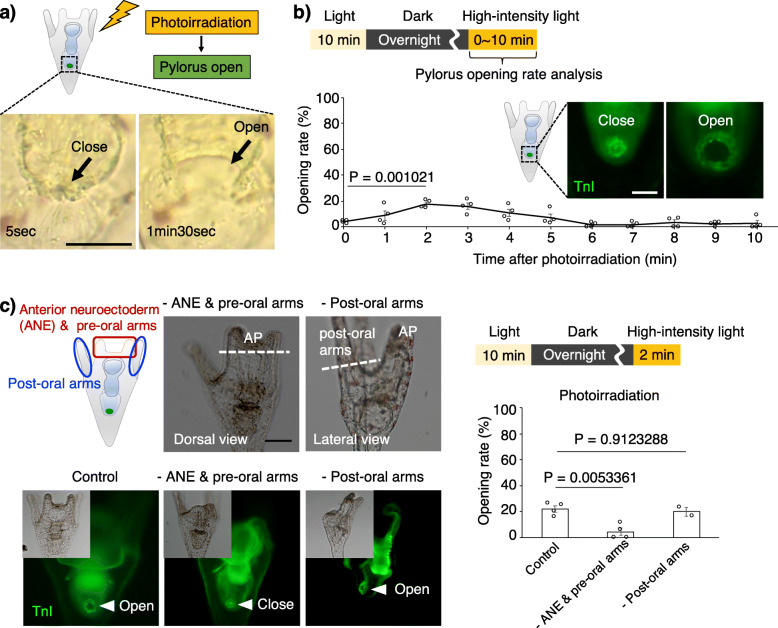
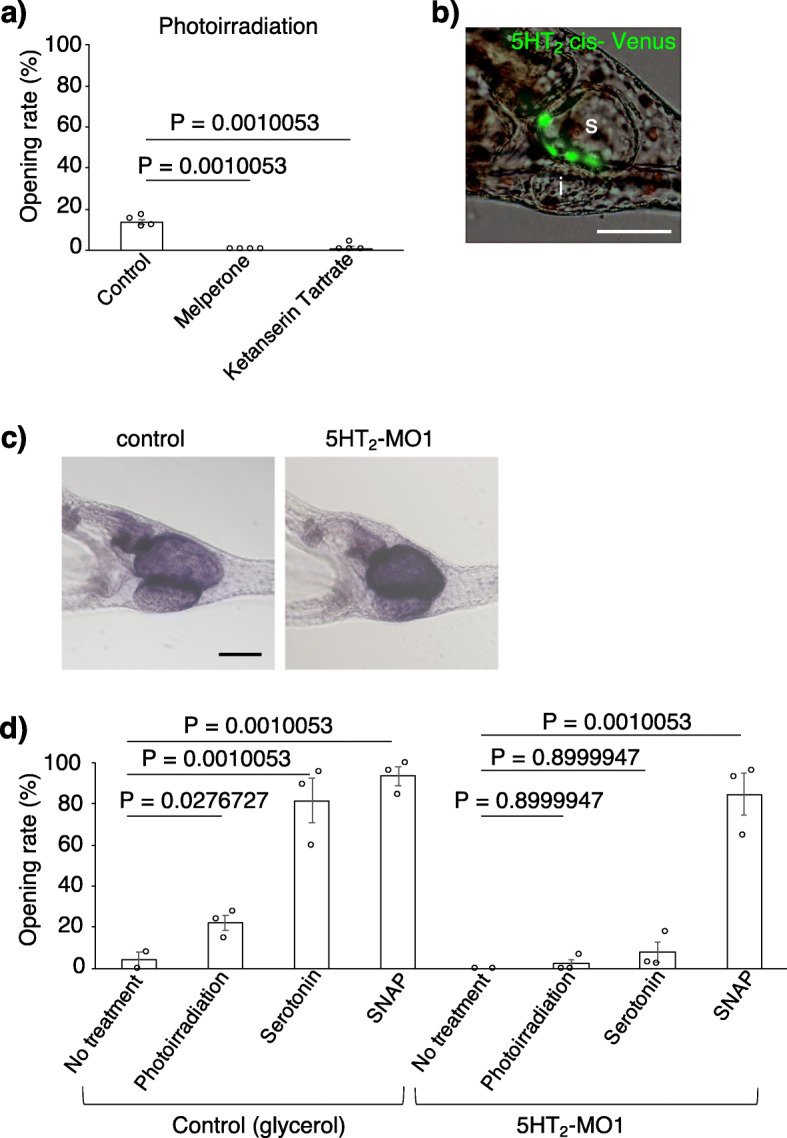
Here, we show that sea urchin larvae utilize light for digestive tract activity. We found that photoirradiation of larvae induces pyloric opening even without addition of food stimuli. Micro-surgical and knockdown experiments revealed that this stimulating light is received and mediated by Go(/RGR)-Opsin (Opsin3.2 in sea urchin genomes) cells around the anterior neuroectoderm. Furthermore, we found that the anterior neuroectodermal serotoninergic neurons near Go-Opsin-expressing cells are essential for mediating light stimuli-induced nitric oxide (NO) release at the pylorus. Our results demonstrate that the light>Go-Opsin>serotonin>NO pathway functions in pyloric opening during larval stages.
The results shown here will lead us to understand how light-dependent systems of pyloric opening functioning via neurotransmitters were acquired and established during animal evolution. Based on the similarity of nervous system patterns and the gut proportions among Ambulacraria, we suggest the light>pyloric opening pathway may be conserved in the clade, although the light signaling pathway has so far not been reported in other members of the group. In light of brain-gut interactions previously found in vertebrates, we speculate that one primitive function of anterior neuroectodermal neurons (brain neurons) may have been to regulate the function of the digestive tract in the common ancestor of deuterostomes. Given that food consumption and nutrient absorption are essential for animals, the acquirement and development of brain-based sophisticated gut regulatory system might have been important for deuterostome evolution.
光是各种生物活动所必需的。特别是,通过眼睛或眼点传递的视觉信息对大多数动物都非常重要,因此,视觉系统的功能和发育机制至今已得到了很好的研究。此外,已利用表达感光器视蛋白的光依赖性非视觉系统来研究光对各种动物行为的影响。然而,由于在环节动物门(后口动物的主要群体之一,也是脊索动物的姊妹群)中几乎完全缺乏对光反应信号通路的了解,因此,在后口动物进化过程中光依赖性系统是如何获得和多样化的仍不清楚。
在这里,我们表明海胆幼虫利用光来进行消化道活动。我们发现,即使没有添加食物刺激,光照射幼虫也会诱导幽门张开。显微手术和敲低实验表明,这种刺激光被前神经外胚层周围的 Go(/RGR)-视蛋白(海胆基因组中的视蛋白 3.2)细胞接收和介导。此外,我们发现表达 Go-Opsin 的细胞附近的前神经外胚层 5-羟色胺能神经元对于介导光刺激诱导的幽门处一氧化氮(NO)释放是必需的。我们的结果表明,在幼虫阶段,光>Go-Opsin>5-羟色胺>NO 途径在幽门张开中起作用。
这里展示的结果将使我们了解在动物进化过程中,通过神经递质发挥作用的光依赖性幽门张开系统是如何获得和建立的。基于环节动物门的神经系统模式和肠道比例的相似性,我们推测,尽管迄今为止尚未在该组的其他成员中报道光信号通路,但该通路可能在该进化枝中保守。鉴于先前在脊椎动物中发现的脑-肠相互作用,我们推测,前神经外胚层神经元(脑神经元)的一个原始功能可能是调节后口动物共同祖先消化道的功能。鉴于食物摄入和营养吸收对动物至关重要,基于大脑的复杂肠道调节系统的获得和发展可能对后口动物的进化很重要。