Division of Biology and Biological Engineering, California Institute of Technology, Pasadena, CA, 91125, USA.
Present address: Department of Genetics and Genome Biology, University of Leicester, Leicester, UK.
BMC Biol. 2021 Dec 4;19(1):257. doi: 10.1186/s12915-021-01194-y.
The evolutionary history of cell types provides insights into how morphological and functional complexity arose during animal evolution. Photoreceptor cell types are particularly broadly distributed throughout Bilateria; however, their evolutionary relationship is so far unresolved. Previous studies indicate that ciliary photoreceptors are homologous at least within chordates, and here, we present evidence that a related form of this cell type is also present in echinoderm larvae.
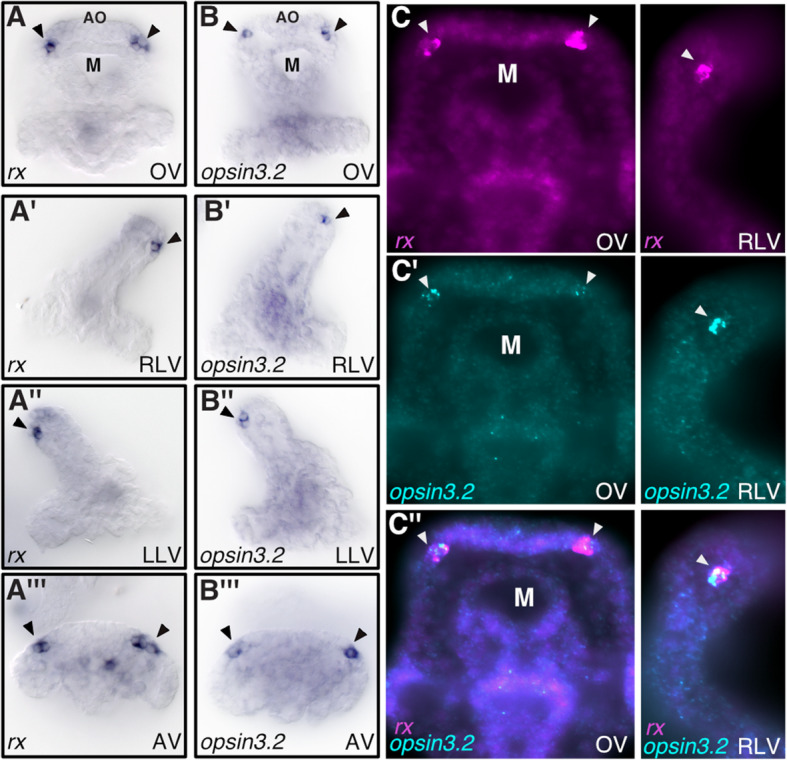
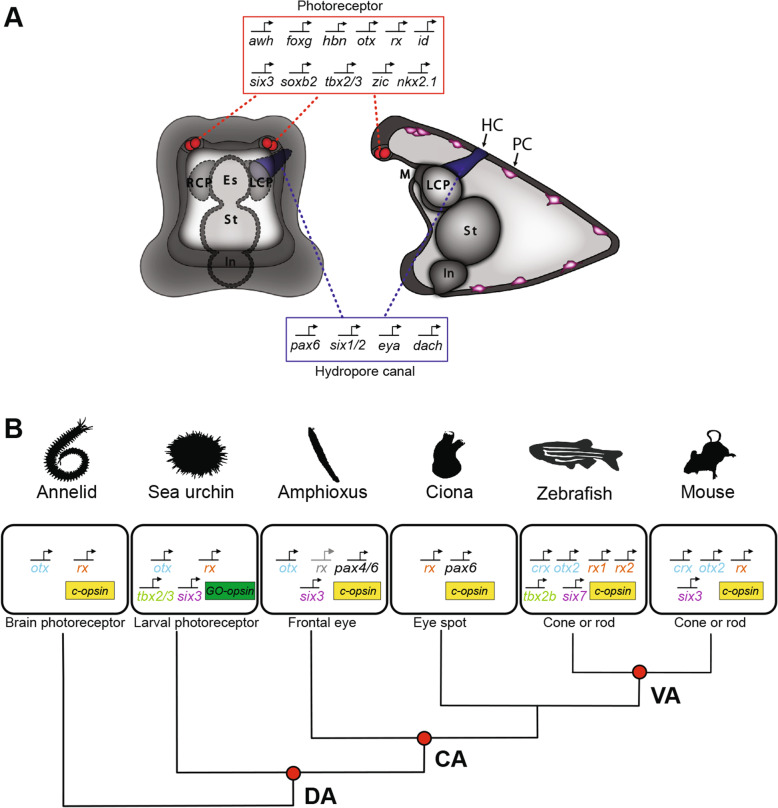
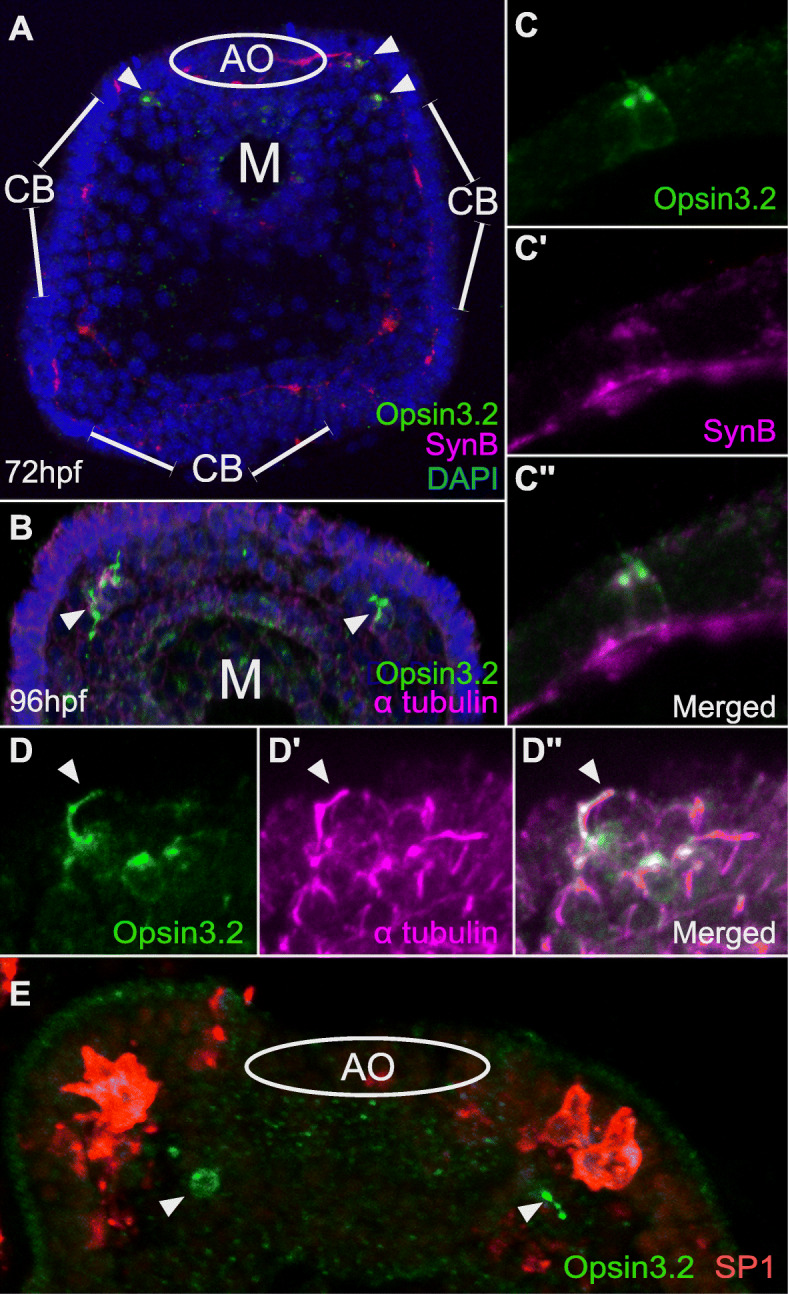
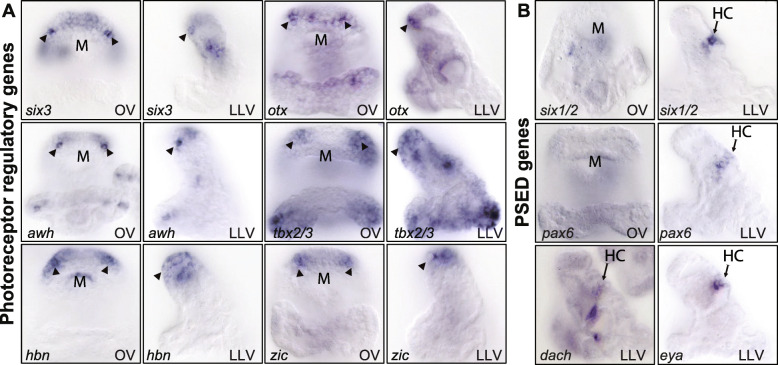
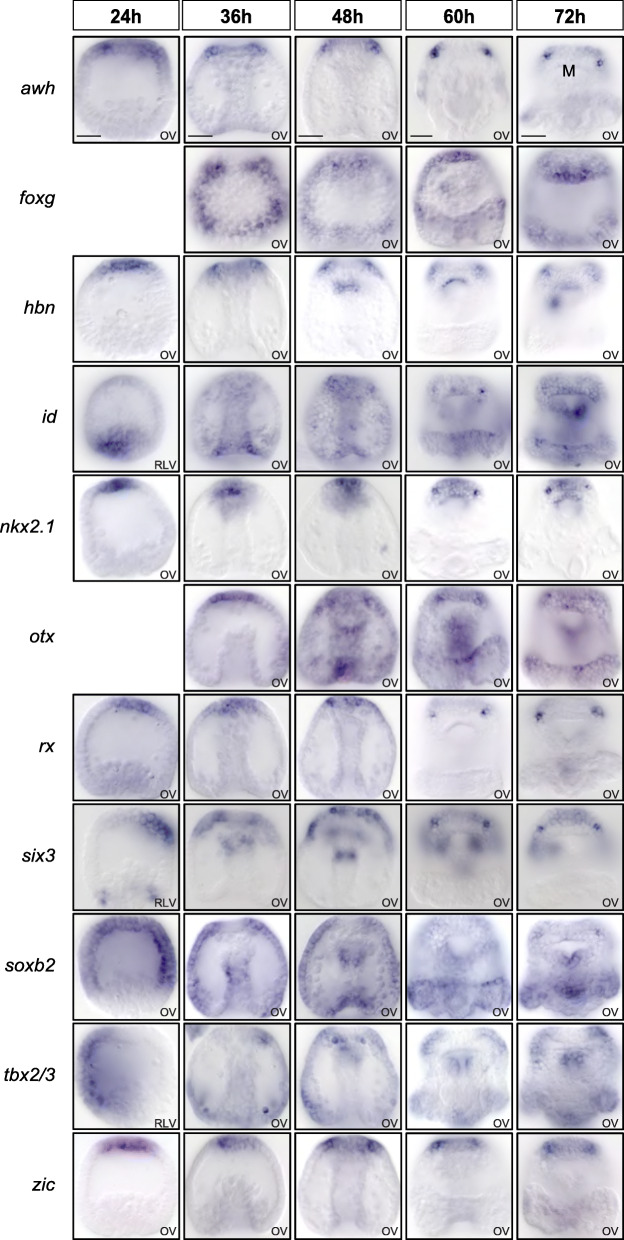
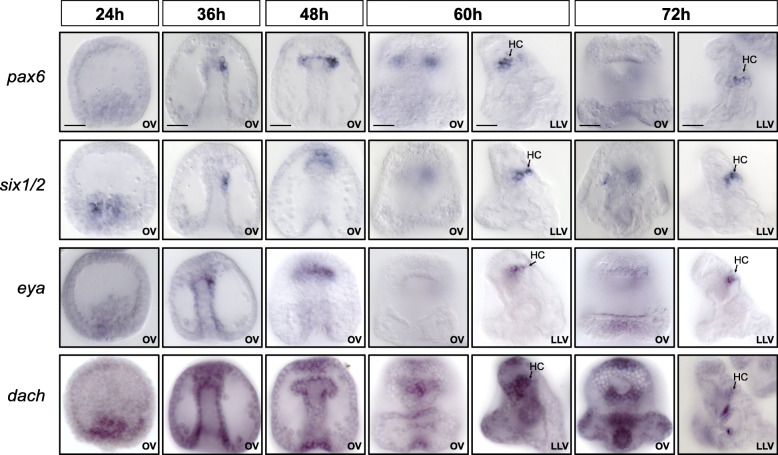
Larvae of the purple sea urchin Strongylocentrotus purpuratus have photoreceptors that are positioned bilaterally in the oral/anterior apical neurogenic ectoderm. Here, we show that these photoreceptors express the transcription factor Rx, which is commonly expressed in ciliary photoreceptors, together with an atypical opsin of the G family, opsin3.2, which localizes in particular to the cilia on the cell surface of photoreceptors. We show that these ciliary photoreceptors express the neuronal marker synaptotagmin and are located in proximity to pigment cells. Furthermore, we systematically identified additional transcription factors expressed in these larval photoreceptors and found that a majority are orthologous to transcription factors expressed in vertebrate ciliary photoreceptors, including Otx, Six3, Tbx2/3, and Rx. Based on the developmental expression of rx, these photoreceptors derive from the anterior apical neurogenic ectoderm. However, genes typically involved in eye development in bilateria, including pax6, six1/2, eya, and dac, are not expressed in sea urchin larval photoreceptors but are instead co-expressed in the hydropore canal.
Based on transcription factor expression, location, and developmental origin, we conclude that the sea urchin larval photoreceptors constitute a cell type that is likely homologous to the ciliary photoreceptors present in chordates.
细胞类型的进化历史为我们提供了线索,使我们了解到动物进化过程中形态和功能的复杂性是如何产生的。感光细胞类型在两侧对称动物中广泛分布;然而,它们的进化关系至今尚未解决。以前的研究表明,纤毛感光器至少在脊索动物中是同源的,在这里,我们提供的证据表明,这种细胞类型的相关形式也存在于棘皮动物幼虫中。
紫色海胆 Strongylocentrotus purpuratus 的幼虫具有位于口腔/前顶神经外胚层双侧的感光器。在这里,我们表明这些感光器表达转录因子 Rx,该因子通常在纤毛感光器中表达,以及一种非典型的 G 家族视蛋白 opsin3.2,它特别定位于感光器细胞表面的纤毛上。我们表明这些纤毛感光器表达神经元标记物突触结合蛋白,并位于色素细胞附近。此外,我们系统地鉴定了这些幼虫感光器中表达的其他转录因子,并发现大多数与脊椎动物纤毛感光器中表达的转录因子具有同源性,包括 Otx、Six3、Tbx2/3 和 Rx。基于 rx 的发育表达,这些感光器源自前顶神经外胚层。然而,在两侧对称动物中通常参与眼睛发育的基因,包括 pax6、six1/2、eya 和 dac,在海胆幼虫感光器中不表达,而是在水孔管中共同表达。
基于转录因子表达、位置和发育起源,我们得出结论,海胆幼虫感光器构成了一种可能与脊索动物中存在的纤毛感光器同源的细胞类型。