Analysis Group Inc., Menlo Park, CA 94025, USA.
Dokuz Eylul University, Izmir, 35220, Turkey.
J Clin Endocrinol Metab. 2021 Jul 13;106(8):e2953-e2967. doi: 10.1210/clinem/dgab216.
Data quantifying the impact of metreleptin therapy on survival in non-human immunodeficiency virus (HIV)-related generalized lipodystrophy (GL) and partial lipodystrophy (PL) are unavailable.
This study aimed to estimate the treatment effect of metreleptin on survival in patients with GL and PL.
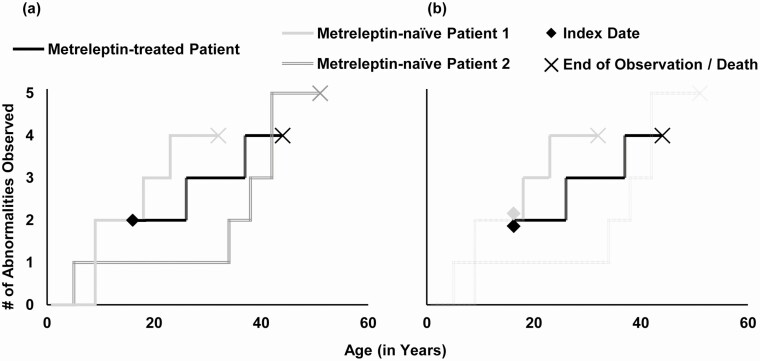
DESIGN/SETTING/PATIENTS: Demographic and clinical characteristics were used to match metreleptin-treated and metreleptin-naïve patients with GL and PL. Differences in mortality risk were estimated between matched cohorts of metreleptin-treated and metreleptin-naïve patient cohorts using Cox proportional hazard models. Sensitivity analyses assessed the impact of study assumptions and the robustness of results.
This study assessed time-to-mortality and risk of mortality.
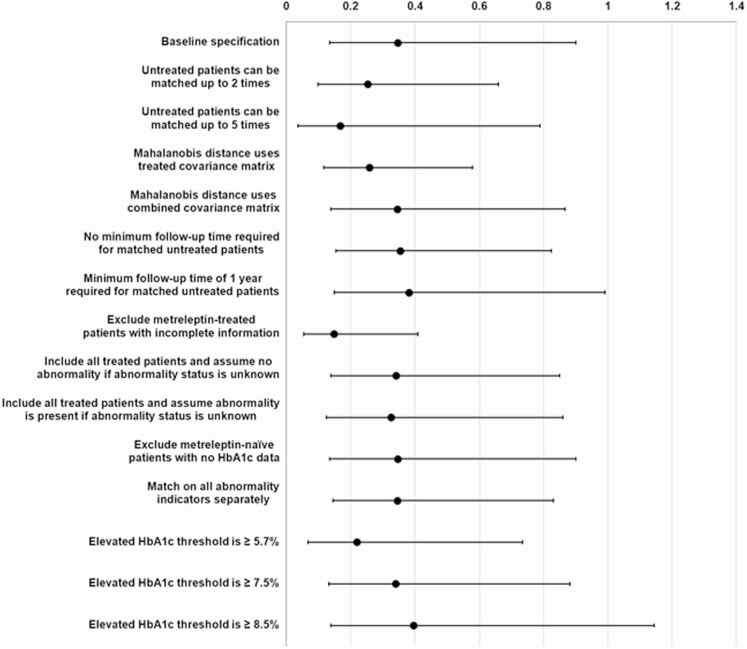
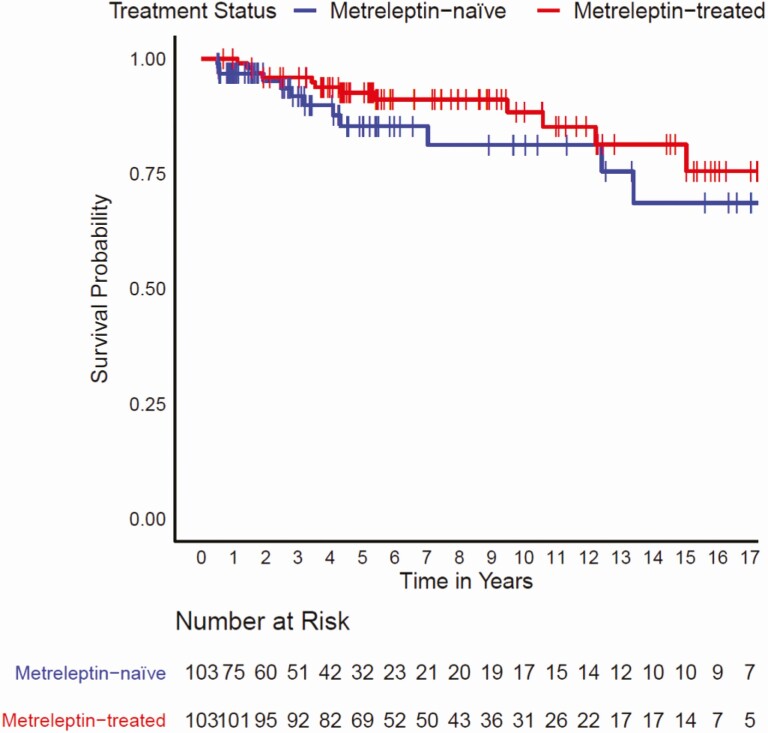
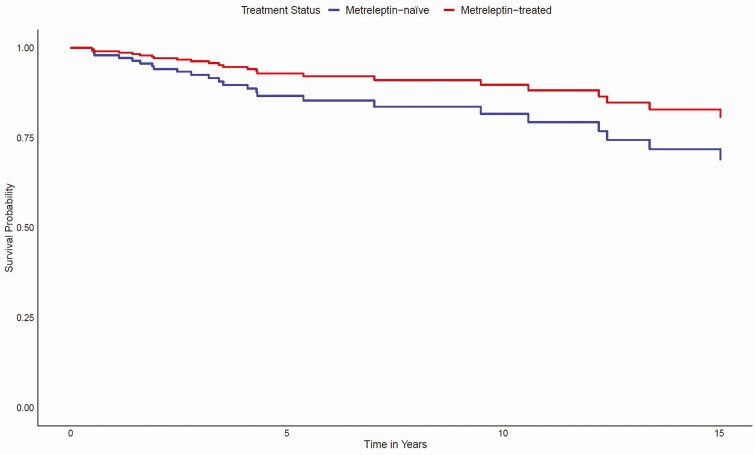
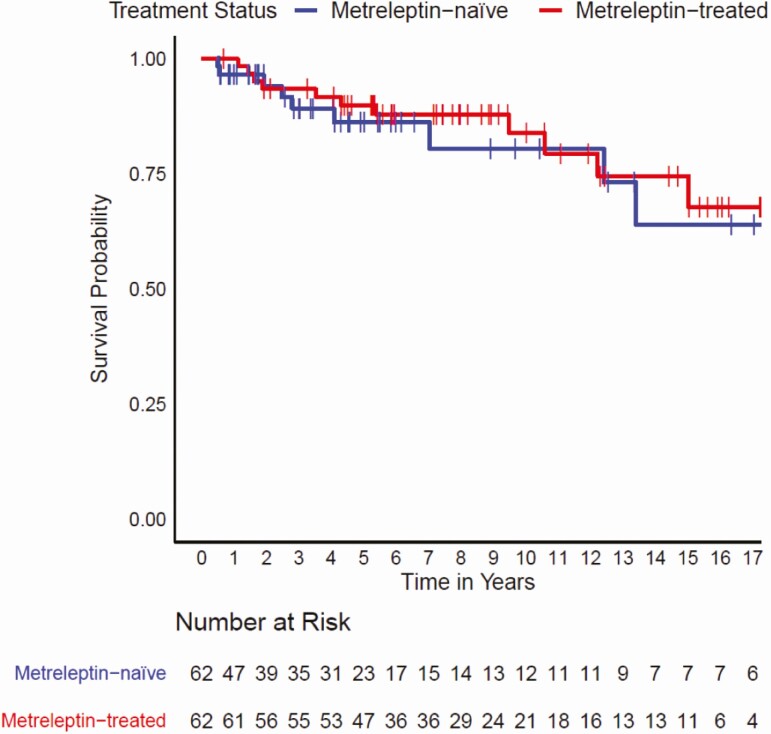
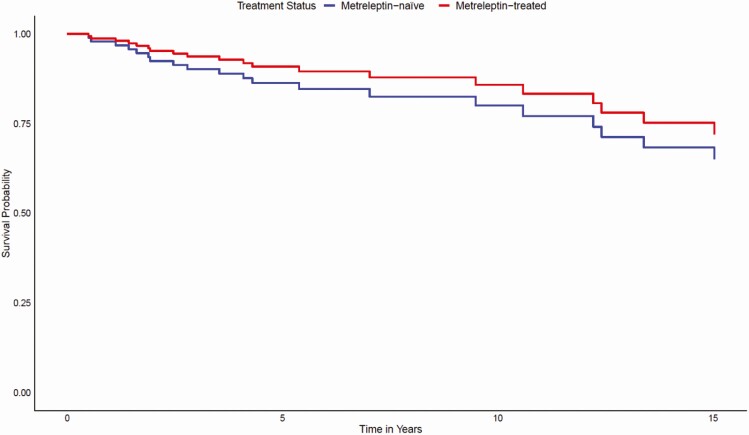
The analysis evaluated 103 metreleptin-naïve patients with characteristics matched to 103 metreleptin-treated patients at treatment initiation. Even after matching, some metabolic and organ abnormalities were more prevalent in the metreleptin-treated cohort due to bias toward treating more severely affected patients. A Cox proportional hazards model associated metreleptin therapy with an estimated 65% decrease in mortality risk (hazard ratio [HR] 0.348, 95% confidence interval (CI): 0.134-0.900; P = 0.029) even though the actual number of events were relatively small. Results were robust across a broad range of alternate methodological assumptions. Kaplan-Meier estimates of time-to-mortality for the metreleptin-treated and the matched metreleptin-naïve cohorts were comparable.
Metreleptin therapy was associated with a reduction in mortality risk in patients with lipodystrophy syndromes despite greater disease severity in treated patients, supporting the view that metreleptin can have a positive disease-modifying impact. Confirmatory studies in additional real-world and clinical datasets are warranted.
目前尚无 metreleptin 治疗对非人类免疫缺陷病毒(HIV)相关广义脂肪营养不良(GL)和部分脂肪营养不良(PL)患者生存影响的数据。
本研究旨在评估 metreleptin 治疗对 GL 和 PL 患者生存的治疗效果。
设计/设置/患者:使用人口统计学和临床特征来匹配 GL 和 PL 的 metreleptin 治疗和 metreleptin 初治患者。使用 Cox 比例风险模型估计匹配的 metreleptin 治疗和 metreleptin 初治患者队列之间的死亡率风险差异。敏感性分析评估了研究假设的影响和结果的稳健性。
本研究评估了死亡率的时间和风险。
分析评估了 103 名 metreleptin 初治患者,他们在治疗开始时的特征与 103 名 metreleptin 治疗患者相匹配。即使在匹配后,由于偏向于治疗更严重的患者,metreleptin 治疗组的一些代谢和器官异常更为普遍。Cox 比例风险模型表明,metreleptin 治疗与死亡率风险降低 65%相关(风险比 [HR] 0.348,95%置信区间 [CI]:0.134-0.900;P = 0.029),尽管实际事件数量相对较少。结果在广泛的替代方法假设下是稳健的。metreleptin 治疗组和匹配的 metreleptin 初治组的 Kaplan-Meier 估计死亡率时间相似。
尽管治疗组患者的疾病严重程度更高,但 metreleptin 治疗与脂肪营养不良综合征患者的死亡率风险降低相关,支持 metreleptin 可能具有积极的疾病改善作用的观点。需要在其他真实世界和临床数据集的验证性研究。