Bolleddula Jayaprakasam, Ke Alice, Yang Hua, Prakash Chandra
Agios Pharmaceuticals, Inc, Cambridge, Massachusetts, USA.
Simcyp Ltd, Sheffield, UK.
CPT Pharmacometrics Syst Pharmacol. 2021 Jun;10(6):577-588. doi: 10.1002/psp4.12619. Epub 2021 May 1.
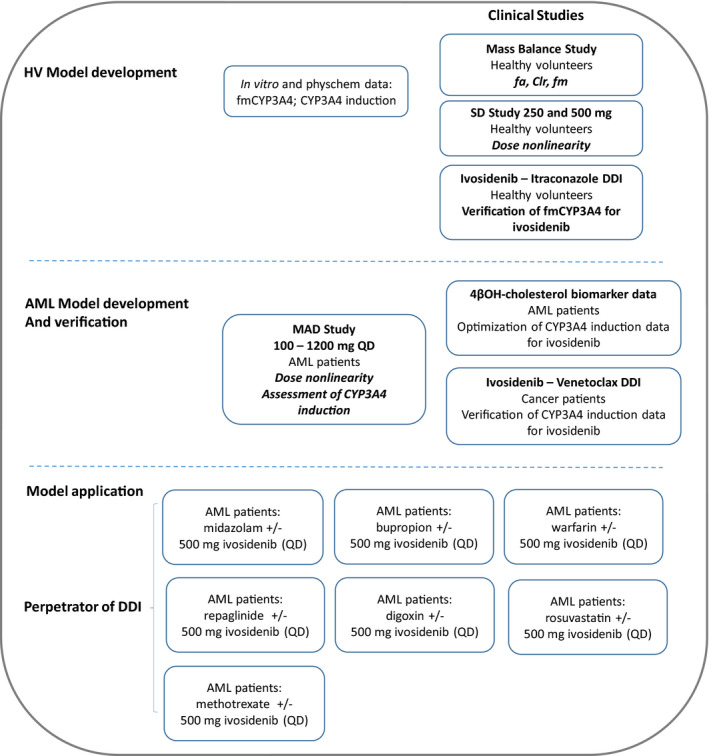
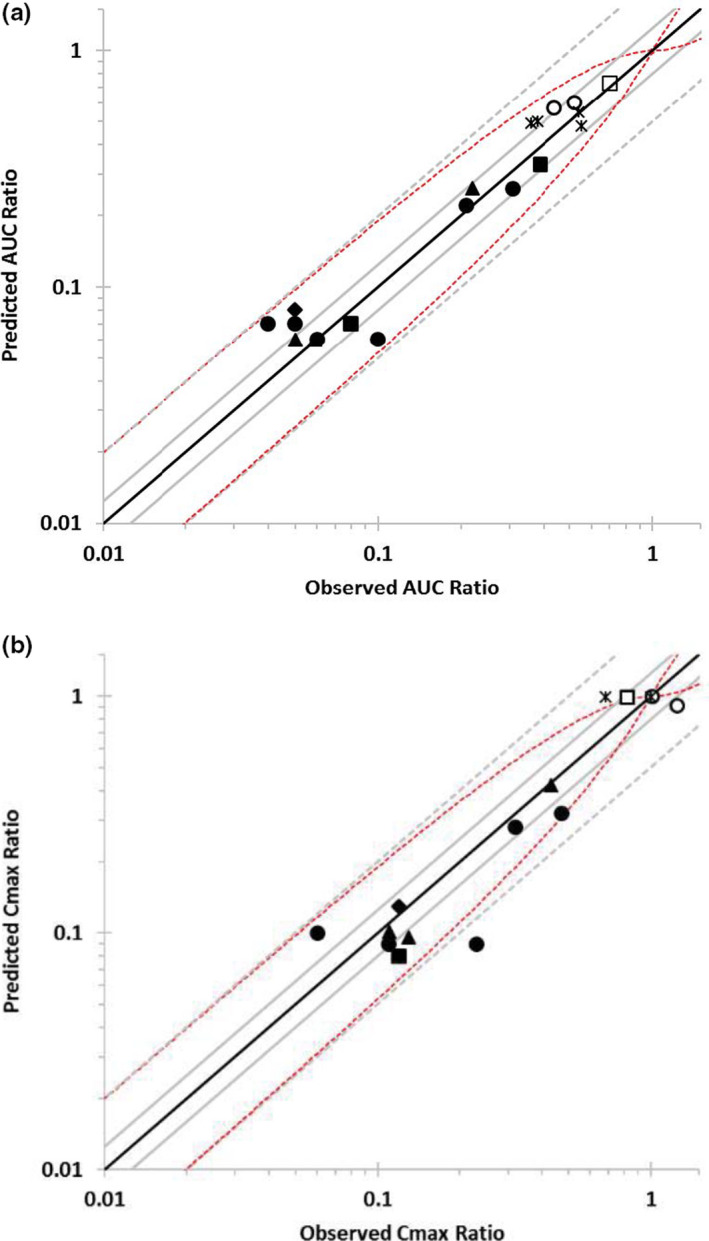
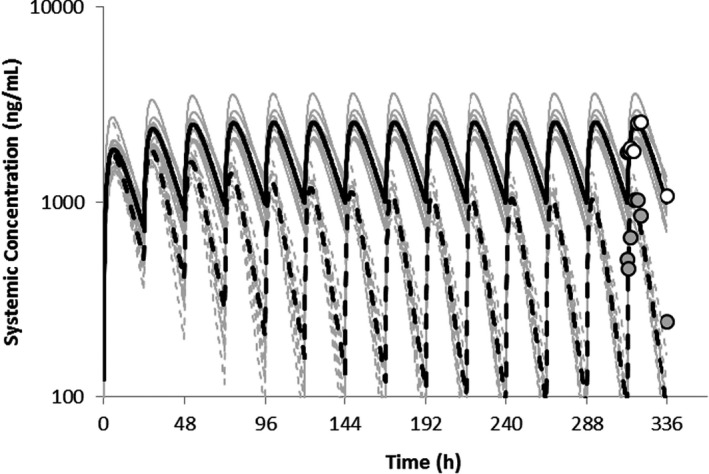
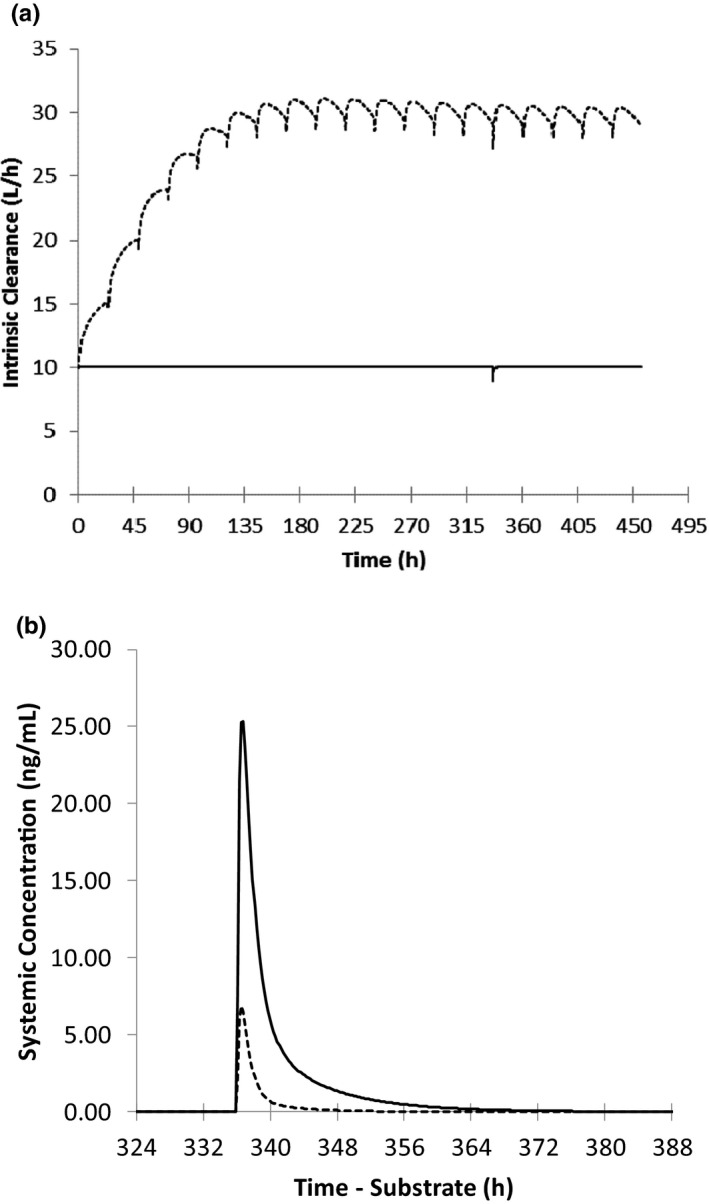
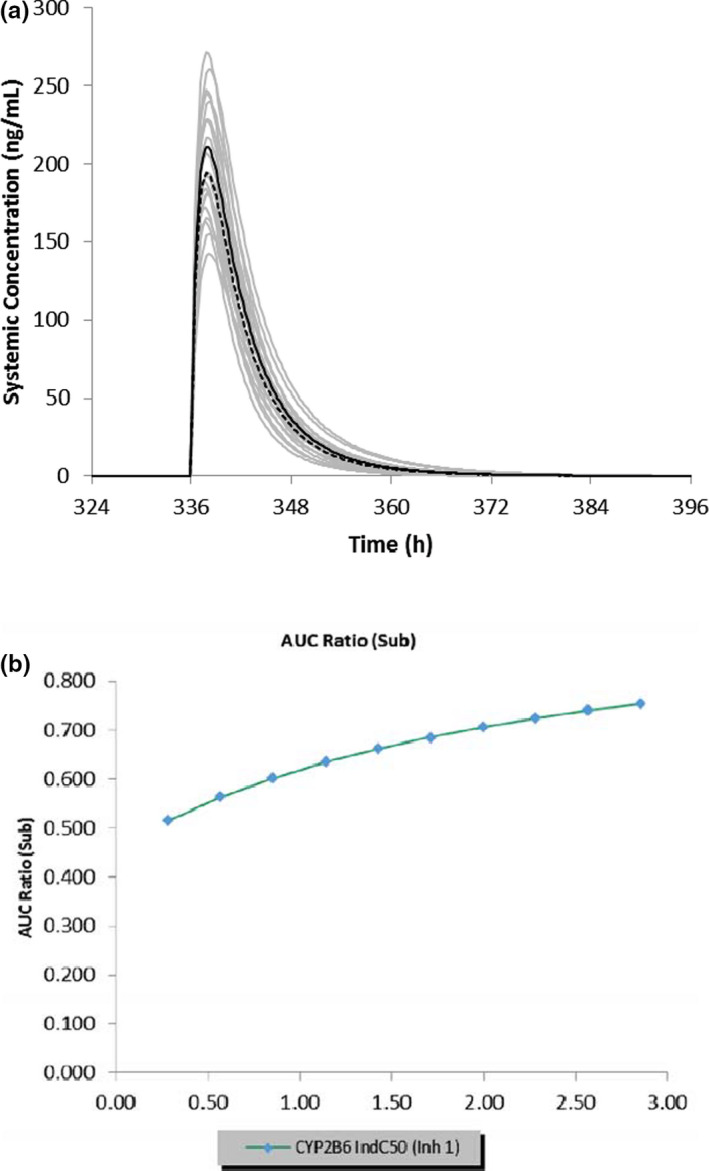
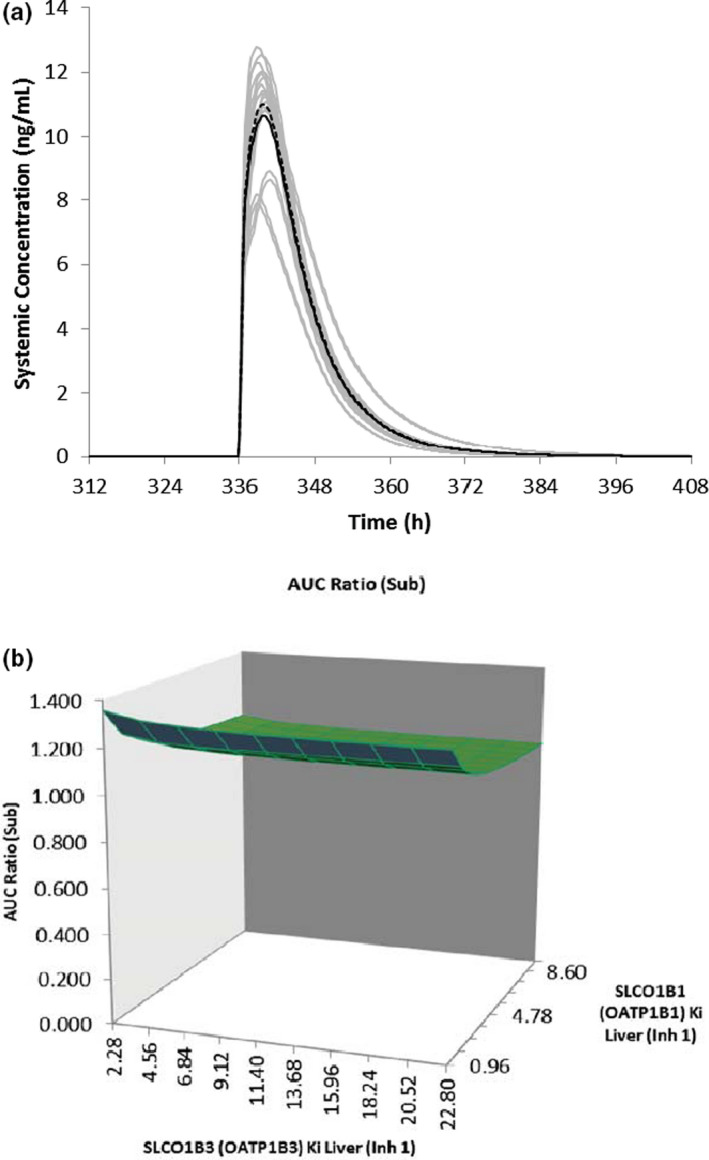
Ivosidenib is a potent, targeted, orally active, small-molecule inhibitor of mutant isocitrate dehydrogenase 1 (IDH1) that has been approved in the United States for the treatment of adults with newly diagnosed acute myeloid leukemia (AML) who are greater than or equal to 75 years of age or ineligible for intensive chemotherapy, and those with relapsed or refractory AML, with a susceptible IDH1 mutation. Ivosidenib is an inducer of the CYP2B6, CYP2C8, CYP2C9, and CYP3A4 and an inhibitor of P-glycoprotein (P-gp), organic anion transporting polypeptide-1B1/1B3 (OATP1B1/1B3), and organic anion transporter-3 (OAT3) in vitro. A physiologically-based pharmacokinetic (PK) model was developed to predict drug-drug interactions (DDIs) of ivosidenib in patients with AML. The in vivo CYP3A4 induction effect of ivosidenib was quantified using 4β-hydroxycholesterol and was subsequently verified with the PK data from an ivosidenib and venetoclax combination study. The verified model was prospectively applied to assess the effect of multiple doses of ivosidenib on a sensitive CYP3A4 substrate, midazolam. The simulated midazolam geometric mean area under the curve (AUC) and maximum plasma concentration (C ) ratios were 0.18 and 0.27, respectively, suggesting ivosidenib is a strong inducer. The model was also used to predict the DDIs of ivosidenib with CYP2B6, CYP2C8, CYP2C9, P-gp, OATP1B1/1B3, and OAT3 substrates. The AUC ratios following multiple doses of ivosidenib and a single dose of CYP2B6 (bupropion), CYP2C8 (repaglinide), CYP2C9 (warfarin), P-gp (digoxin), OATP1B1/1B3 (rosuvastatin), and OAT3 (methotrexate) substrates were 0.90, 0.52, 0.84, 1.01, 1.02, and 1.27, respectively. Finally, in accordance with regulatory guidelines, the Simcyp modeling platform was qualified to predict CYP3A4 induction using known inducers and sensitive substrates.
艾伏尼布是一种强效、靶向、口服活性的小分子突变异柠檬酸脱氢酶1(IDH1)抑制剂,已在美国获批用于治疗年龄大于或等于75岁、不适合接受强化化疗的新诊断急性髓系白血病(AML)成人患者,以及具有敏感IDH1突变的复发或难治性AML患者。艾伏尼布在体外是CYP2B6、CYP2C8、CYP2C9和CYP3A4的诱导剂,也是P-糖蛋白(P-gp)、有机阴离子转运多肽-1B1/1B3(OATP1B1/1B3)和有机阴离子转运体-3(OAT3)的抑制剂。开发了一种基于生理学的药代动力学(PK)模型,以预测艾伏尼布在AML患者中的药物相互作用(DDIs)。使用4β-羟基胆固醇对艾伏尼布的体内CYP3A4诱导作用进行了量化,并随后通过艾伏尼布与维奈克拉联合研究的PK数据进行了验证。将经过验证的模型前瞻性地应用于评估多次服用艾伏尼布对敏感CYP3A4底物咪达唑仑的影响。模拟的咪达唑仑曲线下几何平均面积(AUC)和最大血浆浓度(C)比值分别为0.18和0.27,表明艾伏尼布是一种强效诱导剂。该模型还用于预测艾伏尼布与CYP2B6、CYP2C8、CYP2C9、P-gp、OATP1B1/1B3和OAT3底物的DDIs。多次服用艾伏尼布后与单剂量CYP2B6(安非他酮)、CYP2C8(瑞格列奈)、CYP2C9(华法林)、P-gp(地高辛)、OATP1B1/1B3(瑞舒伐他汀)和OAT3(甲氨蝶呤)底物的AUC比值分别为0.90、0.52、0.84、1.01、1.02和1.27。最后,根据监管指南,Simcyp建模平台有资格使用已知诱导剂和敏感底物预测CYP3A4诱导作用。