Arizona Cancer Center, University of Arizona, Tucson, AZ, USA.
Division of Cardiothoracic Surgery, Department of Surgery, College of Medicine-Tucson, University of Arizona, Tucson, AZ, USA.
BMC Cancer. 2021 Apr 6;21(1):356. doi: 10.1186/s12885-021-07963-w.
Evidence bearing on the role of statins in the prevention and treatment of cancer is confounded by the diversity of statins, chemotherapeutic agents and cancer types included in the numerous published studies; consequently, the adjunctive value of statins with chemotherapy remains uncertain.
We assayed lovastatin in combination with each of ten commonly prescribed chemotherapy drugs in highly reproducible in vitro assays, using a neutral cellular substrate, Saccharomyces cerevisiae. Cell density (OD) data were analyzed for synergism and antagonism using the Loewe additivity model implemented with the Combenefit software.
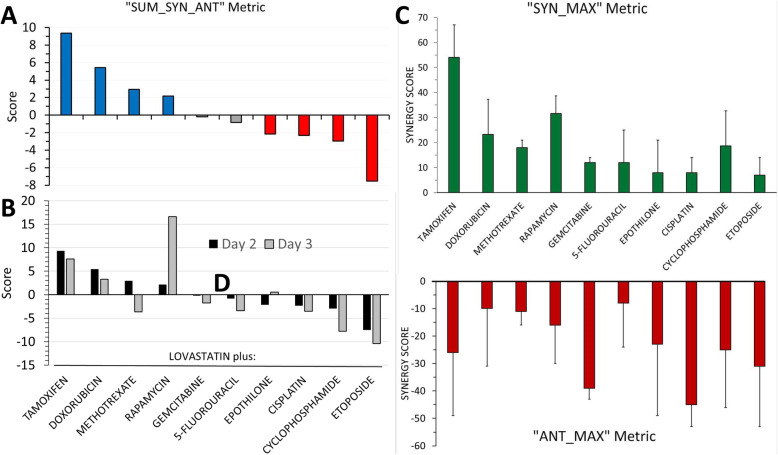
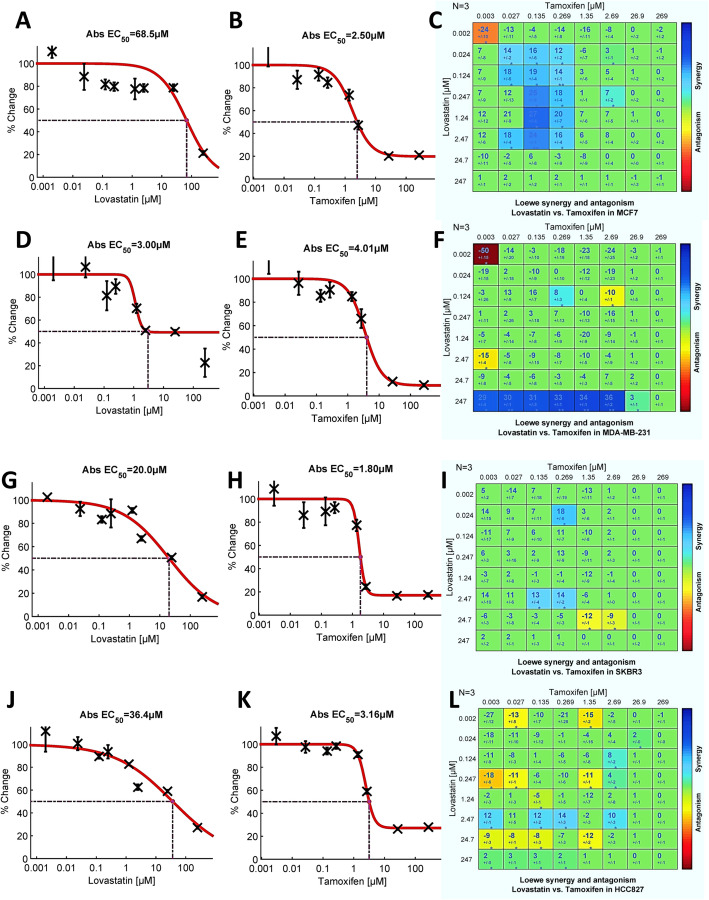
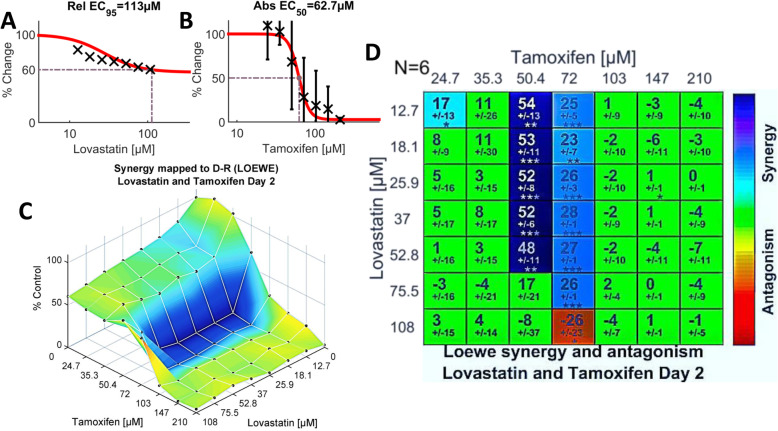
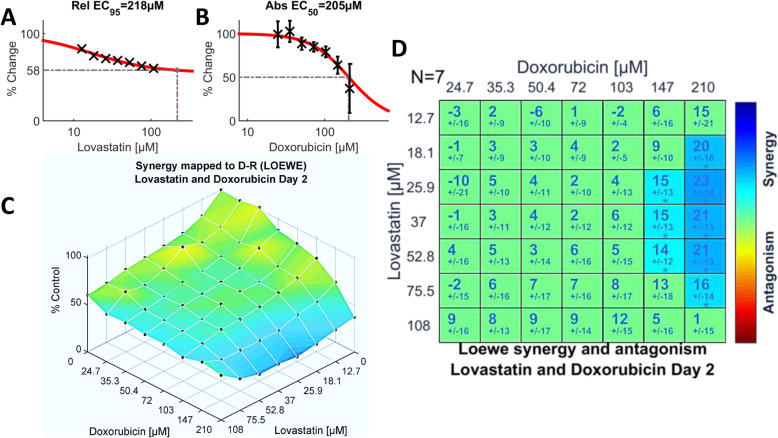
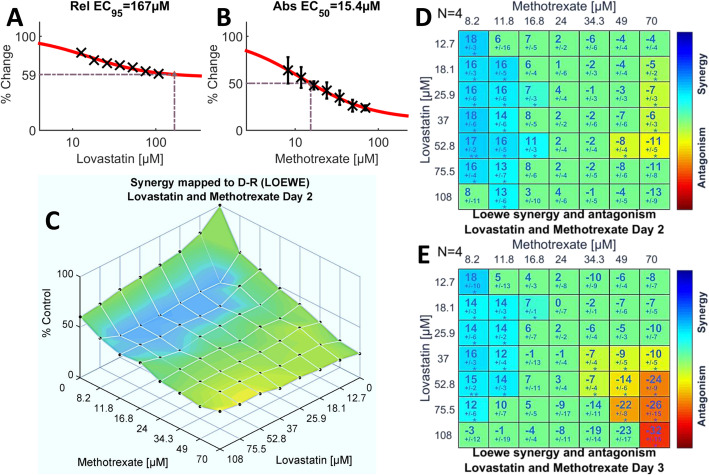
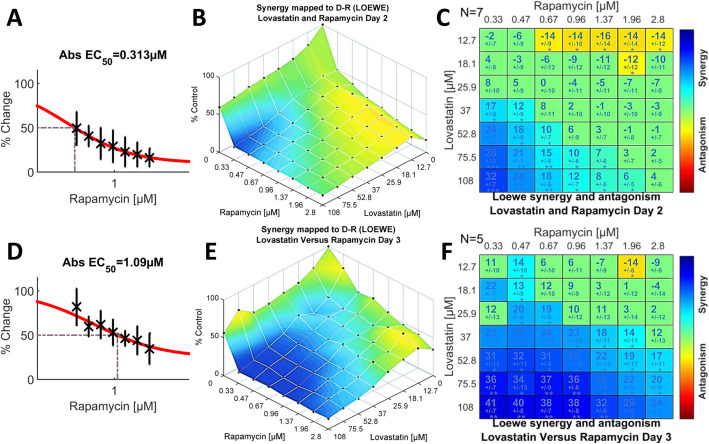
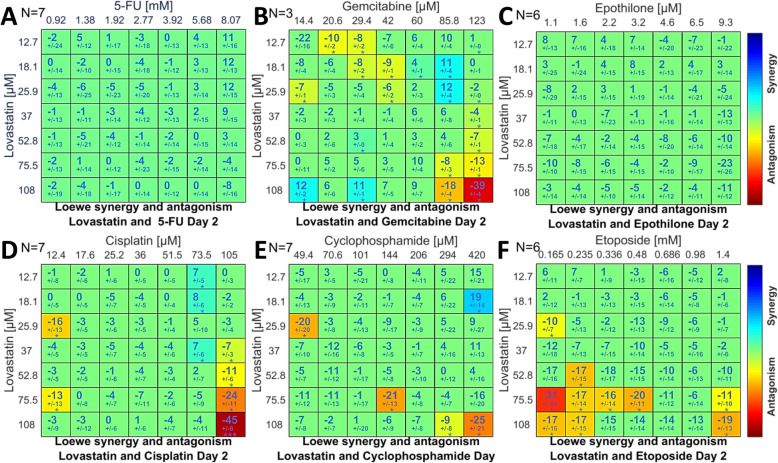
Four of the ten chemotherapy drugs - tamoxifen, doxorubicin, methotrexate and rapamycin - exhibited net synergism with lovastatin. The remaining six agents (5-fluorouracil, gemcitabine, epothilone, cisplatin, cyclophosphamide and etoposide) compiled neutral or antagonistic scores. Distinctive patterns of synergism and antagonism, often coexisting within the same concentration space, were documented with the various combinations, including those with net synergism scores. Two drug pairs, lovastatin combined with tamoxifen or cisplatin, were also assayed in human cell lines as proof of principle.
The synergistic interactions of tamoxifen, doxorubicin, methotrexate and rapamycin with lovastatin - because they suggest the possibility of clinical utility - merit further exploration and validation in cell lines and animal models. No less importantly, strong antagonistic interactions between certain agents and lovastatin argue for a cautious, data-driven approach before adding a statin to any chemotherapeutic regimen. We also urge awareness of adventitious statin usage by patients entering cancer treatment protocols.
众多已发表的研究中包含了各种他汀类药物、化疗药物和癌症类型,这使得他汀类药物在癌症预防和治疗中的作用的证据变得复杂,因此,他汀类药物与化疗联合应用的附加价值仍不确定。
我们使用中性细胞基质酿酒酵母(Saccharomyces cerevisiae),在高度可重复的体外检测中,检测了洛伐他汀与十种常用化疗药物中的每一种的联合作用。使用 Combenefit 软件中的 Loewe 加性模型,对细胞密度(OD)数据进行协同作用和拮抗作用分析。
十种化疗药物中的四种 - 他莫昔芬、多柔比星、甲氨蝶呤和雷帕霉素 - 与洛伐他汀表现出净协同作用。其余六种药物(5-氟尿嘧啶、吉西他滨、埃博霉素、顺铂、环磷酰胺和依托泊苷)的协同作用或拮抗作用评分中性。在各种组合中都记录了独特的协同作用和拮抗作用模式,通常在同一浓度空间内共存,包括具有净协同作用评分的组合。两种药物组合,洛伐他汀与他莫昔芬或顺铂的组合,也在人细胞系中进行了检测,作为原理验证。
他莫昔芬、多柔比星、甲氨蝶呤和雷帕霉素与洛伐他汀的协同相互作用 - 因为它们暗示了临床应用的可能性 - 需要在细胞系和动物模型中进一步探索和验证。同样重要的是,某些药物与洛伐他汀之间的强烈拮抗相互作用表明,在将他汀类药物添加到任何化疗方案之前,需要谨慎、数据驱动的方法。我们还敦促注意进入癌症治疗方案的患者偶然使用他汀类药物的情况。