Department of Pharmacology and Chemical Biology, Baylor College of Medicine, 1 Baylor Plaza, Houston, TX, 77030, USA.
Dan L. Duncan Comprehensive Cancer Center, Baylor College of Medicine, 1 Baylor Plaza, Houston, TX, 77030, USA.
J Hematol Oncol. 2021 Apr 6;14(1):56. doi: 10.1186/s13045-021-01057-7.
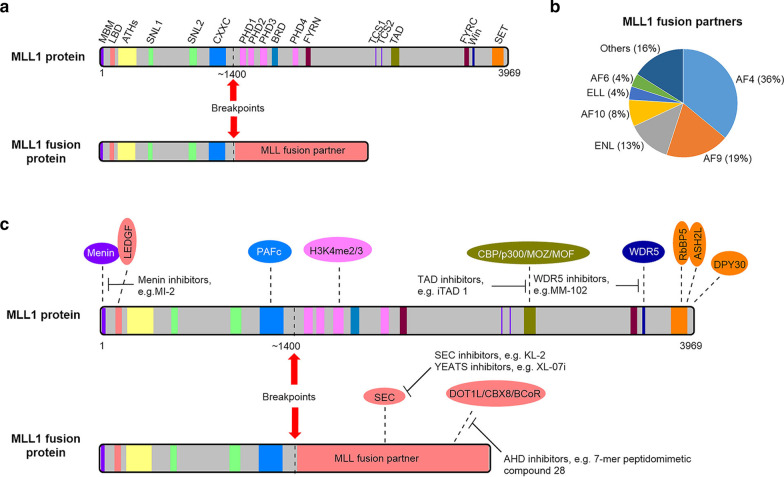
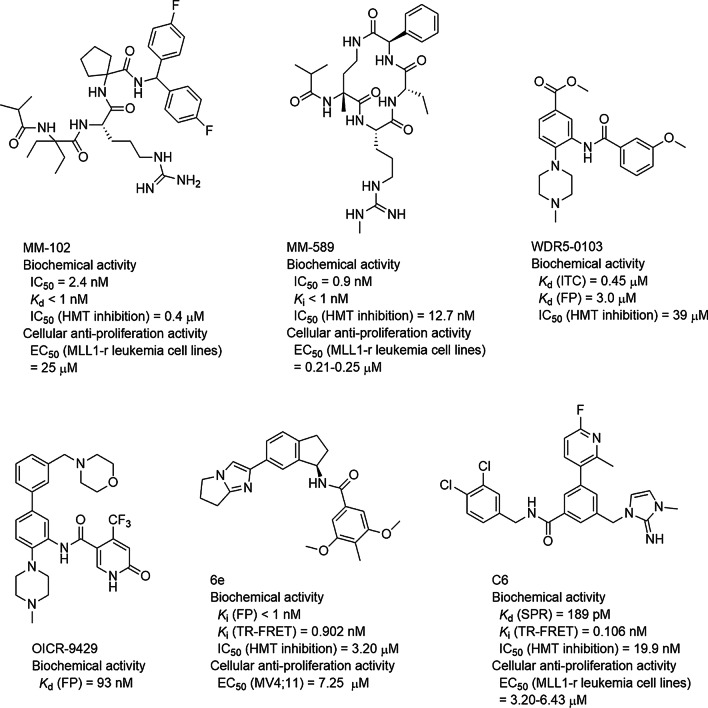
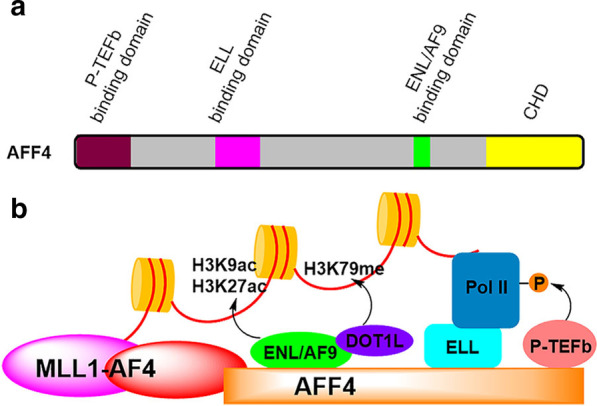
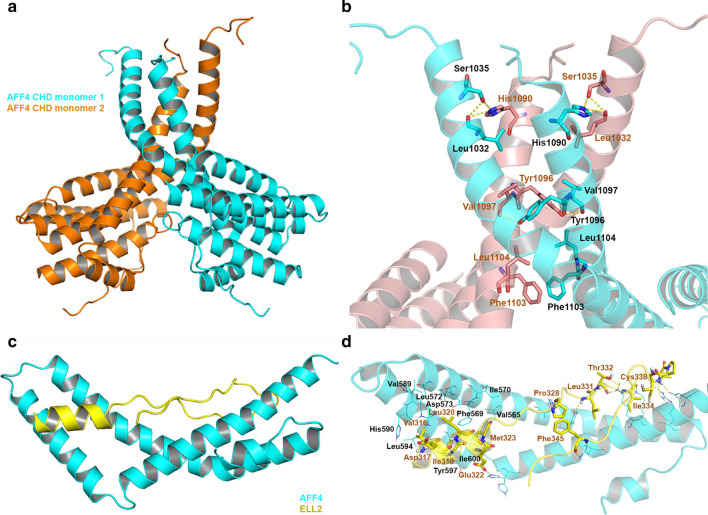
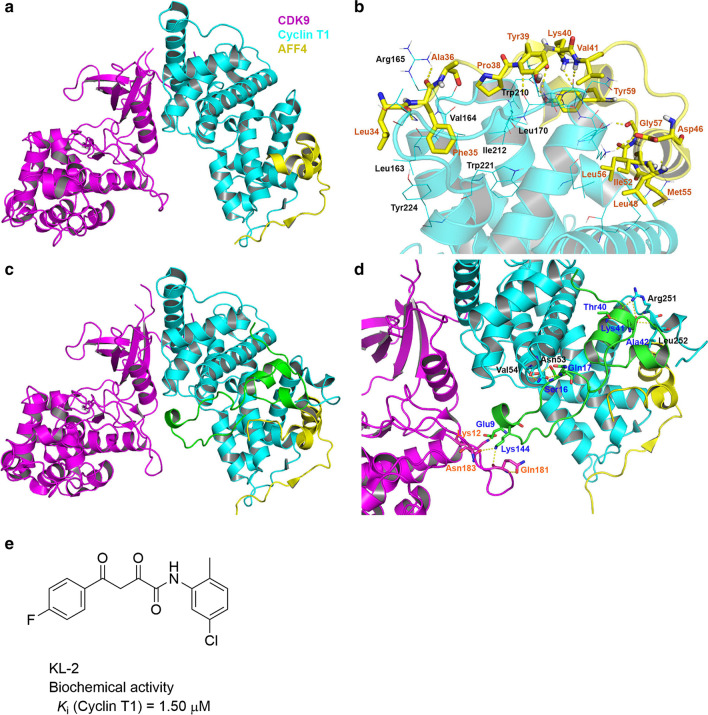
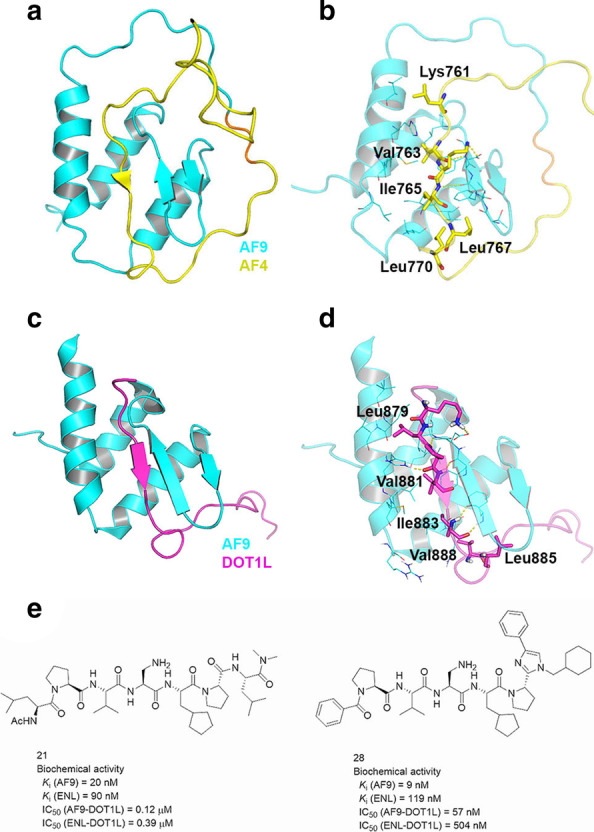
Mixed lineage leukemia 1 (MLL1, also known as MLL or KMT2A) is an important transcription factor and histone-H3 lysine-4 (H3K4) methyltransferase. It is a master regulator for transcription of important genes (e.g., Hox genes) for embryonic development and hematopoiesis. However, it is largely dispensable in matured cells. Dysregulation of MLL1 leads to overexpression of certain Hox genes and eventually leukemia initiation. Chromosome translocations involving MLL1 cause ~ 75% of acute leukemia in infants and 5-10% in children and adults with a poor prognosis. Targeted therapeutics against oncogenic fusion MLL1 (onco-MLL1) are therefore needed. Onco-MLL1 consists of the N-terminal DNA-interacting domains of MLL1 fused with one of > 70 fusion partners, among which transcription cofactors AF4, AF9 and its paralog ENL, and ELL are the most frequent. Wild-type (WT)- and onco-MLL1 involve numerous protein-protein interactions (PPI), which play critical roles in regulating gene expression in normal physiology and leukemia. Moreover, WT-MLL1 has been found to be essential for MLL1-rearranged (MLL1-r) leukemia. Rigorous studies of such PPIs have been performed and much progress has been achieved in understanding their structures, structure-function relationships and the mechanisms for activating gene transcription as well as leukemic transformation. Inhibition of several critical PPIs by peptides, peptidomimetic or small-molecule compounds has been explored as a therapeutic approach for MLL1-r leukemia. This review summarizes the biological functions, biochemistry, structure and inhibition of the critical PPIs involving MLL1 and its fusion partner proteins. In addition, challenges and perspectives of drug discovery targeting these PPIs for the treatment of MLL1-r leukemia are discussed.
混合谱系白血病 1(Mixed Lineage Leukemia 1,MLL1,也称为 MLL 或 KMT2A)是一种重要的转录因子和组蛋白 H3 赖氨酸 4(Histone-H3 Lysine-4,H3K4)甲基转移酶。它是胚胎发育和造血过程中重要基因(如 Hox 基因)转录的主要调节因子。然而,在成熟细胞中它在很大程度上是可有可无的。MLL1 的失调导致某些 Hox 基因的过度表达,最终导致白血病的发生。涉及 MLL1 的染色体易位导致约 75%的婴儿急性白血病和 5-10%的儿童和成人急性白血病,预后不良。因此,需要针对致癌融合 MLL1(oncogenic MLL1,onco-MLL1)的靶向治疗。Onco-MLL1 由 MLL1 的 N 端 DNA 相互作用结构域与超过 70 个融合伴侣之一融合而成,其中转录共因子 AF4、AF9 及其同源物 ENL 和 ELL 最为常见。野生型(Wild-Type,WT)-MLL1 和 onco-MLL1 涉及许多蛋白质-蛋白质相互作用(Protein-Protein Interactions,PPIs),这些相互作用在正常生理和白血病中调节基因表达中起着关键作用。此外,已经发现 WT-MLL1 对于 MLL1 重排(MLL1-r)白血病是必需的。对这些 PPIs 的严格研究已经进行,并在理解它们的结构、结构-功能关系以及激活基因转录和白血病转化的机制方面取得了很大进展。通过肽、肽模拟物或小分子化合物抑制几个关键的 PPIs 已被探索作为治疗 MLL1-r 白血病的一种方法。本综述总结了涉及 MLL1 及其融合伴侣蛋白的关键 PPIs 的生物学功能、生物化学、结构和抑制。此外,还讨论了针对这些 PPIs 进行药物发现以治疗 MLL1-r 白血病的挑战和前景。