College of Medical Laboratory Science and Technology, Harbin Medical University (Daqing), 163319, Daqing, P. R. China.
Central Laboratory of Harbin Medical University (Daqing), 163319, Daqing, P. R. China.
Cell Death Dis. 2021 Apr 6;12(4):356. doi: 10.1038/s41419-021-03626-7.
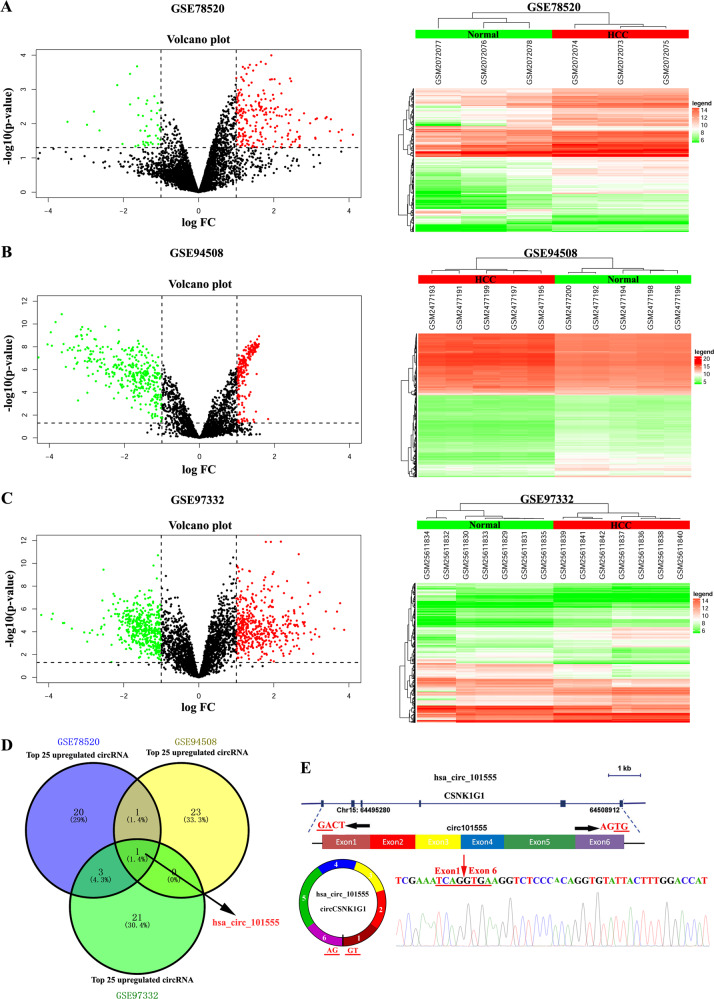
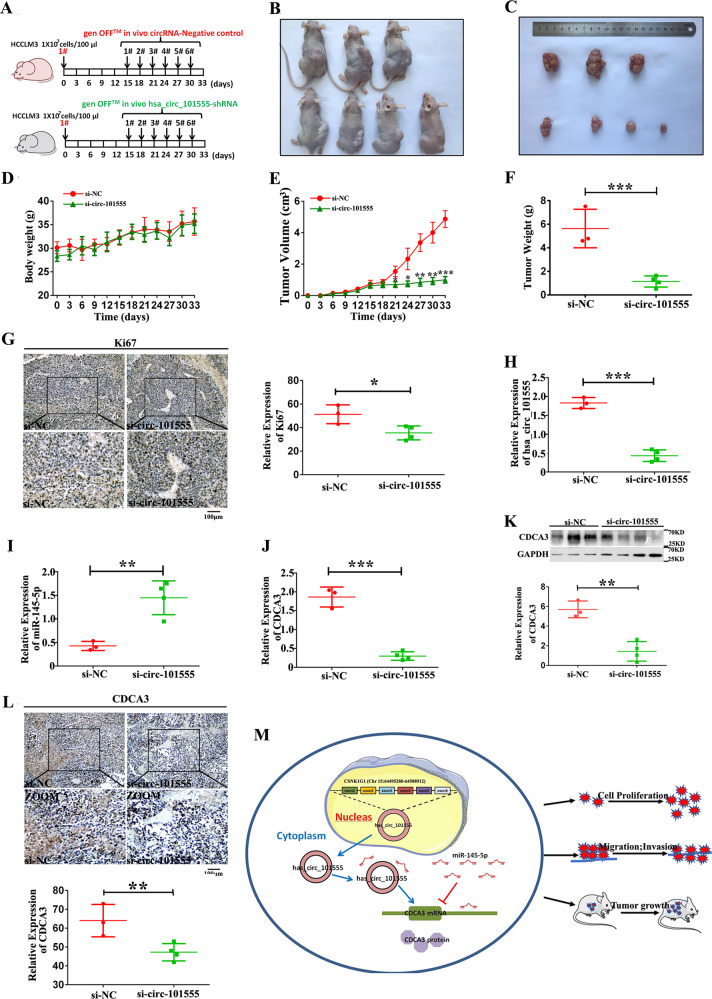
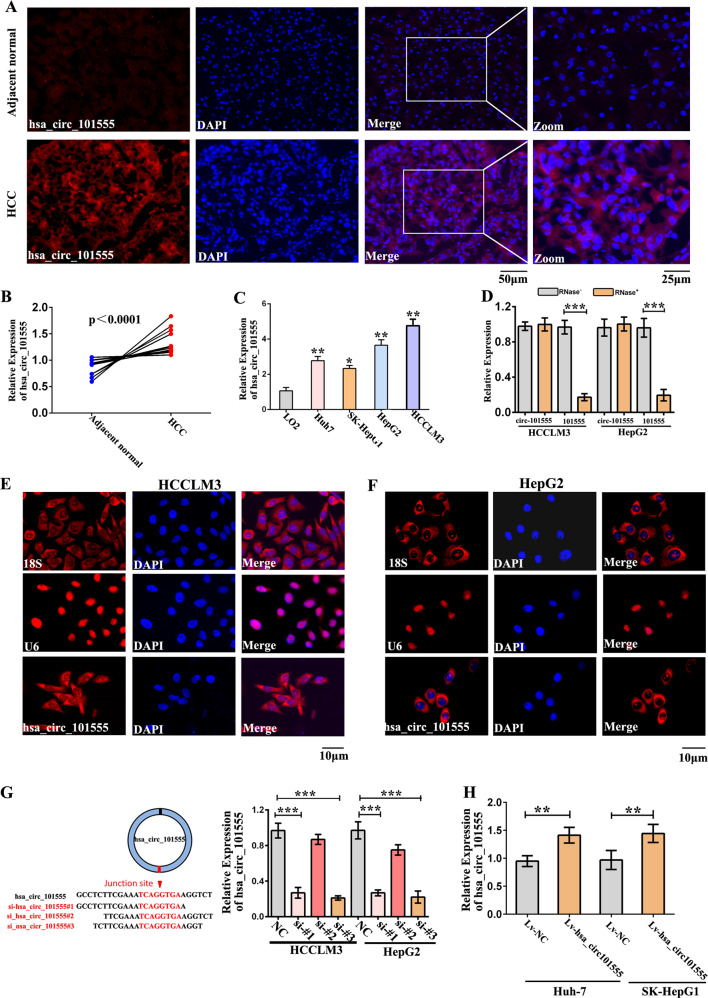
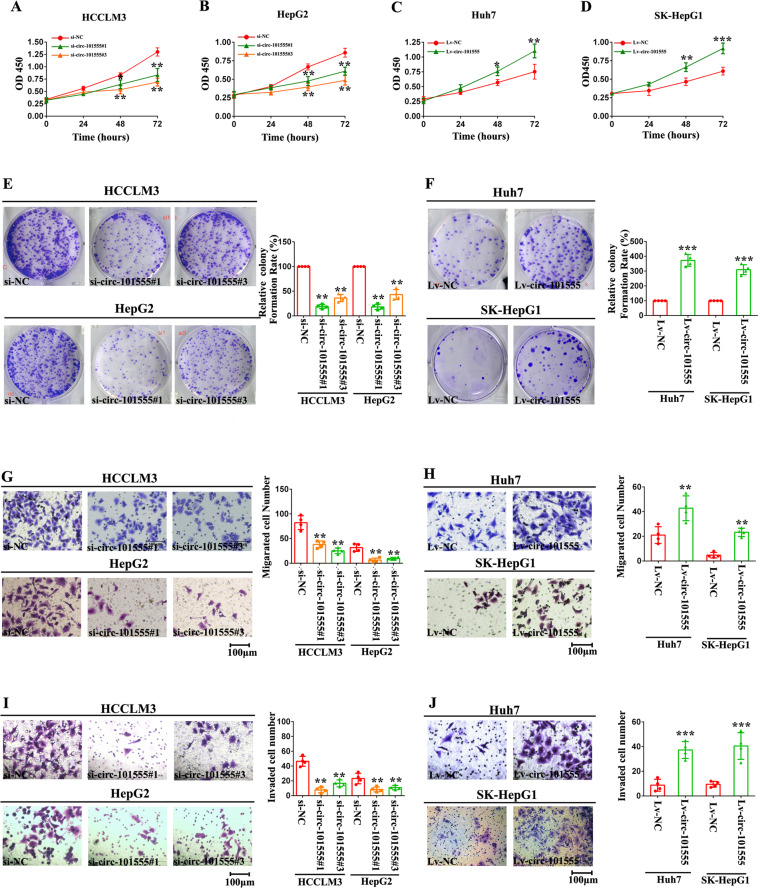
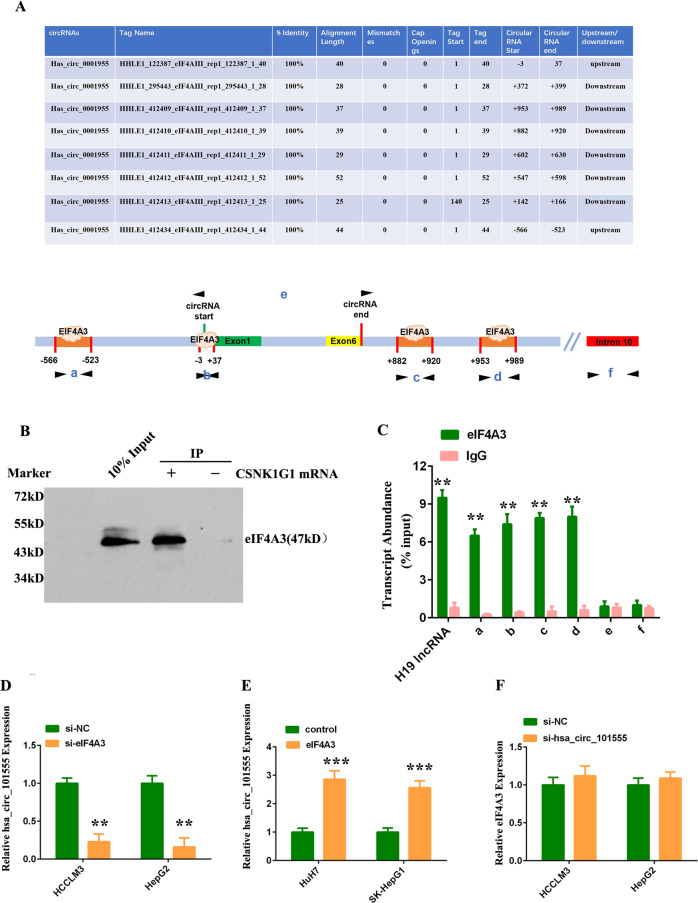
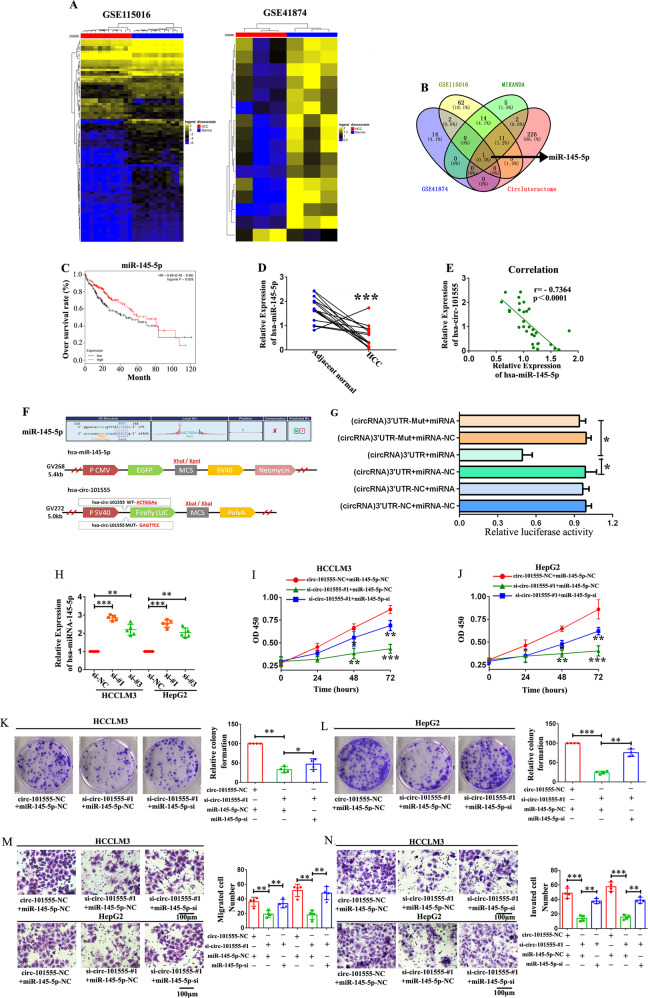
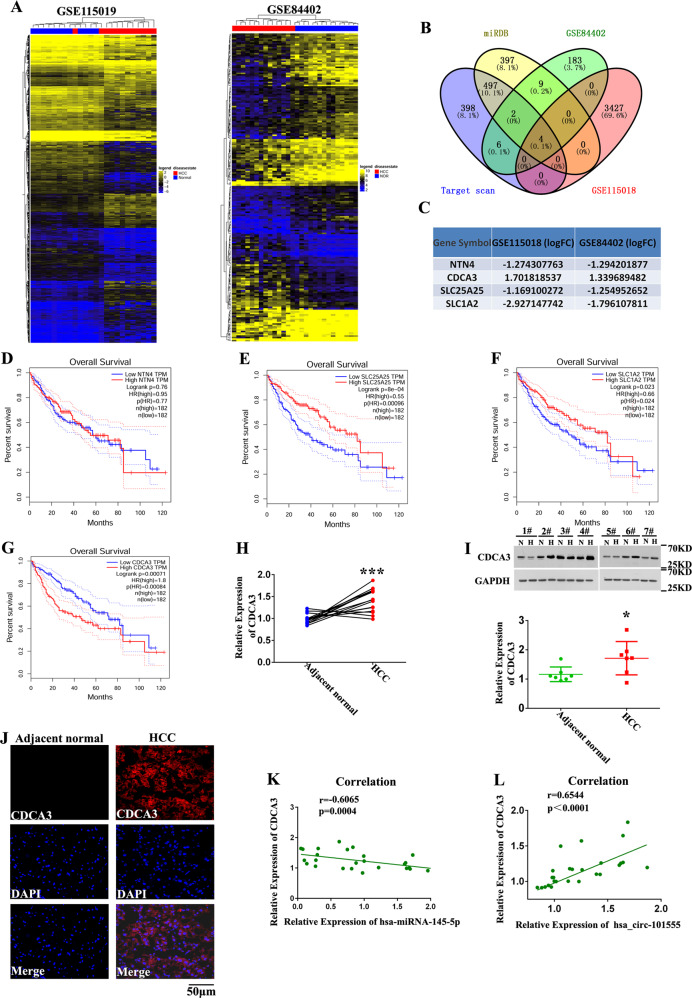
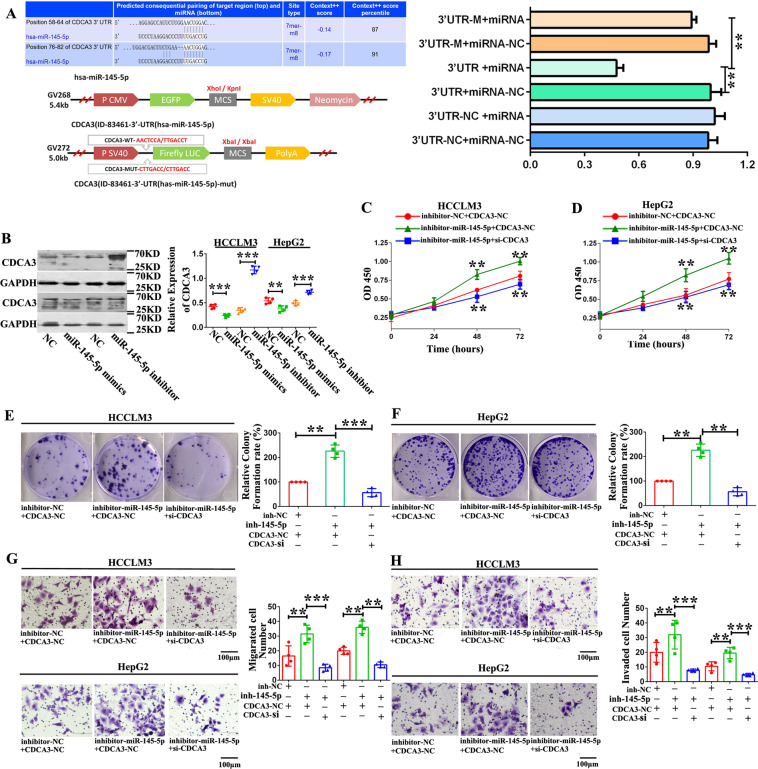
Circular RNAs have been reported to play significant roles in regulating pathophysiological processes while also guiding clinical diagnosis and treatment of hepatocellular carcinoma (HCC). However, only a few circRNAs have been identified thus far. Herein, we investigated the role of a specific closed-loop structure of hsa_circ_101555 that was generated by back-splicing of the host gene casein kinase 1 gamma 1 (CSNK1G1) in the development and proliferation of HCC. We investigated the expression of Hsa_circ_101555 in HCC and normal tissues using bioinformatics. The expression level of hsa_circ_101555 was further detected by fluorescence in situ hybridization and qRT-PCR in ten HCC patients. Transwell, migration, WST-1 assays, and colony formation assays were used to evaluate the role of hsa_circ_101555 in HCC development and proliferation. The regulatory mechanisms of hsa_circ_101555 in miR-145-5p and CDCA3 were determined by dual luciferase reporter assay. A mouse xenograft model was also used to determine the effect of hsa_circ_101555 on HCC growth in vivo. hsa_circ_101555 showed greater stability than the linear RNA; while in vitro and in vivo results demonstrated that hsa_circ_101555 silencing significantly suppressed cell proliferation, migration, and invasion of HCC cells. Rescue experiments further demonstrated that suppression of miR-145-5p significantly attenuated the biological effects of hsa_circ_101555 knockdown in HCC cells. We also identified a putative oncogene CDCA3 as a potential miR-145-5p target. Thus, our results demonstrated that hsa_circ_101555 might function as a competing endogenous RNA of miR-145-5p to upregulate CDCA3 expression in HCC. These findings suggest that hsa_circ_101555 may be a potential therapeutic target for patients with HCC.
环状 RNA 已被报道在调节生理病理过程中发挥重要作用,同时指导肝细胞癌(HCC)的临床诊断和治疗。然而,迄今为止,只有少数 circRNA 被鉴定出来。在这里,我们研究了由宿主基因酪蛋白激酶 1γ 1(CSNK1G1)反式剪接产生的特定封闭环结构 hsa_circ_101555 在 HCC 发展和增殖中的作用。我们使用生物信息学方法研究了 HCC 和正常组织中 Hsa_circ_101555 的表达。我们进一步通过荧光原位杂交和 qRT-PCR 在 10 名 HCC 患者中检测了 hsa_circ_101555 的表达水平。使用 Transwell、迁移、WST-1 测定和集落形成测定来评估 hsa_circ_101555 在 HCC 发展和增殖中的作用。通过双荧光素酶报告基因测定确定了 hsa_circ_101555 在 miR-145-5p 和 CDCA3 中的调节机制。还使用小鼠异种移植模型来确定 hsa_circ_101555 在体内对 HCC 生长的影响。hsa_circ_101555 比线性 RNA 更稳定;而体外和体内结果表明,hsa_circ_101555 沉默显著抑制 HCC 细胞的增殖、迁移和侵袭。挽救实验进一步表明,抑制 miR-145-5p 可显著减弱 hsa_circ_101555 敲低对 HCC 细胞生物学效应的抑制作用。我们还鉴定了一个假定的癌基因 CDCA3 作为潜在的 miR-145-5p 靶标。因此,我们的结果表明,hsa_circ_101555 可能作为 miR-145-5p 的竞争性内源性 RNA 发挥作用,上调 HCC 中 CDCA3 的表达。这些发现表明,hsa_circ_101555 可能是 HCC 患者的潜在治疗靶点。