Papé Family Pediatric Research Institute, Oregon Health & Science University, Portland, OR, USA.
Medical Scientist Training Program, Oregon Health & Science University, Portland, OR, USA.
Nat Commun. 2021 Apr 6;12(1):2057. doi: 10.1038/s41467-021-22361-3.
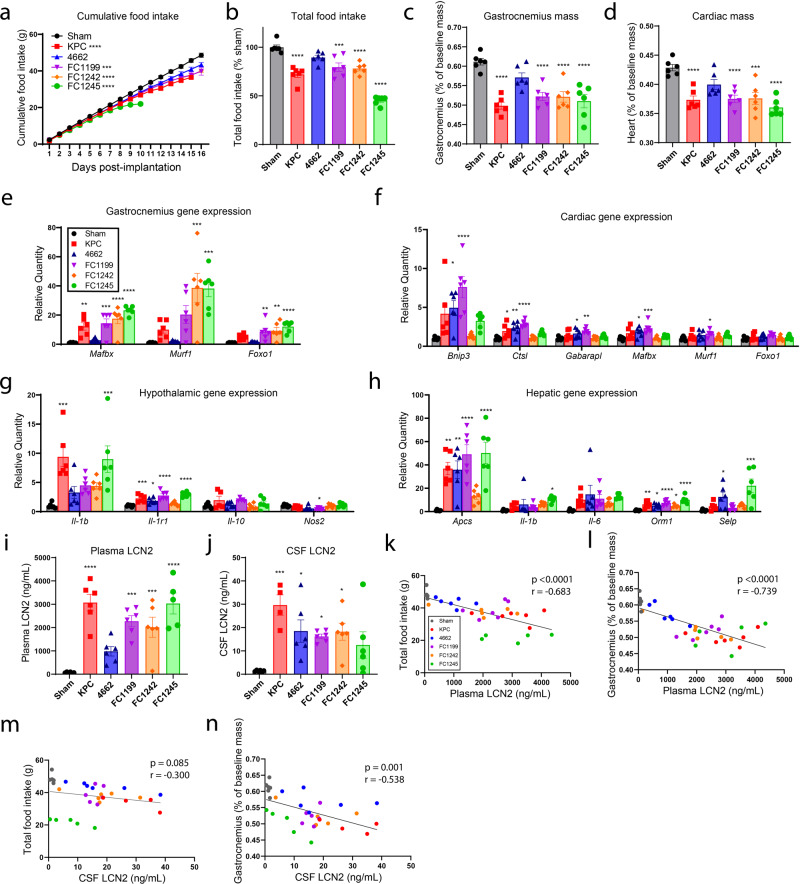
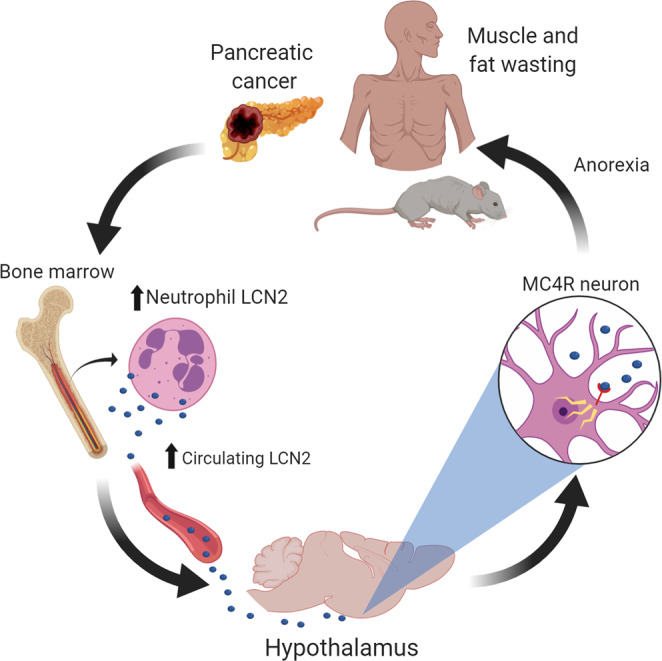
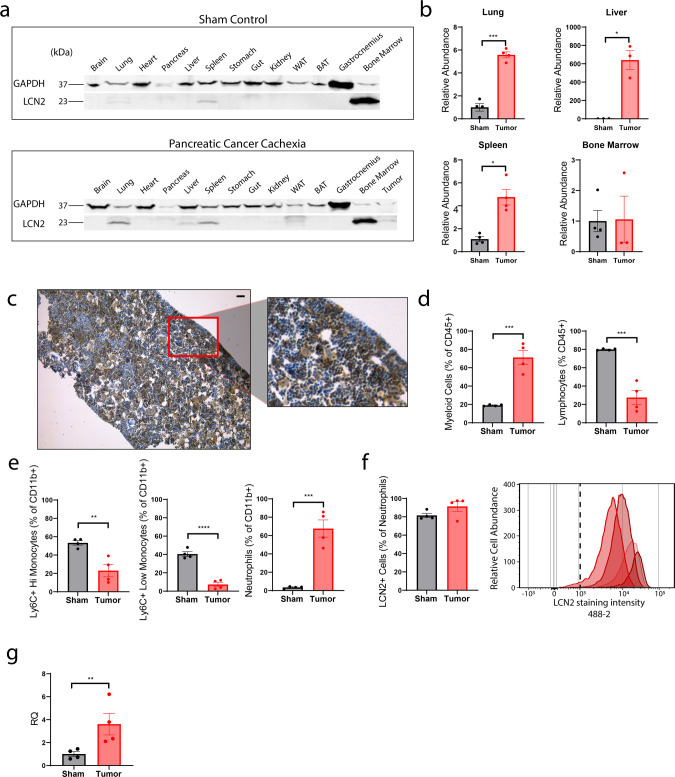
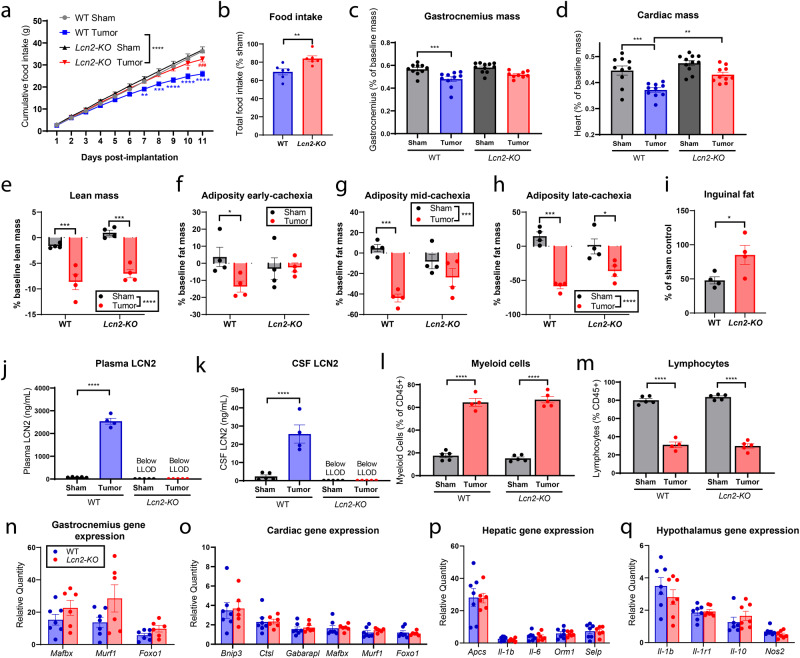
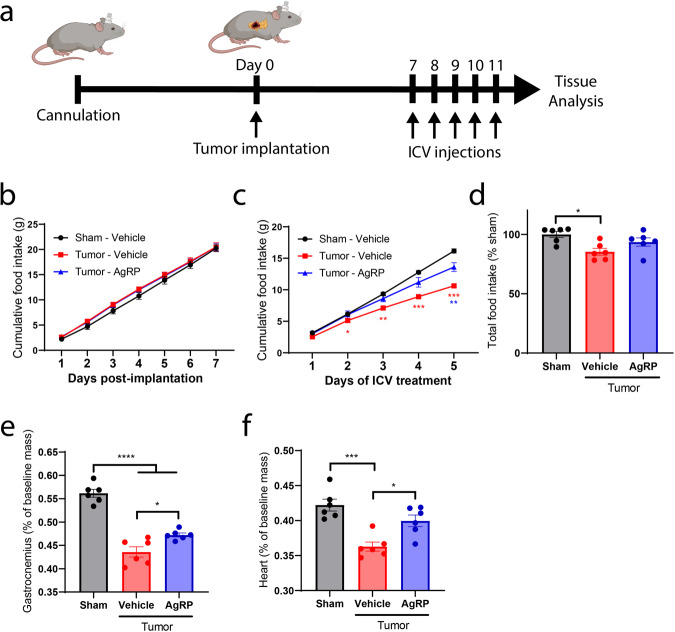
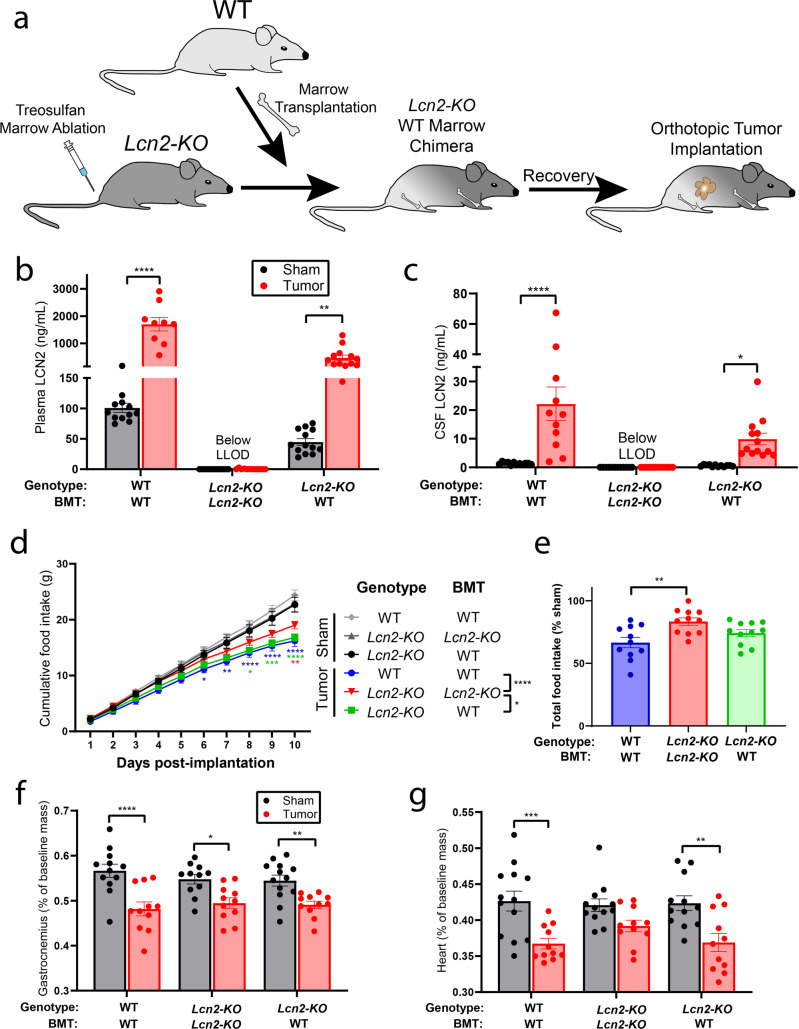
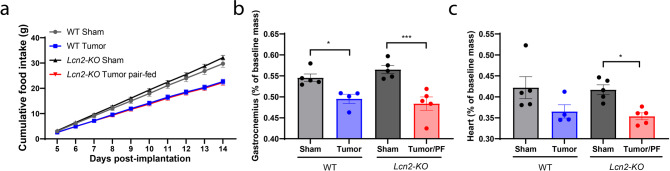
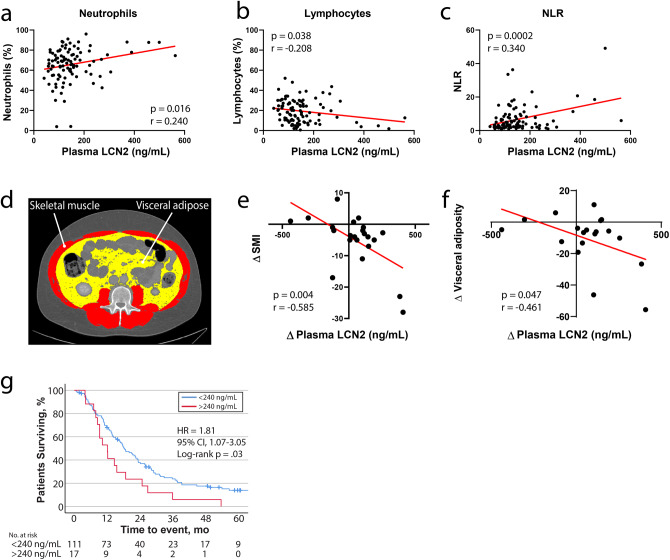
Lipocalin 2 (LCN2) was recently identified as an endogenous ligand of the type 4 melanocortin receptor (MC4R), a critical regulator of appetite. However, it remains unknown if this molecule influences appetite during cancer cachexia, a devastating clinical entity characterized by decreased nutrition and progressive wasting. We demonstrate that LCN2 is robustly upregulated in murine models of pancreatic cancer, its expression is associated with reduced food consumption, and Lcn2 deletion is protective from cachexia-anorexia. Consistent with LCN2's proposed MC4R-dependent role in cancer-induced anorexia, pharmacologic MC4R antagonism mitigates cachexia-anorexia, while restoration of Lcn2 expression in the bone marrow is sufficient in restoring the anorexia feature of cachexia. Finally, we observe that LCN2 levels correlate with fat and lean mass wasting and is associated with increased mortality in patients with pancreatic cancer. Taken together, these findings implicate LCN2 as a pathologic mediator of appetite suppression during pancreatic cancer cachexia.
脂质运载蛋白 2(LCN2)最近被鉴定为 4 型黑色素皮质素受体(MC4R)的内源性配体,MC4R 是食欲的关键调节剂。然而,目前尚不清楚这种分子是否会在癌症恶病质期间影响食欲,癌症恶病质是一种破坏性的临床实体,其特征是营养减少和进行性消瘦。我们证明 LCN2 在胰腺癌的小鼠模型中被强烈上调,其表达与食物摄入量减少有关,并且 Lcn2 缺失可预防恶病质-厌食症。与 LCN2 提议的在癌症引起的厌食症中依赖 MC4R 的作用一致,药物 MC4R 拮抗作用减轻恶病质-厌食症,而骨髓中 Lcn2 表达的恢复足以恢复恶病质的厌食症特征。最后,我们观察到 LCN2 水平与脂肪和瘦体重减少相关,并与胰腺癌患者的死亡率增加相关。综上所述,这些发现表明 LCN2 是胰腺癌恶病质期间抑制食欲的病理性介质。