Lymphocyte Signalling and Development Programme, Babraham Institute, Cambridge, UK.
Nuclear Dynamics Programme, Babraham Institute, Cambridge, UK.
Nat Commun. 2021 Apr 7;12(1):2098. doi: 10.1038/s41467-021-22201-4.
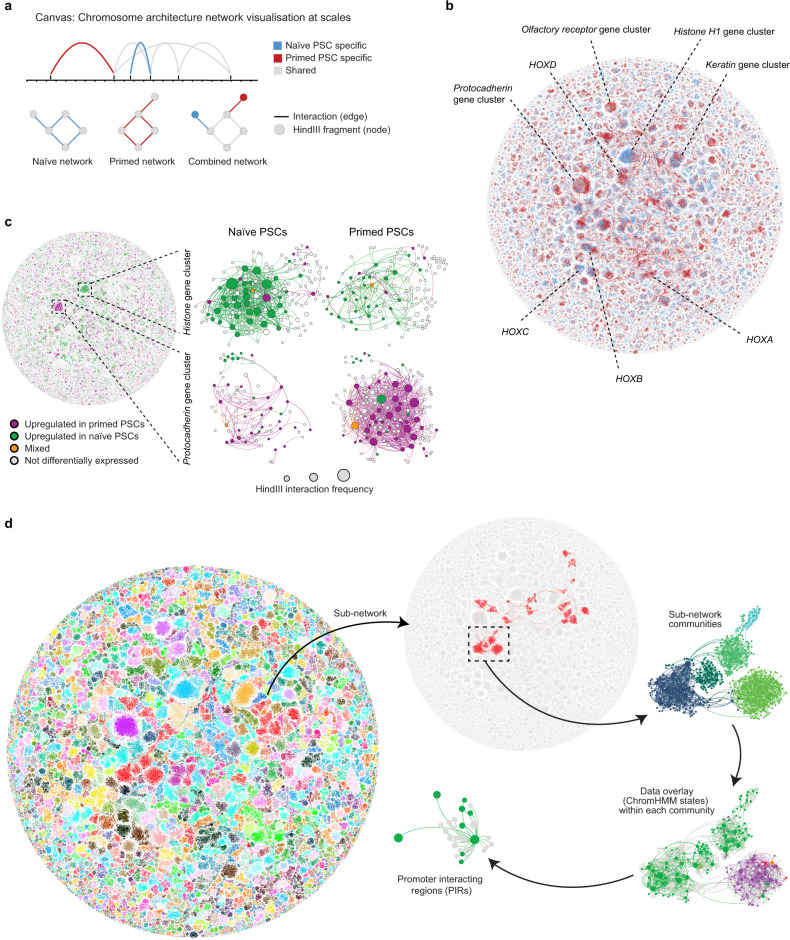
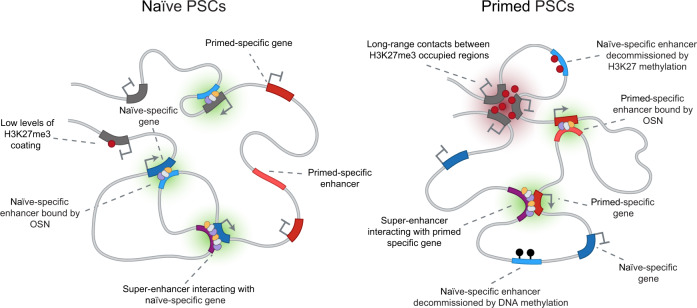
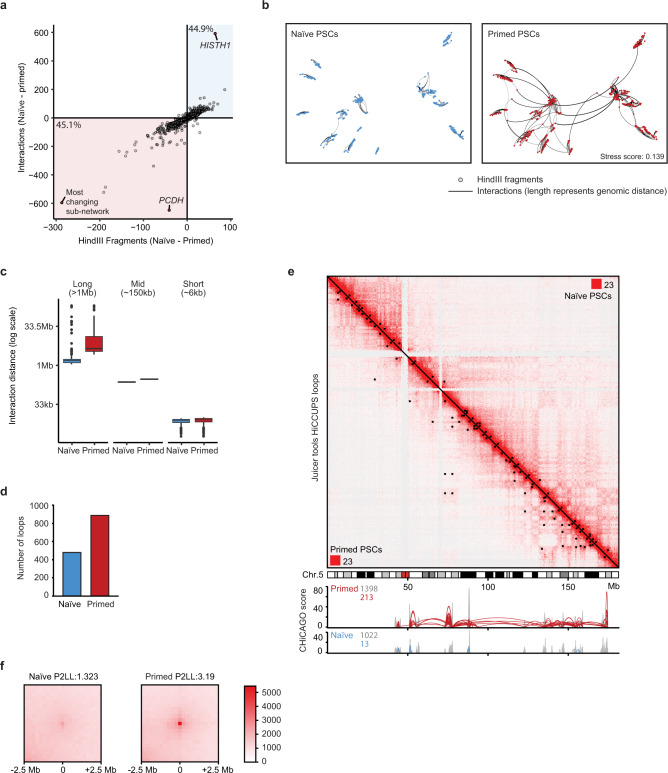
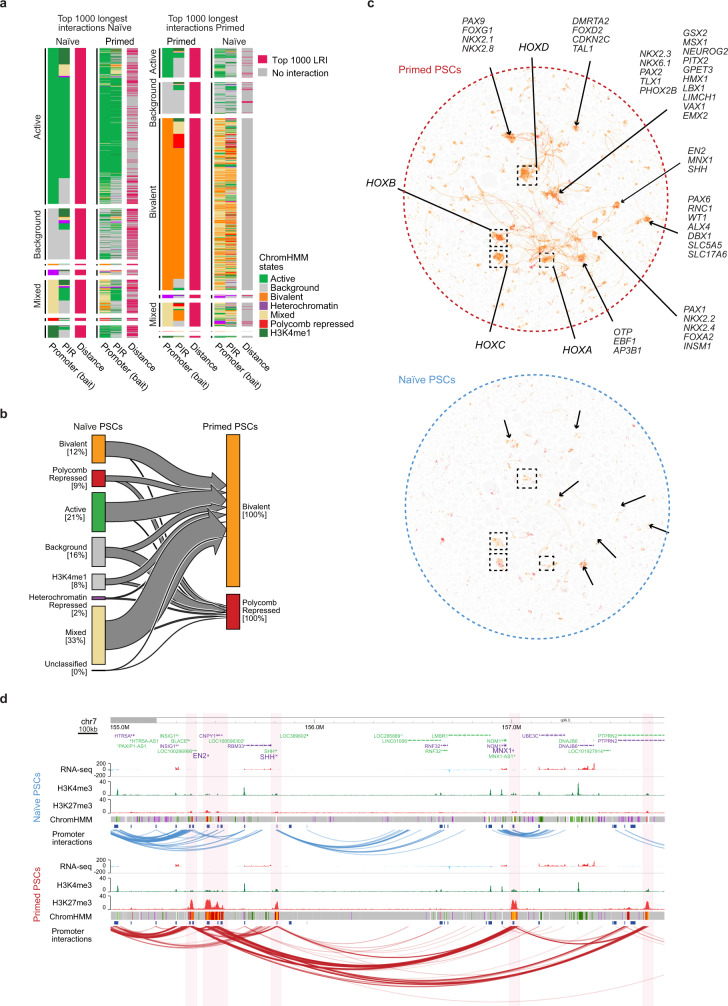
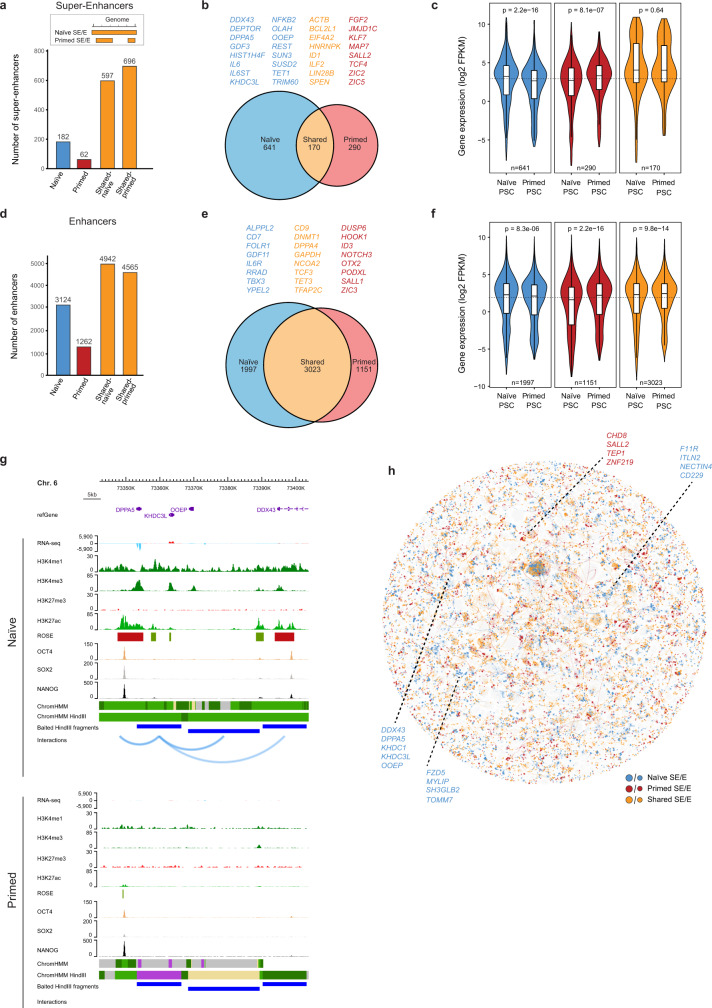
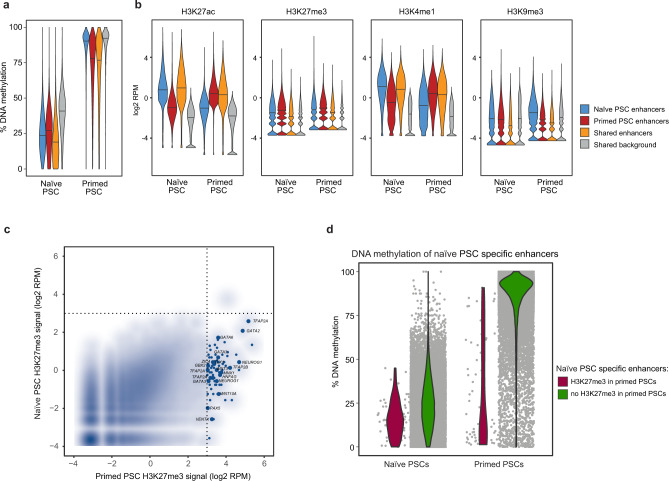
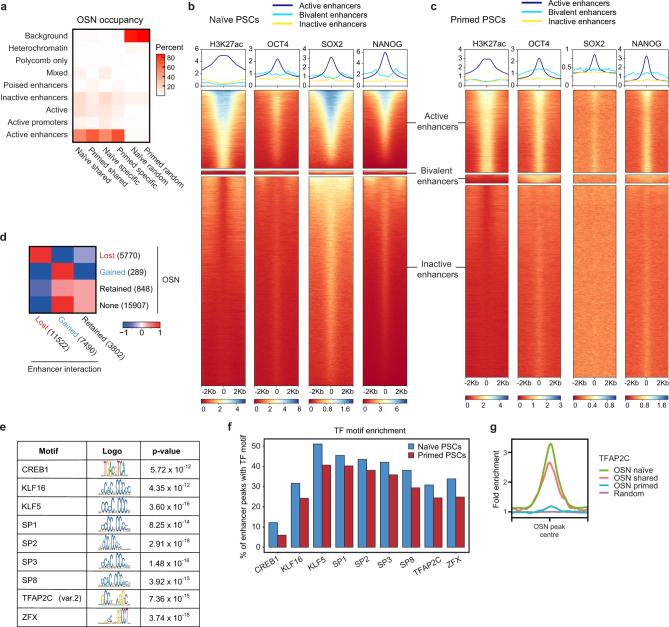
The transition from naive to primed pluripotency is accompanied by an extensive reorganisation of transcriptional and epigenetic programmes. However, the role of transcriptional enhancers and three-dimensional chromatin organisation in coordinating these developmental programmes remains incompletely understood. Here, we generate a high-resolution atlas of gene regulatory interactions, chromatin profiles and transcription factor occupancy in naive and primed human pluripotent stem cells, and develop a network-graph approach to examine the atlas at multiple spatial scales. We uncover highly connected promoter hubs that change substantially in interaction frequency and in transcriptional co-regulation between pluripotent states. Small hubs frequently merge to form larger networks in primed cells, often linked by newly-formed Polycomb-associated interactions. We identify widespread state-specific differences in enhancer activity and interactivity that correspond with an extensive reconfiguration of OCT4, SOX2 and NANOG binding and target gene expression. These findings provide multilayered insights into the chromatin-based gene regulatory control of human pluripotent states.
从幼稚态到初始态的多能性转变伴随着转录和表观遗传程序的广泛重组。然而,转录增强子和三维染色质组织在协调这些发育程序中的作用仍不完全清楚。在这里,我们生成了高分辨率的幼稚态和初始态人多能干细胞基因调控相互作用、染色质图谱和转录因子占据图谱图谱,并开发了一种网络图形方法来在多个空间尺度上检查图谱。我们发现了高度连接的启动子枢纽,这些枢纽在多能状态之间的相互作用频率和转录共调控方面发生了很大变化。在初始细胞中,小枢纽经常合并形成更大的网络,这些网络通常通过新形成的 Polycomb 相关相互作用连接。我们确定了广泛的增强子活性和可及性的状态特异性差异,这些差异与 OCT4、SOX2 和 NANOG 结合和靶基因表达的广泛重排相对应。这些发现为人类多能状态的基于染色质的基因调控控制提供了多层次的见解。