Tantardini Christian, Oganov Artem R
Skolkovo Institute of Science and Technology, Bolshoi Boulevard 30, Moscow, 121025, Russian Federation.
Institute of Solid State Chemistry and Mechanochemistry SB RAS, 630128, Kutateladze 18, Novosibirsk, Russian Federation.
Nat Commun. 2021 Apr 7;12(1):2087. doi: 10.1038/s41467-021-22429-0.
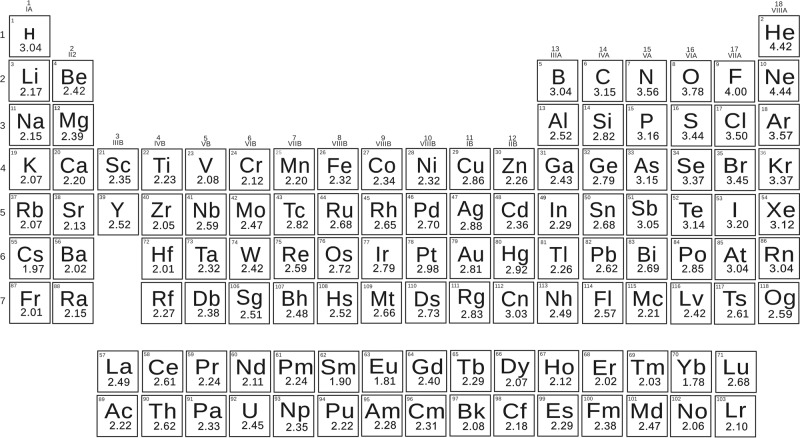
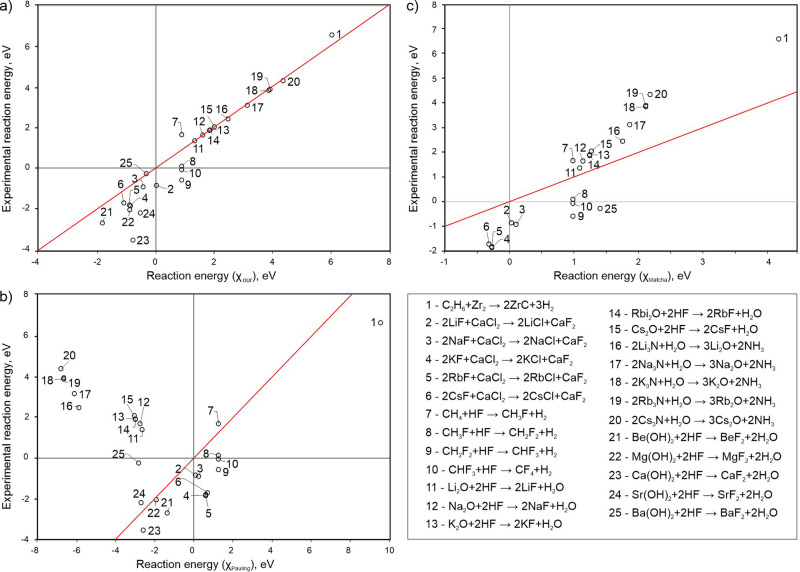
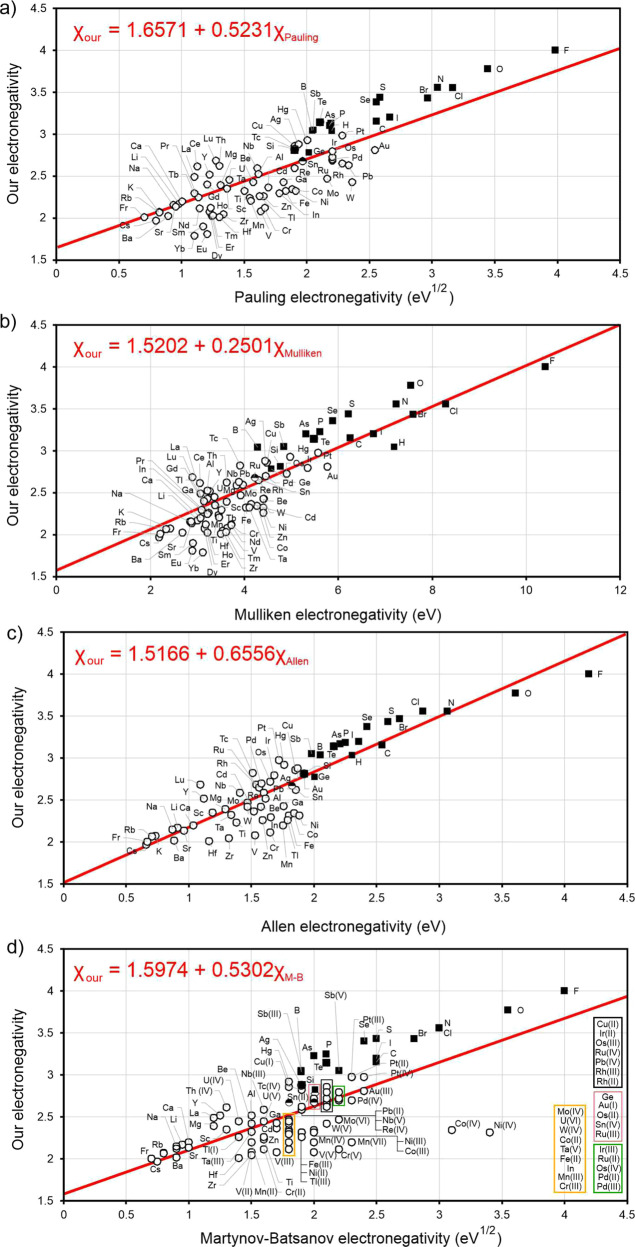
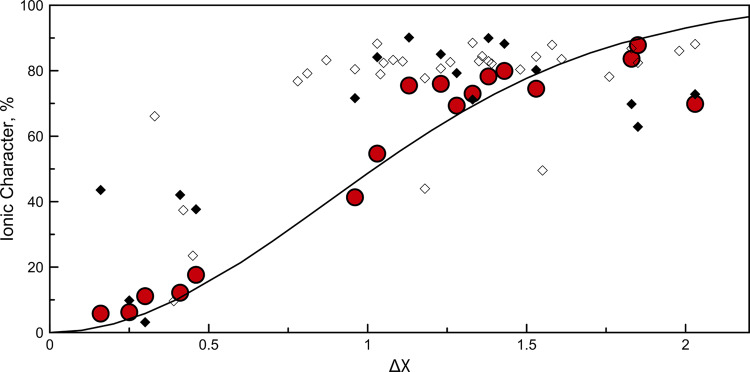
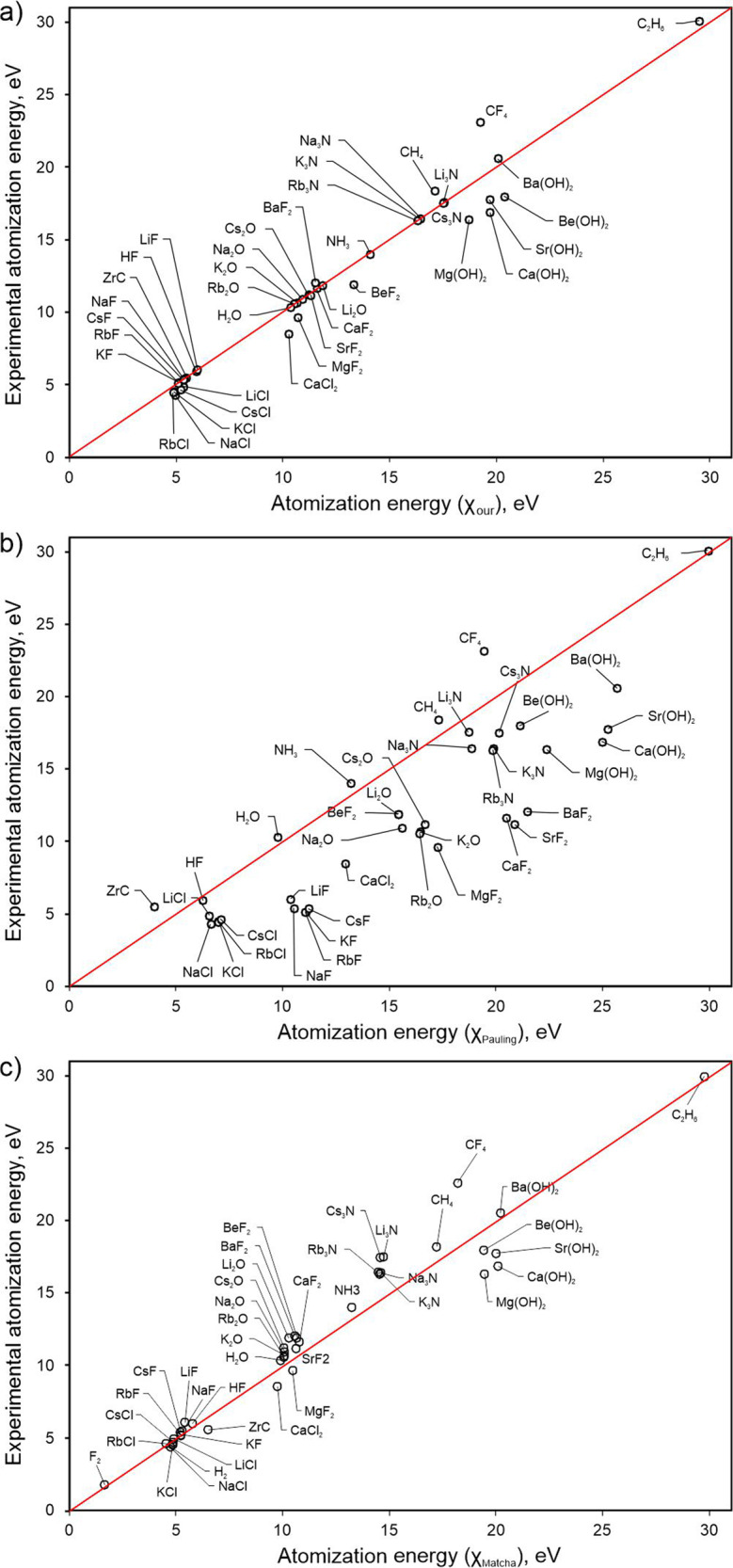
Electronegativity is a key property of the elements. Being useful in rationalizing stability, structure and properties of molecules and solids, it has shaped much of the thinking in the fields of structural chemistry and solid state chemistry and physics. There are many definitions of electronegativity, which can be roughly classified as either spectroscopic (these are defined for isolated atoms) or thermochemical (characterizing bond energies and heats of formation of compounds). The most widely used is the thermochemical Pauling's scale, where electronegativities have units of eV. Here we identify drawbacks in the definition of Pauling's electronegativity scale-and, correcting them, arrive at our thermochemical scale, where electronegativities are dimensionless numbers. Our scale displays intuitively correct trends for the 118 elements and leads to an improved description of chemical bonding (e.g., bond polarity) and thermochemistry.
电负性是元素的一个关键属性。它有助于解释分子和固体的稳定性、结构及性质,在结构化学、固态化学和物理领域的诸多思考中都起到了重要作用。电负性有多种定义,大致可分为光谱学定义(针对孤立原子)和热化学定义(用于表征化合物的键能和生成热)。应用最为广泛的是热化学的鲍林标度,其中电负性的单位是电子伏特。在此,我们指出了鲍林电负性标度定义中的缺陷,并对其进行修正,从而得出我们的热化学标度,其中电负性是无量纲数。我们的标度直观地呈现了118种元素正确的趋势,并且能对化学键(如键的极性)和热化学给出更好的描述。