Key Laboratory of Respiratory Disease of Zhejiang Province, Department of Respiratory and Critical Care Medicine, Second Affiliated Hospital of Zhejiang University School of Medicine, Hangzhou, China.
State Key Laboratory of Respiratory Disease, Guangzhou Medical University, Guangzhou, China.
Front Immunol. 2021 Mar 22;12:594330. doi: 10.3389/fimmu.2021.594330. eCollection 2021.
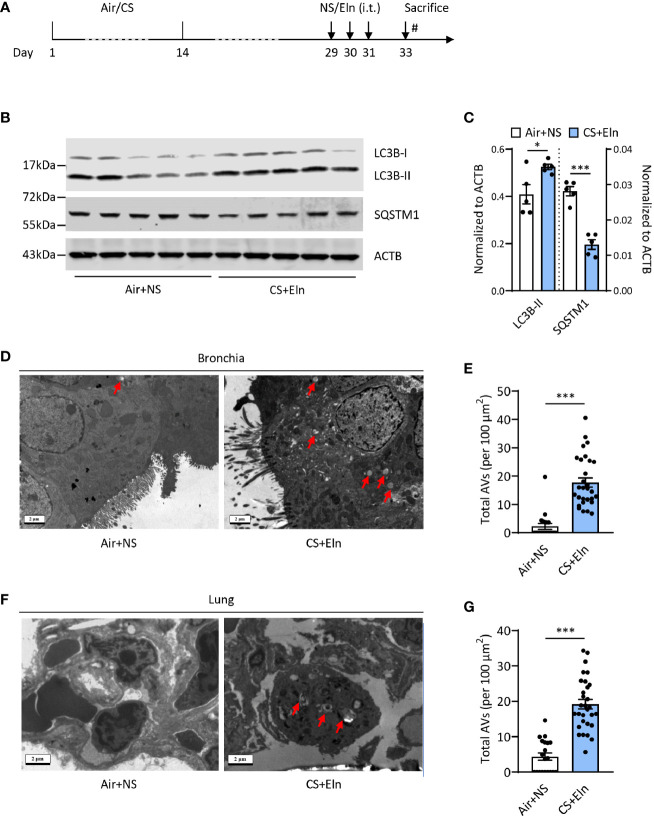
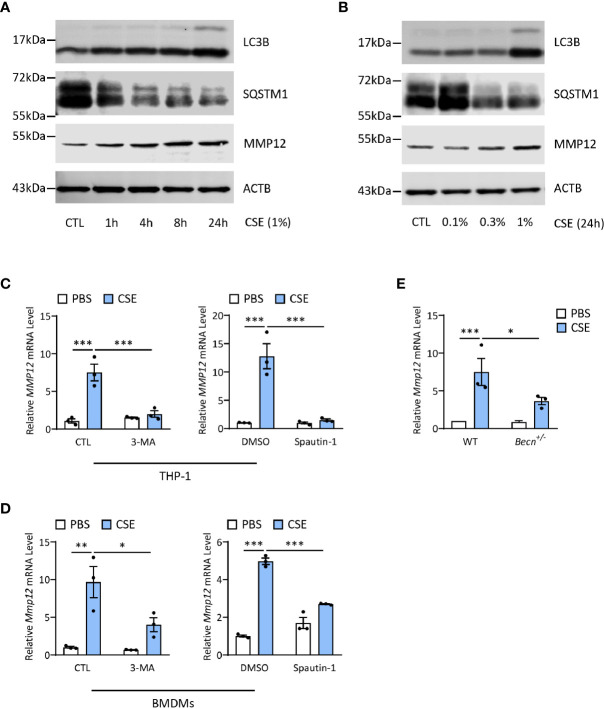
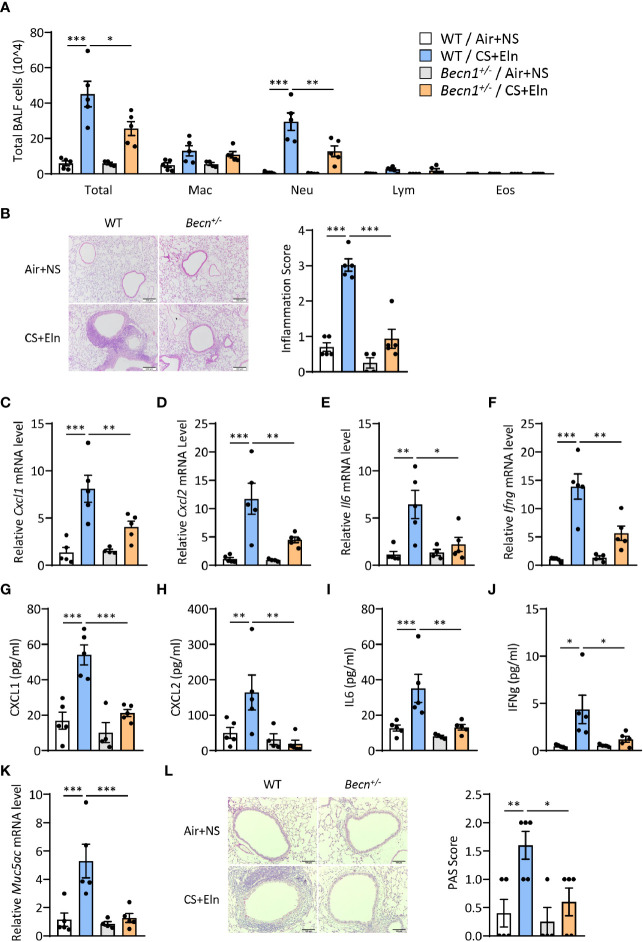
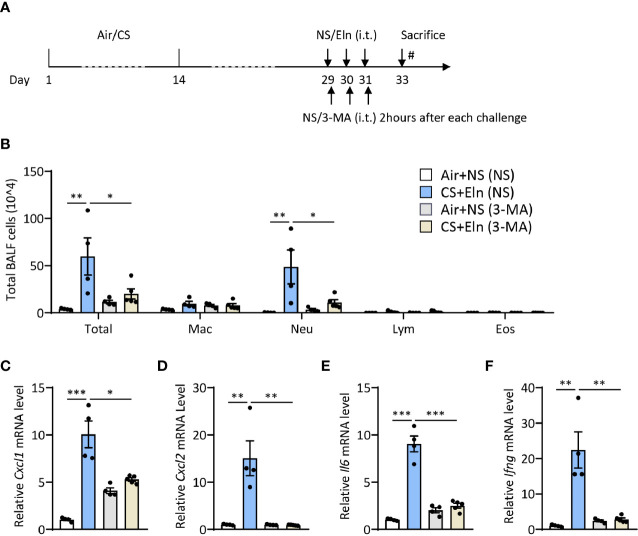
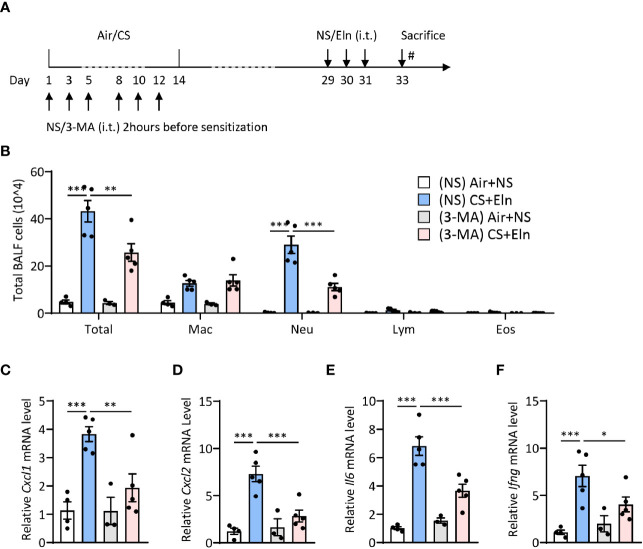
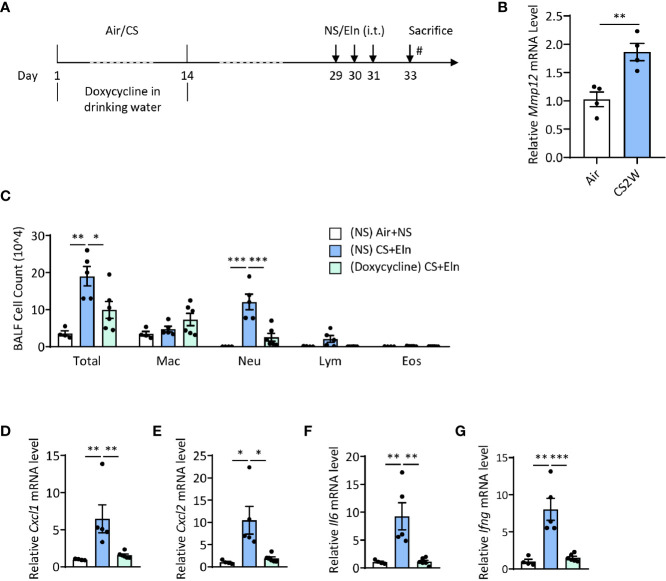
Cigarette smoke (CS)-induced macrophage activation and airway epithelial injury are both critical for the development of chronic obstructive pulmonary disease (COPD), while the eventual functions of autophagy in these processes remain controversial. We have recently developed a novel COPD mouse model which is based on the autoimmune response sensitized by CS and facilitated by elastin. In the current study, we therefore utilized this model to investigate the roles of autophagy in different stages of the development of bronchitis-like airway inflammation. Autophagic markers were increased in airway epithelium and lung tissues, and or mice exhibited reduced neutrophilic airway inflammation and mucus hyperproduction in this COPD mouse model. Moreover, treatment of an autophagic inhibitor 3-methyladenine (3-MA) either during CS-initiated sensitization or during elastin provocation significantly inhibited the bronchitis-like phenotypes in mice. Short CS exposure rapidly induced expression of matrix metallopeptidase 12 (MMP12) in alveolar macrophages, and treatment of doxycycline, a pan metalloproteinase inhibitor, during CS exposure effectively attenuated the ensuing elastin-induced airway inflammation in mice. CS extract triggered MMP12 expression in cultured macrophages, which was attenuated by autophagy impairment ( or ) or inhibition (3-MA or Spautin-1). These data, taken together, demonstrate that autophagy mediates both the CS-initiated MMP12 activation in macrophages and subsequent airway epithelial injury, eventually contributing to development COPD-like airway inflammation. This study reemphasizes that inhibition of autophagy as a novel therapeutic strategy for CS-induced COPD.
香烟烟雾(CS)诱导的巨噬细胞激活和气道上皮损伤均对慢性阻塞性肺疾病(COPD)的发展至关重要,而自噬在这些过程中的最终功能仍存在争议。我们最近开发了一种新型 COPD 小鼠模型,该模型基于 CS 诱导的自身免疫反应和弹性蛋白促进作用。在本研究中,我们因此利用该模型研究了自噬在支气管炎样气道炎症发展的不同阶段中的作用。气道上皮和肺组织中的自噬标志物增加, 或 小鼠在该 COPD 小鼠模型中表现出中性粒细胞性气道炎症和黏液高分泌减少。此外,在 CS 起始敏化期间或弹性蛋白诱发期间用自噬抑制剂 3-甲基腺嘌呤(3-MA)治疗可显著抑制小鼠的支气管炎样表型。短期 CS 暴露可迅速诱导肺泡巨噬细胞中基质金属蛋白酶 12(MMP12)的表达,并且在用 CS 暴露期间用多金属蛋白酶抑制剂强力霉素治疗可有效减轻随后的弹性蛋白诱导的小鼠气道炎症。CS 提取物可触发培养的巨噬细胞中 MMP12 的表达,而自噬受损( 或 )或抑制(3-MA 或 Spautin-1)则可减弱其表达。这些数据表明,自噬介导 CS 诱导的巨噬细胞中 MMP12 的激活以及随后的气道上皮损伤,最终导致 COPD 样气道炎症的发展。这项研究再次强调了抑制自噬作为 CS 诱导的 COPD 的一种新的治疗策略。