Babaei Ghader, Khadem Ansari Mohammad Hassan, Aziz Shiva Gholizadeh-Ghaleh, Bazl Masoumeh Rajabi
Department of Biochemistry, Faculty of Medicine, Urmia University of Medical Sciences, Urmia, I.R. Iran.
Cellular and Molecular Research Center, Urmia University of Medical Sciences, Urmia, I.R. Iran.
Res Pharm Sci. 2020 Nov 27;15(6):551-562. doi: 10.4103/1735-5362.301340. eCollection 2020 Dec.
Cancer stem cells (CSCs), as the subpopulation of cancer cells, are associated with carcinogenesis, chemoresistance, and metastasis in malignancies. Also, CSCs are considered as the major reason for treatment failure in prostate cancer (PCa). Alantolactone (ALT), exerts anticancer activity in different types of cancers. In the present study, the relationship between ALT and CSCs in PCa metastasis and the molecular mechanisms involved in the progression of PCa were investigated.
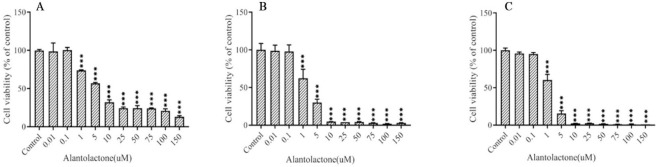
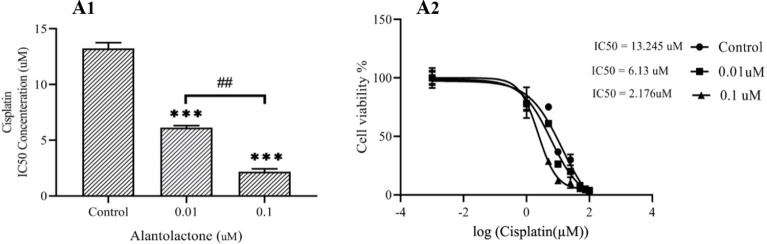
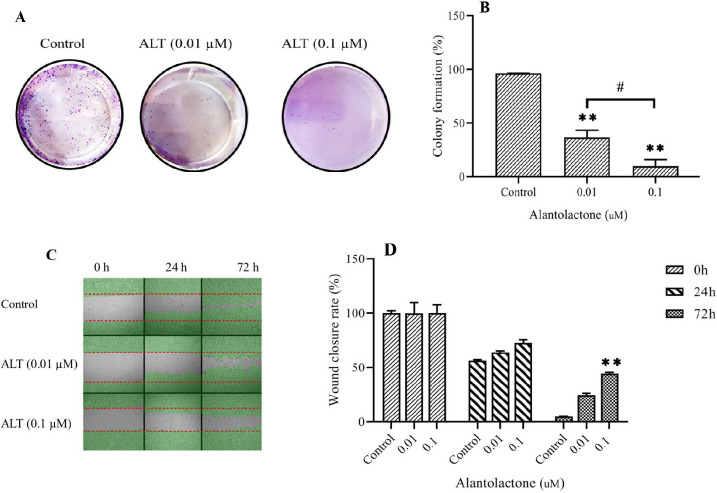
In this study, to evaluate cell viability, MTT assay was performed. Then, PC3 cells were treated with nontoxic concentrations of ALT and after this step wound-healing assay, colony-formation assay and chemosensitization assay were applied to determine cell migration, the ability of colony formation, and chemoresistance, respectively. Also, real-time polymerase chain reaction and western blotting were used for the determination of genes and protein expression, respectively.
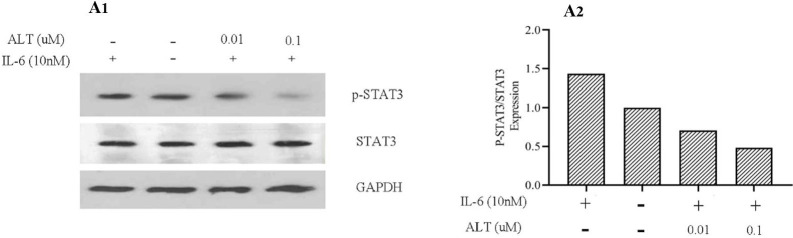
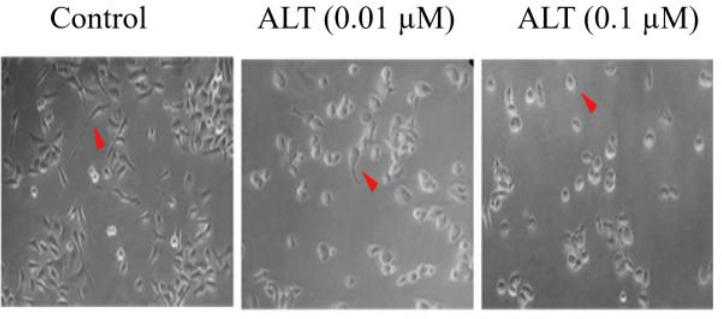
FINDINGS/RESULTS: Our finding showed that ALT at nontoxic concentrations (0.01 and 0.1 μM) for 72 h suppressed the STAT3 phosphorylation and signaling pathway. Also, ALT was able to modulate the stemness of PCa cells through downregulation of expression of SOX2, Oct-4, Nanog, CD133, CD44, and upregulation of p53 expression. On the other hand, we further found that ALT in nontoxic concentrations sensitized PCa cells to cisplatin.
ALT combated the stemness of cancer cells and metastasis by antagonizing of STAT3 signaling pathway. In addition, ALT exhibited anti-metastatic properties and may have potential as a new chemotherapy agent for the reduction of PCa metastasis.
癌症干细胞(CSCs)作为癌细胞的亚群,与恶性肿瘤的发生、化疗耐药及转移相关。此外,CSCs被认为是前列腺癌(PCa)治疗失败的主要原因。土木香内酯(ALT)在不同类型癌症中发挥抗癌活性。在本研究中,探究了ALT与PCa转移中CSCs的关系以及PCa进展涉及的分子机制。
在本研究中,为评估细胞活力,进行了MTT实验。然后,用无毒浓度的ALT处理PC3细胞,在此步骤之后,分别应用伤口愈合实验、集落形成实验和化学增敏实验来测定细胞迁移、集落形成能力和化疗耐药性。此外,实时聚合酶链反应和蛋白质免疫印迹分别用于测定基因和蛋白质表达。
我们的研究结果表明,无毒浓度(0.01和0.1 μM)的ALT处理72小时可抑制STAT3磷酸化和信号通路。此外,ALT能够通过下调SOX2、Oct-4、Nanog、CD133、CD44的表达以及上调p53表达来调节PCa细胞的干性。另一方面,我们进一步发现无毒浓度的ALT使PCa细胞对顺铂敏感。
ALT通过拮抗STAT3信号通路对抗癌细胞的干性和转移。此外,ALT表现出抗转移特性,可能具有作为减少PCa转移的新型化疗药物的潜力。