Lei Zi-Ning, Teng Qiu-Xu, Gupta Pranav, Zhang Wei, Narayanan Silpa, Yang Dong-Hua, Wurpel John N D, Fan Ying-Fang, Chen Zhe-Sheng
Department of Pharmaceutical Sciences, College of Pharmacy and Health Sciences, St. John's University, Queens, NY, United States.
Institute of Plastic Surgery, Weifang Medical University, Weifang, China.
Front Cell Dev Biol. 2021 Mar 22;9:640957. doi: 10.3389/fcell.2021.640957. eCollection 2021.
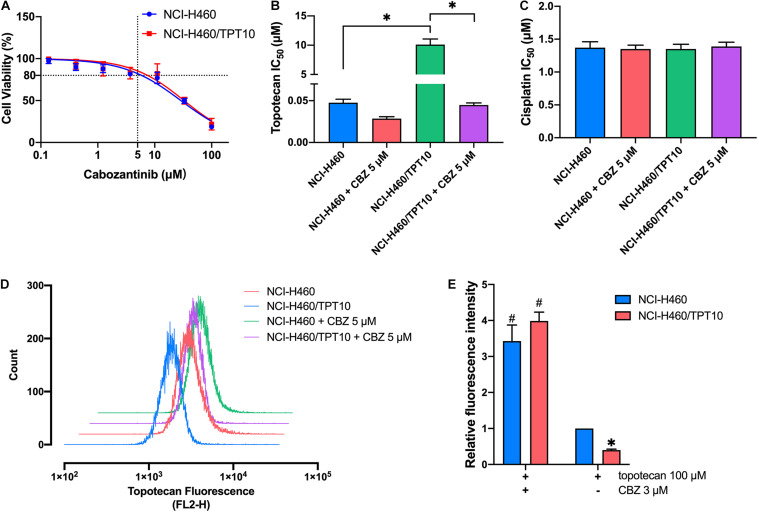
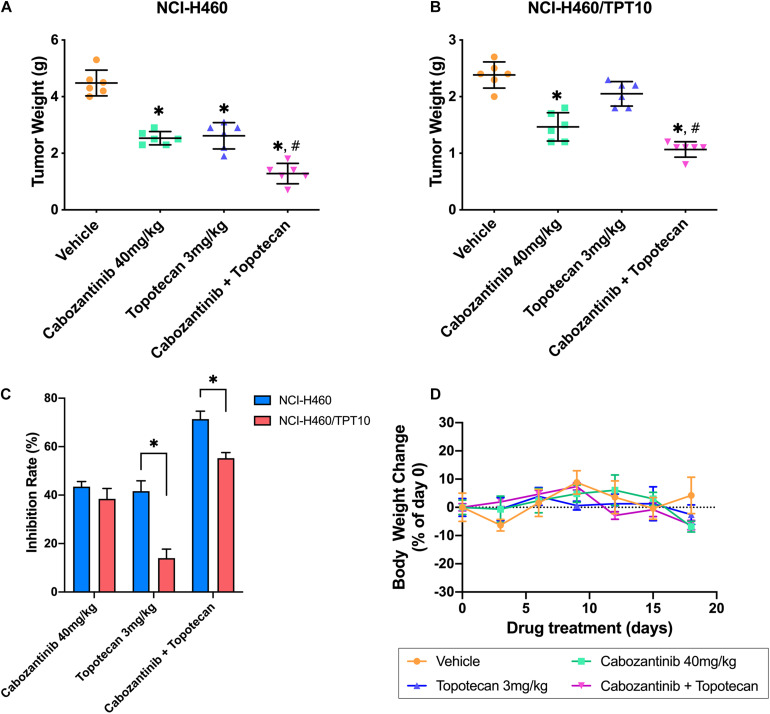
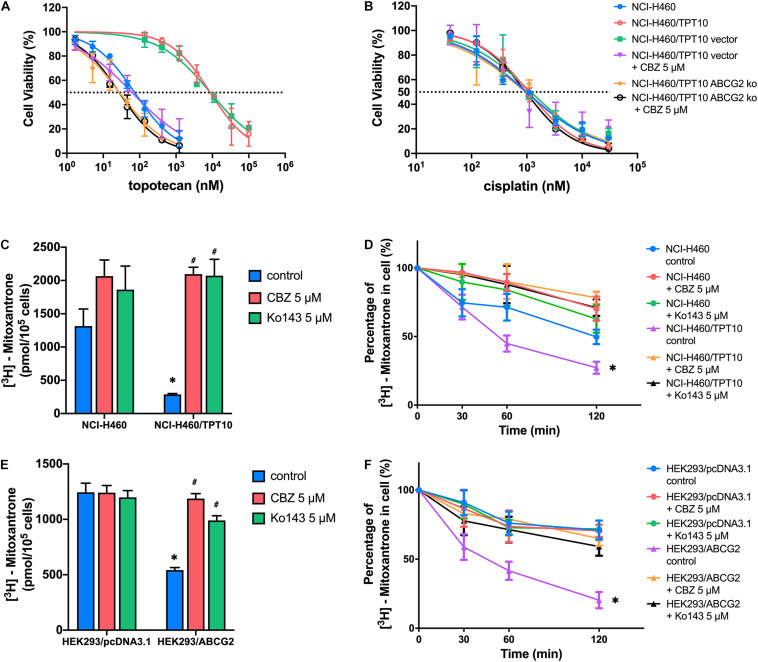
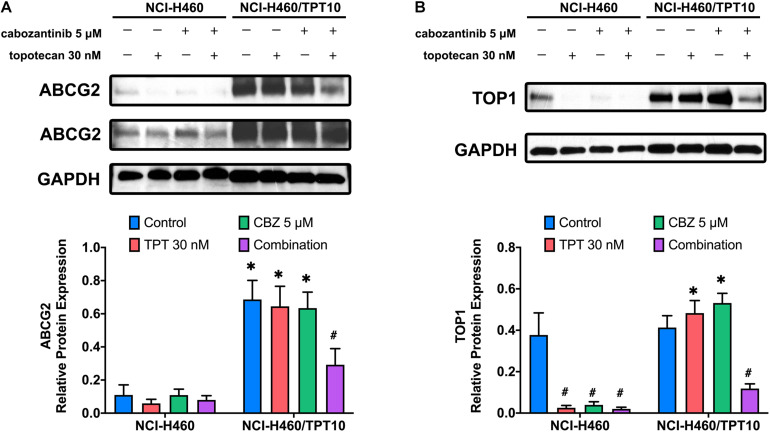
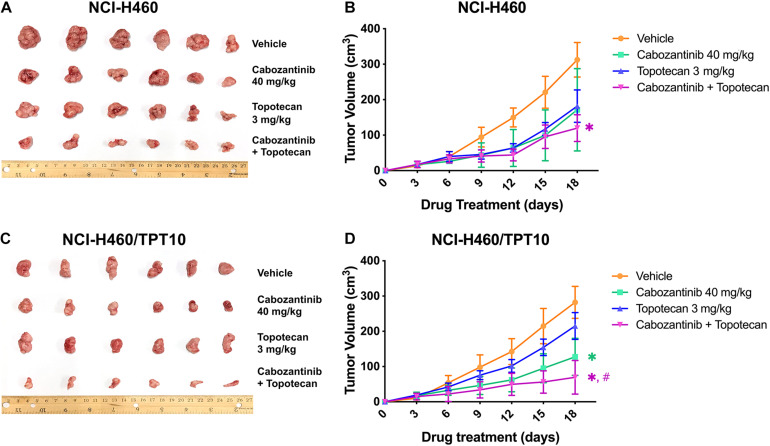
Cabozantinib (CBZ) is a small molecule tyrosine kinase receptor inhibitor, which could also inhibit the ABCG2 transporter function. Therefore, CBZ could re-sensitize cancer cells that are resistant to ABCG2 substrate drugs including topotecan (TPT). However, its reversal effect against TPT resistance has not been tested in a TPT-induced resistant cancer model. In this study, a new TPT selected human non-small cell lung cancer (NSCLC)-resistant cell model NCI-H460/TPT10 with ABCG2 overexpression and its parental NCI-H460 cells were utilized to investigate the role of CBZ in drug resistance. The study showed that CBZ, at a non-toxic concentration, could re-sensitize NCI-H460/TPT10 cells to TPT by restoring intracellular TPT accumulation via inhibiting ABCG2 function. In addition, the increased cytotoxicity by co-administration of CBZ and TPT may be contributed by the synergistic effect on downregulating ABCG2 expression in NCI-H460/TPT10 cells. To further verify the applicability of the NCI-H460/TPT10 cell line to test multidrug resistance (MDR) reversal agents and to evaluate the efficacy of CBZ on reversing TPT resistance, a tumor xenograft mouse model was established by implanting NCI-H460 and NCI-H460/TPT10 into nude mice. The NCI-H460/TPT10 xenograft tumors treated with the combination of TPT and CBZ dramatically reduced in size compared to tumors treated with TPT or CBZ alone. The TPT-resistant phenotype of NCI-H460/TPT10 cell line and the reversal capability of CBZ in NCI-H460/TPT10 cells could be extended from cell model to xenograft model. Collectively, CBZ is considered to be a potential approach in overcoming ABCG2-mediated MDR in NSCLC. The established NCI-H460/TPT10 xenograft model could be a sound clinically relevant resource for future drug screening to eradicate ABCG2-mediated MDR in NSCLC.
卡博替尼(CBZ)是一种小分子酪氨酸激酶受体抑制剂,它还可以抑制ABCG2转运蛋白的功能。因此,CBZ可以使对包括拓扑替康(TPT)在内的ABCG2底物药物耐药的癌细胞重新敏感。然而,其对TPT耐药的逆转作用尚未在TPT诱导的耐药癌症模型中进行测试。在本研究中,利用新筛选出的具有ABCG2过表达的人非小细胞肺癌(NSCLC)耐药细胞模型NCI-H460/TPT10及其亲本NCI-H460细胞来研究CBZ在耐药中的作用。研究表明,在无毒浓度下,CBZ可通过抑制ABCG2功能恢复细胞内TPT蓄积,从而使NCI-H460/TPT10细胞对TPT重新敏感。此外,CBZ与TPT联合使用时细胞毒性增加可能是由于对下调NCI-H460/TPT10细胞中ABCG2表达的协同作用。为了进一步验证NCI-H460/TPT10细胞系在测试多药耐药(MDR)逆转剂方面的适用性,并评估CBZ逆转TPT耐药的疗效,将NCI-H460和NCI-H460/TPT10植入裸鼠建立了肿瘤异种移植小鼠模型。与单独用TPT或CBZ治疗的肿瘤相比,联合使用TPT和CBZ治疗的NCI-H460/TPT10异种移植肿瘤大小显著减小。NCI-H460/TPT10细胞系的TPT耐药表型以及CBZ在NCI-H460/TPT10细胞中的逆转能力可以从细胞模型扩展到异种移植模型。总的来说,CBZ被认为是克服NSCLC中ABCG2介导的MDR的一种潜在方法。所建立的NCI-H460/TPT10异种移植模型可能是未来药物筛选以根除NSCLC中ABCG2介导的MDR的一个可靠的临床相关资源。