Kolesnyk Pavlo, Bayen Sabine, Shushman Ivanna, Kolesnyk Andrew, Kuodza George, Klemenc-Ketiš Zalika, Frese Thomas
Department of Family Medicine and Outpatient Care, Medical Faculty#2, Education Scientific Family Medicine Training Centre, Uzhgorod National University, Uzhgorod, Ukraine.
Department of General Practice, University of Lille, Lille, France.
Front Med (Lausanne). 2021 Mar 22;8:646276. doi: 10.3389/fmed.2021.646276. eCollection 2021.
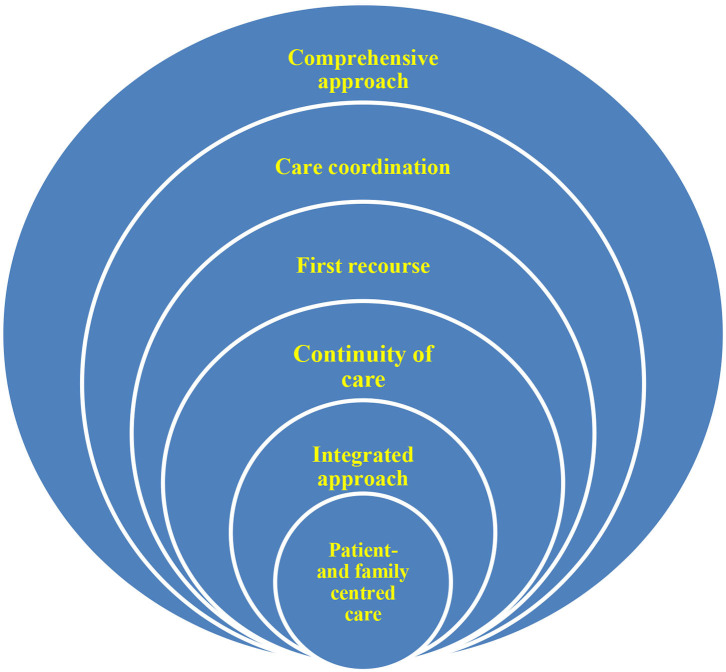
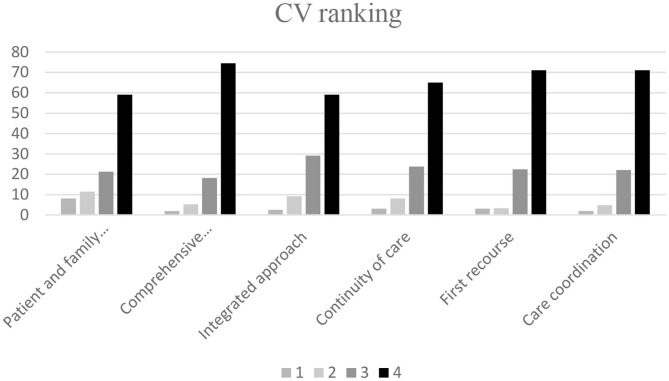
The term core value (CV) can be defined as fundamental beliefs or principles, guiding one's behavior in a social context. Though core competencies of family medicine (FM) have been clearly defined by WONCA, there has been an ongoing debate on what the CVs are for family doctors (FDs). Ukraine is a developing country in the middle of Europe with a population of 43 million inhabitants, gained independence from the Soviet Union in 1991. Ukraine is a low-income country, developing a modern European healthcare system, especially regarding FM. To implement WONCA standards, it is mandatory to assess the ongoing understanding of CVs in clinical daily practice among active FDs, working in different countries of Europe including Ukraine. How do Ukrainian FDs (Delphi group experts) define the CVs of FM in Ukraine and how important are these CVs to a wider population of Ukrainian FDs in their everyday practice? A mixed method study was conducted in two steps during August and September 2020 in Ukraine. The first part was a qualitative Delphi round (three rounds) design among 20 Ukrainian FDs who were familiar with teaching and terms like CV. A consensus list of six CVs has emerged from the Delphi round study. The second part was a quantitative survey among Ukrainian FDs, who were not specially used to discussing CVs. The consensus list of those six CVs was then submitted to 2000 FDs (randomly selected) who were not involved in the Delphi team, to rank those values from one to nine, according to the importance from their personal point of view. Demographic characteristics have been assessed for all the participants of the Delphi round and quantitative survey. Twenty FDs were involved as experts in the first Delphi round, whereas only five experts continued their participation in the second and the third rounds of the survey. The following six CVs emerged from the Delphi round: comprehensive approach, care coordination, first recourse, continuity of care, integrated approach, and patient and family centered care. The final sample consisted of 375 FDs (19% response rate). There were 323 (88.7%) female and 34 (9.3%) male FDs in the sample. The mean age of the participants was 44.6±13.5 years. Defining CVs for FM by Ukrainian FDs in a given socio-economical and historical-cultural setting is crucial to optimize primary medical care and to guarantee an appropriate and successful implementation of WONCA standards as well as CVs in different countries including those where reformation of the health system is ongoing.
核心价值观(CV)这一术语可被定义为基本信念或原则,在社会环境中指导一个人的行为。尽管世界家庭医生组织(WONCA)已明确界定了家庭医学(FM)的核心能力,但对于家庭医生(FDs)的核心价值观是什么,一直存在争议。乌克兰是欧洲中部的一个发展中国家,有4300万人口,于1991年从苏联独立出来。乌克兰是一个低收入国家,正在发展现代欧洲医疗体系,尤其是在家庭医学方面。为了实施WONCA标准,必须评估在包括乌克兰在内的欧洲不同国家积极工作的家庭医生在临床日常实践中对核心价值观的持续理解。乌克兰的家庭医生(德尔菲专家组专家)如何界定乌克兰家庭医学的核心价值观,以及这些核心价值观对更广泛的乌克兰家庭医生群体在其日常实践中有多重要?2020年8月和9月在乌克兰分两个步骤进行了一项混合方法研究。第一部分是对20名熟悉教学和核心价值观等术语的乌克兰家庭医生进行定性德尔菲轮次(三轮)设计。从德尔菲轮次研究中得出了一份包含六个核心价值观的共识清单。第二部分是对不太习惯讨论核心价值观的乌克兰家庭医生进行定量调查。然后将这六个核心价值观的共识清单提交给2000名未参与德尔菲团队的家庭医生(随机选择),让他们根据个人观点按重要性从1到9对这些价值观进行排序。对德尔菲轮次和定量调查的所有参与者都评估了人口统计学特征。20名家庭医生作为专家参与了第一轮德尔菲调查,而只有5名专家继续参与了第二轮和第三轮调查。从德尔菲轮次中得出了以下六个核心价值观:综合方法、护理协调、首选医疗、连续护理、综合方法以及以患者和家庭为中心的护理。最终样本包括375名家庭医生(回复率为19%)。样本中有323名(88.7%)女性家庭医生和34名(9.3%)男性家庭医生。参与者的平均年龄为44.6±13.5岁。在特定的社会经济和历史文化背景下,由乌克兰家庭医生界定家庭医学的核心价值观对于优化初级医疗保健以及确保在不同国家(包括那些正在进行卫生系统改革的国家)适当且成功地实施WONCA标准以及核心价值观至关重要。