Department of Otorhinolaryngology, Head and Neck Surgery, Medical Faculty Mannheim, University Hospital Mannheim, University of Heidelberg, Theodor-Kutzer-Ufer 1-3, Mannheim, Germany.
Department of Otorhinolaryngology, Head and Neck Surgery, University Hospital Essen, University of Duisburg-Essen, Essen, Germany.
Eur Arch Otorhinolaryngol. 2022 Mar;279(3):1233-1242. doi: 10.1007/s00405-021-06755-z. Epub 2021 Apr 8.
Numerous endeavors have been undertaken to preserve hearing in cochlear implant (CI) patients. Particularly, optimization of electrode array design aims at preservation of residual hearing (RH). This study examines whether a slim perimodiolar (PM) electrode array could bear the capability to preserve hearing.
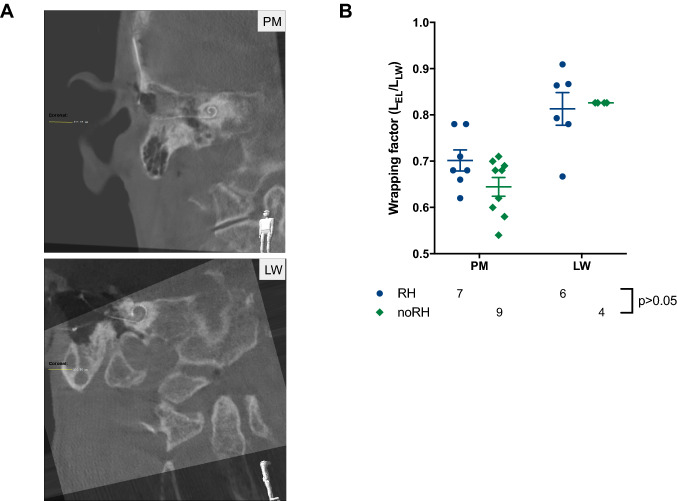
A total of 47 patients underwent cochlear implantation receiving the PM electrode. (i) Patients with pure tone audiogram (PTA) thresholds better than 85 dB and/or hearing loss for Freiburg speech test numbers less than 60 dB and more than 50% maximum monosyllabic understanding were assigned to the RH group (n = 17), while all others belonged to the noRH group (n = 30). (ii) Another group implanted with a slim straight, lateral wall (LW) electrode was recruited for comparison.
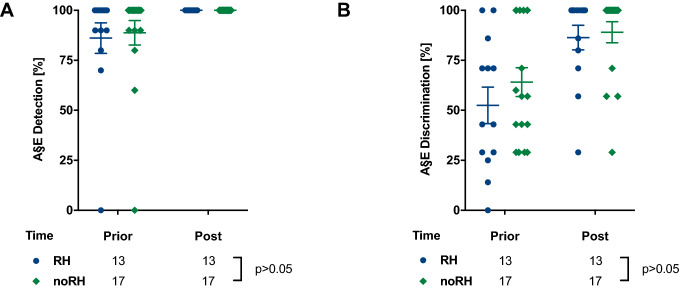
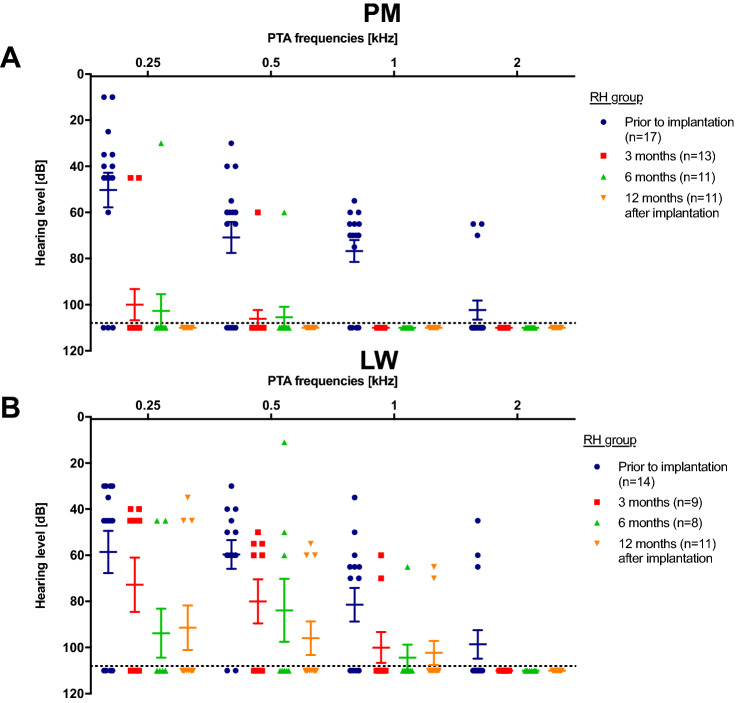
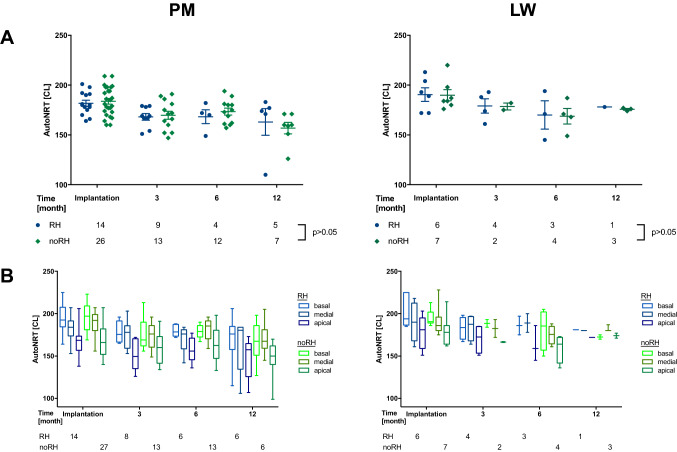
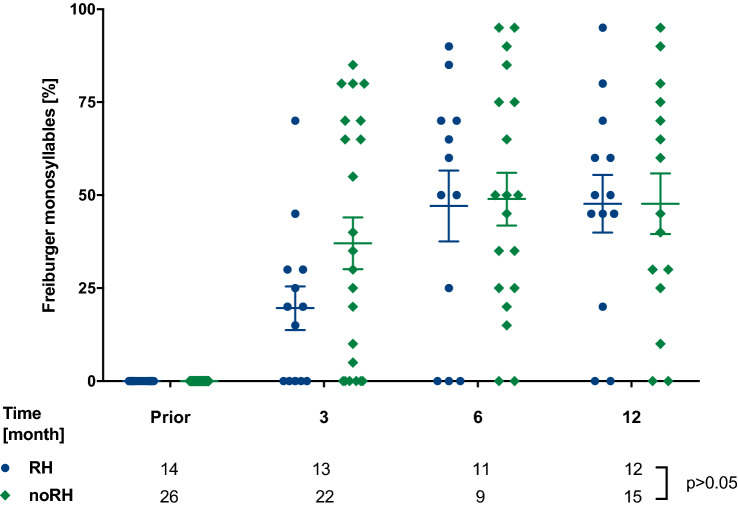
We compared 17 RH-30 noRH patients all receiving the PM electrode. RH in PM recipients decreased faster than in LW recipients. No significant differences were observed between both (RH v/s noRH) groups in NRT thresholds, Freiburg speech test and A§E phonemes. Analogous satisfaction levels were indicated through the questionnaires in terms of sound quality, hearing in silence, noise and directional hearing in both groups.
The results suggest that hearing preservation is influenced not only by electrode shape but various factors. This study opens an avenue for further investigations to elucidate and enumerate the causes for progressive hearing loss.
为了保护植入人工耳蜗(CI)患者的听力,已经进行了许多尝试。特别是,优化电极阵列设计旨在保留残余听力(RH)。本研究旨在探讨是否可以使用超薄的peri Modiolar(PM)电极阵列来保持听力。
共有 47 名患者接受了 PM 电极的耳蜗植入。(i)纯音听阈(PTA)阈值优于 85dB 和/或弗赖堡言语测试数字大于 60dB 且大于 50%最大单音节理解的患者被分配到 RH 组(n=17),而其他所有患者都属于无 RH 组(n=30)。(ii)招募了另一组植入超薄直型、侧壁(LW)电极的患者进行比较。
我们比较了 17 名 RH-30 名无 RH 患者,他们都接受了 PM 电极。PM 电极植入者的 RH 下降速度快于 LW 电极植入者。两组(RH 与无 RH)的 NRT 阈值、弗赖堡言语测试和 A§E 语音无显著差异。两组患者在声音质量、安静时听力、噪声和定向听力方面,通过问卷调查都表现出了类似的满意度。
结果表明,听力保护不仅受电极形状的影响,还受多种因素的影响。本研究为进一步研究阐明和列举导致听力逐渐丧失的原因开辟了途径。