Department of Molecular and Clinical Pharmacology, Institute of Translational Medicine, University of Liverpool, Liverpool, UK.
Division of Infectious Diseases and Hospital Epidemiology, Departments of Medicine and Clinical Research, University Hospital Basel, Basel, Switzerland.
Clin Pharmacokinet. 2021 Jul;60(7):835-853. doi: 10.1007/s40262-021-01005-1. Epub 2021 Apr 8.
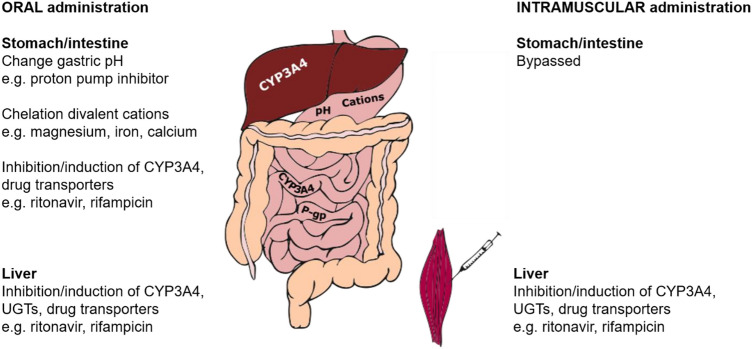
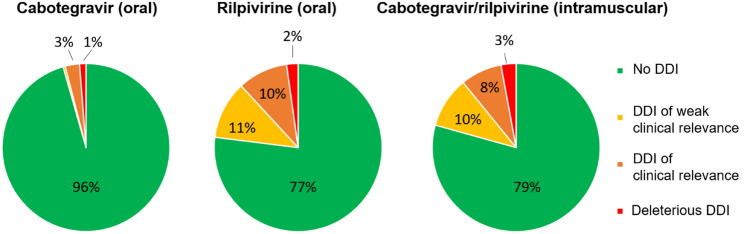
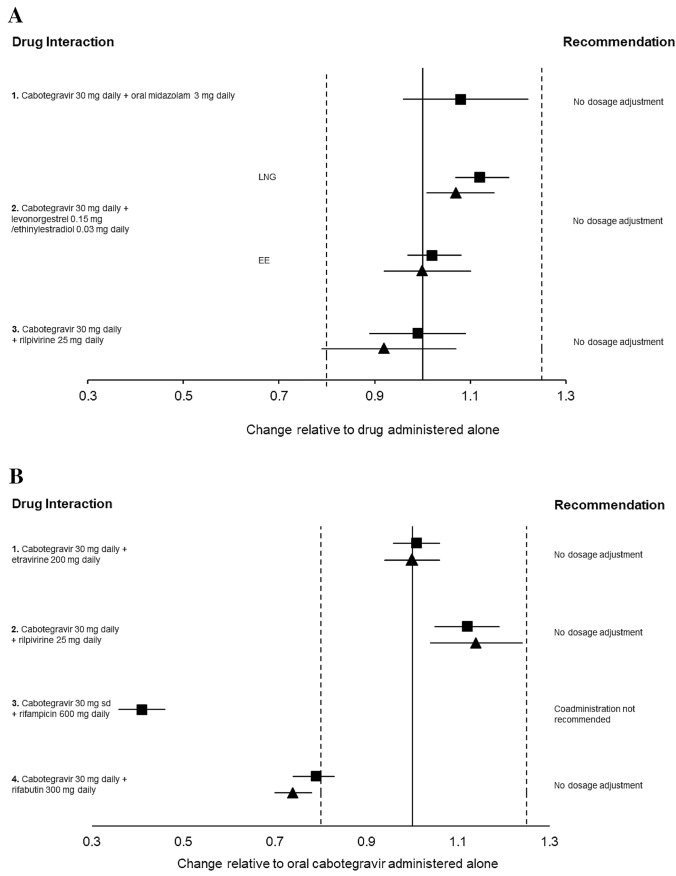
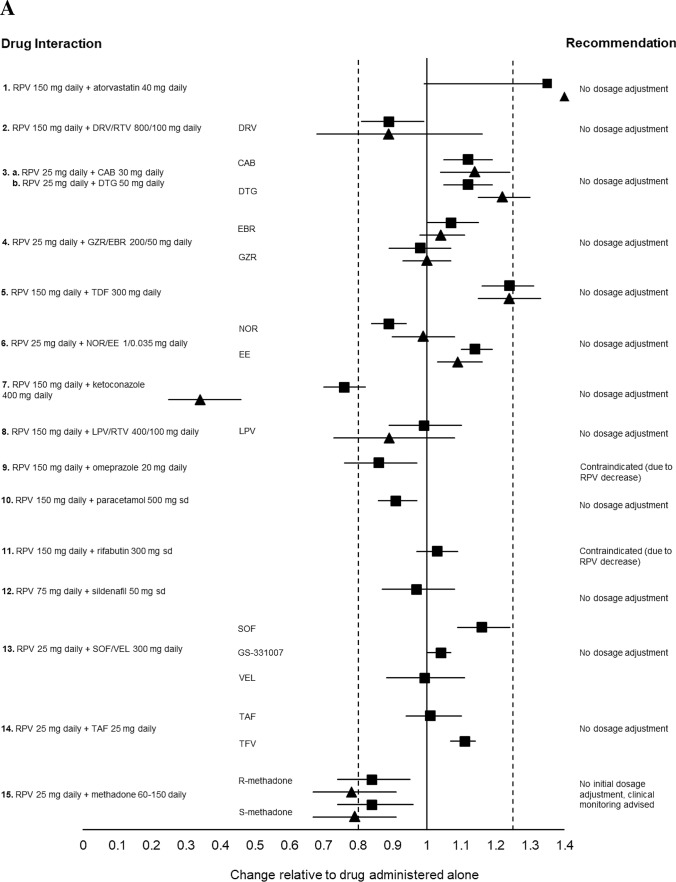
Combined antiretroviral treatments have significantly improved the morbidity and mortality related to HIV infection, thus transforming HIV infection into a chronic disease; however, the efficacy of antiretroviral treatments is highly dependent on the ability of infected individuals to adhere to life-long drug combination therapies. A major milestone in HIV treatment is the marketing of the long-acting intramuscular antiretroviral drugs cabotegravir and rilpivirine, allowing for infrequent drug administration, with the potential to improve adherence to therapy and treatment satisfaction. Intramuscular administration of cabotegravir and rilpivirine leads to differences in pharmacokinetics and drug-drug interaction (DDI) profiles compared with oral administration. A notable difference is the long elimination half-life with intramuscular administration, which reaches 5.6-11.5 weeks for cabotegravir and 13-28 weeks for rilpivirine, compared with 41 and 45 h, respectively, with their oral administration. Cabotegravir and rilpivirine have a low potential to cause DDIs, however these drugs can be victims of DDIs. Cabotegravir is mainly metabolized by UGT1A1, and rilpivirine is mainly metabolized by CYP3A4, therefore these agents are susceptible to DDIs with inhibitors, and particularly inducers of drug-metabolizing enzymes. Intramuscular administration of cabotegravir and rilpivirine has the advantage of eliminating DDIs occurring at the gastrointestinal level, however interactions can still occur at the hepatic level. This review provides insight on the intramuscular administration of drugs and summarizes the pharmacology of long-acting cabotegravir and rilpivirine. Particular emphasis is placed on DDI profiles after oral and intramuscular administration of these antiretroviral drugs.
联合抗逆转录病毒治疗显著改善了与 HIV 感染相关的发病率和死亡率,从而将 HIV 感染转变为慢性病;然而,抗逆转录病毒治疗的疗效高度依赖于感染者终身坚持药物联合治疗的能力。HIV 治疗的一个主要里程碑是长效肌内注射抗逆转录病毒药物卡替拉韦和利匹韦林的上市,允许减少药物给药频率,有可能提高治疗依从性和治疗满意度。与口服给药相比,肌内注射卡替拉韦和利匹韦林会导致药代动力学和药物相互作用(DDI)特征的差异。一个显著的区别是肌内注射的长消除半衰期,卡替拉韦的消除半衰期为 5.6-11.5 周,利匹韦林为 13-28 周,而其口服制剂的消除半衰期分别为 41 和 45 小时。卡替拉韦和利匹韦林发生药物相互作用的潜力较低,但这些药物也可能是药物相互作用的受害者。卡替拉韦主要由 UGT1A1 代谢,利匹韦林主要由 CYP3A4 代谢,因此这些药物容易与药物代谢酶的抑制剂和诱导剂发生 DDI。卡替拉韦和利匹韦林的肌内注射具有消除胃肠道水平发生的 DDI 的优势,但仍可能在肝脏水平发生相互作用。这篇综述提供了对药物肌内注射的深入了解,并总结了长效卡替拉韦和利匹韦林的药理学。特别强调了这些抗逆转录病毒药物口服和肌内给药后的 DDI 特征。