Zmazek Jan, Klemen Maša Skelin, Markovič Rene, Dolenšek Jurij, Marhl Marko, Stožer Andraž, Gosak Marko
Faculty of Natural Sciences and Mathematics, University of Maribor, Maribor, Slovenia.
Faculty of Medicine, University of Maribor, Maribor, Slovenia.
Front Physiol. 2021 Mar 23;12:612233. doi: 10.3389/fphys.2021.612233. eCollection 2021.
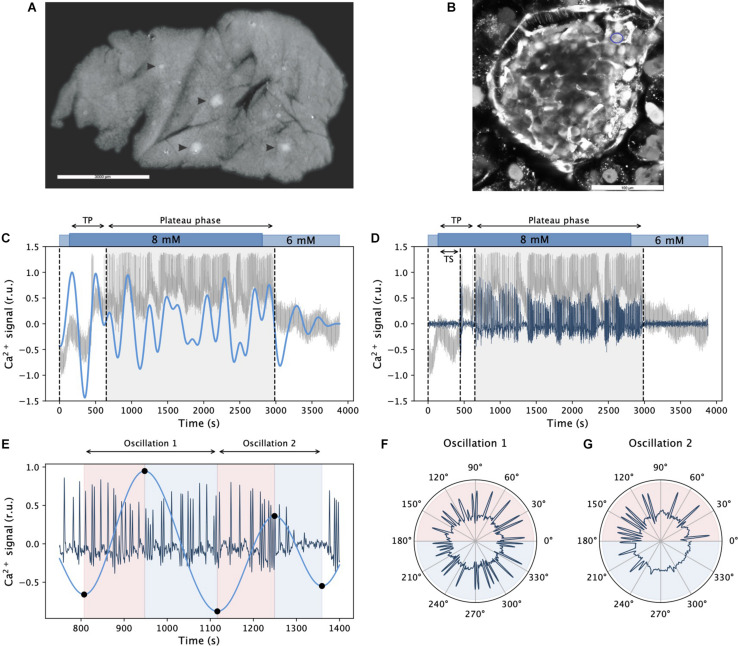
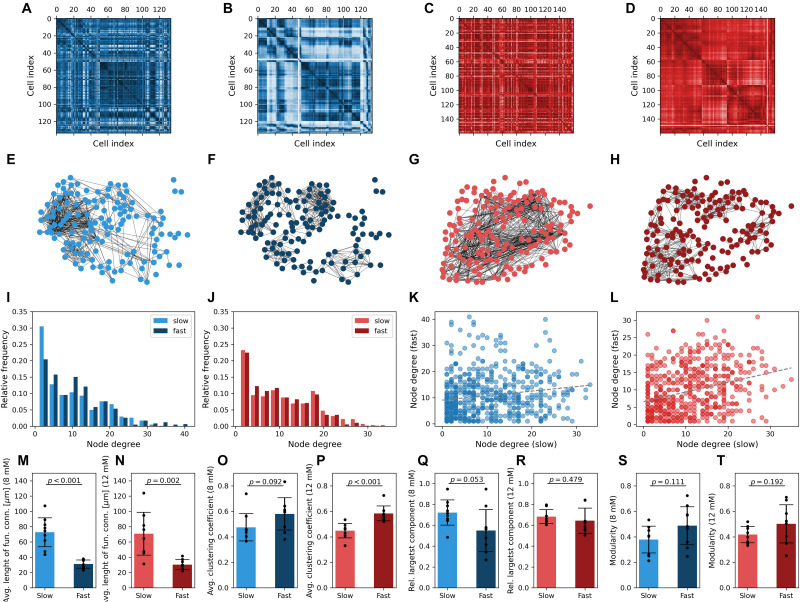
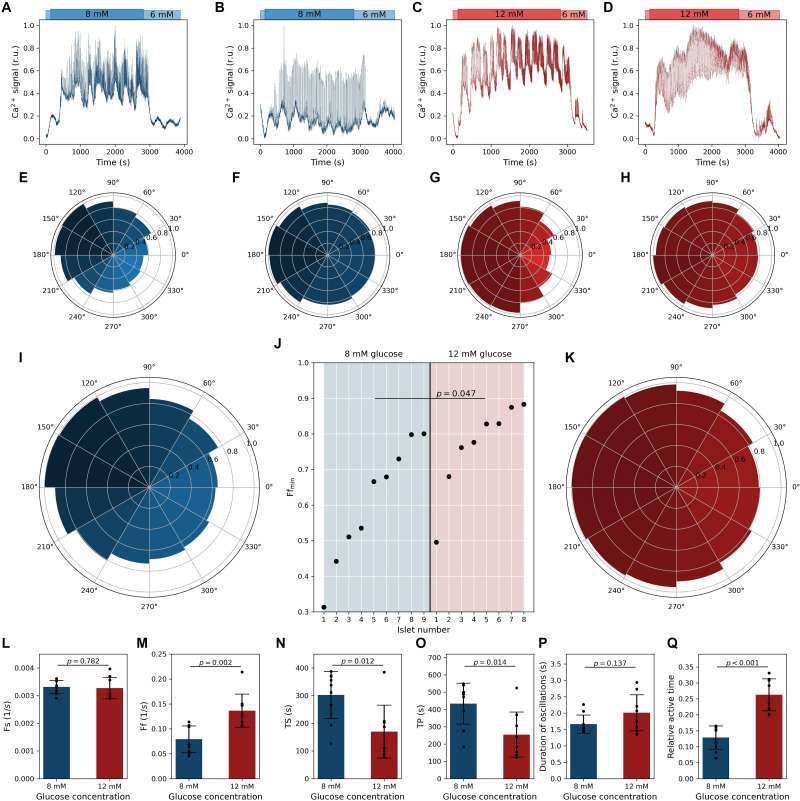
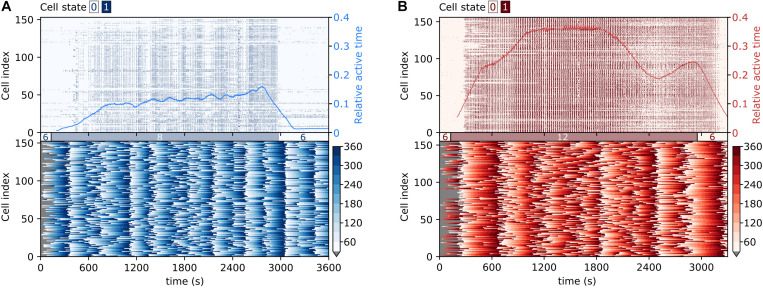
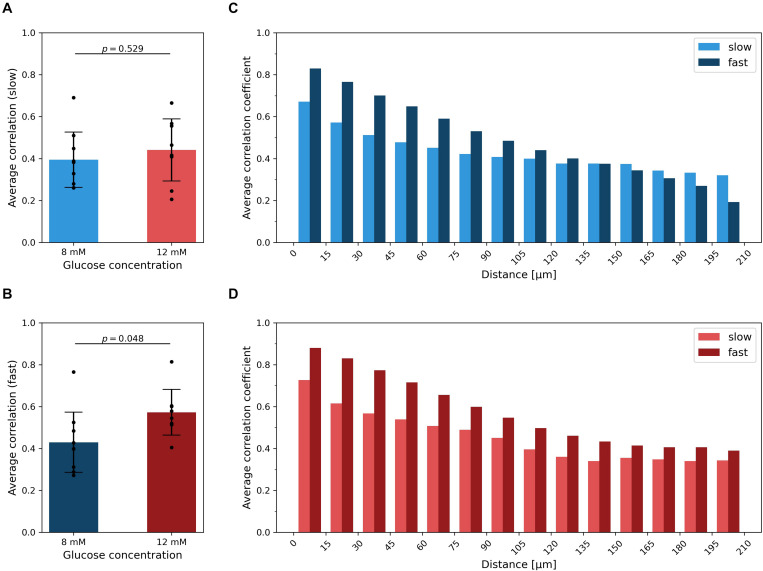
Beta cells within the pancreatic islets of Langerhans respond to stimulation with coherent oscillations of membrane potential and intracellular calcium concentration that presumably drive the pulsatile exocytosis of insulin. Their rhythmic activity is multimodal, resulting from networked feedback interactions of various oscillatory subsystems, such as the glycolytic, mitochondrial, and electrical/calcium components. How these oscillatory modules interact and affect the collective cellular activity, which is a prerequisite for proper hormone release, is incompletely understood. In the present work, we combined advanced confocal Ca imaging in fresh mouse pancreas tissue slices with time series analysis and network science approaches to unveil the glucose-dependent characteristics of different oscillatory components on both the intra- and inter-cellular level. Our results reveal an interrelationship between the metabolically driven low-frequency component and the electrically driven high-frequency component, with the latter exhibiting the highest bursting rates around the peaks of the slow component and the lowest around the nadirs. Moreover, the activity, as well as the average synchronicity of the fast component, considerably increased with increasing stimulatory glucose concentration, whereas the stimulation level did not affect any of these parameters in the slow component domain. Remarkably, in both dynamical components, the average correlation decreased similarly with intercellular distance, which implies that intercellular communication affects the synchronicity of both types of oscillations. To explore the intra-islet synchronization patterns in more detail, we constructed functional connectivity maps. The subsequent comparison of network characteristics of different oscillatory components showed more locally clustered and segregated networks of fast oscillatory activity, while the slow oscillations were more global, resulting in several long-range connections and a more cohesive structure. Besides the structural differences, we found a relatively weak relationship between the fast and slow network layer, which suggests that different synchronization mechanisms shape the collective cellular activity in islets, a finding which has to be kept in mind in future studies employing different oscillations for constructing networks.
朗格汉斯胰岛内的β细胞对刺激做出反应,表现为膜电位和细胞内钙浓度的相干振荡,这可能驱动胰岛素的脉冲式胞吐作用。它们的节律性活动是多模式的,源于各种振荡子系统(如糖酵解、线粒体和电/钙成分)的网络反馈相互作用。这些振荡模块如何相互作用并影响集体细胞活动(这是正常激素释放的先决条件),目前尚不完全清楚。在本研究中,我们将新鲜小鼠胰腺组织切片中的先进共聚焦钙成像与时间序列分析和网络科学方法相结合,以揭示细胞内和细胞间水平上不同振荡成分的葡萄糖依赖性特征。我们的结果揭示了代谢驱动的低频成分和电驱动的高频成分之间的相互关系,后者在慢成分的峰值附近表现出最高的爆发率,而在最低点附近则最低。此外,随着刺激葡萄糖浓度的增加,快速成分的活性以及平均同步性显著增加,而刺激水平在慢成分域中不影响这些参数中的任何一个。值得注意的是,在这两个动态成分中,平均相关性都随着细胞间距离的增加而类似地降低,这意味着细胞间通讯会影响两种振荡类型的同步性。为了更详细地探索胰岛内的同步模式,我们构建了功能连接图。随后对不同振荡成分的网络特征进行比较,结果显示快速振荡活动的网络更具局部聚类性和隔离性,而慢振荡则更具全局性,导致多个长程连接和更紧密的结构。除了结构差异外,我们还发现快速和慢速网络层之间的关系相对较弱,这表明不同的同步机制塑造了胰岛中的集体细胞活动,这一发现对于未来利用不同振荡构建网络的研究必须牢记在心。