Unit of Neuroscience, Department of Medicine and Surgery, University of Parma, Italy.
Unit of Audiology and Pediatric Otorhinolaryngology, University Hospital of Parma, Italy.
Neural Plast. 2021 Mar 24;2021:8890541. doi: 10.1155/2021/8890541. eCollection 2021.
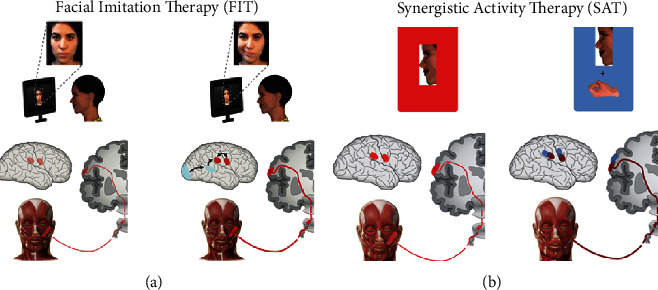
To perform a preliminary test of a new rehabilitation treatment (FIT-SAT), based on mirror mechanisms, for gracile muscles after smile surgery.
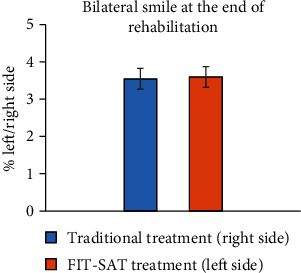
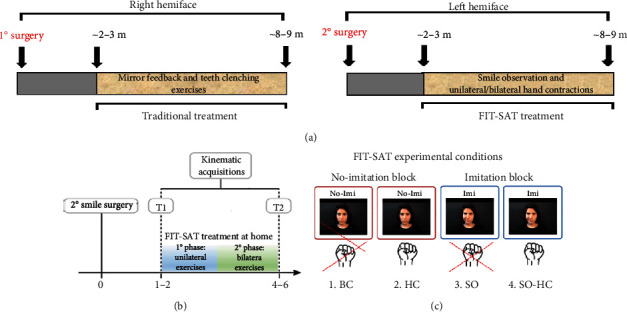
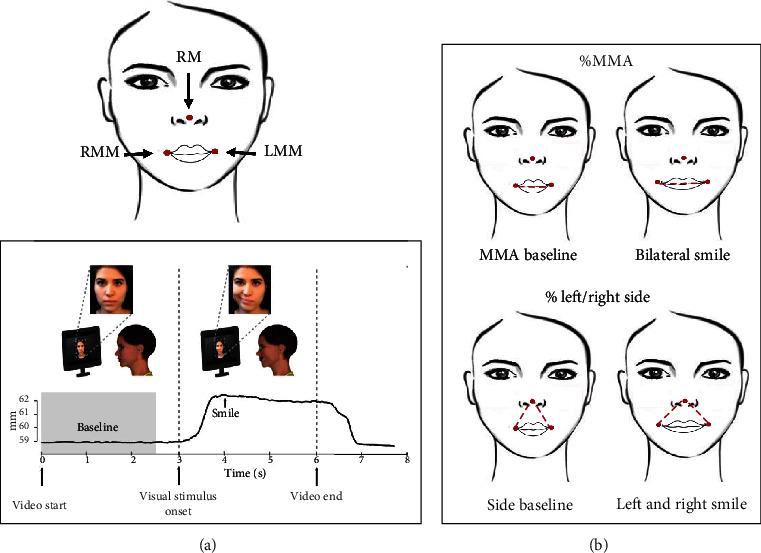
A pre- and postsurgery longitudinal design was adopted to study the efficacy of FIT-SAT. Four patients with bilateral facial nerve paralysis (Moebius syndrome) were included. They underwent two surgeries with free muscle transfers, one year apart from each other. The side of the face first operated on was rehabilitated with the traditional treatment, while the second side was rehabilitated with FIT-SAT. The FIT-SAT treatment includes video clips of an actor performing a unilateral or a bilateral smile to be imitated (FIT condition). In addition to this, while smiling, the participants close their hand in order to exploit the overlapped cortical motor representation of the hand and the mouth, which may facilitate the synergistic activity of the two effectors during the early phases of recruitment of the transplanted muscles (SAT). The treatment was also aimed at avoiding undesired movements such as teeth grinding. . Results support FIT-SAT as a viable alternative for smile rehabilitation after free muscle transfer. We propose that the treatment potentiates the effect of smile observation by activating the same neural structures responsible for the execution of the smile and therefore by facilitating its production. Closing of the hand induces cortical recruitment of hand motor neurons, recruiting the transplanted muscles, and reducing the risk of associating other unwanted movements such as teeth clenching to the smile movements.
初步测试一种新的基于镜像机制的康复治疗(FIT-SAT),用于微笑手术后的细小肌肉。
采用术前和术后纵向设计来研究 FIT-SAT 的疗效。纳入 4 例双侧面神经麻痹(Moebius 综合征)患者。他们接受了两次游离肌肉移植手术,间隔一年。先进行手术的一侧采用传统治疗进行康复,而另一侧则采用 FIT-SAT 进行康复。FIT-SAT 治疗包括模仿演员进行单侧或双侧微笑的视频片段(FIT 条件)。此外,在微笑时,参与者会闭上手,以利用手和嘴的重叠皮质运动代表,这可能有助于在移植肌肉早期募集阶段协同活动两个效应器(SAT)。该治疗还旨在避免磨牙等不期望的运动。结果支持 FIT-SAT 作为游离肌肉移植后微笑康复的可行替代方案。我们提出,该治疗通过激活负责微笑执行的相同神经结构,从而促进微笑的产生,增强微笑观察的效果。手的闭合会引起手部运动神经元的皮质募集,募集移植的肌肉,并降低将其他不期望的运动(如咬牙)与微笑运动联系起来的风险。