Department of Radiation Oncology, Nanfang Hospital, Southern Medical University, Guangzhou 510515, Guangdong Province, People's Republic of China.
Department of Infectious Diseases, Nanfang Hospital, Southern Medical University, Guangzhou 510515, Guangdong Province, People's Republic of China.
Biosci Rep. 2021 Apr 30;41(4). doi: 10.1042/BSR20202870.
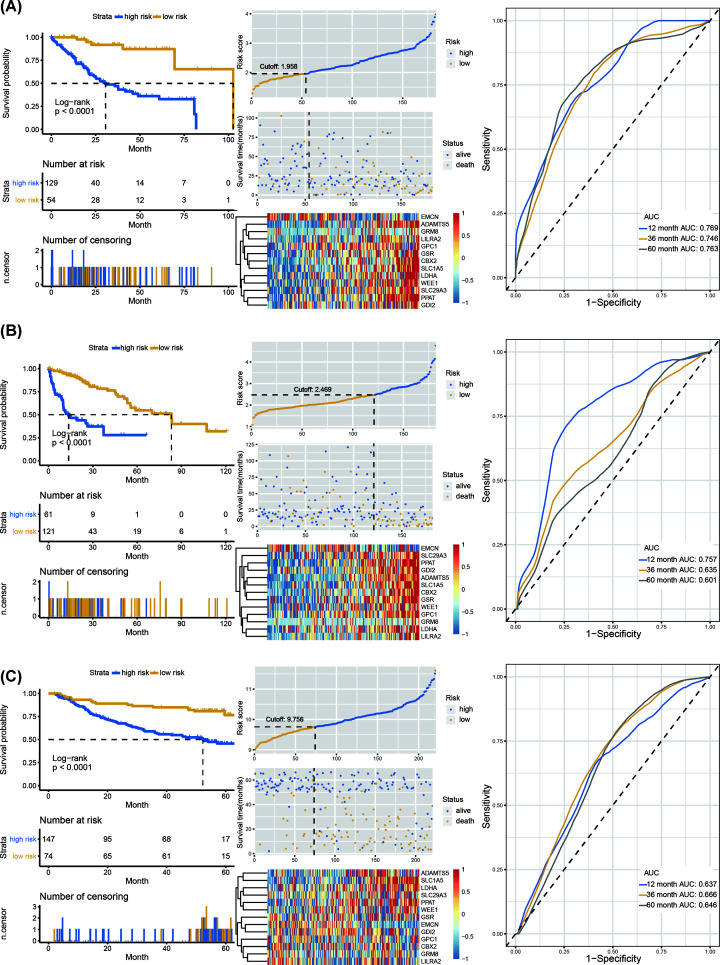
Hepatocellular carcinoma (HCC) is a malignant tumor of the digestive system characterized by mortality rate and poor prognosis. To indicate the prognosis of HCC patients, lots of genes have been screened as prognostic indicators. However, the predictive efficiency of single gene is not enough. Therefore, it is essential to identify a risk-score model based on gene signature to elevate predictive efficiency.
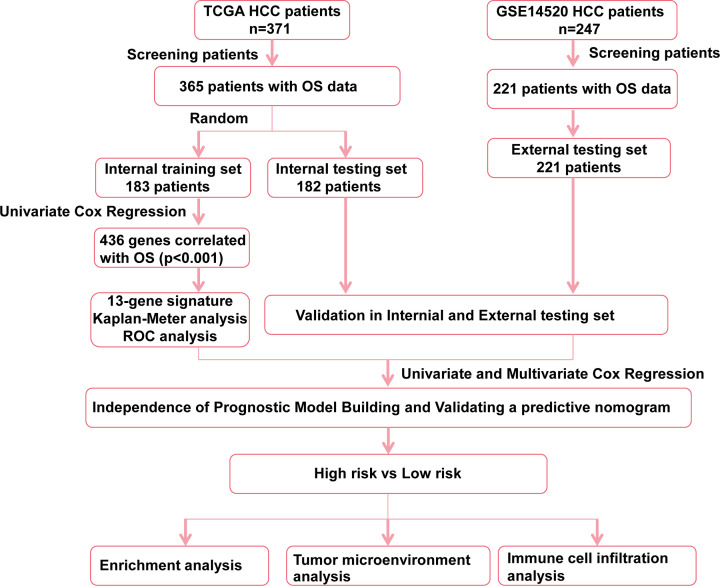
Lasso regression analysis followed by univariate Cox regression was employed to establish a risk-score model for HCC prognosis prediction based on The Cancer Genome Atlas (TCGA) dataset and Gene Expression Omnibus (GEO) dataset GSE14520. R package 'clusterProfiler' was used to conduct function and pathway enrichment analysis. The infiltration level of various immune and stromal cells in the tumor microenvironment (TME) were evaluated by single-sample GSEA (ssGSEA) of R package 'GSVA'.
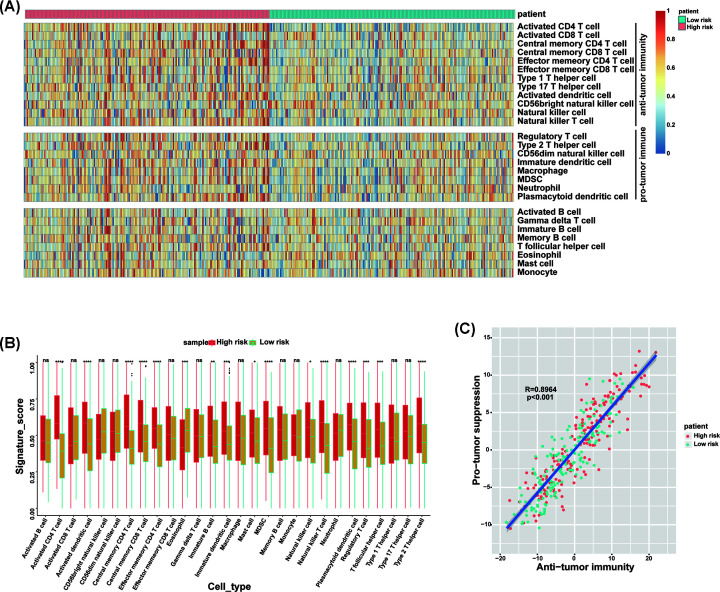
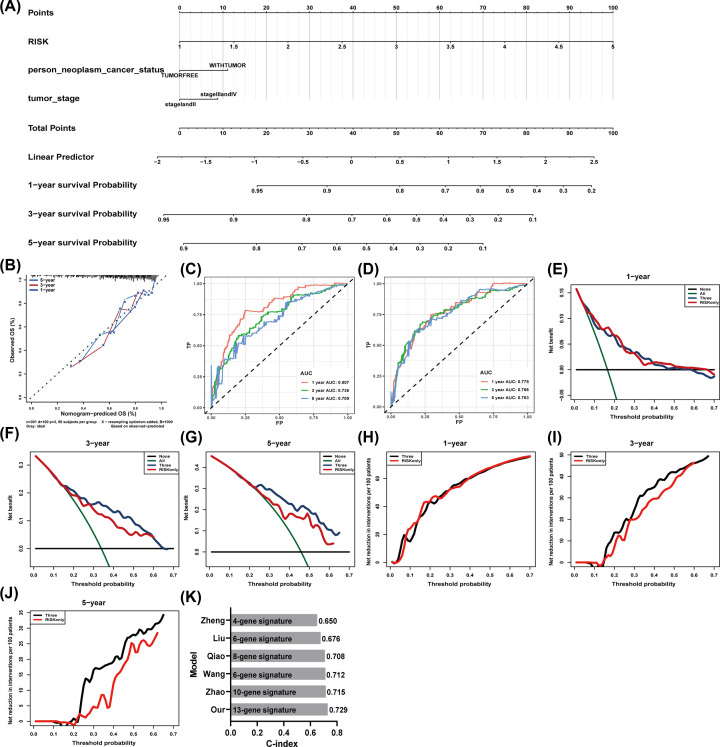
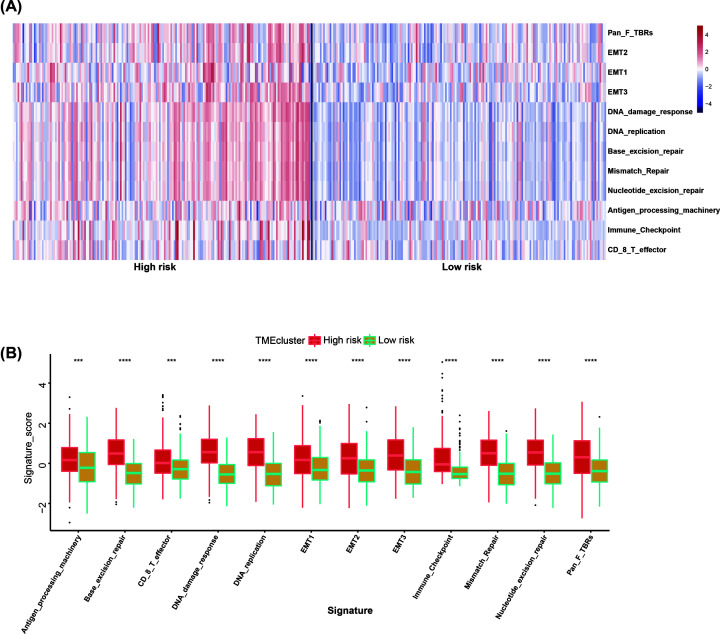
This prognostic model is an independent prognostic factor for predicting the prognosis of HCC patients and can be more effective by combining with clinical data through the construction of nomogram model. Further analysis showed patients in high-risk group possess more complex TME and immune cell composition.
Taken together, our research suggests the thirteen-gene signature to possess potential prognostic value for HCC patients and provide new information for immunological research and treatment in HCC.
肝细胞癌(HCC)是一种消化系统恶性肿瘤,死亡率和预后差。为了指示 HCC 患者的预后,已经筛选了许多基因作为预后指标。然而,单个基因的预测效率不足。因此,基于基因特征识别风险评分模型以提高预测效率至关重要。
基于 The Cancer Genome Atlas(TCGA)数据集和 Gene Expression Omnibus(GEO)数据集 GSE14520,采用 Lasso 回归分析和单因素 Cox 回归建立 HCC 预后预测风险评分模型。使用 R 包'clusterProfiler'进行功能和通路富集分析。通过 R 包'GSVA'的单样本 GSEA(ssGSEA)评估肿瘤微环境(TME)中各种免疫和基质细胞的浸润水平。
该预后模型是预测 HCC 患者预后的独立预后因素,并通过与临床数据构建列线图模型进行联合,可以更有效地预测预后。进一步的分析表明,高危组患者具有更复杂的 TME 和免疫细胞组成。
综上所述,我们的研究表明,该十三基因特征具有潜在的 HCC 患者预后价值,并为 HCC 的免疫研究和治疗提供了新的信息。