The Key Laboratory for Silviculture and Conservation of Ministry of Education, College of Forestry, Beijing Forestry University, Beijing, China.
Beijing Key Laboratory for Forest Pest Control, Beijing Forestry University, Beijing, China.
Mol Plant Pathol. 2021 Jun;22(6):710-726. doi: 10.1111/mpp.13059. Epub 2021 Apr 9.
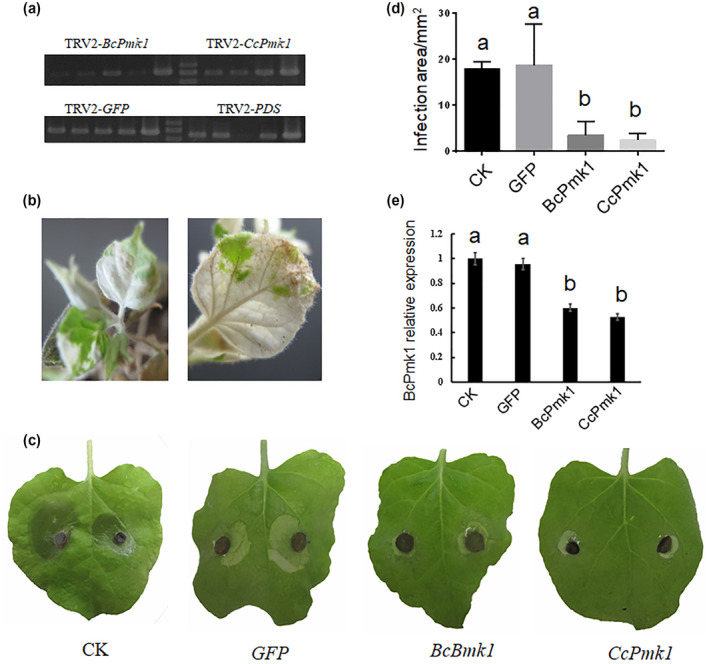
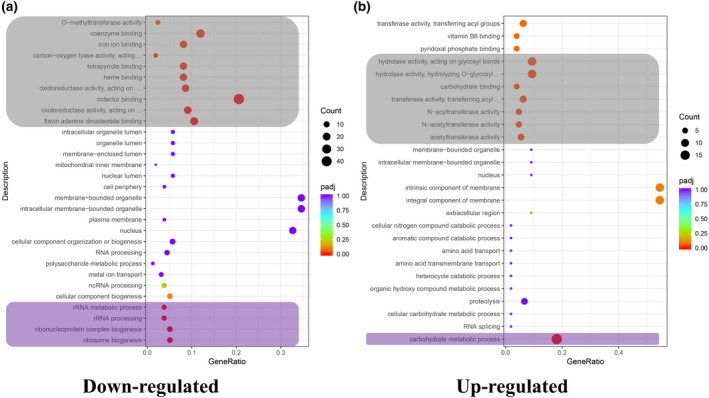
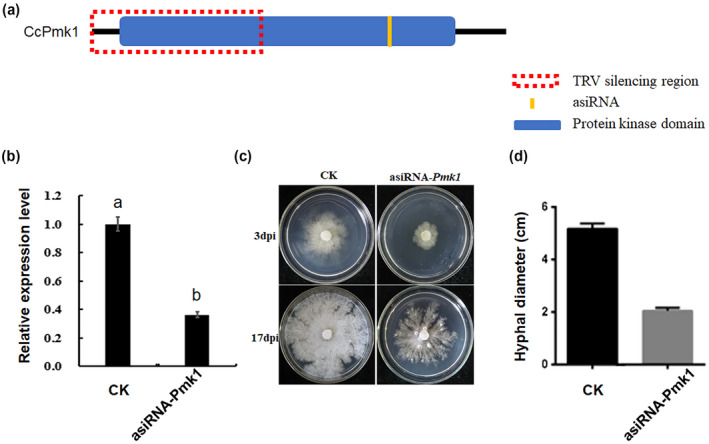
Fus3/Kss1, also known as Pmk1 in several pathogenic fungi, is a component of the mitogen-activated protein kinase (MAPK) signalling pathway that functions as a regulator in fungal development, stress response, mating, and pathogenicity. Cytospora chrysosperma, a notorious woody plant-pathogenic fungus, causes canker disease in many species, and its Pmk1 homolog, CcPmk1, is required for fungal development and pathogenicity. However, the global regulation network of CcPmk1 is still unclear. In this study, we compared transcriptional analysis between a CcPmk1 deletion mutant and the wild type during the simulated infection process. A subset of transcription factor genes and putative effector genes were significantly down-regulated in the CcPmk1 deletion mutant, which might be important for fungal pathogenicity. Additionally, many tandem genes were found to be regulated by CcPmk1. Eleven out of 68 core secondary metabolism biosynthesis genes and several gene clusters were significantly down-regulated in the CcPmk1 deletion mutant. GO annotation of down-regulated genes showed that the ribosome biosynthesis-related processes were over-represented in the CcPmk1 deletion mutant. Comparison of the CcPmk1-regulated genes with the Pmk1-regulated genes from Magnaporthe oryzae revealed only a few overlapping regulated genes in both CcPmk1 and Pmk1, while the enrichment GO terms in the ribosome biosynthesis-related processes were also found. Subsequently, we calculated that in vitro feeding artificial small interference RNAs of CcPmk1 could silence the target gene, resulting in inhibited fungal growth. Furthermore, silencing of BcPmk1 in Botrytis cinerea with conserved CcPmk1 and BcPmk1 fragments could significantly compromise fungal virulence using the virus-induced gene silencing system in Nicotiana benthamiana. These results suggest that CcPmk1 functions as a regulator of pathogenicity and can potentially be designed as a target for broad-spectrum disease control, but unintended effects on nonpathogenic fungi need to be avoided.
Fus3/Kss1,在几种病原真菌中也被称为 Pmk1,是丝裂原活化蛋白激酶(MAPK)信号通路的一个组成部分,作为真菌发育、应激反应、交配和致病性的调节剂发挥作用。黄杨盘长孢菌是一种臭名昭著的木质植物病原真菌,可引起许多物种的溃疡病,其 Pmk1 同源物 CcPmk1 是真菌发育和致病性所必需的。然而,CcPmk1 的全局调控网络仍不清楚。在这项研究中,我们比较了模拟感染过程中 CcPmk1 缺失突变体和野生型之间的转录分析。在 CcPmk1 缺失突变体中,一组转录因子基因和推定效应基因显著下调,这可能对真菌的致病性很重要。此外,许多串联基因受到 CcPmk1 的调控。在 CcPmk1 缺失突变体中,68 个核心次级代谢生物合成基因和几个基因簇中的 11 个显著下调。下调基因的 GO 注释表明,核糖体生物合成相关过程在 CcPmk1 缺失突变体中过表达。将 CcPmk1 调控基因与稻瘟病菌中的 Pmk1 调控基因进行比较,发现 CcPmk1 和 Pmk1 中仅有少数重叠的调控基因,而核糖体生物合成相关过程的富集 GO 术语也存在。随后,我们计算出体外喂食 CcPmk1 的人工小干扰 RNA 可以沉默靶基因,从而抑制真菌的生长。此外,利用病毒诱导的基因沉默系统在本氏烟中用保守的 CcPmk1 和 BcPmk1 片段沉默 Botrytis cinerea 中的 BcPmk1 ,可显著降低真菌的毒力。这些结果表明 CcPmk1 作为致病性的调节剂发挥作用,并且可以潜在地设计为广谱疾病控制的靶标,但需要避免对非致病性真菌产生意外影响。