Department of Pharmaceutical Sciences, Eugene Applebaum College of Pharmacy and Health Sciences, Wayne State University, 259 Mack Avenue, Detroit, MI, 48201, USA.
Department of Pharmaceutical Sciences, Eugene Applebaum College of Pharmacy and Health Sciences, Wayne State University, 259 Mack Avenue, Detroit, MI, 48201, USA.
Semin Cancer Biol. 2021 Nov;76:258-266. doi: 10.1016/j.semcancer.2021.04.004. Epub 2021 Apr 6.
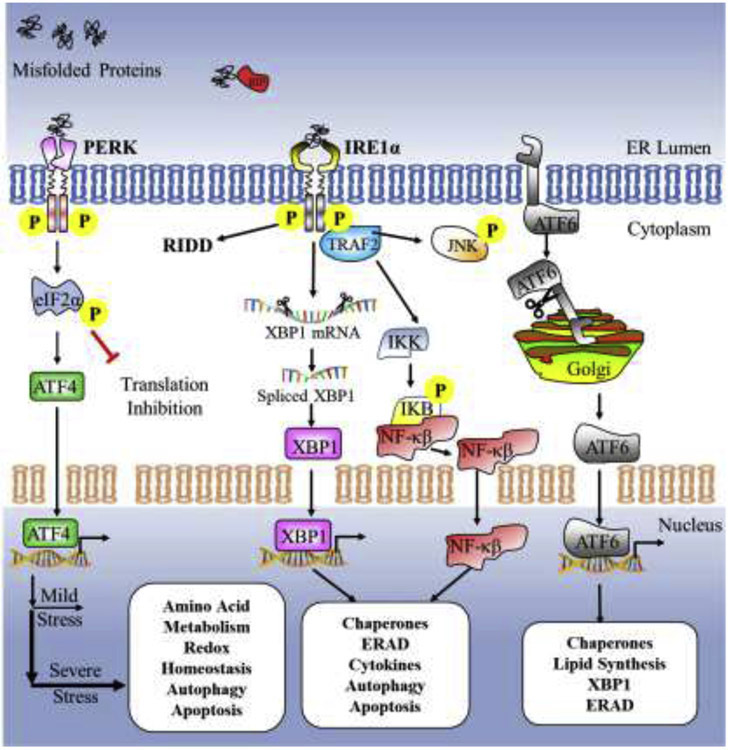
Arsenic exposure in contaminated drinking water is a global health issue, as more than 200 million people are affected globally. Arsenic has been known to cause skin, liver, lung, bladder and prostate cancers. Accordingly, it has been categorized as a group I human carcinogen by the International Agency for Research on Cancer (IARC). Various natural and anthropogenic activities lead to the release of arsenic in the environment, contaminating air, water and food sources. Traditionally, genetic mutations have been the center of cancer research. However, emerging studies have now focused on the importance of epigenetics, metabolism and endoplasmic reticulum (ER) stress in cancer. Arsenic is highly capable of inducing stress in the cells via the generation of free radicals causing oxidative stress, epigenetic and genetic alterations, mitochondrial dysfunction, activation of intracellular signaling pathways, and impairment of autophagy and DNA repair systems. The cancer cells are able to utilize the unfolded protein response (UPR) to overcome these internal stresses in various stages of arsenic-induced carcinogenesis, from cancer growth to immune responses. The UPR is an evolutionarily conserved stress response that has both survival and apoptotic outcomes. PERK, IRE1α and ATF6α are the three ER stress sensors that are activated to maintain cellular proteostasis, which can also promote apoptosis on prolonged ER stress. The dual nature of UPR in different cancer types and stages is a challenge for researchers. We must investigate the role and the connections among ER stress-associated UPR, mitochondrial dysfunction and autophagy in arsenic malignancies to identify key targets for cancer prevention and therapeutics.
砷污染饮用水暴露是一个全球性的健康问题,因为全球有超过 2 亿人受到影响。砷已被证实可导致皮肤癌、肝癌、肺癌、膀胱癌和前列腺癌。因此,国际癌症研究机构(IARC)将其归类为 I 类人类致癌物。各种自然和人为活动导致砷在环境中释放,污染空气、水和食物来源。传统上,基因突变一直是癌症研究的中心。然而,新的研究现在已经集中在表观遗传学、代谢和内质网(ER)应激在癌症中的重要性上。砷通过产生自由基引起氧化应激、表观遗传和遗传改变、线粒体功能障碍、细胞内信号通路的激活以及自噬和 DNA 修复系统的损伤,高度能够诱导细胞应激。在砷诱导致癌作用的各个阶段,从癌症生长到免疫反应,癌细胞能够利用未折叠蛋白反应(UPR)来克服这些内部应激。UPR 是一种进化上保守的应激反应,具有生存和凋亡两种结果。PERK、IRE1α 和 ATF6α 是三种被激活的 ER 应激传感器,用于维持细胞蛋白质稳态,也可以在 ER 应激延长时促进细胞凋亡。在不同类型和阶段的癌症中,UPR 的双重性质对研究人员来说是一个挑战。我们必须研究 ER 应激相关 UPR、线粒体功能障碍和自噬在砷致恶性肿瘤中的作用及其联系,以确定癌症预防和治疗的关键靶点。