• 文献检索
  • 文档翻译
  • 深度研究
  • 学术资讯
  • Suppr Zotero 插件Zotero 插件
  • 邀请有礼
  • 套餐&价格
  • 历史记录
应用&插件
Suppr Zotero 插件Zotero 插件浏览器插件Mac 客户端Windows 客户端微信小程序
定价
高级版会员购买积分包购买API积分包
服务
文献检索文档翻译深度研究API 文档MCP 服务
关于我们
关于 Suppr公司介绍联系我们用户协议隐私条款
关注我们

Suppr 超能文献

核心技术专利:CN118964589B侵权必究
粤ICP备2023148730 号-1Suppr @ 2026

文献检索

告别复杂PubMed语法,用中文像聊天一样搜索,搜遍4000万医学文献。AI智能推荐,让科研检索更轻松。

立即免费搜索

文件翻译

保留排版,准确专业,支持PDF/Word/PPT等文件格式,支持 12+语言互译。

免费翻译文档

深度研究

AI帮你快速写综述,25分钟生成高质量综述,智能提取关键信息,辅助科研写作。

立即免费体验

中国山东省 COVID-19 疫情的时空演变及影响机制。

Spatio-temporal evolution and influencing mechanism of the COVID-19 epidemic in Shandong province, China.

机构信息

Department of Physical Education, Northwest University, Xi'an, 710127, China.

College of Urban and Environmental Sciences, Northwest University, Xi'an, 710127, China.

出版信息

Sci Rep. 2021 Apr 9;11(1):7811. doi: 10.1038/s41598-021-86188-0.

DOI:10.1038/s41598-021-86188-0
PMID:33837241
原文链接:https://pmc.ncbi.nlm.nih.gov/articles/PMC8035406/
Abstract

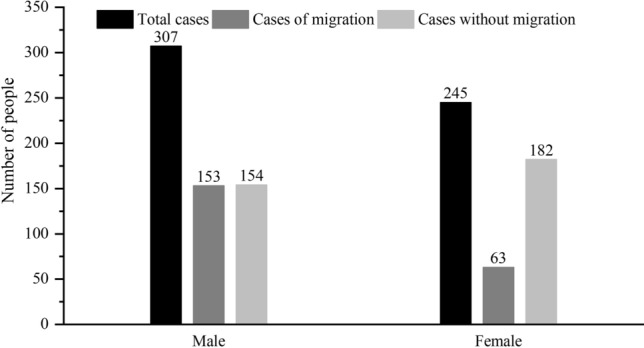
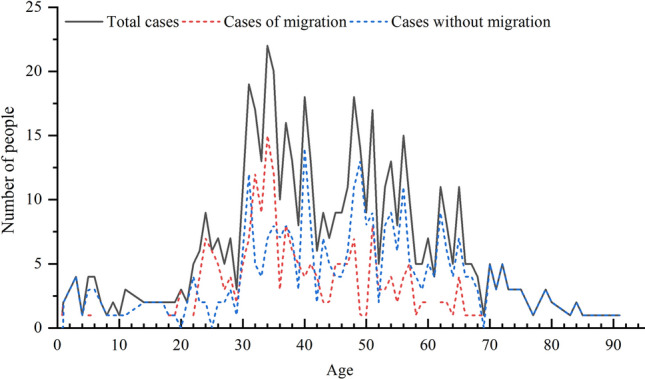
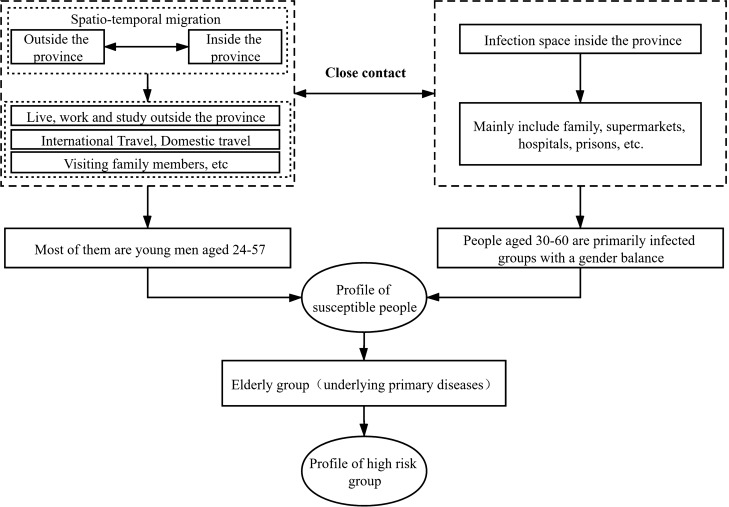
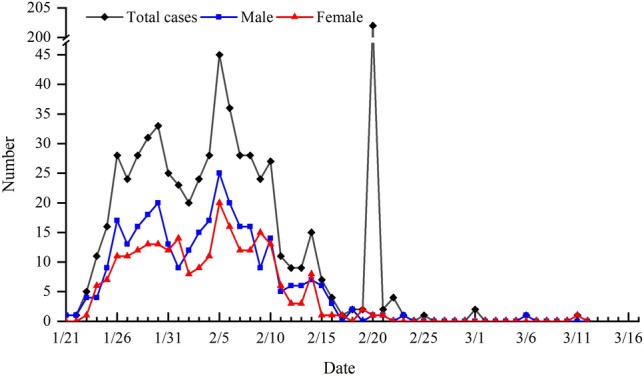
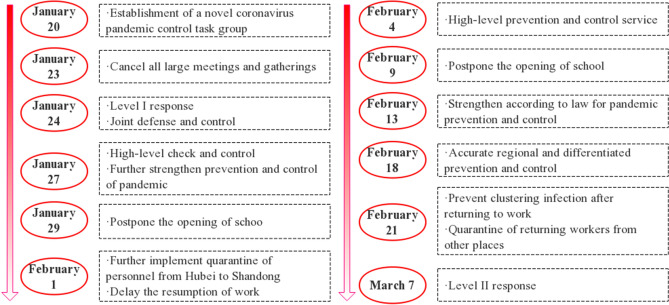
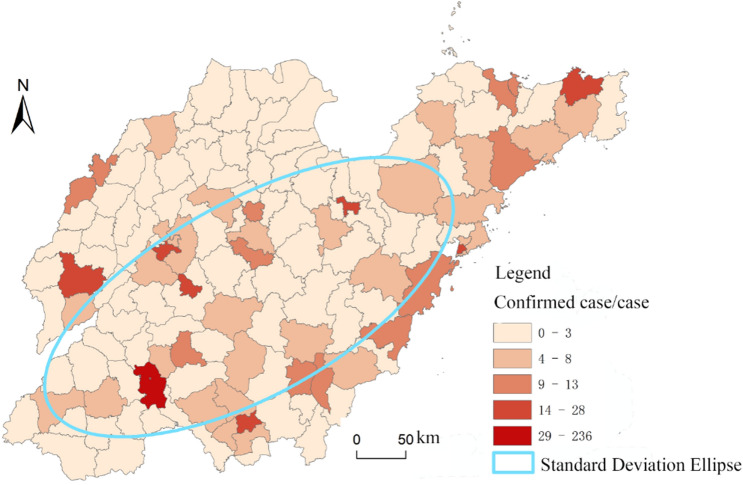
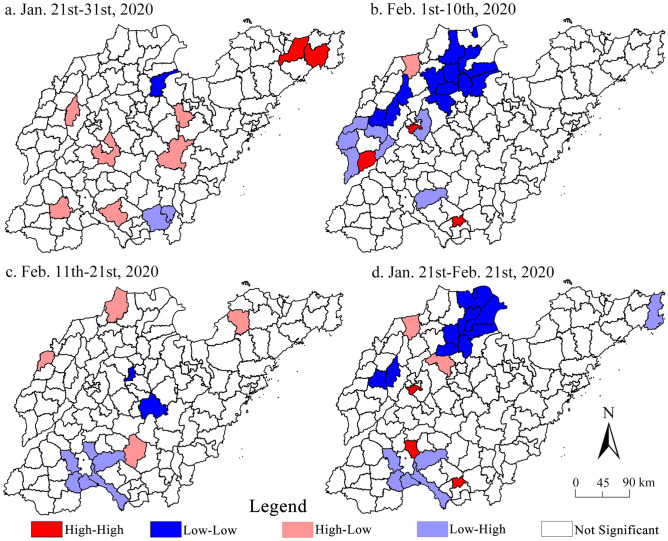
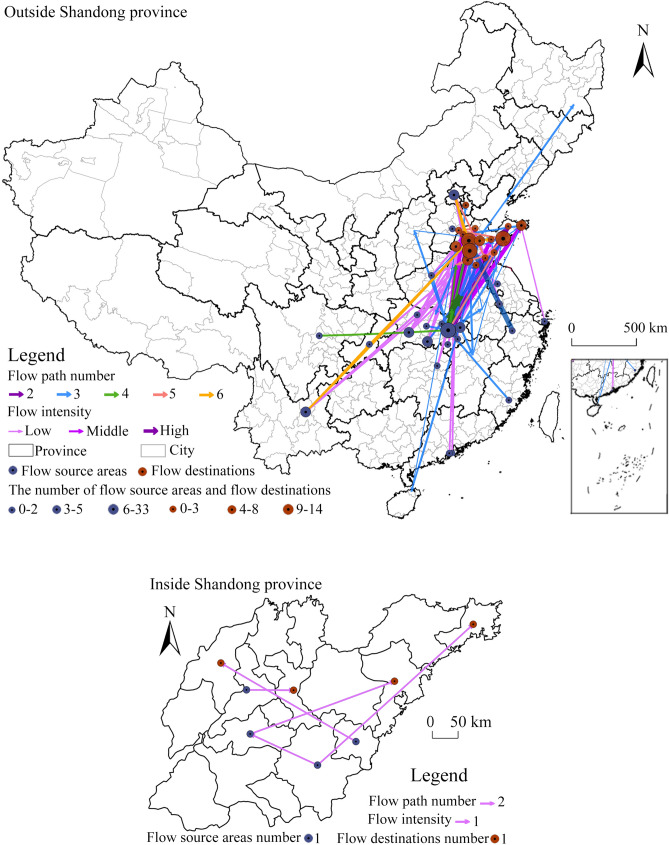
The novel coronavirus pneumonia (COVID-19) outbreak that emerged in late 2019 has posed a severe threat to human health and social and economic development, and thus has become a major public health crisis affecting the world. The spread of COVID-19 in population and regions is a typical geographical process, which is worth discussing from the geographical perspective. This paper focuses on Shandong province, which has a high incidence, though the first Chinese confirmed case was reported from Hubei province. Based on the data of reported confirmed cases and the detailed information of cases collected manually, we used text analysis, mathematical statistics and spatial analysis to reveal the demographic characteristics of confirmed cases and the spatio-temporal evolution process of the epidemic, and to explore the comprehensive mechanism of epidemic evolution and prevention and control. The results show that: (1) the incidence rate of COVID-19 in Shandong is 0.76/100,000. The majority of confirmed cases are old and middle-aged people who are infected by the intra-province diffusion, followed by young and middle-aged people who are infected outside the province. (2) Up to February 5, the number of daily confirmed cases shows a trend of "rapid increase before slowing down", among which, the changes of age and gender are closely related to population migration, epidemic characteristics and intervention measures. (3) Affected by the regional economy and population, the spatial distribution of the confirmed cases is obviously unbalanced, with the cluster pattern of "high-low" and "low-high". (4) The evolution of the migration pattern, affected by the geographical location of Wuhan and Chinese traditional culture, is dominated by "cross-provincial" and "intra-provincial" direct flow, and generally shows the trend of "southwest → northeast". Finally, combined with the targeted countermeasures of "source-flow-sink", the comprehensive mechanism of COVID-19 epidemic evolution and prevention and control in Shandong is revealed. External and internal prevention and control measures are also figured out.

摘要

新型冠状病毒肺炎(COVID-19)疫情于 2019 年末爆发,对人类健康和社会经济发展构成严重威胁,成为影响世界的重大公共卫生危机。COVID-19 在人群和地区中的传播是一个典型的地理过程,值得从地理角度进行探讨。本文以山东省为研究对象,该省疫情发病率较高,尽管首例中国确诊病例报告于湖北省。基于报告的确诊病例数据和手动收集的病例详细信息,我们使用文本分析、数理统计和空间分析来揭示确诊病例的人口统计学特征和疫情的时空演变过程,并探讨疫情演变和防控的综合机制。结果表明:(1)山东省 COVID-19 的发病率为 0.76/10 万,确诊病例以中老年人群为主,主要是省内扩散感染,其次是中青年人群,主要是省外感染。(2)截至 2 月 5 日,每日确诊病例数呈“快速增加后减缓”趋势,其中年龄和性别变化与人口迁移、疫情特征和干预措施密切相关。(3)受区域经济和人口影响,确诊病例的空间分布明显不平衡,呈现“高低”和“低高”的集聚模式。(4)迁移模式的演变受武汉地理位置和中国传统文化的影响,以“省际”和“省内”直接流为主,总体呈“西南→东北”的趋势。最后,结合“源-流-汇”的针对性措施,揭示了山东省 COVID-19 疫情演变和防控的综合机制,并提出了内外防控措施。

https://cdn.ncbi.nlm.nih.gov/pmc/blobs/a18a/8035406/e2aa497210f3/41598_2021_86188_Fig13_HTML.jpg
https://cdn.ncbi.nlm.nih.gov/pmc/blobs/a18a/8035406/514306bea676/41598_2021_86188_Fig1_HTML.jpg
https://cdn.ncbi.nlm.nih.gov/pmc/blobs/a18a/8035406/70d1a309dacf/41598_2021_86188_Fig2_HTML.jpg
https://cdn.ncbi.nlm.nih.gov/pmc/blobs/a18a/8035406/6075f7aa5839/41598_2021_86188_Fig3_HTML.jpg
https://cdn.ncbi.nlm.nih.gov/pmc/blobs/a18a/8035406/5edee84f0802/41598_2021_86188_Fig4_HTML.jpg
https://cdn.ncbi.nlm.nih.gov/pmc/blobs/a18a/8035406/211a539ebecc/41598_2021_86188_Fig5_HTML.jpg
https://cdn.ncbi.nlm.nih.gov/pmc/blobs/a18a/8035406/24784994489d/41598_2021_86188_Fig6_HTML.jpg
https://cdn.ncbi.nlm.nih.gov/pmc/blobs/a18a/8035406/0ba49fcd52c7/41598_2021_86188_Fig7_HTML.jpg
https://cdn.ncbi.nlm.nih.gov/pmc/blobs/a18a/8035406/ef5005f2672a/41598_2021_86188_Fig8_HTML.jpg
https://cdn.ncbi.nlm.nih.gov/pmc/blobs/a18a/8035406/7228e4aa98c4/41598_2021_86188_Fig9_HTML.jpg
https://cdn.ncbi.nlm.nih.gov/pmc/blobs/a18a/8035406/be46eecf0886/41598_2021_86188_Fig10_HTML.jpg
https://cdn.ncbi.nlm.nih.gov/pmc/blobs/a18a/8035406/3afc1e1fda7b/41598_2021_86188_Fig11_HTML.jpg
https://cdn.ncbi.nlm.nih.gov/pmc/blobs/a18a/8035406/c0bb704e6423/41598_2021_86188_Fig12_HTML.jpg
https://cdn.ncbi.nlm.nih.gov/pmc/blobs/a18a/8035406/e2aa497210f3/41598_2021_86188_Fig13_HTML.jpg
https://cdn.ncbi.nlm.nih.gov/pmc/blobs/a18a/8035406/514306bea676/41598_2021_86188_Fig1_HTML.jpg
https://cdn.ncbi.nlm.nih.gov/pmc/blobs/a18a/8035406/70d1a309dacf/41598_2021_86188_Fig2_HTML.jpg
https://cdn.ncbi.nlm.nih.gov/pmc/blobs/a18a/8035406/6075f7aa5839/41598_2021_86188_Fig3_HTML.jpg
https://cdn.ncbi.nlm.nih.gov/pmc/blobs/a18a/8035406/5edee84f0802/41598_2021_86188_Fig4_HTML.jpg
https://cdn.ncbi.nlm.nih.gov/pmc/blobs/a18a/8035406/211a539ebecc/41598_2021_86188_Fig5_HTML.jpg
https://cdn.ncbi.nlm.nih.gov/pmc/blobs/a18a/8035406/24784994489d/41598_2021_86188_Fig6_HTML.jpg
https://cdn.ncbi.nlm.nih.gov/pmc/blobs/a18a/8035406/0ba49fcd52c7/41598_2021_86188_Fig7_HTML.jpg
https://cdn.ncbi.nlm.nih.gov/pmc/blobs/a18a/8035406/ef5005f2672a/41598_2021_86188_Fig8_HTML.jpg
https://cdn.ncbi.nlm.nih.gov/pmc/blobs/a18a/8035406/7228e4aa98c4/41598_2021_86188_Fig9_HTML.jpg
https://cdn.ncbi.nlm.nih.gov/pmc/blobs/a18a/8035406/be46eecf0886/41598_2021_86188_Fig10_HTML.jpg
https://cdn.ncbi.nlm.nih.gov/pmc/blobs/a18a/8035406/3afc1e1fda7b/41598_2021_86188_Fig11_HTML.jpg
https://cdn.ncbi.nlm.nih.gov/pmc/blobs/a18a/8035406/c0bb704e6423/41598_2021_86188_Fig12_HTML.jpg
https://cdn.ncbi.nlm.nih.gov/pmc/blobs/a18a/8035406/e2aa497210f3/41598_2021_86188_Fig13_HTML.jpg

相似文献

1
Spatio-temporal evolution and influencing mechanism of the COVID-19 epidemic in Shandong province, China.中国山东省 COVID-19 疫情的时空演变及影响机制。
Sci Rep. 2021 Apr 9;11(1):7811. doi: 10.1038/s41598-021-86188-0.
2
Spatio-Temporal Patterns of the 2019-nCoV Epidemic at the County Level in Hubei Province, China.中国湖北省县级 2019-nCoV 疫情的时空模式。
Int J Environ Res Public Health. 2020 Apr 8;17(7):2563. doi: 10.3390/ijerph17072563.
3
The spatial transmission of SARS-CoV-2 in China under the prevention and control measures at the early outbreak.疫情初期防控措施下新型冠状病毒在中国的空间传播。
Arch Public Health. 2021 Jan 13;79(1):8. doi: 10.1186/s13690-021-00529-z.
4
Spatial Statistics and Influencing Factors of the COVID-19 Epidemic at Both Prefecture and County Levels in Hubei Province, China.中国湖北省州县级 COVID-19 疫情的空间统计及影响因素。
Int J Environ Res Public Health. 2020 May 31;17(11):3903. doi: 10.3390/ijerph17113903.
5
A cross-sectional study of the epidemic situation on COVID-19 in Gansu Province, China - a big data analysis of the national health information platform.中国甘肃省 COVID-19 疫情的横断面研究——国家卫生信息平台的大数据分析。
BMC Infect Dis. 2021 Feb 5;21(1):146. doi: 10.1186/s12879-020-05743-8.
6
Spatiotemporal evolution, pattern of diffusion, and influencing factors of the COVID-19 epidemic in Hainan Province, China.中国海南省 COVID-19 疫情的时空演变、扩散模式及影响因素。
J Med Virol. 2022 Apr;94(4):1581-1591. doi: 10.1002/jmv.27502. Epub 2021 Dec 11.
7
An analysis of the domestic resumption of social production and life under the COVID-19 epidemic.对 COVID-19 疫情下国内社会生产生活恢复情况的分析。
PLoS One. 2020 Jul 22;15(7):e0236387. doi: 10.1371/journal.pone.0236387. eCollection 2020.
8
[Epidemiological characteristics of COVID-19 in Wuchang district of Wuhan].[武汉武昌区新型冠状病毒肺炎的流行病学特征]
Zhonghua Liu Xing Bing Xue Za Zhi. 2020 Oct 10;41(10):1616-1622. doi: 10.3760/cma.j.cn112338-20200412-00565.
9
Spatio-temporal distribution characteristics of COVID-19 in China: a city-level modeling study.中国新冠肺炎的时空分布特征:一项城市层面的建模研究
BMC Infect Dis. 2021 Aug 14;21(1):816. doi: 10.1186/s12879-021-06515-8.
10
Epidemiology of COVID-19 in Jiangxi, China: A retrospective observational study.中国江西 COVID-19 的流行病学:一项回顾性观察研究。
Medicine (Baltimore). 2021 Oct 29;100(43):e27685. doi: 10.1097/MD.0000000000027685.

引用本文的文献

1
Spatial-temporal analysis and spatial drivers of hepatitis-related deaths in 183 countries, 2000-2019.2000-2019 年全球 183 个国家与地区肝炎相关死亡的时空分析及其驱动因素
Sci Rep. 2023 Nov 13;13(1):19845. doi: 10.1038/s41598-023-45672-5.
2
Spatial-Temporal Patterns of Population Aging in Rural China.中国农村人口老龄化的时空格局。
Int J Environ Res Public Health. 2022 Nov 24;19(23):15631. doi: 10.3390/ijerph192315631.
3
Prevalence and associated influential factors of mental health problems among Chinese college students during different stages of COVID-19 pandemic: A systematic review.

本文引用的文献

1
Entry and initial spread of COVID-19 in India: Epidemiological analysis of media surveillance data, India, 2020.2020年印度新冠病毒病在印度的传入与初期传播:基于媒体监测数据的流行病学分析
Clin Epidemiol Glob Health. 2021 Jan-Mar;9:347-354. doi: 10.1016/j.cegh.2020.10.008. Epub 2020 Nov 7.
2
COVID-19 in New Zealand and the impact of the national response: a descriptive epidemiological study.新西兰的 COVID-19 疫情及国家应对措施的影响:一项描述性流行病学研究。
Lancet Public Health. 2020 Nov;5(11):e612-e623. doi: 10.1016/S2468-2667(20)30225-5. Epub 2020 Oct 14.
3
Epidemiological and clinical characteristics of the first 557 successive patients with COVID-19 in Pernambuco state, Northeast Brazil.
新冠疫情不同阶段中国大学生心理健康问题的患病率及相关影响因素:一项系统综述
Psychiatry Res Commun. 2022 Dec;2(4):100082. doi: 10.1016/j.psycom.2022.100082. Epub 2022 Nov 13.
4
Application of neighborhood-scale wastewater-based epidemiology in low COVID-19 incidence situations.基于社区尺度污水流行病学在低 COVID-19 发病率情况下的应用。
Sci Total Environ. 2022 Dec 15;852:158448. doi: 10.1016/j.scitotenv.2022.158448. Epub 2022 Sep 2.
5
Methods Used in the Spatial and Spatiotemporal Analysis of COVID-19 Epidemiology: A Systematic Review.用于 COVID-19 流行病学的空间和时空分析的方法:系统评价。
Int J Environ Res Public Health. 2022 Jul 6;19(14):8267. doi: 10.3390/ijerph19148267.
6
Panel Associations Between Newly Dead, Healed, Recovered, and Confirmed Cases During COVID-19 Pandemic.新冠肺炎大流行期间新死亡、已治愈、已恢复和已确诊病例的面板关联。
J Epidemiol Glob Health. 2022 Mar;12(1):40-55. doi: 10.1007/s44197-021-00019-z. Epub 2021 Dec 11.
巴西东北部伯南布哥州前 557 例连续 COVID-19 患者的流行病学和临床特征。
Travel Med Infect Dis. 2020 Nov-Dec;38:101884. doi: 10.1016/j.tmaid.2020.101884. Epub 2020 Sep 21.
4
Is Colombia an example of successful containment of the 2020 COVID-19 pandemic? A critical analysis of the epidemiological data, March to July 2020.哥伦比亚是否是成功控制 2020 年 COVID-19 大流行的范例?对 2020 年 3 月至 7 月的流行病学数据的批判性分析。
Int J Infect Dis. 2020 Oct;99:522-529. doi: 10.1016/j.ijid.2020.08.017. Epub 2020 Aug 11.
5
Epidemiological characteristics of the COVID-19 outbreak in a secondary hospital in Spain.西班牙一家二级医院 COVID-19 爆发的流行病学特征。
Am J Infect Control. 2021 Feb;49(2):143-150. doi: 10.1016/j.ajic.2020.07.014. Epub 2020 Jul 11.
6
Trajectory of the COVID-19 pandemic: chasing a moving target.新冠疫情的轨迹:追逐一个移动的目标。
Ann Transl Med. 2020 Jun;8(11):694. doi: 10.21037/atm-20-2793.
7
Covid-19, prison crowding, and release policies.新冠疫情、监狱拥挤与释放政策。
BMJ. 2020 Apr 20;369:m1551. doi: 10.1136/bmj.m1551.
8
Remdesivir and chloroquine effectively inhibit the recently emerged novel coronavirus (2019-nCoV) in vitro.瑞德西韦和氯喹在体外能有效抑制新出现的新型冠状病毒(2019 - 新冠病毒)。
Cell Res. 2020 Mar;30(3):269-271. doi: 10.1038/s41422-020-0282-0. Epub 2020 Feb 4.
9
A pneumonia outbreak associated with a new coronavirus of probable bat origin.一种新型冠状病毒引发的肺炎疫情,该病毒可能来源于蝙蝠。
Nature. 2020 Mar;579(7798):270-273. doi: 10.1038/s41586-020-2012-7. Epub 2020 Feb 3.
10
Epidemiological and clinical characteristics of 99 cases of 2019 novel coronavirus pneumonia in Wuhan, China: a descriptive study.中国武汉 99 例 2019 年新型冠状病毒肺炎患者的流行病学和临床特征:描述性研究。
Lancet. 2020 Feb 15;395(10223):507-513. doi: 10.1016/S0140-6736(20)30211-7. Epub 2020 Jan 30.