Engineering Biology Research Center, Kobe University, Kobe, Japan.
Graduate School of Science, Technology and Innovation, Kobe University, Kobe, Japan.
Commun Biol. 2021 Apr 9;4(1):450. doi: 10.1038/s42003-021-01976-8.
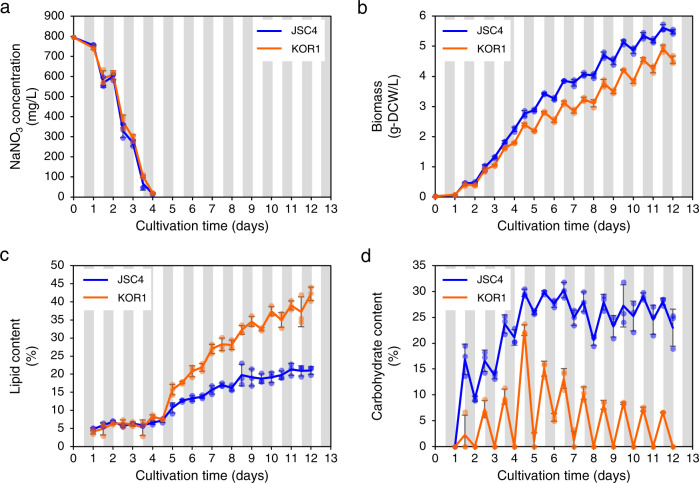
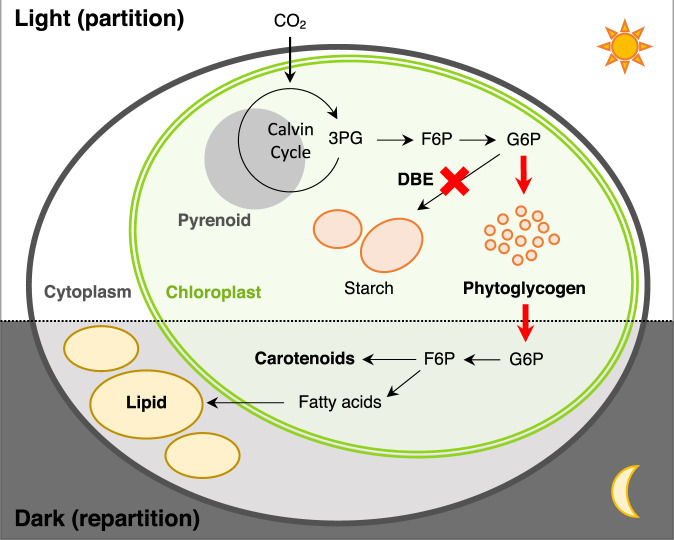
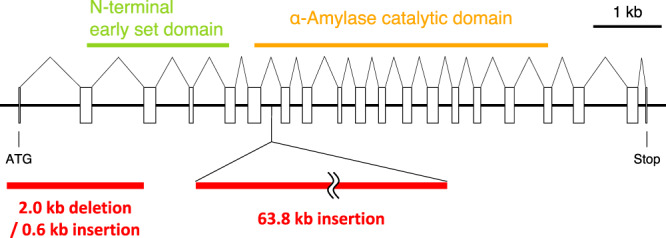
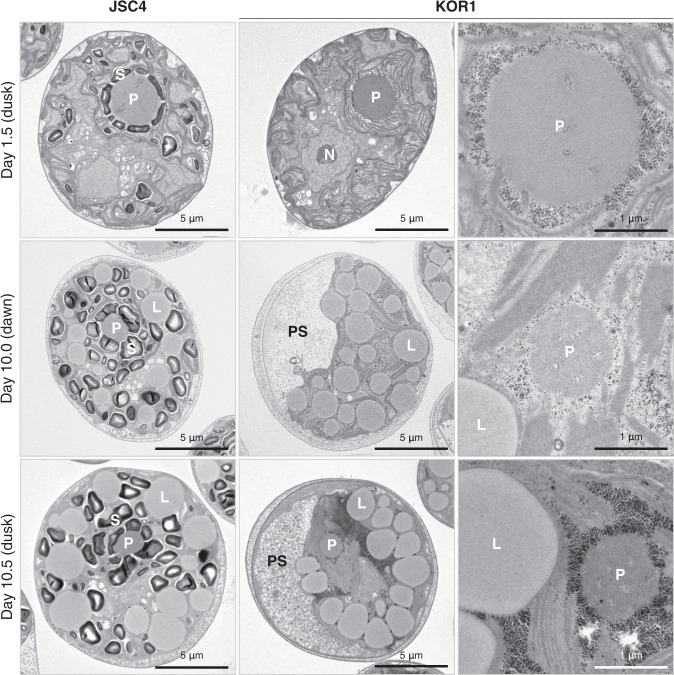
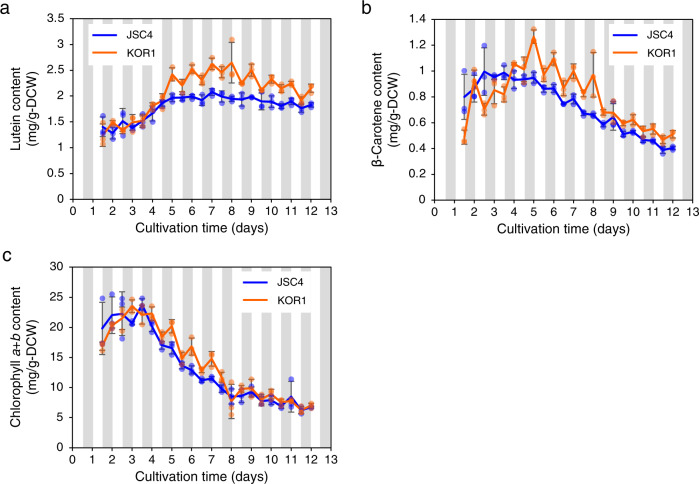
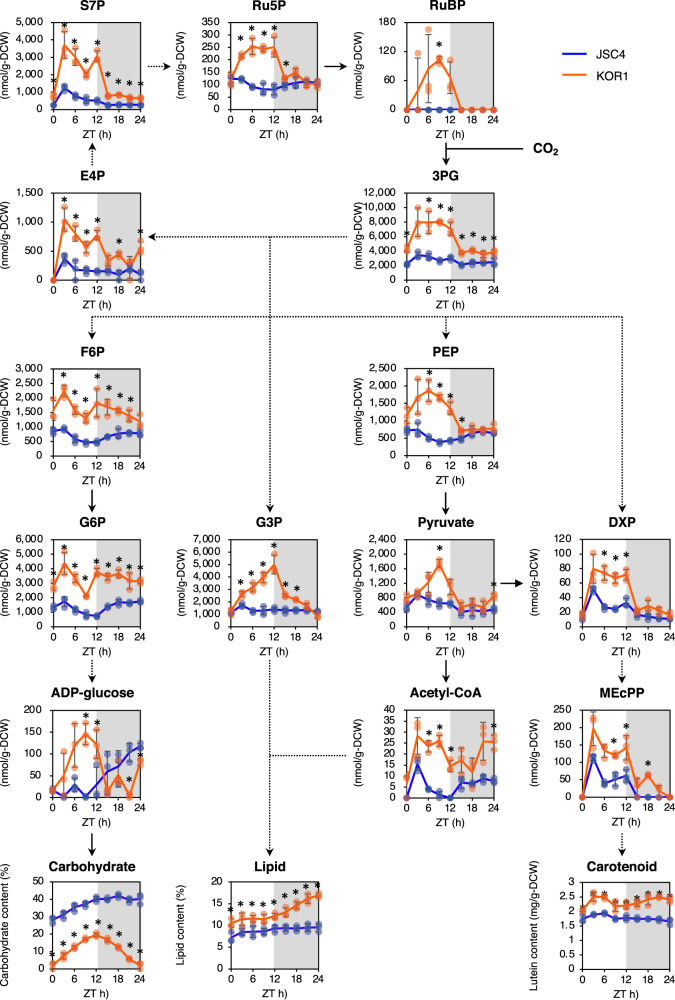
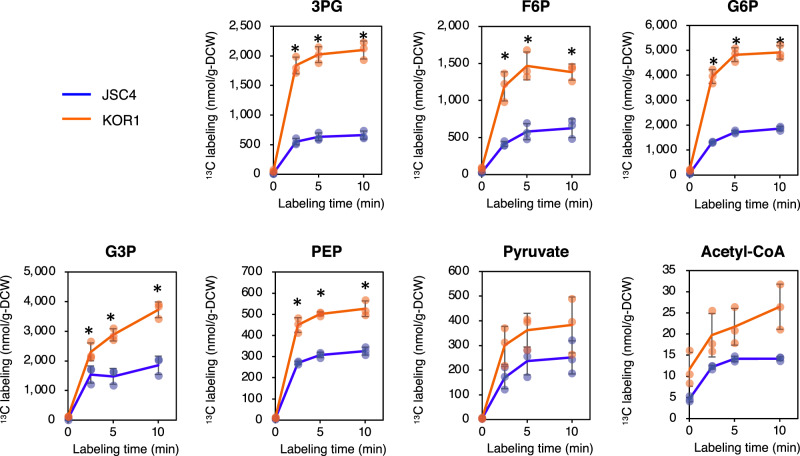
Light/dark cycling is an inherent condition of outdoor microalgae cultivation, but is often unfavorable for lipid accumulation. This study aims to identify promising targets for metabolic engineering of improved lipid accumulation under outdoor conditions. Consequently, the lipid-rich mutant Chlamydomonas sp. KOR1 was developed through light/dark-conditioned screening. During dark periods with depressed CO fixation, KOR1 shows rapid carbohydrate degradation together with increased lipid and carotenoid contents. KOR1 was subsequently characterized with extensive mutation of the ISA1 gene encoding a starch debranching enzyme (DBE). Dynamic time-course profiling and metabolomics reveal dramatic changes in KOR1 metabolism throughout light/dark cycles. During light periods, increased flux from CO through glycolytic intermediates is directly observed to accompany enhanced formation of small starch-like particles, which are then efficiently repartitioned in the next dark cycle. This study demonstrates that disruption of DBE can improve biofuel production under light/dark conditions, through accelerated carbohydrate repartitioning into lipid and carotenoid.
光/暗循环是户外微藻培养的固有条件,但通常不利于脂质积累。本研究旨在确定有前途的目标,以实现户外条件下改善脂质积累的代谢工程。因此,通过光/暗条件筛选开发了富含脂质的突变体 Chlamydomonas sp. KOR1。在 CO 固定受抑制的暗期,KOR1 表现出快速的碳水化合物降解,同时脂质和类胡萝卜素含量增加。KOR1 随后被表征为编码淀粉分支酶 (DBE) 的 ISA1 基因的广泛突变。动态时间过程分析和代谢组学揭示了 KOR1 代谢在光/暗循环中的剧烈变化。在光期,直接观察到 CO 通过糖酵解中间体的通量增加,同时伴随着小淀粉样颗粒的形成增强,然后在下一个暗期有效地重新分配。本研究表明,通过加速碳水化合物向脂质和类胡萝卜素的重新分配,破坏 DBE 可以改善光/暗条件下的生物燃料生产。