Department of Anesthesiology, Affiliated Hospital of Inner Mongolia Medical University, Hohhot, Inner Mongolia, China.
Department of Anesthesiology, The Ohio State University Wexner Medical Center, Columbus, OH, 43210, USA.
BMC Anesthesiol. 2021 Apr 10;21(1):110. doi: 10.1186/s12871-021-01330-9.
Blood transfusion can cause immunosuppression and lead to worse outcomes in patients with digestive tract malignancies; however, the specific mechanism behind this is not completely understood. One theory is that increased numbers of regulatory CD3CD4CD25FOXP3 T cells (Tregs) and forkhead box protein-3 mRNA (FOXP3) expression in the blood after transfusion contribute to these outcomes. The effect of blood transfusion on immune function in patients with different ABO blood types is variable. This study investigates the effect of intraoperative blood transfusion on the number of Tregs and the expression of FOXP3 in the blood of patients with different ABO blood types and digestive tract malignancies.
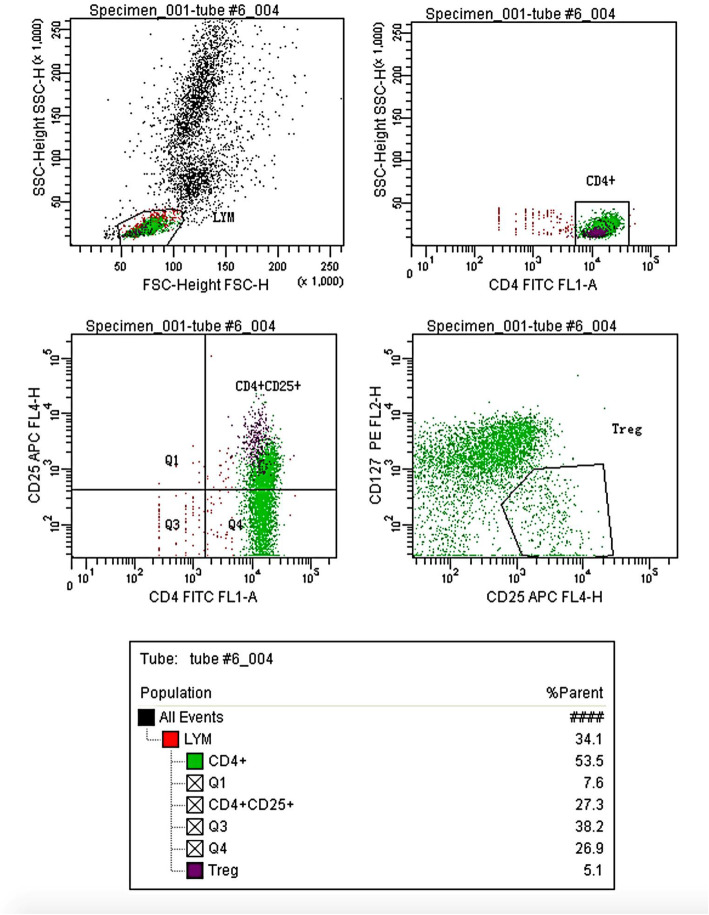
Patients with digestive tract malignancies who underwent radical resection and received intraoperative blood transfusion were divided into four groups according to their blood types:blood group A, blood group B, blood group O and blood group AB (n = 20 for each group). Blood was collected from all patients before surgery, immediately after transfusion, 1 day after transfusion, and 5 days after transfusion. The number of Tregs was measured by flow cytometry. The expression of FOXP3 was detected by real time reverse transcription polymerase chain reaction (RT-PCR).
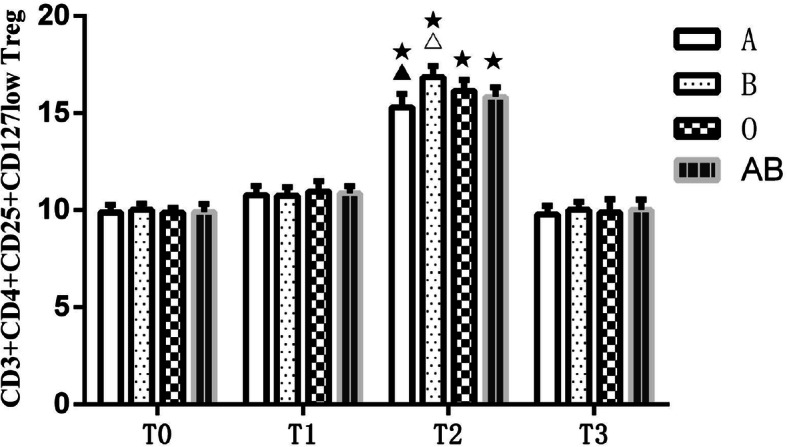
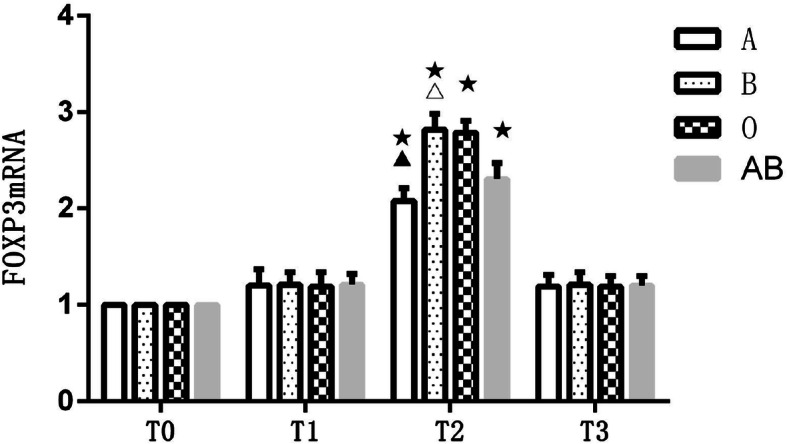
There was no significant difference in the number of Tregs or expression of FOXP3 mRNA among patients with different blood types before surgery. However, the number of Tregs and the expression of FOXP3 increased after blood transfusion in all blood type groups. This increase was especially evident and statistically significant on the first day after blood transfusion when compared with measures obtained before the surgery. Measures returned to the preoperative level five days after surgery. There were significant differences in the increase of Tregs and expression of FOXP3 among patients with different blood types. The greatest increase was seen in patients with blood group B and the least in blood group A.
Intraoperative blood transfusion can lead to an increase in blood Tregs and FOXP3 expression in patients with digestive tract malignancies. Increases were greatest on the first day after surgery and differed among patients with different blood types. Increases were greatest in blood type B and least in blood type A.
输血可导致免疫抑制,并使消化道恶性肿瘤患者的预后恶化;然而,其具体机制尚不完全清楚。一种理论认为,输血后血液中调节性 CD3CD4CD25FOXP3 T 细胞(Tregs)和叉头框蛋白 3mRNA(FOXP3)的表达增加是导致这些结果的原因。输血对不同 ABO 血型患者免疫功能的影响是不同的。本研究探讨了术中输血对不同 ABO 血型消化道恶性肿瘤患者血液中 Tregs 数量和 FOXP3 表达的影响。
根据血型将接受根治性切除术且术中输血的消化道恶性肿瘤患者分为四组:A 组、B 组、O 组和 AB 组(每组 20 例)。所有患者术前、输血后即刻、输血后 1 天和输血后 5 天采集血液。采用流式细胞术检测 Tregs 数量,实时逆转录聚合酶链反应(RT-PCR)检测 FOXP3 表达。
术前不同血型患者 Tregs 数量或 FOXP3mRNA 表达无显著差异。然而,所有血型组输血后 Tregs 数量和 FOXP3mRNA 表达均增加,输血后第 1 天增加尤为明显且与术前测量值相比有统计学差异,术后第 5 天恢复至术前水平。不同血型患者 Tregs 增加和 FOXP3 表达存在显著差异。B 型血患者增加最大,A 型血患者增加最小。
术中输血可导致消化道恶性肿瘤患者血液 Tregs 和 FOXP3 表达增加。术后第 1 天增加最为明显,且不同血型患者之间存在差异。B 型血患者增加最大,A 型血患者增加最小。