Research Institute of Experimental Diagnostics and Therapy of Tumors, N. N. Blokhin National Medical Research Center of Oncology, Kashirskoe shosse, 24, 115478, Moscow, Russia.
Department of Pharmaceutical Technology and Pharmacology, Sechenov University, 8/2 Trubeckaya str., 119991, Moscow, Russia.
BMC Complement Med Ther. 2021 Apr 10;21(1):117. doi: 10.1186/s12906-021-03294-2.
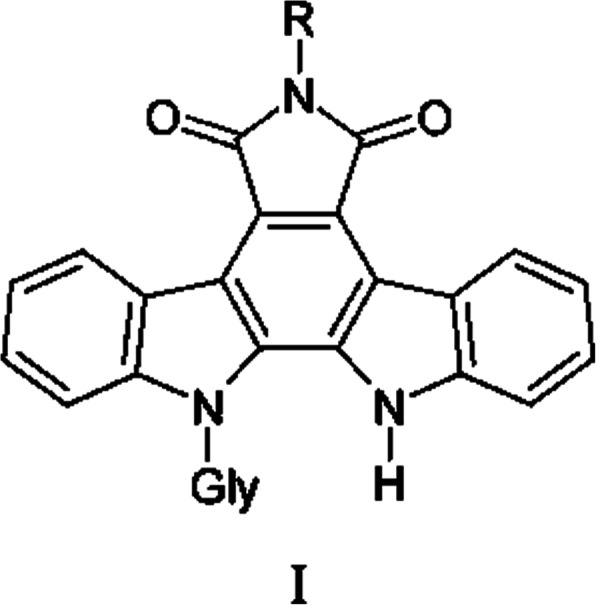
The current scientific research direction is development of drugs with a targeted effect on malignant tumors. One of the promising groups is indolocarbazoles and their derivatives, which can initiate various tumor cell death pathways. Russian scientists from N. N. Blokhin National Medical Research Center of Oncology of the Ministry of Health of Russian Federation has developed a new experimental drug form of the original compound LCS 1269 with cytotoxic and antiangiogenic properties, blocking vasculogenic mimicry in tumor. The study aim is the experimental drug form LCS 1269 antitumor activity on models of transplantable mouse tumors B-16 melanoma and Lewis epidermoid lung carcinoma (LLC) with different routes and modes of administration.
Female F1 hybrid mice (CBl/ x DBA/2) and male and female linear mice CBL/ were used for management of tumor strains. Mice were obtained from N. N. Blokhin National Medical Research Center of Oncology of the Ministry of Health of Russian Federation vivarium. The antitumor effect was assessed by tumor growth inhibition (TGI) and increase of treated animal's life span (ILS) compared to the control.
The experimental drug form showed high antitumor activity when administered intravenously once at doses of 100 and 120 mg/kg (TGI = 98-82% and TGI = 95-77%, respectively, ILS = 24%, p < 0.05) on melanoma B-16 mice. On LLC mice, the experimental drug form showed that the intravenous administration route was effective in the range of doses from 60 to 80 mg/kg with a 5 day administration regimen with an interval of 24 h. A dose of 70 mg/kg had maximum effect at the level of TGI = 96-77% (p < 0.05) with its retention for 20 days after the end of treatment.
The studies have shown that the new compound LCS 1269 in the original drug form, has a pronounced antitumor activity and significantly reduces the volume of tumor mass both on melanoma B-16 and on LLC. It allows us to recommend continue the search for sensitivity of animal transplantable tumors to LCS 1269.
当前的科学研究方向是开发针对恶性肿瘤具有靶向作用的药物。有前途的一类药物是吲哚咔唑及其衍生物,它们可以引发各种肿瘤细胞死亡途径。俄罗斯联邦卫生部 N.N.布洛克国家肿瘤医学研究中心的科学家们开发了一种新的实验性药物形式,即具有细胞毒性和抗血管生成特性的原始化合物 LCS 1269,可阻断肿瘤中的血管生成拟态。本研究的目的是研究实验性药物形式 LCS 1269 对不同给药途径和模式的可移植小鼠肿瘤 B-16 黑色素瘤和 Lewis 表皮样肺癌(LLC)模型的抗肿瘤活性。
使用雌性 F1 杂交小鼠(CBl/ x DBA/2)和雄性和雌性线性小鼠 CBL/来管理肿瘤株。小鼠购自俄罗斯联邦卫生部 N.N.布洛克国家肿瘤医学研究中心的动物饲养室。通过肿瘤生长抑制(TGI)和治疗动物的生存期(ILS)增加与对照相比,评估抗肿瘤作用。
当以 100 和 120mg/kg 的剂量静脉内一次给药时,实验性药物形式显示出很高的抗肿瘤活性(TGI=98-82%和 TGI=95-77%,ILS=24%,p<0.05)对黑色素瘤 B-16 小鼠。在 LLC 小鼠中,实验性药物形式表明静脉给药途径在 60 至 80mg/kg 的剂量范围内有效,且 24 小时间隔的 5 天给药方案有效。70mg/kg 的剂量在 TGI=96-77%(p<0.05)的水平上具有最大作用,并且在治疗结束后 20 天内保留。
研究表明,新化合物 LCS 1269 以原始药物形式具有明显的抗肿瘤活性,并显著降低黑色素瘤 B-16 和 LLC 上肿瘤肿块的体积。这使我们能够建议继续寻找动物可移植肿瘤对 LCS 1269 的敏感性。