Department of Molecular Virology, Research Institute for Microbial Diseases, Osaka University, Suita, Osaka 565-0871, Japan; Center for Infectious Diseases Education and Research, Osaka University, Suita, Osaka 565-0871, Japan.
Department of Microbiology and Immunology, Graduate School of Medicine, Hokkaido University, Sapporo, Hokkaido 060-8638, Japan.
Cell Rep. 2021 Apr 20;35(3):109014. doi: 10.1016/j.celrep.2021.109014. Epub 2021 Apr 1.
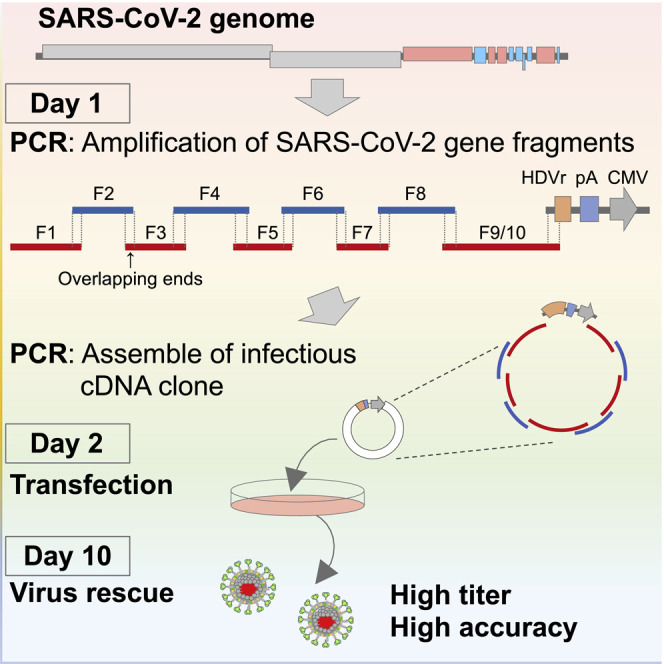
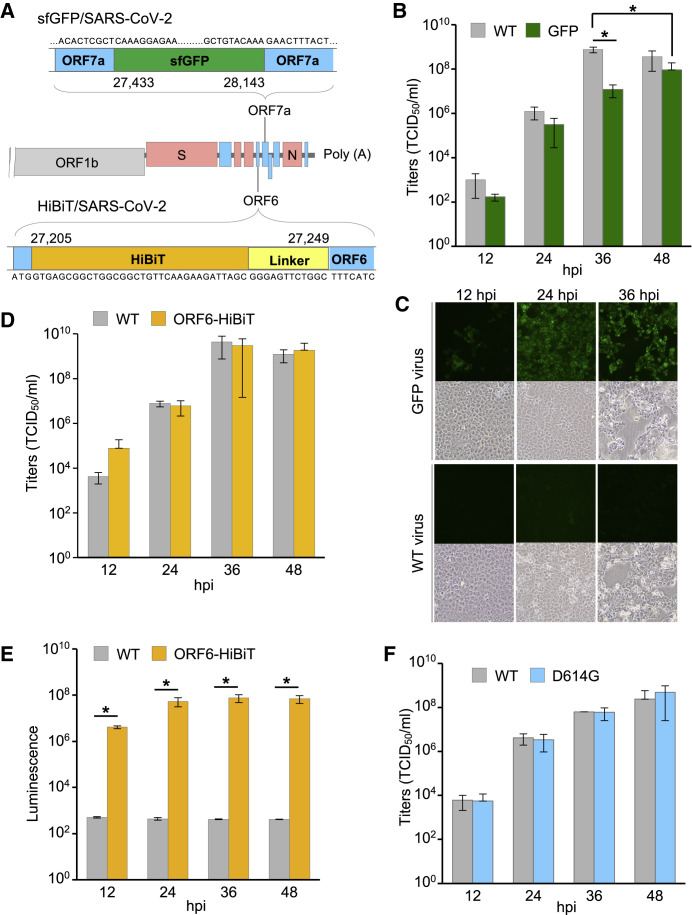
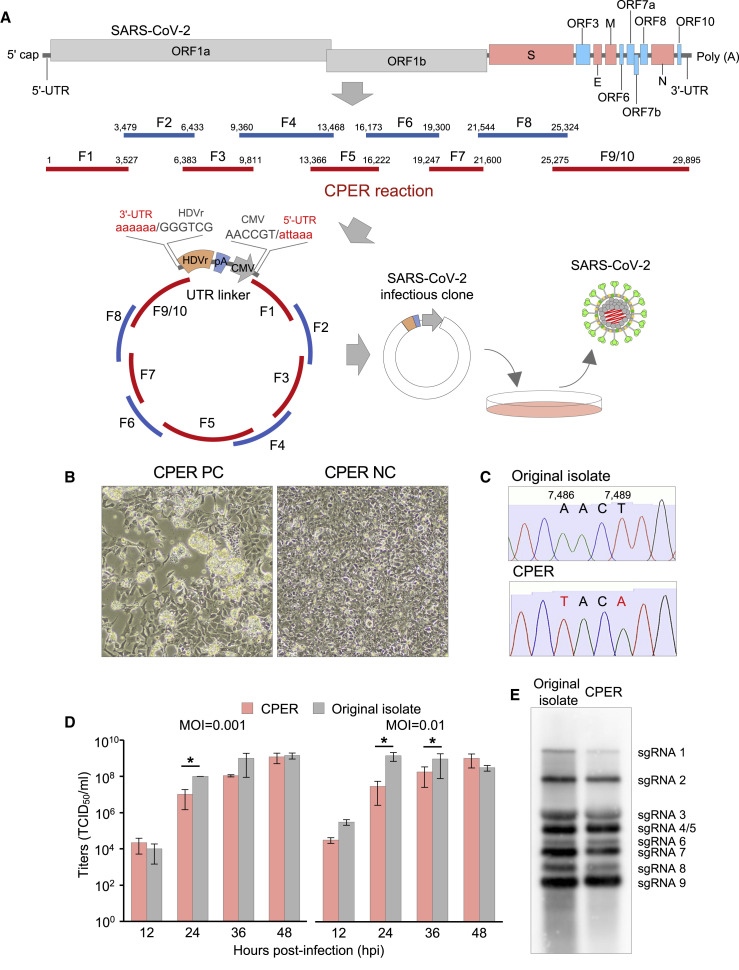
Severe acute respiratory syndrome coronavirus 2 (SARS-CoV-2) has been identified as the causative agent of coronavirus disease 2019 (COVID-19). Although multiple mutations have been observed in SARS-CoV-2, functional analysis of each mutation of SARS-CoV-2 has been limited by the lack of convenient mutagenesis methods. In this study, we establish a PCR-based, bacterium-free method to generate SARS-CoV-2 infectious clones. Recombinant SARS-CoV-2 could be rescued at high titer with high accuracy after assembling 10 SARS-CoV-2 cDNA fragments by circular polymerase extension reaction (CPER) and transfection of the resulting circular genome into susceptible cells. The construction of infectious clones for reporter viruses and mutant viruses could be completed in two simple steps: introduction of reporter genes or mutations into the desirable DNA fragments (∼5,000 base pairs) by PCR and assembly of the DNA fragments by CPER. This reverse genetics system may potentially advance further understanding of SARS-CoV-2.
严重急性呼吸综合征冠状病毒 2(SARS-CoV-2)已被确定为 2019 年冠状病毒病(COVID-19)的病原体。尽管在 SARS-CoV-2 中观察到了多种突变,但由于缺乏方便的诱变方法,对 SARS-CoV-2 每种突变的功能分析受到限制。在这项研究中,我们建立了一种基于 PCR 的无细菌方法来生成 SARS-CoV-2 感染性克隆。通过环聚合酶延伸反应(CPER)组装 10 个 SARS-CoV-2 cDNA 片段,并将所得的环状基因组转染易感细胞后,可高精度地以高滴度拯救重组 SARS-CoV-2。通过 PCR 将报告基因或突变引入所需 DNA 片段(约 5000 个碱基对),然后通过 CPER 组装 DNA 片段,即可完成报告病毒和突变病毒的感染性克隆的构建。该反向遗传学系统可能有助于进一步了解 SARS-CoV-2。