Department of Veterinary Preventive Medicine, College of Veterinary Medicine, Jilin University, Changchun, People's Republic of China.
Key Laboratory of Jilin Province for Zoonosis Prevention and Control, Institute of Military Veterinary Medicine, Academy of Military Medical Sciences, Changchun, People's Republic of China.
Emerg Microbes Infect. 2021 Dec;10(1):1038-1051. doi: 10.1080/22221751.2021.1912644.
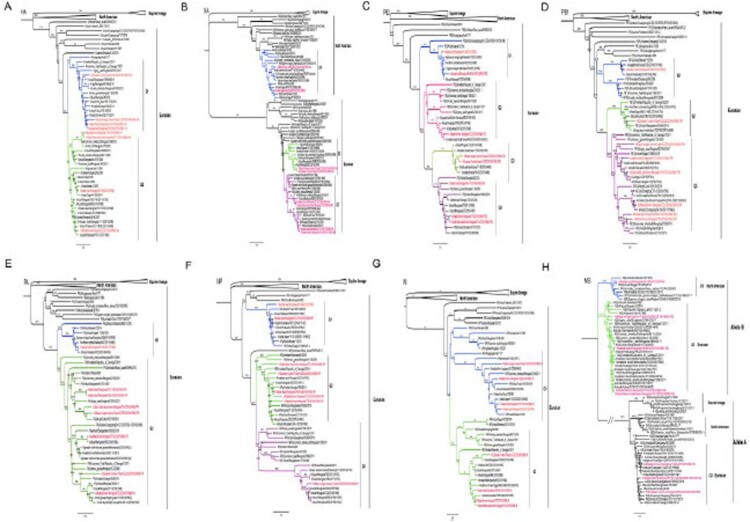
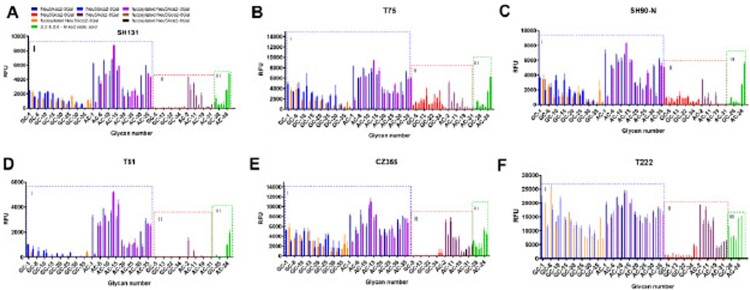
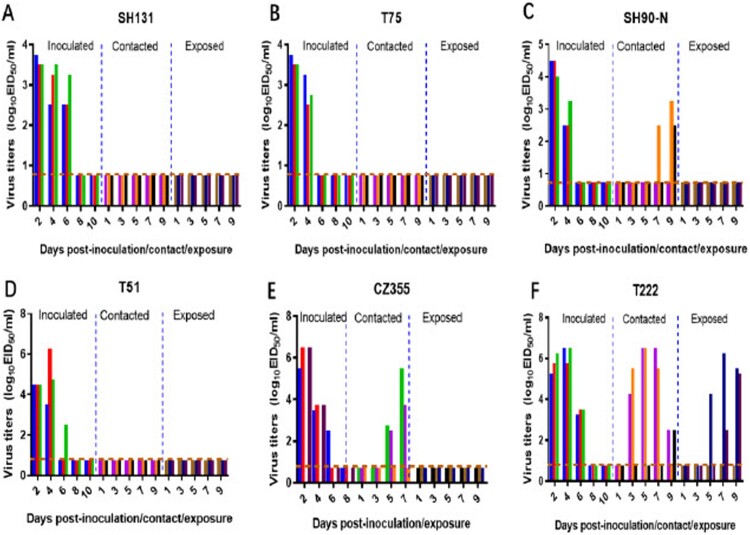
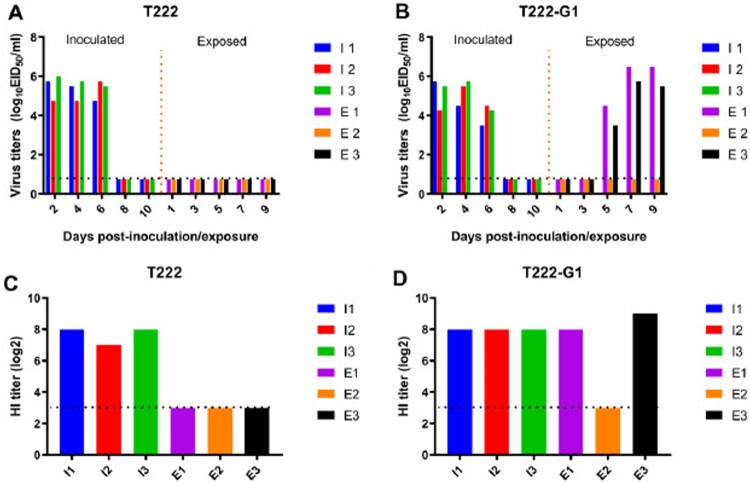
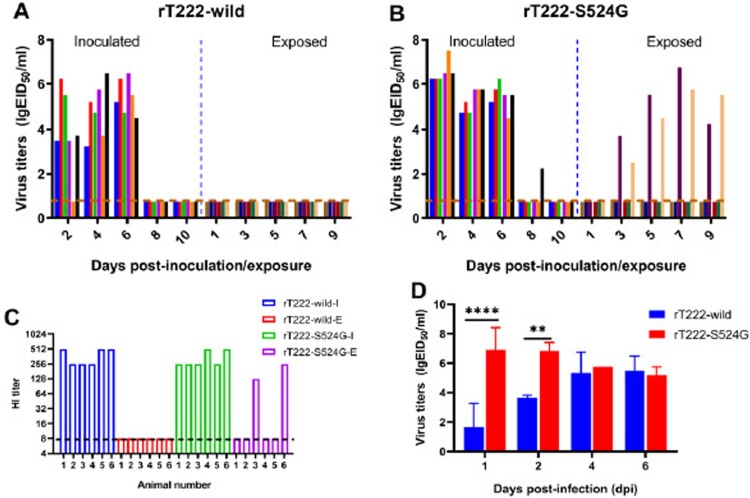
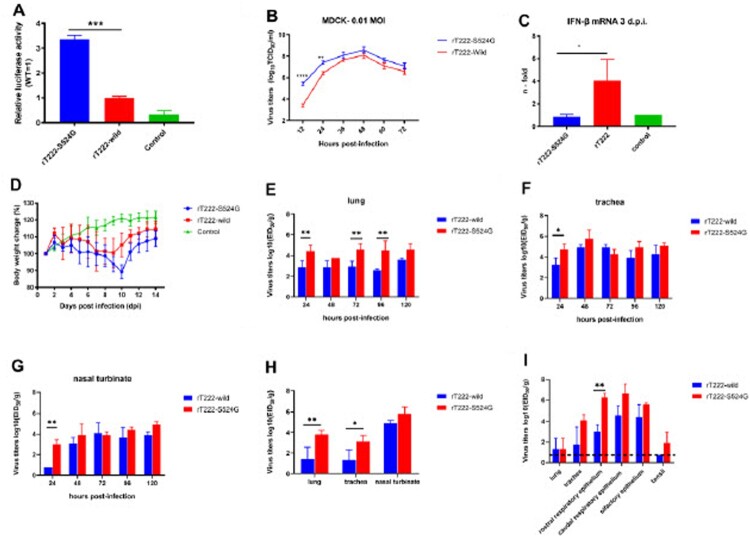
Influenza H3N8 viruses have been recovered frequently from wild bird species, including Anseriformes (primarily from migratory ducks) and Charadriiformes (primarily from shorebirds). However, little attention has been given to the transmission ability of H3N8 avian influenza viruses among mammals. Here, we study the potential human health threat and the molecular basis of mammalian transmissibility of H3N8 avian influenza viruses isolated from wild bird reservoirs. We classified eight H3N8 viruses into seven different genotypes based on genomic diversity. Six of eight H3N8 viruses isolated naturally from wild birds have acquired the ability to bind to the human-type receptor. However, the affinity for α-2,6-linked SAs was lower than that for α-2,3-linked SAs. Experiments on guinea pigs demonstrated that three viruses transmitted efficiently to direct-contact guinea pigs without prior adaptation. Notably, one virus transmitted efficiently via respiratory droplets in guinea pigs but not in ferrets. We further found that the PB1 S524G mutation conferred T222 virus airborne transmissibility between ferrets. We also determined that the 524G mutant increased viral pathogenicity slightly in mice compared with the WT (wild type). Based on these results, we elucidated the potential human health threat and molecular basis of mammalian transmissibility of H3N8 influenza viruses. We emphasized the need for continued surveillance of the H3N8 influenza viruses circulating in birds.
H3N8 流感病毒经常从野生鸟类中分离出来,包括雁形目(主要来自迁徙鸭)和鸻形目(主要来自滨鸟)。然而,人们对 H3N8 禽流感病毒在哺乳动物之间的传播能力关注甚少。在这里,我们研究了从野生鸟类储存库中分离出的 H3N8 禽流感病毒对人类健康的潜在威胁和哺乳动物传播的分子基础。我们根据基因组多样性将八种 H3N8 病毒分为七种不同的基因型。从野生鸟类中自然分离出的八种 H3N8 病毒中的六种已经获得了与人型受体结合的能力。然而,与 α-2,3-连接的 SAs 相比,它们与α-2,6-连接的 SAs 的亲和力较低。豚鼠实验表明,三种病毒无需预先适应即可有效地传播给直接接触的豚鼠。值得注意的是,有一种病毒在豚鼠中可以通过呼吸道飞沫有效地传播,但在雪貂中不能传播。我们进一步发现,PB1 S524G 突变赋予了 T222 病毒在雪貂之间的空气传播能力。我们还确定与 WT(野生型)相比,524G 突变略微增加了病毒在小鼠中的致病性。基于这些结果,我们阐明了 H3N8 流感病毒对人类健康的潜在威胁和哺乳动物传播的分子基础。我们强调需要继续监测在鸟类中循环的 H3N8 流感病毒。