Department of Emergency Medicine, Yale University School of Medicine, New Haven, CT; Center for Outcomes Research and Evaluation, Yale University School of Medicine, New Haven, CT.
Department of Emergency Medicine, Yale University School of Medicine, New Haven, CT.
Ann Emerg Med. 2021 Jul;78(1):84-91. doi: 10.1016/j.annemergmed.2021.01.011. Epub 2021 Jan 13.
We use a national emergency medicine clinical quality registry to describe recent trends in emergency department (ED) visitation overall and for select emergency conditions.
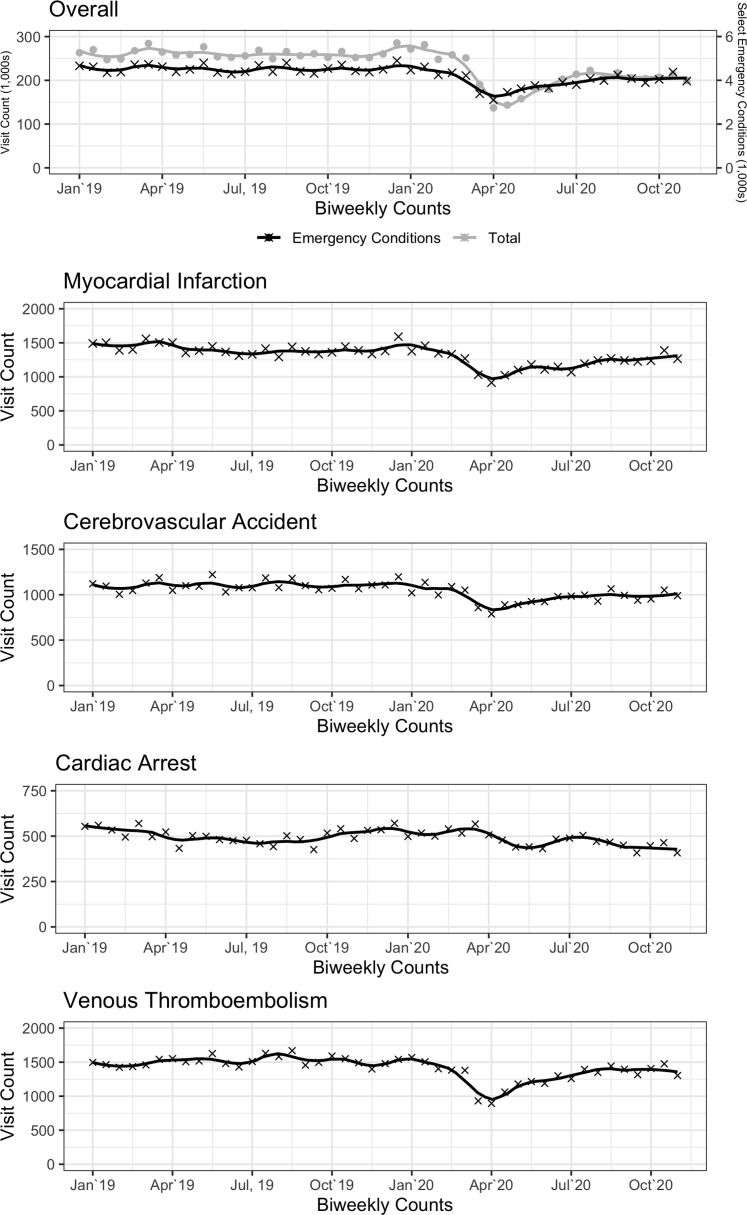
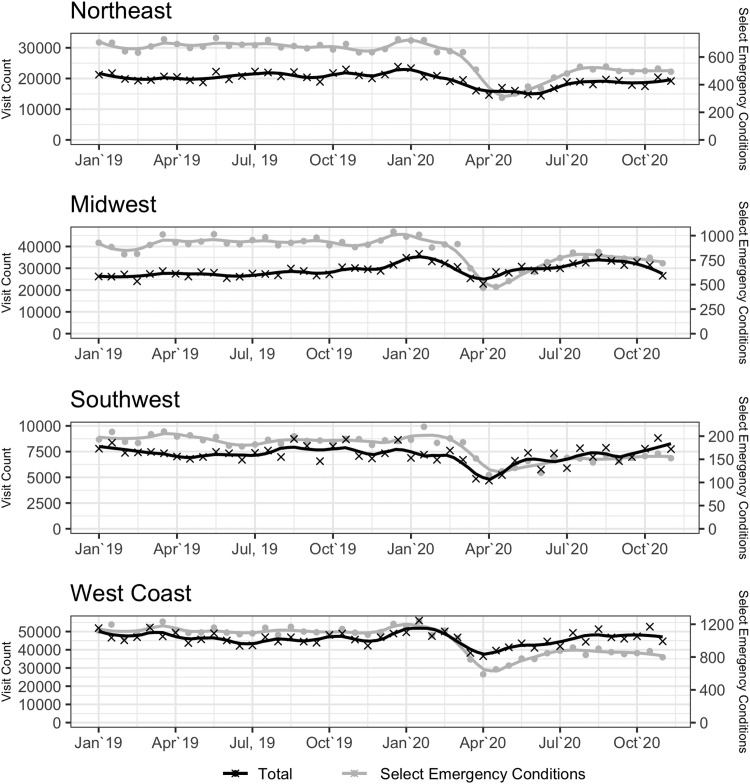
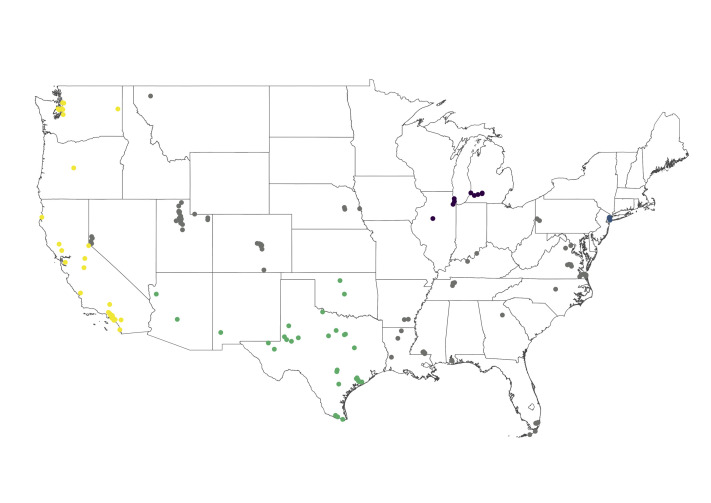
Data were drawn from the Clinical Emergency Department Registry, including 164 ED sites across 35 states participating in the registry with complete data from January 2019 through November 15, 2020. Overall ED visit counts, as well as specific emergency medical conditions identified by International Classification of Diseases, Tenth Revision, Clinical Modification code (myocardial infarction, cerebrovascular accident, cardiac arrest/ventricular fibrillation, and venous thromboembolisms), were tabulated. We plotted biweekly visit counts overall and across specific geographic regions.
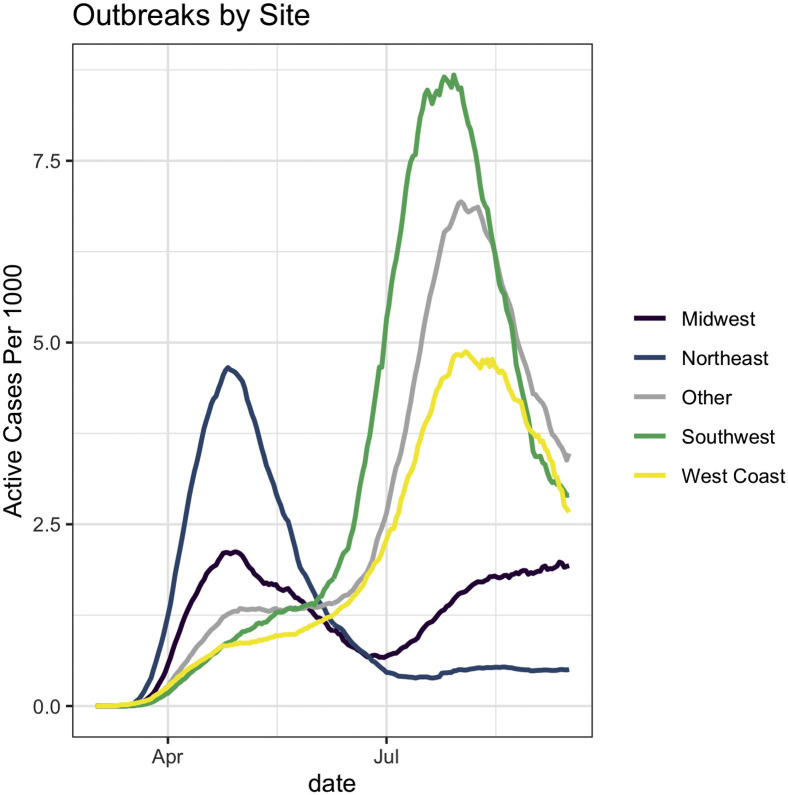
The largest declines in visit counts occurred early in the pandemic, with a nadir in April 46% lower than the 2019 monthly average. By November, overall ED visit counts had increased, but were 23% lower than prepandemic levels. The proportion of all ED visits that were for the select emergency conditions increased early in the pandemic; however, total visit counts for acute myocardial infarction and cerebrovascular disease have remained lower in 2020 compared with 2019. Despite considerable geographic and temporal variation in the trajectory of the coronavirus disease 2019 outbreak, the overall pattern of ED visits observed was similar across regions and time.
The persistent decline in ED visits for these time-sensitive emergency conditions raises the concern that coronavirus disease 2019 may continue to impede patients from seeking essential care. Efforts thus far to encourage individuals with concerning signs and symptoms to seek emergency care may not have been sufficient.
我们利用国家急诊医学临床质量登记处的数据,描述了整体急诊部(ED)就诊情况和特定急诊状况的近期趋势。
数据来自临床急诊部登记处,包括来自 35 个州的 164 个急诊部,这些急诊部参与了该登记处,其数据完整,时间范围为 2019 年 1 月至 2020 年 11 月 15 日。统计了整体 ED 就诊次数,以及国际疾病分类第十版临床修订版(ICD-10-CM)代码(心肌梗死、脑血管意外、心脏骤停/心室颤动和静脉血栓栓塞症)确定的特定紧急医疗状况。我们绘制了整体和特定地理区域的双周就诊次数图。
疫情早期就诊次数下降幅度最大,4 月份就诊次数达到最低点,比 2019 年月平均水平低 46%。到 11 月,整体 ED 就诊次数有所增加,但仍比大流行前水平低 23%。在疫情早期,特定急诊状况的所有 ED 就诊比例有所增加;然而,与 2019 年相比,急性心肌梗死和脑血管疾病的总就诊次数在 2020 年仍然较低。尽管 2019 年冠状病毒病的爆发在地理和时间上存在很大差异,但观察到的 ED 就诊整体模式在各个地区和时间都是相似的。
这些时间敏感的紧急状况的 ED 就诊持续下降,这让人担忧 2019 年冠状病毒病可能继续阻碍患者寻求基本治疗。迄今为止,鼓励有可疑症状的个人寻求急诊治疗的努力可能还不够。