Neuro-Immune Regulome Unit, National Eye Institute, National Institutes of Health, Bethesda, MD, United States.
Laboratory Affiliated to Istituto Pasteur Italia - Fondazione Cenci-Bolognetti, Department of Molecular Medicine, Sapienza University of Rome, Rome, Italy.
Front Immunol. 2021 Mar 25;12:655590. doi: 10.3389/fimmu.2021.655590. eCollection 2021.
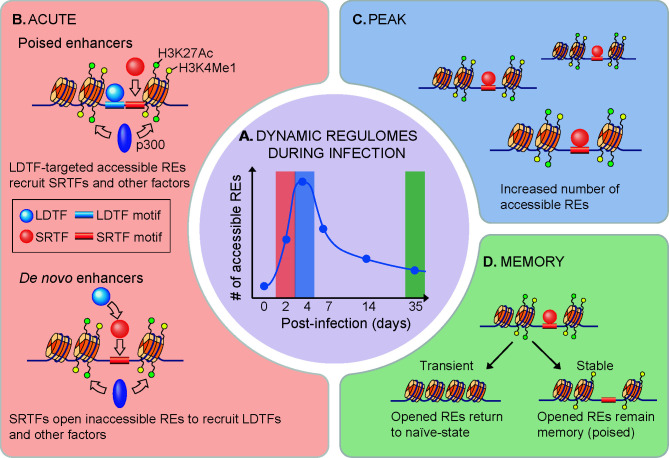
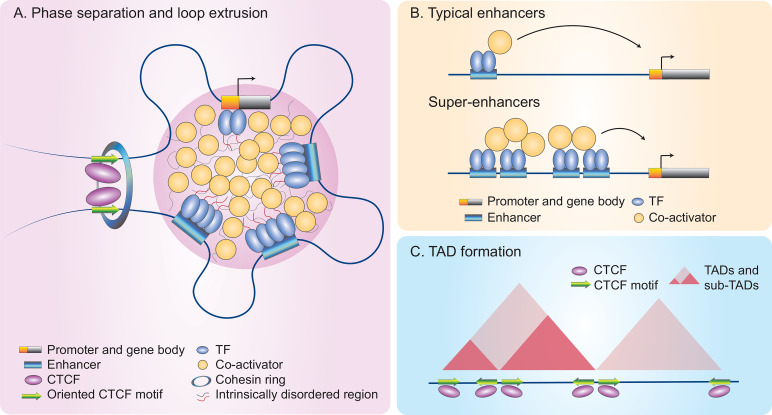
The precise control of cytokine production by innate lymphoid cells (ILCs) and their T cell adaptive system counterparts is critical to mounting a proper host defense immune response without inducing collateral damage and autoimmunity. Unlike T cells that differentiate into functionally divergent subsets upon antigen recognition, ILCs are developmentally programmed to rapidly respond to environmental signals in a polarized manner, without the need of T cell receptor (TCR) signaling. The specification of cytokine production relies on dynamic regulation of cis-regulatory elements that involve multi-dimensional epigenetic mechanisms, including DNA methylation, transcription factor binding, histone modification and DNA-DNA interactions that form chromatin loops. How these different layers of gene regulation coordinate with each other to fine tune cytokine production, and whether ILCs and their T cell analogs utilize the same regulatory strategy, remain largely unknown. Herein, we review the molecular mechanisms that underlie cell identity and functionality of helper T cells and ILCs, focusing on networks of transcription factors and cis-regulatory elements. We discuss how higher-order chromatin architecture orchestrates these components to construct lineage- and state-specific regulomes that support ordered immunoregulation.
先天淋巴细胞(ILCs)和它们的 T 细胞适应性系统对应物精确控制细胞因子的产生对于启动适当的宿主防御免疫反应至关重要,而不会引起附带损伤和自身免疫。与抗原识别后分化为功能不同亚群的 T 细胞不同,ILCs 是在发育上被编程为快速地以极化方式对环境信号做出反应,而不需要 T 细胞受体(TCR)信号。细胞因子产生的特异性依赖于涉及多维表观遗传机制的顺式调控元件的动态调节,包括 DNA 甲基化、转录因子结合、组蛋白修饰和形成染色质环的 DNA-DNA 相互作用。这些不同层次的基因调控如何相互协调以精细调节细胞因子的产生,以及 ILCs 和它们的 T 细胞类似物是否利用相同的调控策略,在很大程度上仍然未知。本文综述了辅助性 T 细胞和 ILCs 细胞身份和功能的分子机制,重点讨论了转录因子和顺式调控元件网络。我们讨论了高阶染色质结构如何协调这些组件,以构建支持有序免疫调节的谱系和状态特异性调控组。