Ren Hong, Song Zhendi, Chao Chen, Mao Weizheng
Department of General Surgery, Qingdao Municipal Hospital, Qingdao University School of Medicine, Shandong, Qingdao 266000, P.R. China.
Department of General Surgery, Jintan Hospital, Jiangsu University School of Medicine, Changzhou, Jiangsu 213200, P.R. China.
Oncol Lett. 2021 May;21(5):416. doi: 10.3892/ol.2021.12677. Epub 2021 Mar 26.
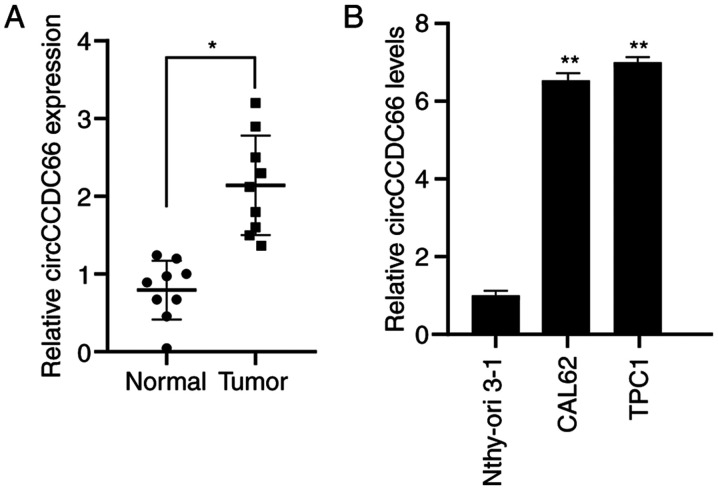
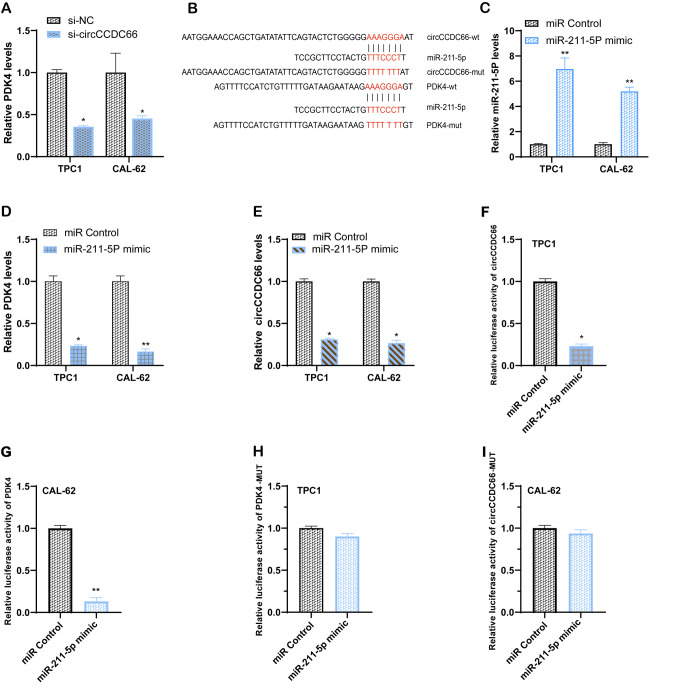
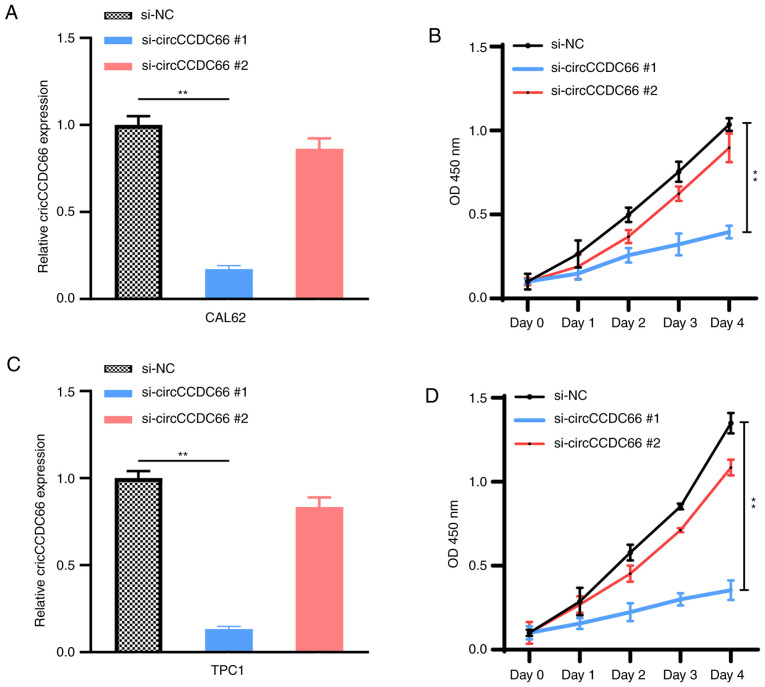
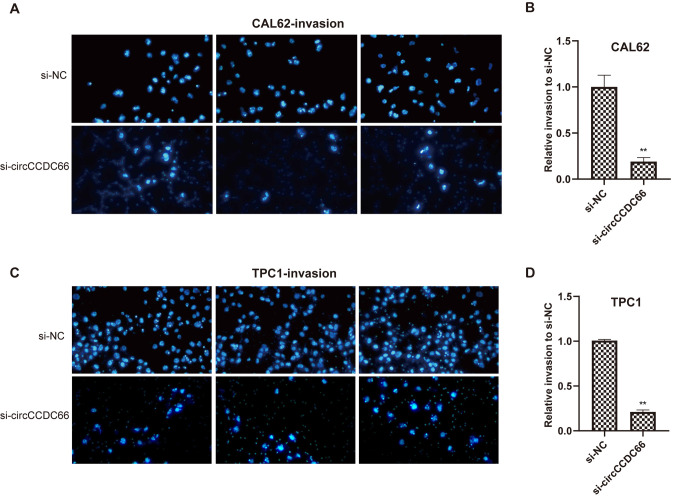
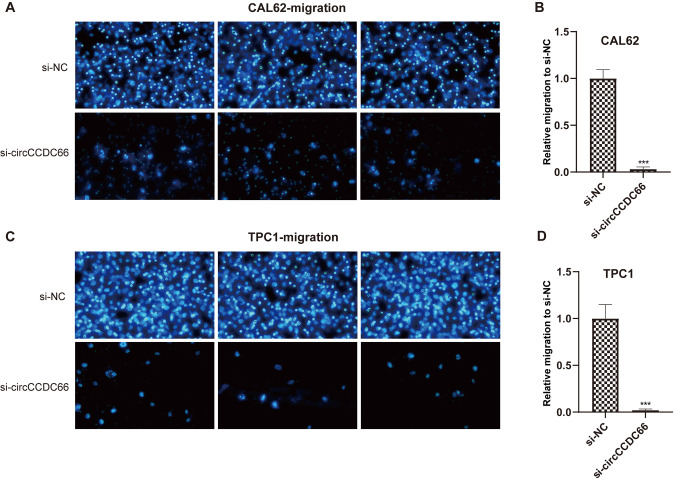
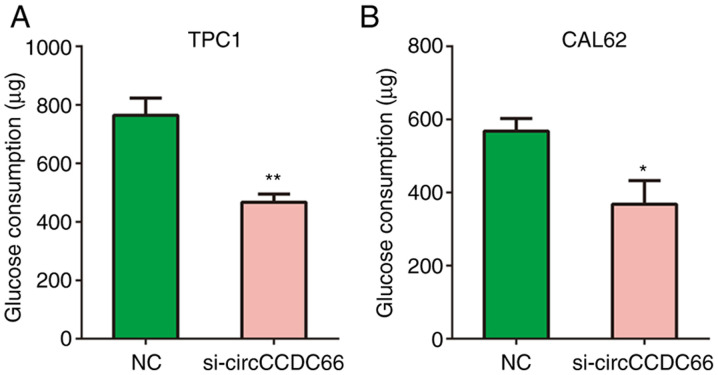
Cancer metastasis is the main cause of death in cancer patients, including patients with thyroid cancer (TC). TC is the most common malignant endocrine tumour. In the recent years, increasing evidence has demonstrated that circular RNAs (circRNAs) serve a significant role in the development of many types of human cancer. However, the function and underlying mechanism of circCCDC66 in TC remain unclear. The present study aimed to explore the role of circCCDC66 in TC. To do so, reverse transcription quantitative PCR was used to detect the expression level of circCCDC66. Cell viability, migratory and invasive abilities, and glucose consumption were evaluated by cell counting kit 8, Transwell and glucose consumption assays, respectively. The association between circCCDC66 or pyruvate dehydrogenase kinase 4 (PDK4) and miR-211-5p was verified by dual-luciferase reporter assay. The results demonstrated that circCCDC66 expression was significantly increased in TC tissues and cell lines. Furthermore, silencing circCCDC66 inhibited TC cell proliferation, migratory and invasive abilities and glycolysis . Further validation demonstrated that circCCDC66 directly interacted with the microRNA (miR) miR-211-5p. Subsequently, the activity of circCCDC66 was attenuated by miR-211-5p. In addition, the results demonstrated that circCCDC66 may promote papillary thyroid cancer progression by sponging miR-211-5p and increasing expression of PDK4. In conclusion, the present study demonstrated that circCCDC66 could promote TC cell proliferation, migratory and invasive abilities and invasion and glycolysis through the miR-211-5p/PDK4 axis. These findings suggested that targeting circCCDC66 may be considered as a promising therapeutic strategy for TC.
癌症转移是癌症患者(包括甲状腺癌患者)死亡的主要原因。甲状腺癌是最常见的恶性内分泌肿瘤。近年来,越来越多的证据表明,环状RNA(circRNA)在多种人类癌症的发生发展中发挥着重要作用。然而,circCCDC66在甲状腺癌中的功能及潜在机制仍不清楚。本研究旨在探讨circCCDC66在甲状腺癌中的作用。为此,采用逆转录定量PCR检测circCCDC66的表达水平。分别通过细胞计数试剂盒8、Transwell实验和葡萄糖消耗实验评估细胞活力、迁移和侵袭能力以及葡萄糖消耗情况。通过双荧光素酶报告基因实验验证circCCDC66或丙酮酸脱氢酶激酶4(PDK4)与miR-211-5p之间的关联。结果表明,circCCDC66在甲状腺癌组织和细胞系中的表达显著增加。此外,沉默circCCDC66可抑制甲状腺癌细胞的增殖、迁移和侵袭能力以及糖酵解。进一步验证表明,circCCDC66直接与微小RNA(miR)miR-211-5p相互作用。随后,miR-211-5p减弱了circCCDC66的活性。此外,结果表明circCCDC66可能通过吸附miR-211-5p并增加PDK4的表达来促进甲状腺乳头状癌的进展。总之,本研究表明circCCDC66可通过miR-211-5p/PDK4轴促进甲状腺癌细胞增殖、迁移和侵袭能力以及侵袭和糖酵解。这些发现提示,靶向circCCDC66可能是一种有前景的甲状腺癌治疗策略。