• 文献检索
  • 文档翻译
  • 深度研究
  • 学术资讯
  • Suppr Zotero 插件Zotero 插件
  • 邀请有礼
  • 套餐&价格
  • 历史记录
应用&插件
Suppr Zotero 插件Zotero 插件浏览器插件Mac 客户端Windows 客户端微信小程序
定价
高级版会员购买积分包购买API积分包
服务
文献检索文档翻译深度研究API 文档MCP 服务
关于我们
关于 Suppr公司介绍联系我们用户协议隐私条款
关注我们

Suppr 超能文献

核心技术专利:CN118964589B侵权必究
粤ICP备2023148730 号-1Suppr @ 2026

文献检索

告别复杂PubMed语法,用中文像聊天一样搜索,搜遍4000万医学文献。AI智能推荐,让科研检索更轻松。

立即免费搜索

文件翻译

保留排版,准确专业,支持PDF/Word/PPT等文件格式,支持 12+语言互译。

免费翻译文档

深度研究

AI帮你快速写综述,25分钟生成高质量综述,智能提取关键信息,辅助科研写作。

立即免费体验

GNPNAT1的上调预示肺腺癌预后不良并与免疫浸润相关。

Upregulation of GNPNAT1 Predicts Poor Prognosis and Correlates With Immune Infiltration in Lung Adenocarcinoma.

作者信息

Liu Wenting, Jiang Kaiting, Wang Jingya, Mei Ting, Zhao Min, Huang Dingzhi

机构信息

Department of Thoracic Oncology, Tianjin Medical University Cancer Institute and Hospital, National Clinical Research Center for Cancer, Tianjin Key Laboratory of Cancer Prevention and Therapy, Tianjin's Clinical Research Center for Cancer, Tianjin, China.

出版信息

Front Mol Biosci. 2021 Mar 25;8:605754. doi: 10.3389/fmolb.2021.605754. eCollection 2021.

DOI:10.3389/fmolb.2021.605754
PMID:33842535
原文链接:https://pmc.ncbi.nlm.nih.gov/articles/PMC8027087/
Abstract

BACKGROUND

Glucosamine 6-phosphate -acetyltransferase (GNPNAT1) is a key enzyme in the hexosamine biosynthetic pathway (HBP), which functions as promoting proliferation in some tumors, yet its potential biological function and mechanism in lung adenocarcinoma (LUAD) have not been explored.

METHODS

The mRNA differential expression of GNPNAT1 in LUAD and normal tissues was analyzed using the Cancer Genome Atlas (TCGA) database and validated by real-time PCR. The clinical value of GNPNAT1 in LUAD was investigated based on the data from the TCGA database. Then, immunohistochemistry (IHC) of GNPNAT1 was applied to verify the expression and clinical significance in LUAD from the protein level. The relationship between GNPNAT1 and epigenetics was explored using the cBioPortal database, and the miRNAs regulating GNPNAT1 were found using the miRNA database. The association between GNPNAT1 expression and tumor-infiltrating immune cells in LUAD was observed through the Tumor IMmune Estimation Resource (TIMER). Finally, Gene set enrichment analysis (GSEA) was used to explore the biological signaling pathways involved in GNPNAT1 in LUAD.

RESULTS

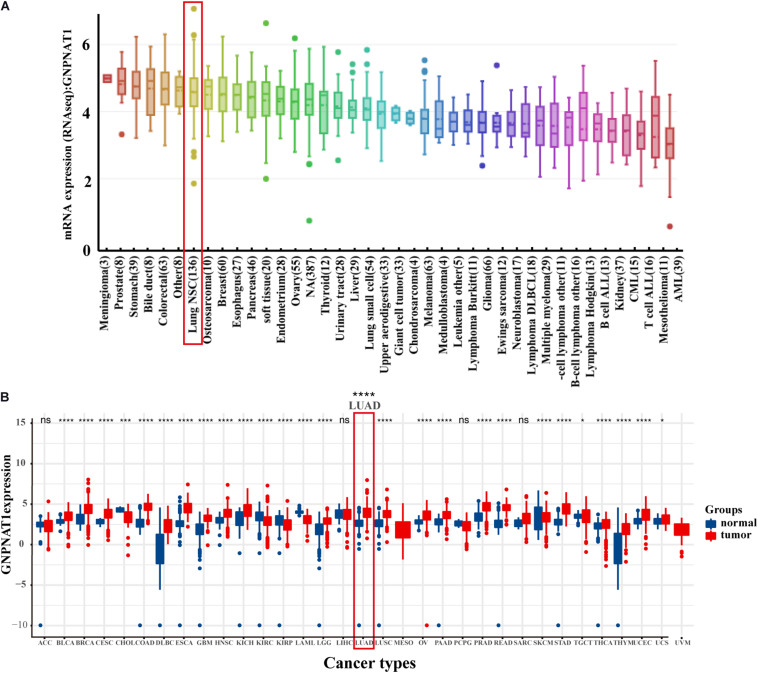
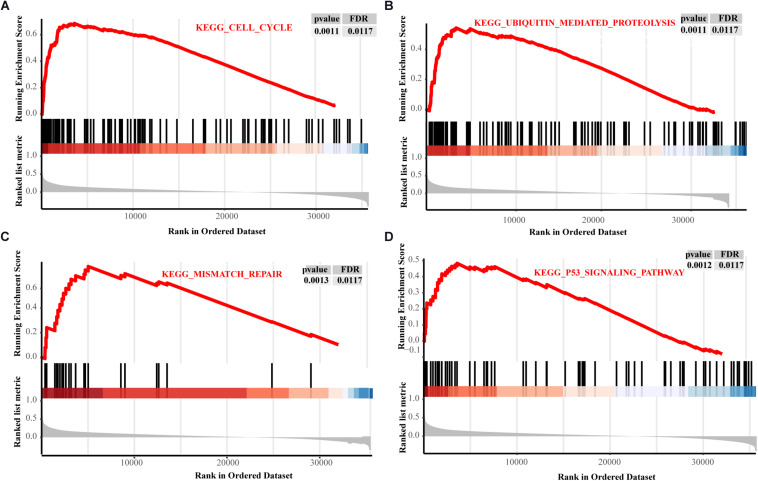
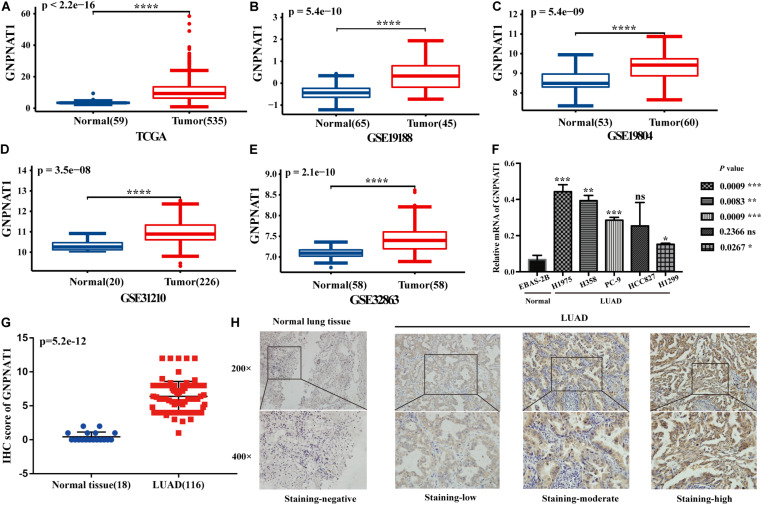
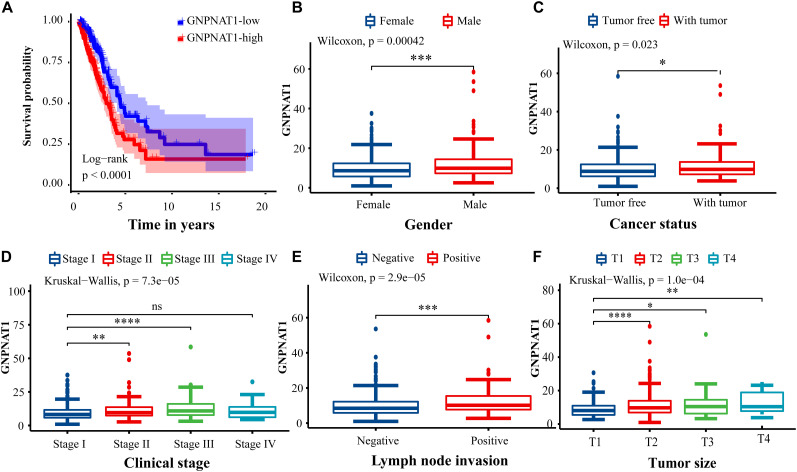
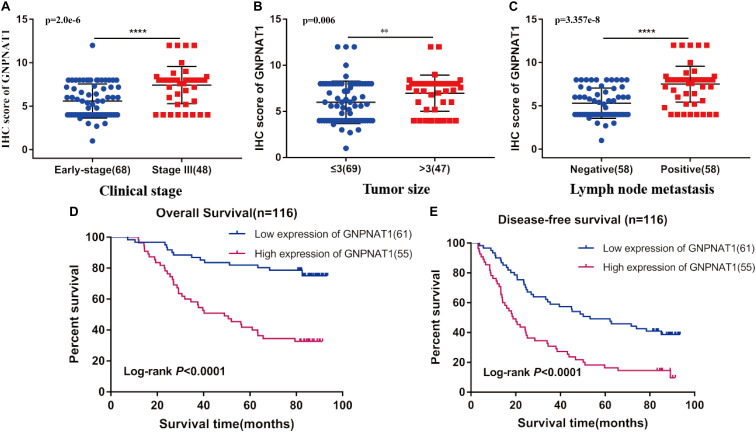
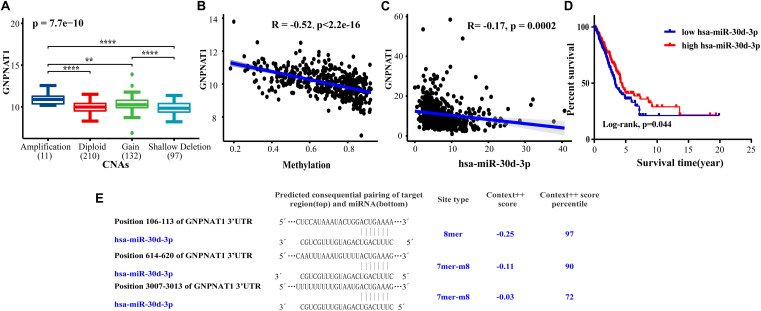
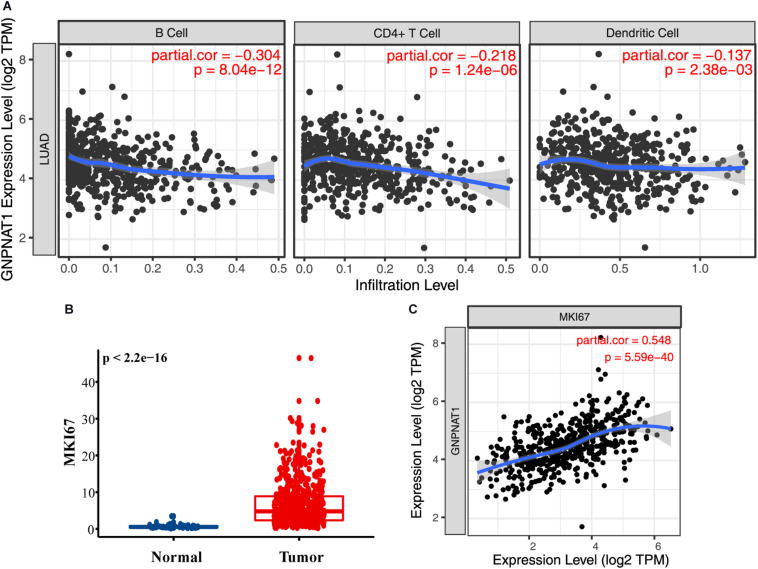
GNPNAT1 was upregulated in LUAD compared with normal tissues, which was verified through qRT-PCR in different cell lines ( < 0.05), and associated with patients' clinical stage, tumor size, and lymphatic metastasis status (all < 0.01). Kaplan-Meier (KM) analysis suggested that patients with upregulated GNPNAT1 had a relatively poor prognosis ( < 0.0001). Furthermore, multivariate Cox regression analysis indicated that GNPNAT1 was an independent prognostic factor for LUAD (OS, TCGA dataset: HR = 1.028, 95% : 1.013-1.044, < 0.001; OS, validation set: HR = 1.313, 95% : 1.130-1.526, < 0.001). GNPNAT1 overexpression was correlated with DNA copy amplification ( < 0.0001), low DNA methylation ( = -0.52, < 0.0001), and downregulation of hsa-miR-30d-3p ( = -0.17, < 0.001). GNPNAT1 expression was linked to B cells ( = -0.304, < 0.0001), CD4T cells ( = -0.218, < 0.0001), and dendritic cells ( = -0.137, = 0.002). Eventually, GSEA showed that the signaling pathways of the cell cycle, ubiquitin-mediated proteolysis, mismatch repair and p53 were enriched in the GNPNAT1 overexpression group.

CONCLUSION

GNPNAT1 may be a potential prognostic biomarker and novel target for intervention in LUAD.

摘要

背景

6-磷酸葡萄糖胺-N-乙酰转移酶(GNPNAT1)是己糖胺生物合成途径(HBP)中的关键酶,在某些肿瘤中具有促进增殖的作用,但其在肺腺癌(LUAD)中的潜在生物学功能及机制尚未得到探索。

方法

利用癌症基因组图谱(TCGA)数据库分析LUAD组织和正常组织中GNPNAT1的mRNA差异表达,并通过实时PCR进行验证。基于TCGA数据库的数据研究GNPNAT1在LUAD中的临床价值。然后,应用GNPNAT1的免疫组织化学(IHC)从蛋白质水平验证其在LUAD中的表达及临床意义。利用cBioPortal数据库探索GNPNAT1与表观遗传学的关系,并通过miRNA数据库寻找调控GNPNAT1的miRNA。通过肿瘤免疫估计资源(TIMER)观察GNPNAT1表达与LUAD中肿瘤浸润免疫细胞的关联。最后,采用基因集富集分析(GSEA)探索LUAD中与GNPNAT1相关的生物信号通路。

结果

与正常组织相比,GNPNAT1在LUAD中上调,这在不同细胞系中通过qRT-PCR得到验证(<0.05),且与患者的临床分期、肿瘤大小和淋巴转移状态相关(均<0.01)。Kaplan-Meier(KM)分析表明,GNPNAT1上调的患者预后相对较差(<0.0001)。此外,多因素Cox回归分析表明,GNPNAT1是LUAD的独立预后因素(总生存期,TCGA数据集:HR = 1.028,95%:1.013 - 1.044,<0.001;总生存期,验证集:HR = 1.313,95%:1.130 - 1.526,<0.001)。GNPNAT1过表达与DNA拷贝数扩增相关(<0.0001)、低DNA甲基化(=-0.52,<0.0001)以及hsa-miR-30d-3p下调(=-0.17,<0.001)。GNPNAT1表达与B细胞(=-0.304,<0.0001)、CD4 T细胞(=-0.218,<0.0001)和树突状细胞(=-0.137,=0.002)有关。最终,GSEA显示细胞周期、泛素介导的蛋白水解、错配修复和p53信号通路在GNPNAT1过表达组中富集。

结论

GNPNAT1可能是LUAD潜在的预后生物标志物和新的干预靶点。
https://cdn.ncbi.nlm.nih.gov/pmc/blobs/2221/8027087/83f856a89e36/fmolb-08-605754-g009.jpg
https://cdn.ncbi.nlm.nih.gov/pmc/blobs/2221/8027087/ef7d4f326deb/fmolb-08-605754-g001.jpg
https://cdn.ncbi.nlm.nih.gov/pmc/blobs/2221/8027087/595311afc0d2/fmolb-08-605754-g002.jpg
https://cdn.ncbi.nlm.nih.gov/pmc/blobs/2221/8027087/7277b6d43464/fmolb-08-605754-g003.jpg
https://cdn.ncbi.nlm.nih.gov/pmc/blobs/2221/8027087/6f294fb3fbec/fmolb-08-605754-g004.jpg
https://cdn.ncbi.nlm.nih.gov/pmc/blobs/2221/8027087/0bc96e3a714a/fmolb-08-605754-g005.jpg
https://cdn.ncbi.nlm.nih.gov/pmc/blobs/2221/8027087/e7f880bf8cde/fmolb-08-605754-g006.jpg
https://cdn.ncbi.nlm.nih.gov/pmc/blobs/2221/8027087/46eab0f07924/fmolb-08-605754-g007.jpg
https://cdn.ncbi.nlm.nih.gov/pmc/blobs/2221/8027087/7fbdbe4a481d/fmolb-08-605754-g008.jpg
https://cdn.ncbi.nlm.nih.gov/pmc/blobs/2221/8027087/83f856a89e36/fmolb-08-605754-g009.jpg
https://cdn.ncbi.nlm.nih.gov/pmc/blobs/2221/8027087/ef7d4f326deb/fmolb-08-605754-g001.jpg
https://cdn.ncbi.nlm.nih.gov/pmc/blobs/2221/8027087/595311afc0d2/fmolb-08-605754-g002.jpg
https://cdn.ncbi.nlm.nih.gov/pmc/blobs/2221/8027087/7277b6d43464/fmolb-08-605754-g003.jpg
https://cdn.ncbi.nlm.nih.gov/pmc/blobs/2221/8027087/6f294fb3fbec/fmolb-08-605754-g004.jpg
https://cdn.ncbi.nlm.nih.gov/pmc/blobs/2221/8027087/0bc96e3a714a/fmolb-08-605754-g005.jpg
https://cdn.ncbi.nlm.nih.gov/pmc/blobs/2221/8027087/e7f880bf8cde/fmolb-08-605754-g006.jpg
https://cdn.ncbi.nlm.nih.gov/pmc/blobs/2221/8027087/46eab0f07924/fmolb-08-605754-g007.jpg
https://cdn.ncbi.nlm.nih.gov/pmc/blobs/2221/8027087/7fbdbe4a481d/fmolb-08-605754-g008.jpg
https://cdn.ncbi.nlm.nih.gov/pmc/blobs/2221/8027087/83f856a89e36/fmolb-08-605754-g009.jpg

相似文献

1
Upregulation of GNPNAT1 Predicts Poor Prognosis and Correlates With Immune Infiltration in Lung Adenocarcinoma.GNPNAT1的上调预示肺腺癌预后不良并与免疫浸润相关。
Front Mol Biosci. 2021 Mar 25;8:605754. doi: 10.3389/fmolb.2021.605754. eCollection 2021.
2
GNPNAT1 Serves as a Prognostic Biomarker Correlated with Immune Infiltration and Promotes Cancer Cell Metastasis through Stabilization of Snai2 in Lung Adenocarcinoma.GNPNAT1作为一种与免疫浸润相关的预后生物标志物,并通过稳定肺腺癌中Snai2促进癌细胞转移。
Biomedicines. 2024 Jul 4;12(7):1477. doi: 10.3390/biomedicines12071477.
3
Independent Prognostic Potential of GNPNAT1 in Lung Adenocarcinoma.肺腺癌中 GNPNAT1 的独立预后潜力。
Biomed Res Int. 2020 Oct 29;2020:8851437. doi: 10.1155/2020/8851437. eCollection 2020.
4
Upregulation of glucosamine-phosphate N-acetyltransferase 1 is a promising diagnostic and predictive indicator for poor survival in patients with lung adenocarcinoma.磷酸氨基葡萄糖N-乙酰转移酶1的上调是肺腺癌患者预后不良的一个有前景的诊断和预测指标。
Oncol Lett. 2021 Jun;21(6):488. doi: 10.3892/ol.2021.12750. Epub 2021 Apr 22.
5
GNPNAT1 is a potential biomarker correlated with immune infiltration and immunotherapy outcome in breast cancer.GNPNAT1 是乳腺癌中与免疫浸润和免疫治疗结果相关的潜在生物标志物。
Front Immunol. 2023 May 5;14:1152678. doi: 10.3389/fimmu.2023.1152678. eCollection 2023.
6
Bioinformatic prediction of miR-320a as a potential negative regulator of CDGSH iron-sulfur domain 2 (), involved in lung adenocarcinoma bone metastasis via MYC activation, and associated with tumor immune infiltration.miR-320a作为CDGSH铁硫结构域2潜在负调控因子的生物信息学预测,其通过MYC激活参与肺腺癌骨转移,并与肿瘤免疫浸润相关。
Transl Cancer Res. 2024 Aug 31;13(8):4485-4499. doi: 10.21037/tcr-24-1188. Epub 2024 Aug 27.
7
Prognostic value of SEC61G in lung adenocarcinoma: a comprehensive study based on bioinformatics and in vitro validation.SEC61G 在肺腺癌中的预后价值:基于生物信息学和体外验证的综合研究。
BMC Cancer. 2021 Nov 13;21(1):1216. doi: 10.1186/s12885-021-08957-4.
8
Study of LY9 as a potential biomarker for prognosis and prediction of immunotherapy efficacy in lung adenocarcinoma.LY9 作为肺腺癌免疫治疗疗效的预后和预测潜在生物标志物的研究。
PeerJ. 2024 Aug 23;12:e17816. doi: 10.7717/peerj.17816. eCollection 2024.
9
Potential role of glucosamine-phosphate N-acetyltransferase 1 in the development of lung adenocarcinoma.氨基葡萄糖-磷酸 N-乙酰转移酶 1 在肺腺癌发展中的潜在作用。
Aging (Albany NY). 2021 Mar 3;13(5):7430-7453. doi: 10.18632/aging.202604.
10
AUNIP Expression Is Correlated With Immune Infiltration and Is a Candidate Diagnostic and Prognostic Biomarker for Hepatocellular Carcinoma and Lung Adenocarcinoma.AUNIP表达与免疫浸润相关,是肝细胞癌和肺腺癌的候选诊断及预后生物标志物。
Front Oncol. 2020 Dec 9;10:590006. doi: 10.3389/fonc.2020.590006. eCollection 2020.

引用本文的文献

1
A novel tumor-associated macrophage risk signature predicts prognosis and immunotherapy response in lung adenocarcinoma.一种新型肿瘤相关巨噬细胞风险特征可预测肺腺癌的预后和免疫治疗反应。
Am J Cancer Res. 2025 Mar 15;15(3):876-893. doi: 10.62347/SQUF6988. eCollection 2025.
2
Prediction of prognosis, efficacy of lung adenocarcinoma by machine learning model based on immune and metabolic related genes.基于免疫和代谢相关基因的机器学习模型对肺腺癌预后及疗效的预测
Discov Oncol. 2024 Dec 18;15(1):778. doi: 10.1007/s12672-024-01515-x.
3
The Hexosamine Biosynthetic Pathway alters the cytoskeleton to modulate cell proliferation and migration in metastatic prostate cancer.

本文引用的文献

1
Reciprocal change in Glucose metabolism of Cancer and Immune Cells mediated by different Glucose Transporters predicts Immunotherapy response.不同葡萄糖转运蛋白介导的肿瘤和免疫细胞葡萄糖代谢的相互变化可预测免疫治疗反应。
Theranostics. 2020 Jul 25;10(21):9579-9590. doi: 10.7150/thno.48954. eCollection 2020.
2
Blockade of -Glycosylation Promotes Antitumor Immune Response of T Cells.阻断糖基化促进 T 细胞的抗肿瘤免疫反应。
J Immunol. 2020 Mar 1;204(5):1373-1385. doi: 10.4049/jimmunol.1900937. Epub 2020 Jan 22.
3
Targeting glucose metabolism to suppress cancer progression: prospective of anti-glycolytic cancer therapy.
己糖胺生物合成途径改变细胞骨架,以调节转移性前列腺癌中的细胞增殖和迁移。
bioRxiv. 2024 Oct 14:2024.10.14.618283. doi: 10.1101/2024.10.14.618283.
4
GNPNAT1 Serves as a Prognostic Biomarker Correlated with Immune Infiltration and Promotes Cancer Cell Metastasis through Stabilization of Snai2 in Lung Adenocarcinoma.GNPNAT1作为一种与免疫浸润相关的预后生物标志物,并通过稳定肺腺癌中Snai2促进癌细胞转移。
Biomedicines. 2024 Jul 4;12(7):1477. doi: 10.3390/biomedicines12071477.
5
Variances in the Expression Profile of Circadian Clock-Related Genes in Astrocytic Brain Tumors.星形细胞瘤中昼夜节律相关基因表达谱的差异
Cancers (Basel). 2024 Jun 26;16(13):2335. doi: 10.3390/cancers16132335.
6
AKR1C3 promotes progression and mediates therapeutic resistance by inducing epithelial-mesenchymal transition and angiogenesis in small cell lung cancer.AKR1C3通过诱导小细胞肺癌的上皮-间质转化和血管生成促进肿瘤进展并介导治疗抗性。
Transl Oncol. 2024 Sep;47:102027. doi: 10.1016/j.tranon.2024.102027. Epub 2024 Jul 1.
7
Circ_100549 promotes tumor progression in lung adenocarcinoma through upregulation of BIRC6.环状 RNA 100549 通过上调 BIRC6 促进肺腺癌肿瘤进展。
Histochem Cell Biol. 2024 Jun;161(6):493-506. doi: 10.1007/s00418-024-02275-z. Epub 2024 Apr 13.
8
is a Biomarker That Predicts a Poor Prognosis of Breast Cancer.是一种预测乳腺癌预后不良的生物标志物。
Breast Cancer (Dove Med Press). 2024 Mar 5;16:71-89. doi: 10.2147/BCTT.S451054. eCollection 2024.
9
Comprehensive analysis the prognostic and immune characteristics of mitochondrial transport-related gene SFXN1 in lung adenocarcinoma.全面分析线粒体转运相关基因 SFXN1 在肺腺癌中的预后和免疫特征。
BMC Cancer. 2024 Jan 17;24(1):94. doi: 10.1186/s12885-023-11646-z.
10
Current knowledge and potential intervention of hexosamine biosynthesis pathway in lung cancer.己糖胺生物合成途径在肺癌中的研究现状及潜在干预作用。
World J Surg Oncol. 2023 Oct 26;21(1):334. doi: 10.1186/s12957-023-03226-z.
靶向葡萄糖代谢抑制肿瘤进展:抗糖酵解肿瘤治疗的前景。
Pharmacol Res. 2019 Dec;150:104511. doi: 10.1016/j.phrs.2019.104511. Epub 2019 Oct 31.
4
Enhanced hexosamine metabolism drives metabolic and signaling networks involving hyaluronan production and O-GlcNAcylation to exacerbate breast cancer.己糖胺代谢增强驱动代谢和信号网络,涉及透明质酸的产生和 O-GlcNAc 化,从而加剧乳腺癌。
Cell Death Dis. 2019 Oct 23;10(11):803. doi: 10.1038/s41419-019-2034-y.
5
Multiple MicroRNAs synergistically promote tolerance to epidermal growth factor receptor-targeted drugs in smoked lung cancer therapies.多种微小RNA协同促进吸烟相关肺癌治疗中对表皮生长因子受体靶向药物的耐受性。
J Cancer Res Ther. 2019;15(4):876-881. doi: 10.4103/jcrt.JCRT_208_18.
6
Fueling the fire: emerging role of the hexosamine biosynthetic pathway in cancer.为火添柴:己糖胺生物合成途径在癌症中的新作用。
BMC Biol. 2019 Jul 4;17(1):52. doi: 10.1186/s12915-019-0671-3.
7
Tumor cellular proliferation is associated with enhanced immune checkpoint expression in stage I non-small cell lung cancer.肿瘤细胞增殖与 I 期非小细胞肺癌中免疫检查点表达增强相关。
J Thorac Cardiovasc Surg. 2019 Sep;158(3):911-919.e6. doi: 10.1016/j.jtcvs.2019.04.084. Epub 2019 May 17.
8
MEXPRESS update 2019.美迅更新 2019.
Nucleic Acids Res. 2019 Jul 2;47(W1):W561-W565. doi: 10.1093/nar/gkz445.
9
miRWalk: An online resource for prediction of microRNA binding sites.miRWalk:一个用于预测 microRNA 结合位点的在线资源。
PLoS One. 2018 Oct 18;13(10):e0206239. doi: 10.1371/journal.pone.0206239. eCollection 2018.
10
mTORC2 modulates the amplitude and duration of GFAT1 Ser-243 phosphorylation to maintain flux through the hexosamine pathway during starvation.mTORC2 调节 GFAT1 Ser-243 磷酸化的幅度和持续时间,以在饥饿期间维持己糖胺途径的通量。
J Biol Chem. 2018 Oct 19;293(42):16464-16478. doi: 10.1074/jbc.RA118.003991. Epub 2018 Sep 10.