The Walter and Eliza Hall Institute of Medical Research, 1G Royal Parade, Parkville, VIC 3052, Australia.
Department of Biochemistry and Genetics, La Trobe Institute for Molecular Science, La Trobe University, Bundoora, VIC 3086, Australia.
Biochem Soc Trans. 2021 Apr 30;49(2):793-804. doi: 10.1042/BST20200696.
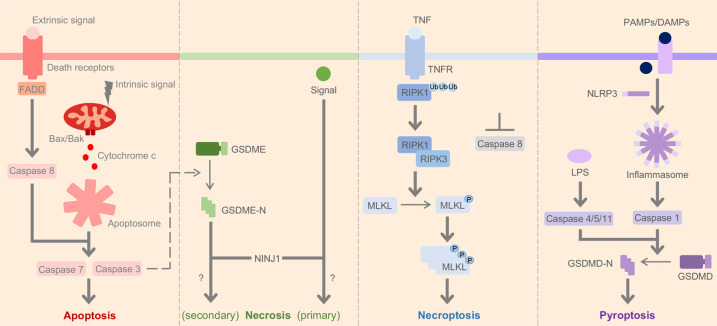
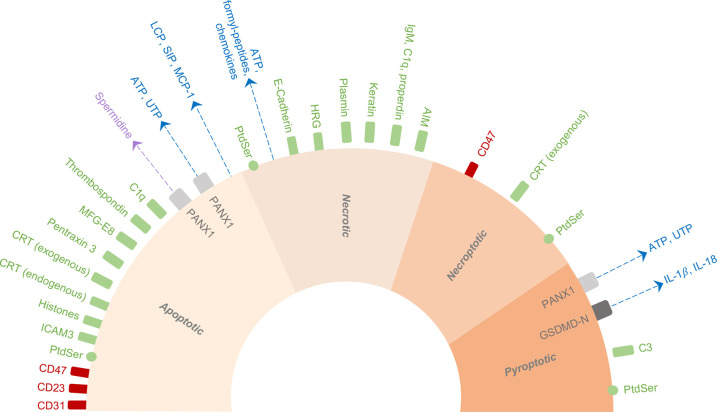
Although millions of cells in the human body will undergo programmed cell death each day, dying cells are rarely detected under homeostatic settings in vivo. The swift removal of dying cells is due to the rapid recruitment of phagocytes to the site of cell death which then recognise and engulf the dying cell. Apoptotic cell clearance - the engulfment of apoptotic cells by phagocytes - is a well-defined process governed by a series of molecular factors including 'find-me', 'eat-me', 'don't eat-me' and 'good-bye' signals. However, in recent years with the rapid expansion of the cell death field, the removal of other necrotic-like cell types has drawn much attention. Depending on the type of death, dying cells employ different mechanisms to facilitate engulfment and elicit varying functional impacts on the phagocyte, from wound healing responses to inflammatory cytokine secretion. Nevertheless, despite the mechanism of death, the clearance of dying cells is a fundamental process required to prevent the uncontrolled release of pro-inflammatory mediators and inflammatory disease. This mini-review summarises the current understandings of: (i) apoptotic, necrotic, necroptotic and pyroptotic cell clearance; (ii) the functional consequences of dying cell engulfment and; (iii) the outstanding questions in the field.
尽管人体每天有上百万个细胞会经历程序性细胞死亡,但在体内的稳态环境下很少能检测到死亡的细胞。死亡细胞之所以能迅速被清除,是因为吞噬细胞会迅速被招募到细胞死亡的部位,然后识别并吞噬死亡的细胞。凋亡细胞的清除——吞噬细胞吞噬凋亡细胞——是一个由一系列分子因素控制的明确过程,包括“找我”、“吃我”、“别吃我”和“再见”信号。然而,近年来,随着细胞死亡领域的迅速扩展,对其他类似坏死细胞类型的清除引起了广泛关注。根据死亡类型的不同,垂死的细胞采用不同的机制来促进吞噬作用,并对吞噬细胞产生不同的功能影响,从伤口愈合反应到炎症细胞因子的分泌。尽管死亡机制不同,但清除死亡细胞是一个基本过程,需要防止促炎介质的失控释放和炎症性疾病。这篇小型综述总结了目前对以下几个方面的理解:(i)凋亡、坏死、坏死性和细胞焦亡细胞的清除;(ii)吞噬垂死细胞的功能后果;(iii)该领域的悬而未决的问题。