IEEE Trans Haptics. 2021 Oct-Dec;14(4):762-775. doi: 10.1109/TOH.2021.3072615. Epub 2021 Dec 17.
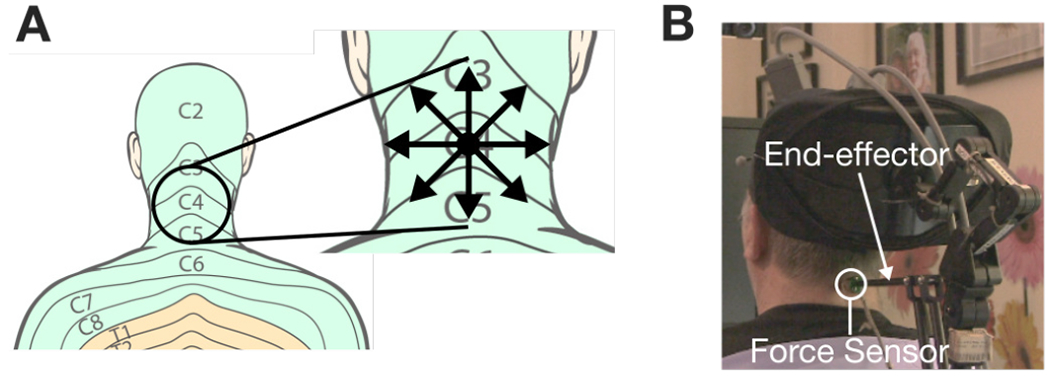
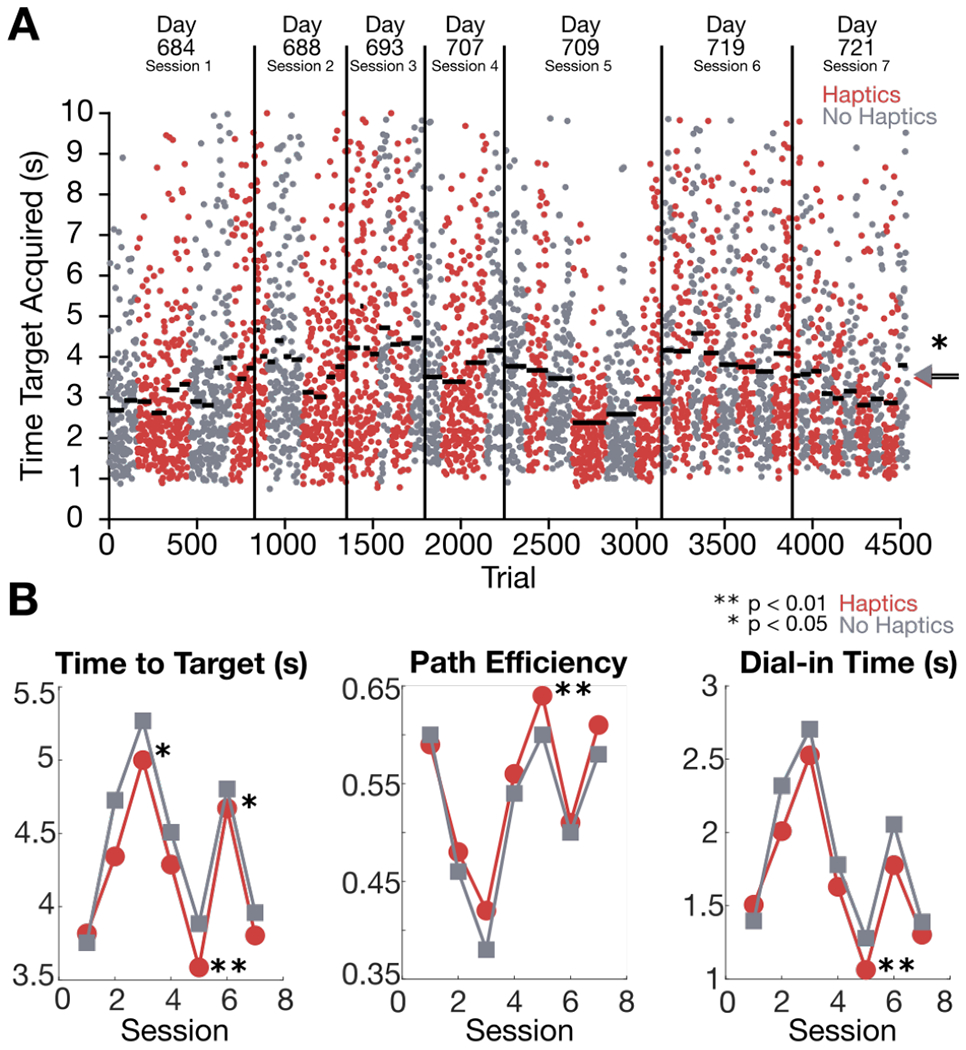
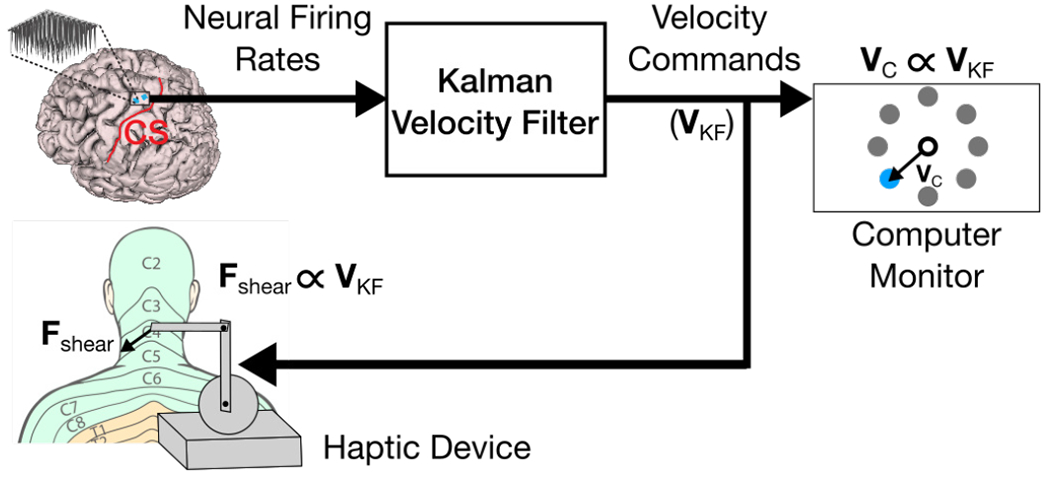
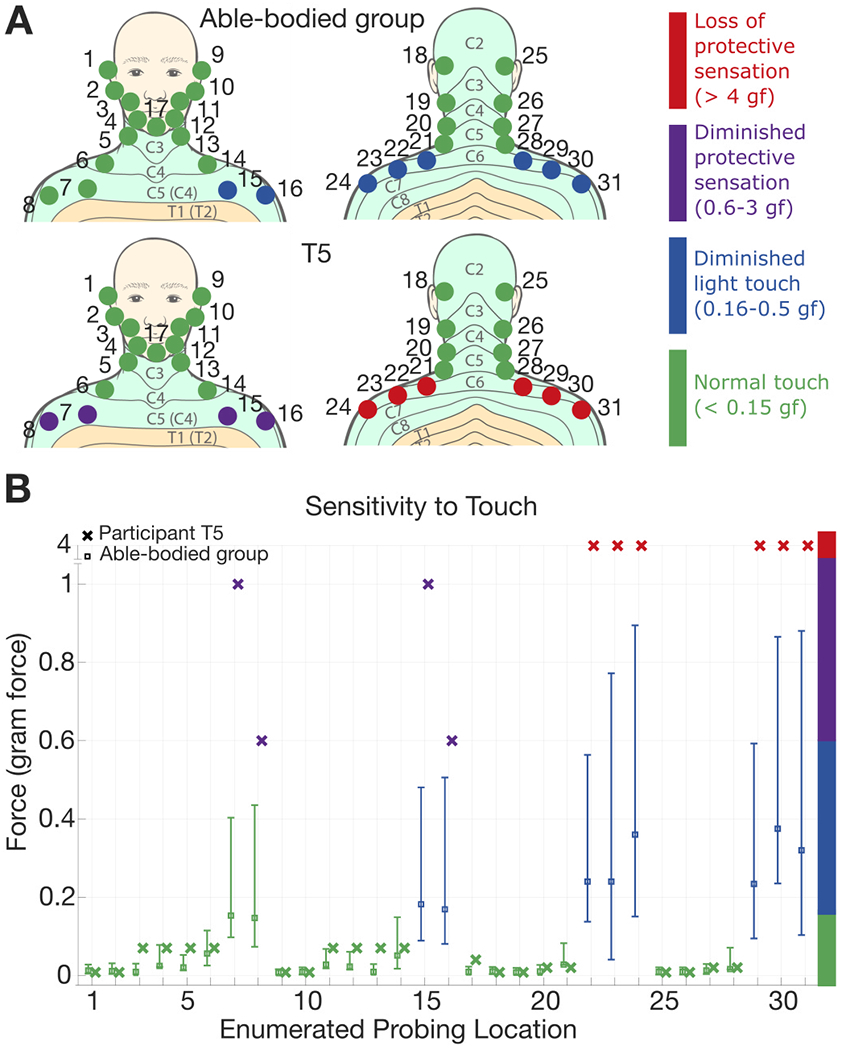
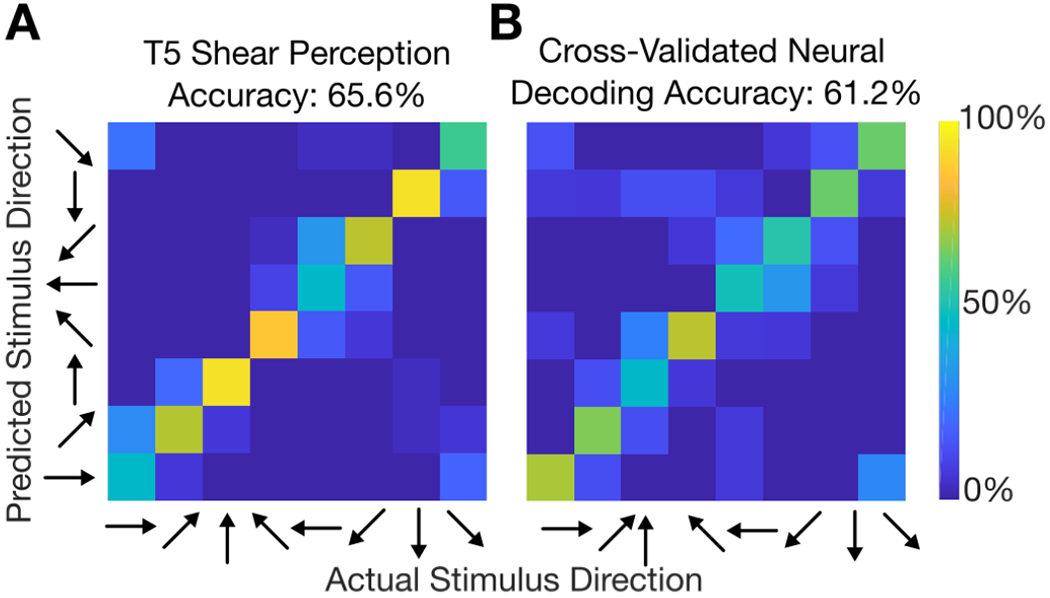
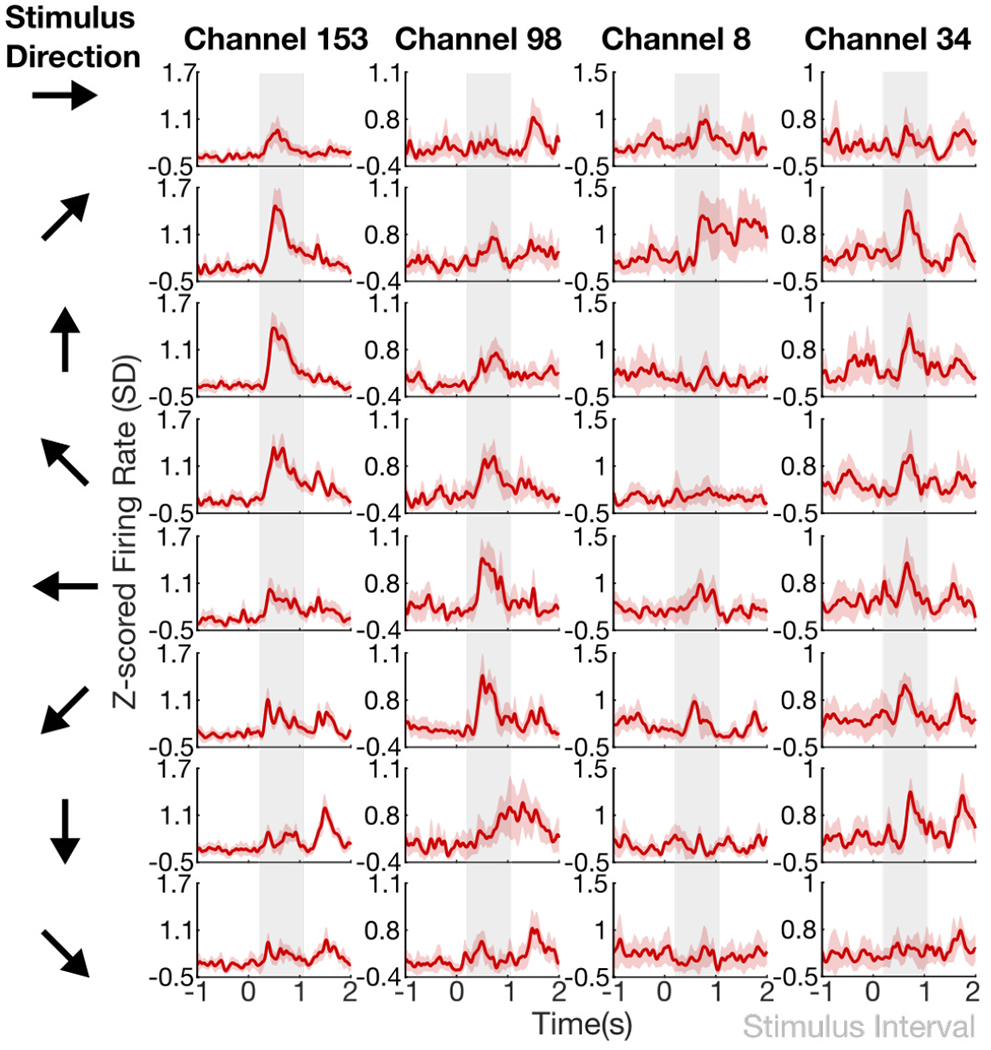
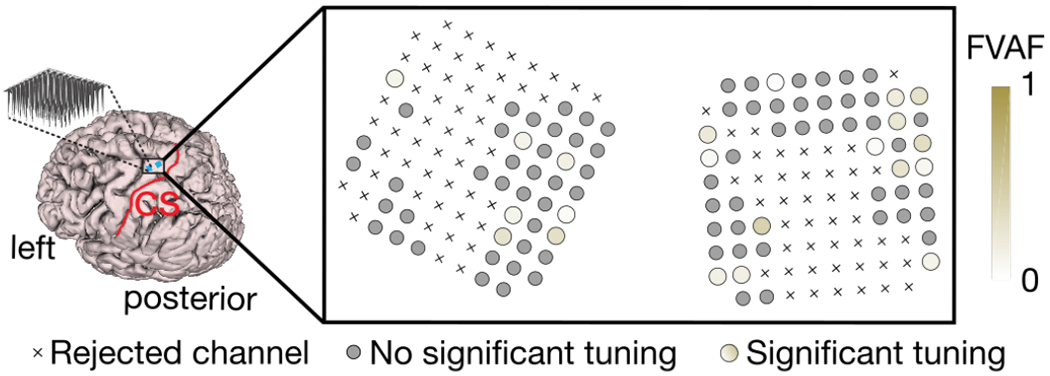
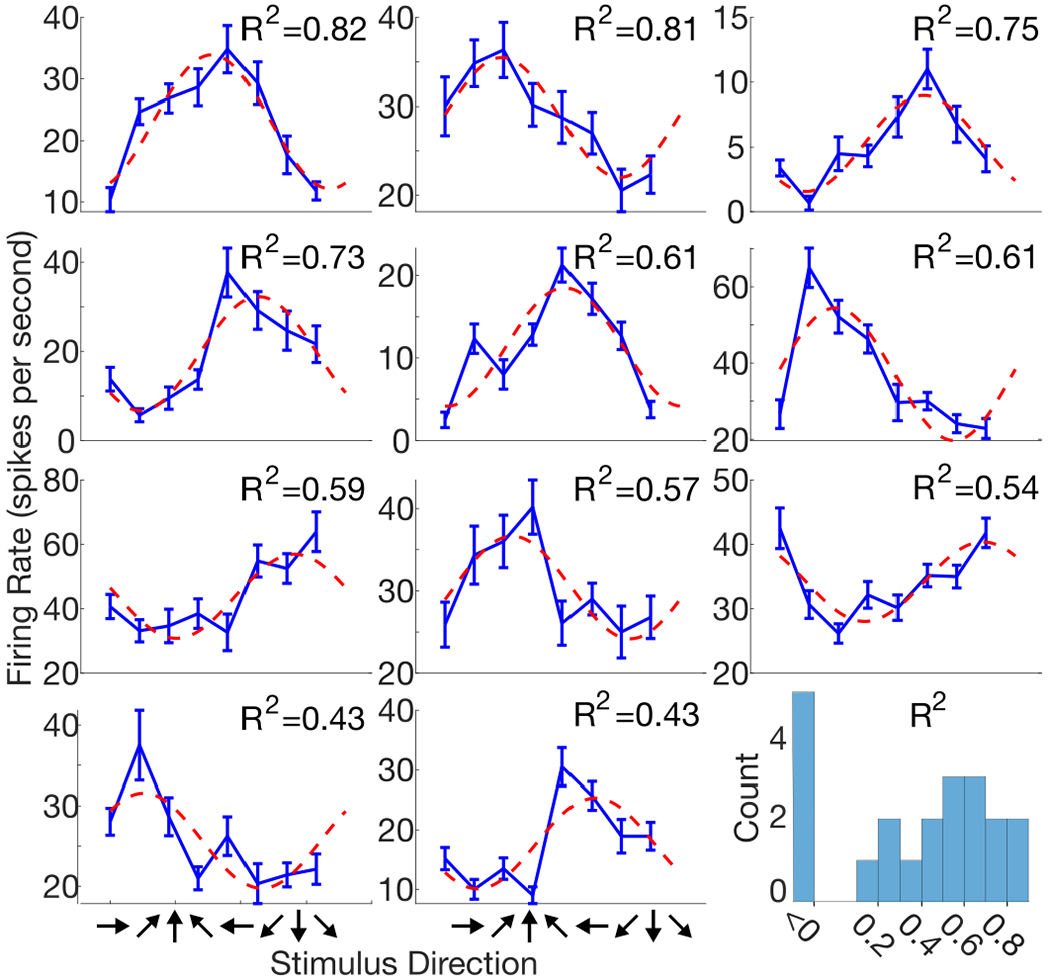
Intracortical brain-computer interfaces (iBCIs) provide people with paralysis a means to control devices with signals decoded from brain activity. Despite recent impressive advances, these devices still cannot approach able-bodied levels of control. To achieve naturalistic control and improved performance of neural prostheses, iBCIs will likely need to include proprioceptive feedback. With the goal of providing proprioceptive feedback via mechanical haptic stimulation, we aim to understand how haptic stimulation affects motor cortical neurons and ultimately, iBCI control. We provided skin shear haptic stimulation as a substitute for proprioception to the back of the neck of a person with tetraplegia. The neck location was determined via assessment of touch sensitivity using a monofilament test kit. The participant was able to correctly report skin shear at the back of the neck in 8 unique directions with 65% accuracy. We found motor cortical units that exhibited sensory responses to shear stimuli, some of which were strongly tuned to the stimuli and well modeled by cosine-shaped functions. In this article, we also demonstrated online iBCI cursor control with continuous skin-shear feedback driven by decoded command signals. Cursor control performance increased slightly but significantly when the participant was given haptic feedback, compared to the purely visual feedback condition.
皮层内脑机接口(iBCIs)为瘫痪患者提供了一种通过解码大脑活动信号来控制设备的方法。尽管最近取得了令人瞩目的进展,但这些设备仍无法达到健全人的控制水平。为了实现神经假体的自然控制和性能提升,iBCIs 可能需要包括本体感觉反馈。为了通过机械触觉刺激提供本体感觉反馈,我们旨在了解触觉刺激如何影响运动皮层神经元,最终影响 iBCI 控制。我们通过使用单丝测试套件对面部触觉敏感度进行评估,为一位四肢瘫痪患者的颈部背部提供了皮肤剪切触觉刺激。该参与者能够以 65%的准确率正确报告颈部背部 8 个独特方向的皮肤剪切感。我们发现了对剪切刺激表现出感觉反应的运动皮层单元,其中一些对刺激有强烈的调谐作用,并可以通过余弦形状函数很好地建模。在本文中,我们还展示了基于解码命令信号驱动的连续皮肤剪切反馈的在线 iBCI 光标控制。与仅视觉反馈条件相比,当参与者获得触觉反馈时,光标控制性能略有但显著提高。