Department of Integrative Oncology, Fudan University Shanghai Cancer Center, 270 Dong An Road, Shanghai, 200032, China.
Department of Oncology, Shanghai Medical College, Fudan University, Shanghai, 200032, China.
BMC Cancer. 2021 Apr 12;21(1):396. doi: 10.1186/s12885-021-08158-z.
Kaempferol, a natural flavonoid, exhibits anticancer properties by scavenging reactive oxygen species (ROS). However, increasing evidence has demonstrated that, under certain conditions, kaempferol can inhibit tumor growth by upregulating ROS levels. In this study, we aimed to investigate whether kaempferol effectively suppresses pancreatic cancer through upregulation of ROS, and to explore the underlying molecular mechanism.
PANC-1 and Mia PaCa-2 cells were exposed to different concentrations of kaempferol. Cell proliferation and colony formation were evaluated by CCK-8 and colony formation assays. Flow cytometry was performed to assess the ROS levels and cell apoptosis. The mRNA sequencing and KEGG enrichment analysis were performed to identify differentially expressed genes and to reveal significantly enriched signaling pathways in response to kaempferol treatment. Based on biological analysis, we hypothesized that tissue transglutaminase (TGM2) gene was an essential target for kaempferol to induce ROS-related apoptosis in pancreatic cancer. TGM2 was overexpressed by lentivirus vector to verify the effect of TGM2 on the ROS-associated apoptotic signaling pathway. Western blot and qRT-PCR were used to determine the protein and mRNA levels, respectively. The prognostic value of TGM2 was analyzed by Gene Expression Profiling Interactive Analysis (GEPIA) tools based on public data from the TCGA database.
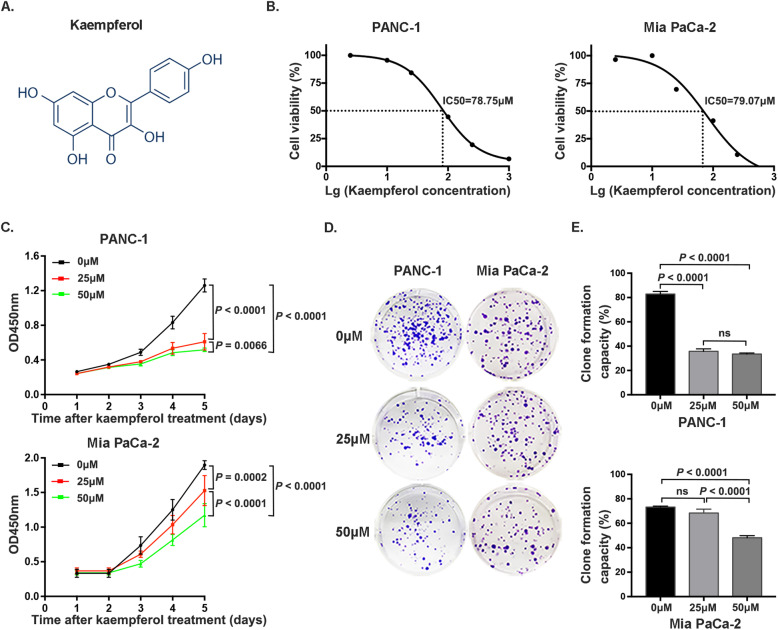
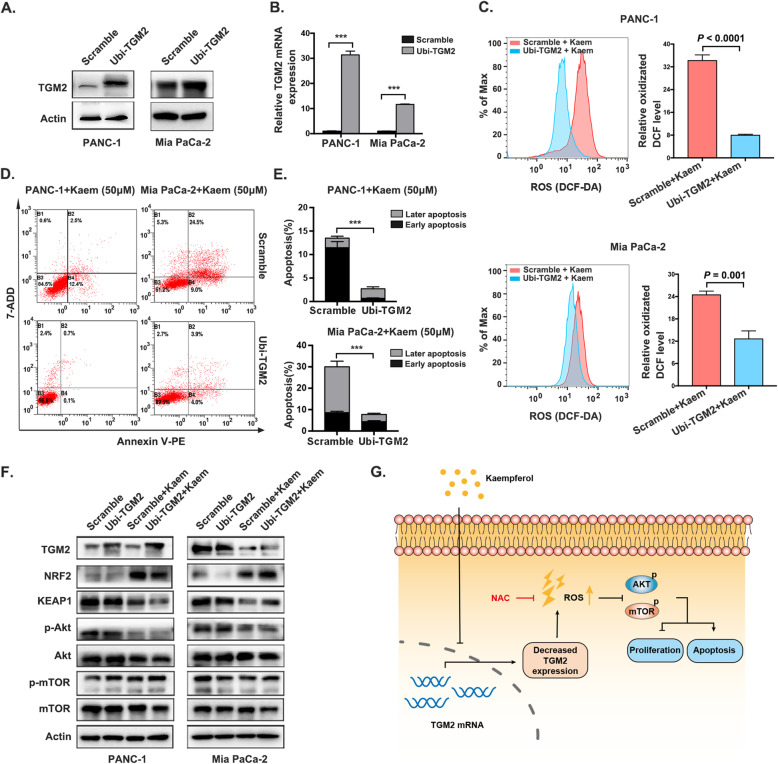
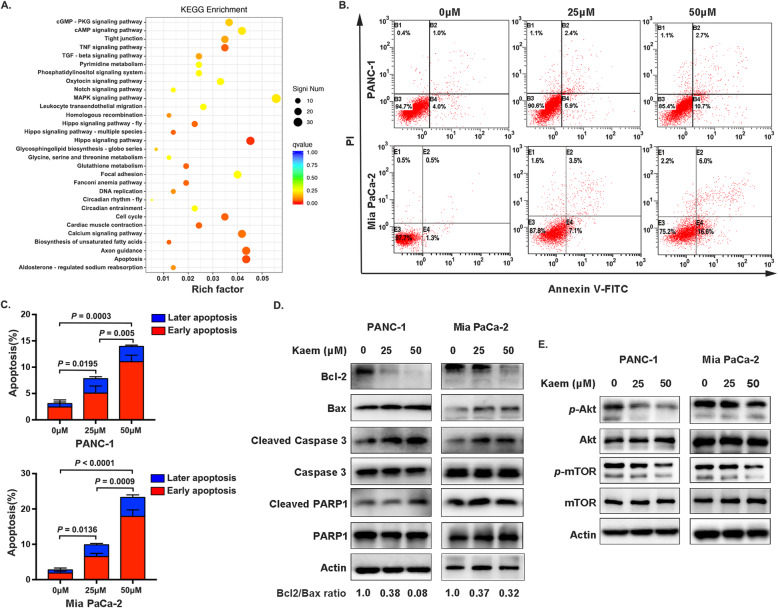
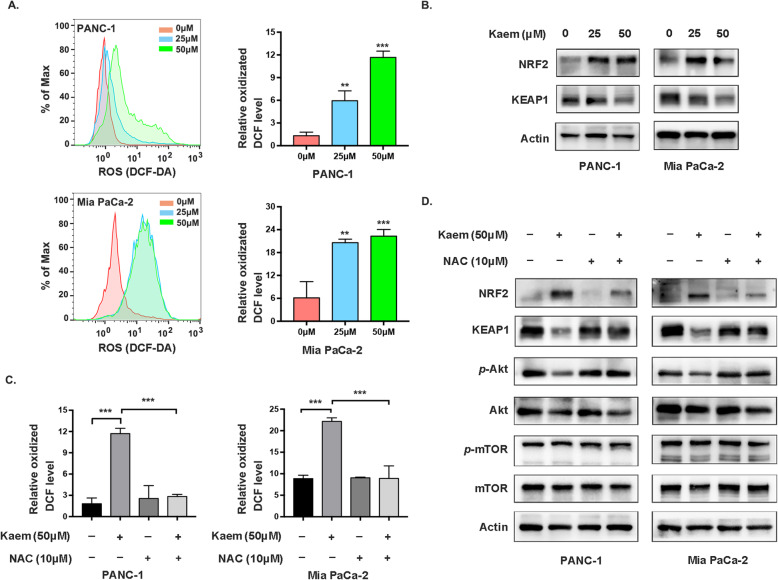
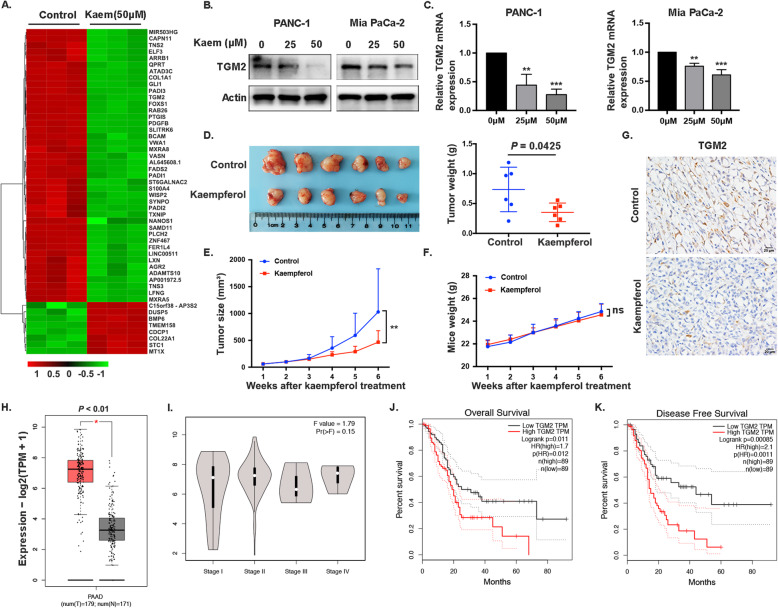
Kaempferol effectively suppressed pancreatic cancer in vitro and in vivo. Kaempferol promoted apoptosis in vitro by increasing ROS generation, which was involved in Akt/mTOR signaling. TGM2 levels were significantly increased in PDAC tissues compared with normal tissues, and high TGM2 expression was positively correlated with poor prognosis in pancreatic cancer patients. Decreased TGM2 mRNA and protein levels were observed in the cells after treatment with kaempferol. Additionally, TGM2 overexpression downregulated ROS production and inhibited the abovementioned apoptotic signaling pathway.
Kaempferol induces ROS-dependent apoptosis in pancreatic cancer cells via TGM2-mediated Akt/mTOR signaling, and TGM2 may represent a promising prognostic biomarker for pancreatic cancer.
山奈酚是一种天然类黄酮,通过清除活性氧(ROS)表现出抗癌特性。然而,越来越多的证据表明,在某些条件下,山奈酚可以通过上调 ROS 水平来抑制肿瘤生长。在这项研究中,我们旨在研究山奈酚是否通过上调 ROS 有效抑制胰腺癌,并探讨其潜在的分子机制。
用不同浓度的山奈酚处理 PANC-1 和 Mia PaCa-2 细胞。通过 CCK-8 和集落形成实验评估细胞增殖和集落形成。通过流式细胞术评估 ROS 水平和细胞凋亡。进行 mRNA 测序和 KEGG 富集分析,以鉴定差异表达基因,并揭示响应山奈酚处理的显著富集信号通路。基于生物学分析,我们假设组织转谷氨酰胺酶(TGM2)基因是山奈酚诱导胰腺癌中 ROS 相关凋亡的关键靶标。通过慢病毒载体过表达 TGM2 来验证 TGM2 对 ROS 相关凋亡信号通路的影响。Western blot 和 qRT-PCR 分别用于测定蛋白和 mRNA 水平。基于 TCGA 数据库的公共数据,使用基因表达谱分析交互分析(GEPIA)工具分析 TGM2 的预后价值。
山奈酚在体外和体内有效抑制胰腺癌。山奈酚通过增加 ROS 产生促进体外细胞凋亡,这涉及 Akt/mTOR 信号通路。与正常组织相比,PDAC 组织中的 TGM2 水平显著升高,并且在胰腺癌患者中,高 TGM2 表达与不良预后呈正相关。在用山奈酚处理后,细胞中的 TGM2 mRNA 和蛋白水平降低。此外,TGM2 过表达下调 ROS 产生并抑制上述凋亡信号通路。
山奈酚通过 TGM2 介导的 Akt/mTOR 信号通路诱导胰腺癌细胞中 ROS 依赖性凋亡,TGM2 可能是胰腺癌有前途的预后生物标志物。