Children's Hospital of Philadelphia Research Institute, Philadelphia, Pennsylvania, USA.
Department of Pediatrics, Washington University School of Medicine, St. Louis, Missouri, USA.
JCI Insight. 2021 May 24;6(10):145854. doi: 10.1172/jci.insight.145854.
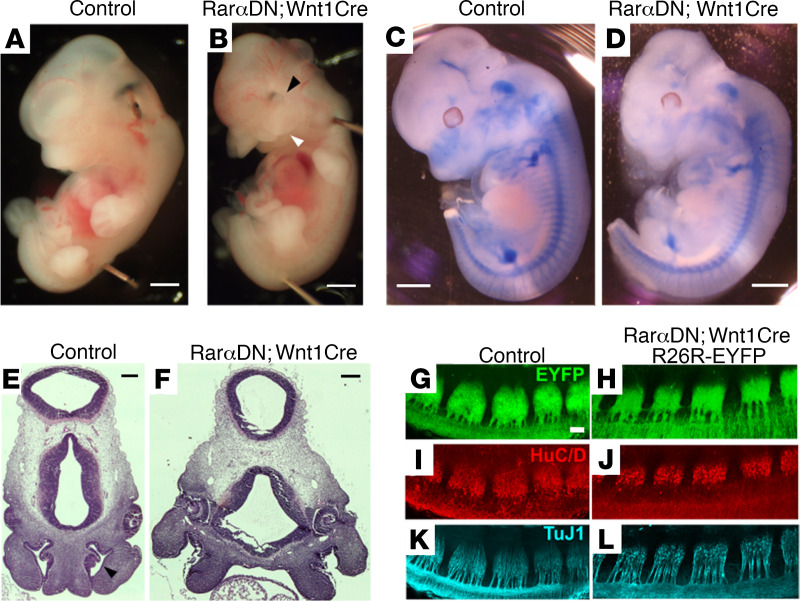
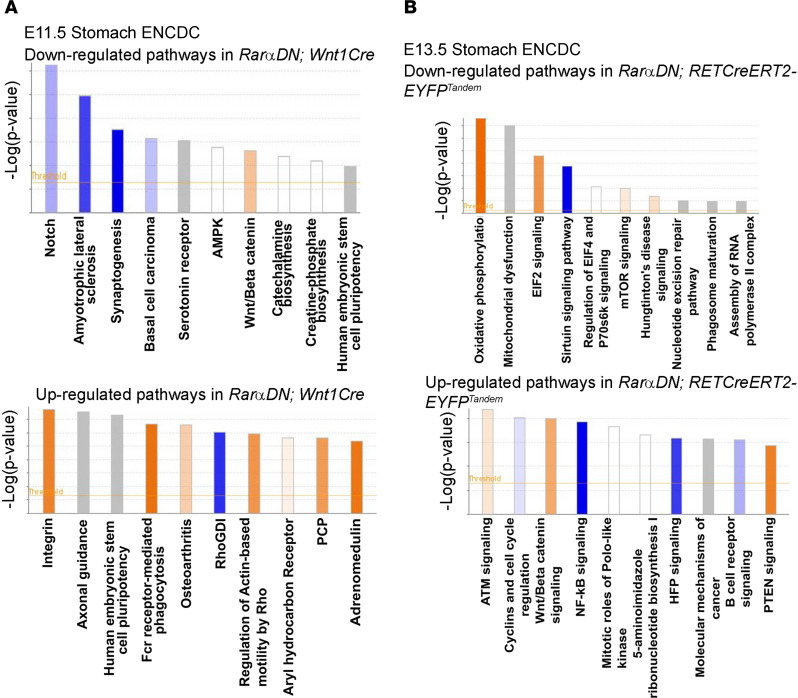
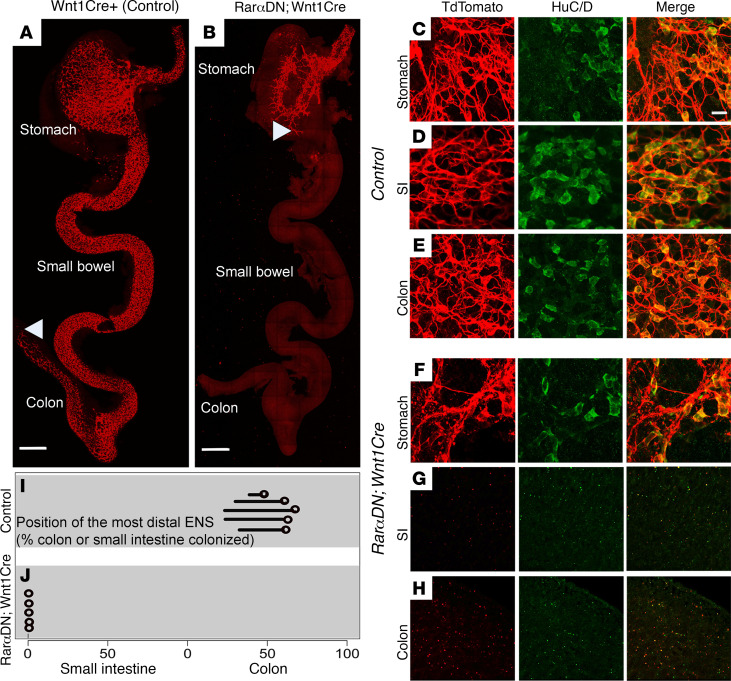
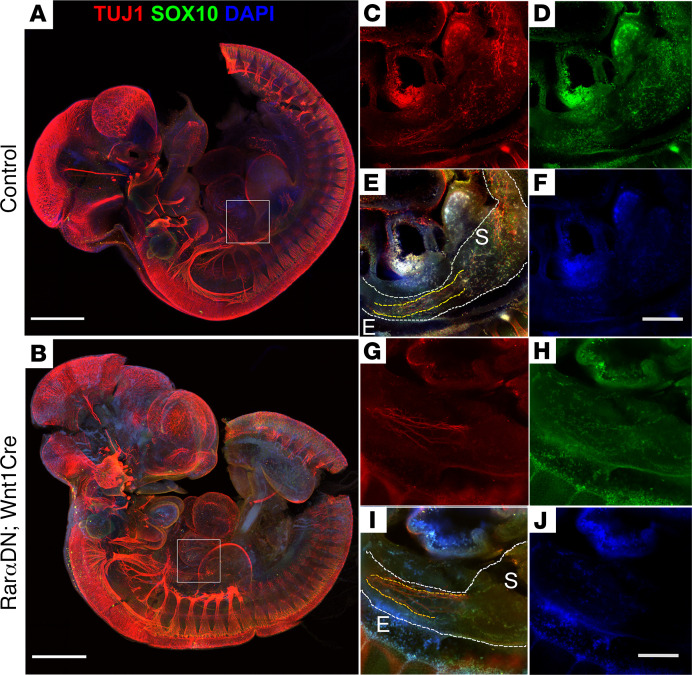
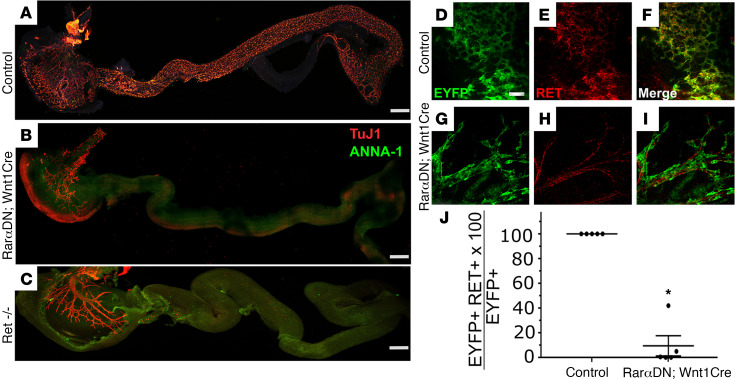
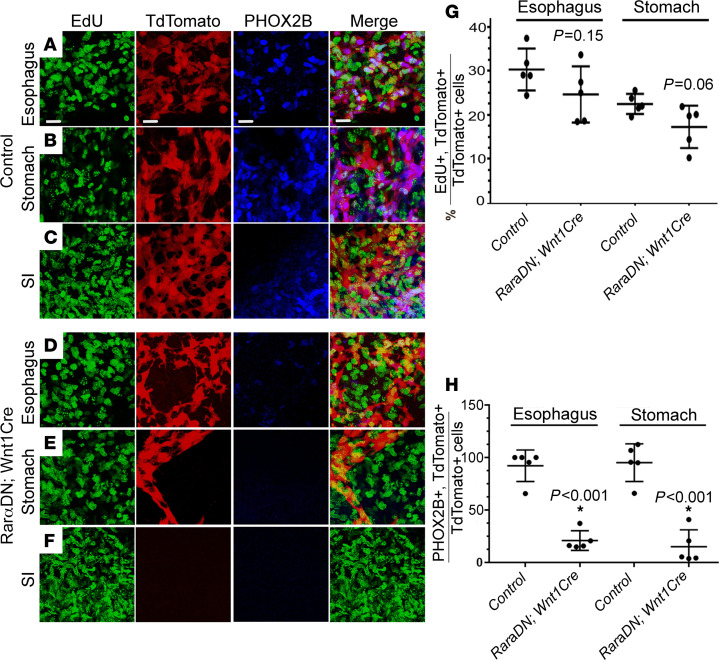
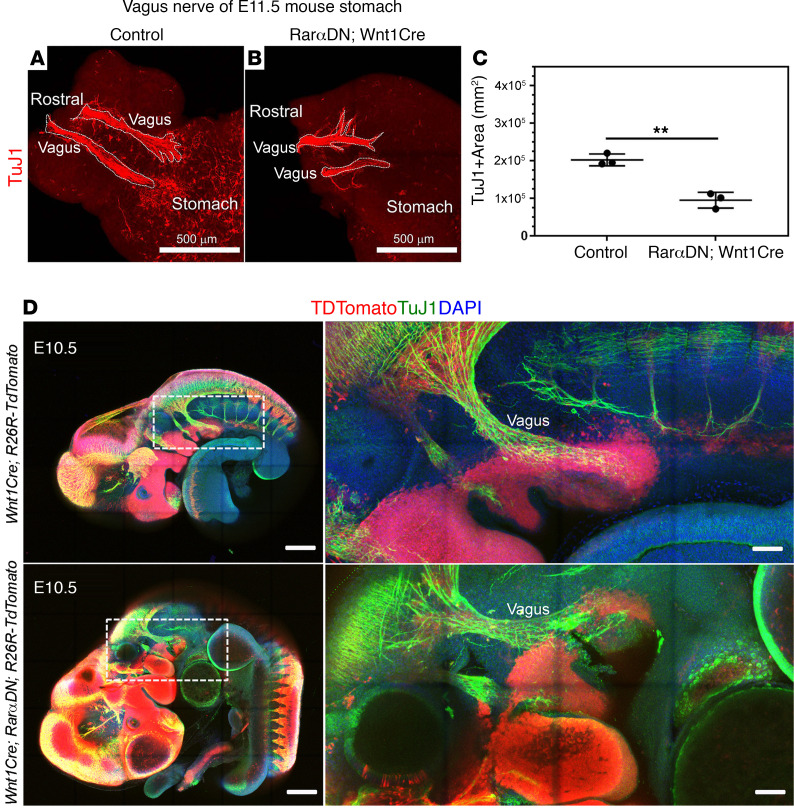
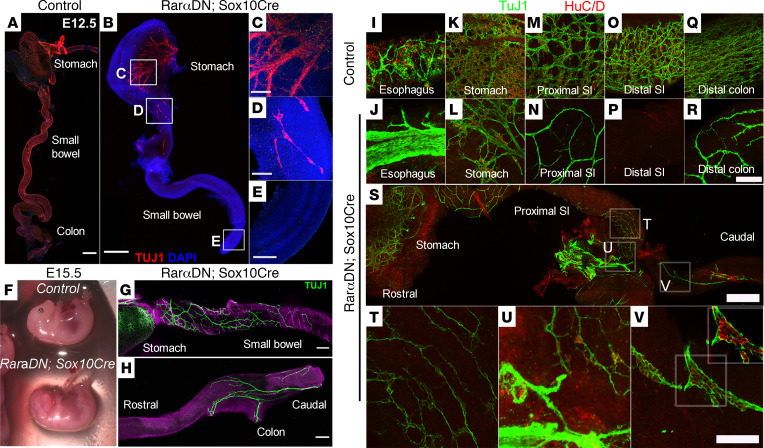
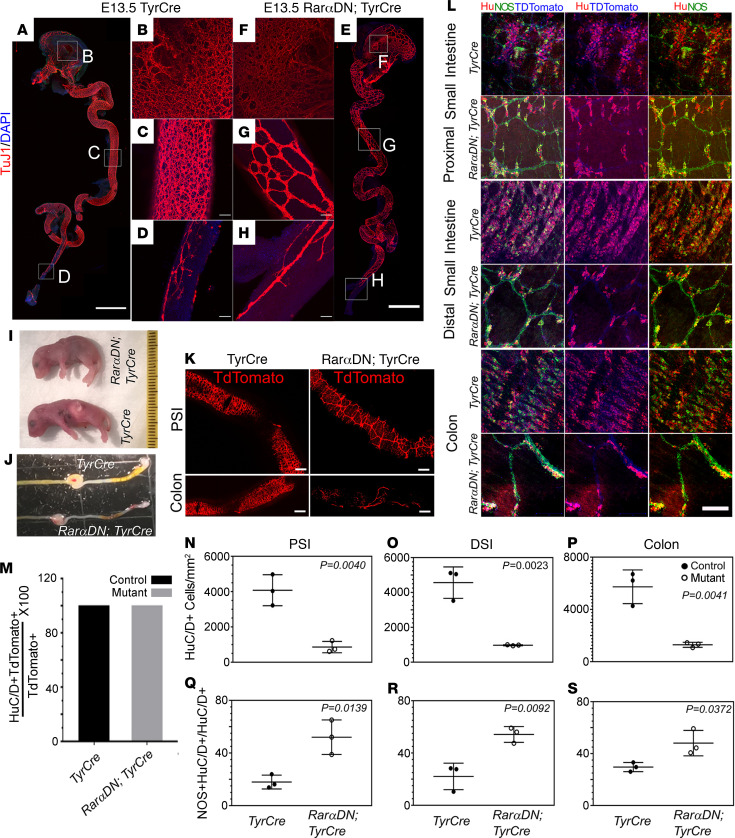
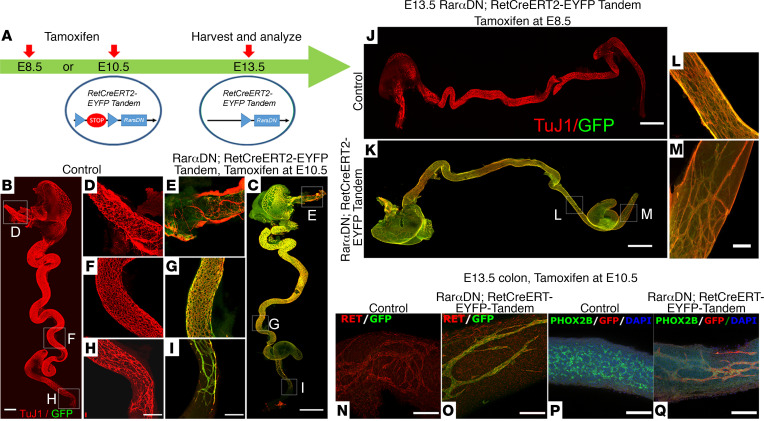
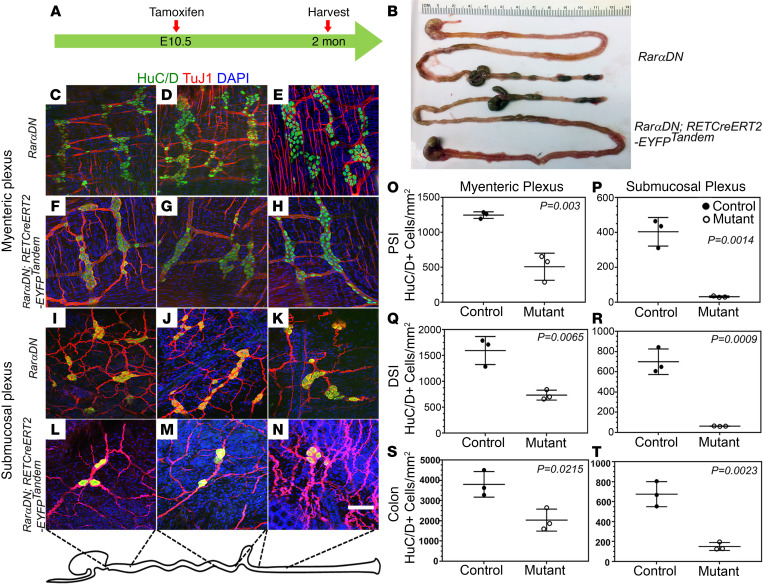
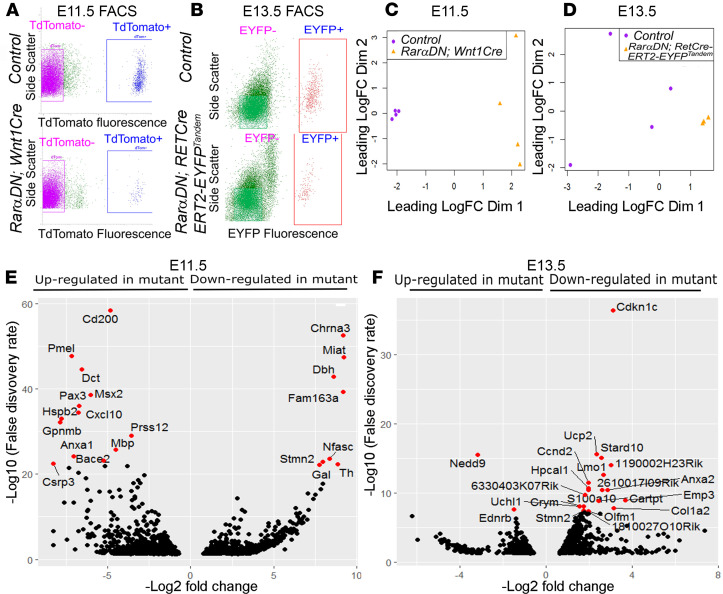
Retinoic acid (RA) signaling is essential for enteric nervous system (ENS) development, since vitamin A deficiency or mutations in RA signaling profoundly reduce bowel colonization by ENS precursors. These RA effects could occur because of RA activity within the ENS lineage or via RA activity in other cell types. To define cell-autonomous roles for retinoid signaling within the ENS lineage at distinct developmental time points, we activated a potent floxed dominant-negative RA receptor α (RarαDN) in the ENS using diverse CRE recombinase-expressing mouse lines. This strategy enabled us to block RA signaling at premigratory, migratory, and postmigratory stages for ENS precursors. We found that cell-autonomous loss of RA receptor (RAR) signaling dramatically affected ENS development. CRE activation of RarαDN expression at premigratory or migratory stages caused severe intestinal aganglionosis, but at later stages, RarαDN induced a broad range of phenotypes including hypoganglionosis, submucosal plexus loss, and abnormal neural differentiation. RNA sequencing highlighted distinct RA-regulated gene sets at different developmental stages. These studies show complicated context-dependent RA-mediated regulation of ENS development.
视黄酸(RA)信号对于肠神经系统(ENS)的发育至关重要,因为维生素 A 缺乏或 RA 信号的突变会极大地减少 ENS 前体对肠道的定植。这些 RA 效应可能是由于 ENS 谱系内的 RA 活性或其他细胞类型中的 RA 活性所致。为了在不同的发育时间点定义 ENS 谱系内视黄醇信号的细胞自主作用,我们使用多种表达 CRE 重组酶的小鼠品系在 ENS 中激活了一种有效的 floxed 显性负性 RA 受体α(RarαDN)。该策略使我们能够阻断 ENS 前体的迁移前、迁移中和迁移后阶段的 RA 信号。我们发现,RA 受体(RAR)信号的细胞自主缺失显着影响 ENS 的发育。在迁移前或迁移阶段激活 CRE 表达 RarαDN 会导致严重的肠无神经节症,但在后期,RarαDN 会引起广泛的表型,包括神经节减少、黏膜下丛丢失和异常的神经分化。RNA 测序突出了不同发育阶段 RA 调节的不同基因集。这些研究表明,RA 对 ENS 发育的调控具有复杂的、依赖于背景的作用。