Lester Evan, Ooi Felicia K, Bakkar Nadine, Ayers Jacob, Woerman Amanda L, Wheeler Joshua, Bowser Robert, Carlson George A, Prusiner Stanley B, Parker Roy
Department of Biochemistry, University of Colorado, Boulder, CO, USA; Medical Scientist Training Program, University of Colorado Anschutz Medical Campus, Aurora, CO, USA.
Institute for Neurodegenerative Diseases, Weill Institute for Neurosciences, University of California San Francisco, San Francisco, CA, USA.
Neuron. 2021 May 19;109(10):1675-1691.e9. doi: 10.1016/j.neuron.2021.03.026. Epub 2021 Apr 12.
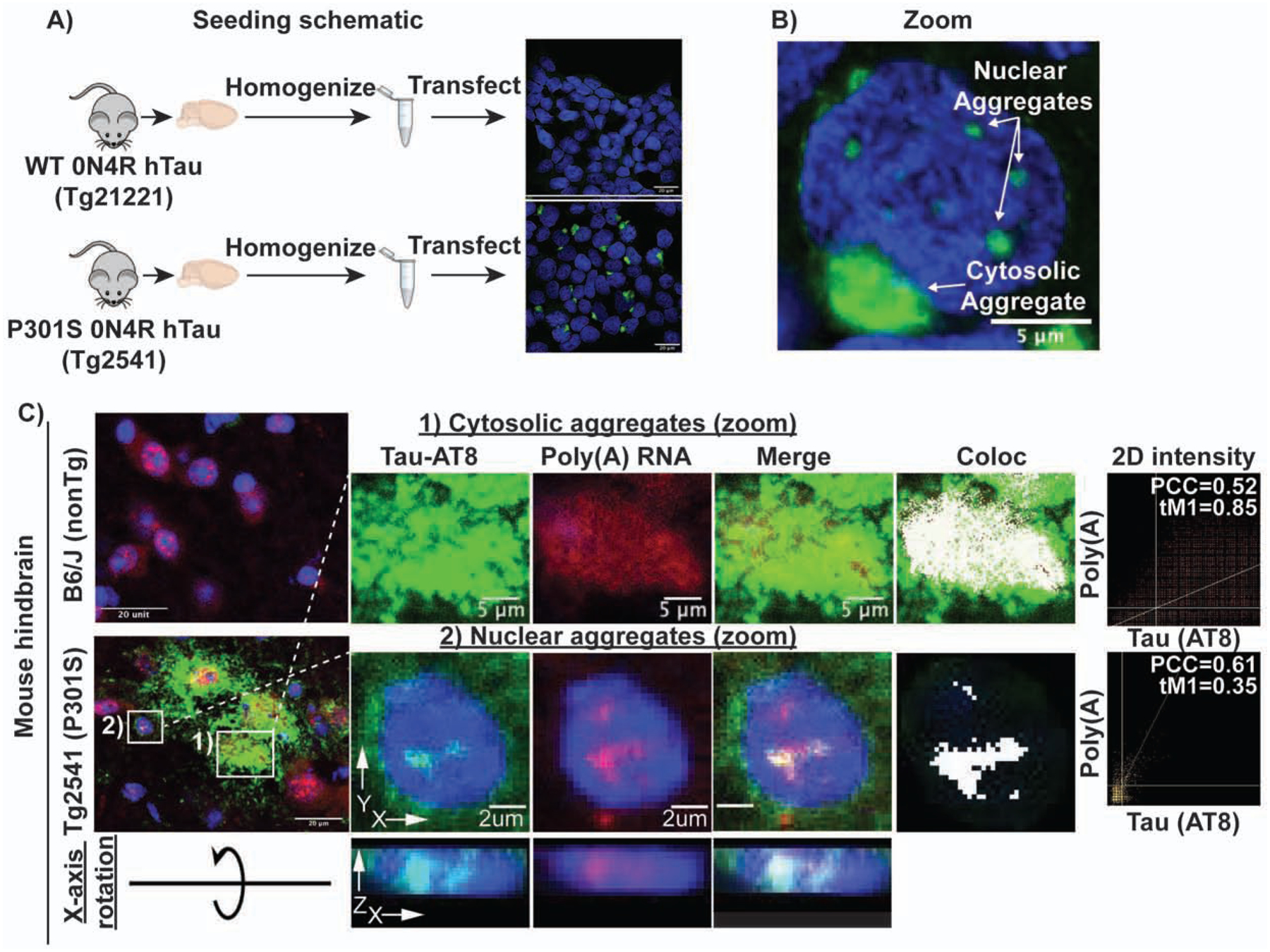
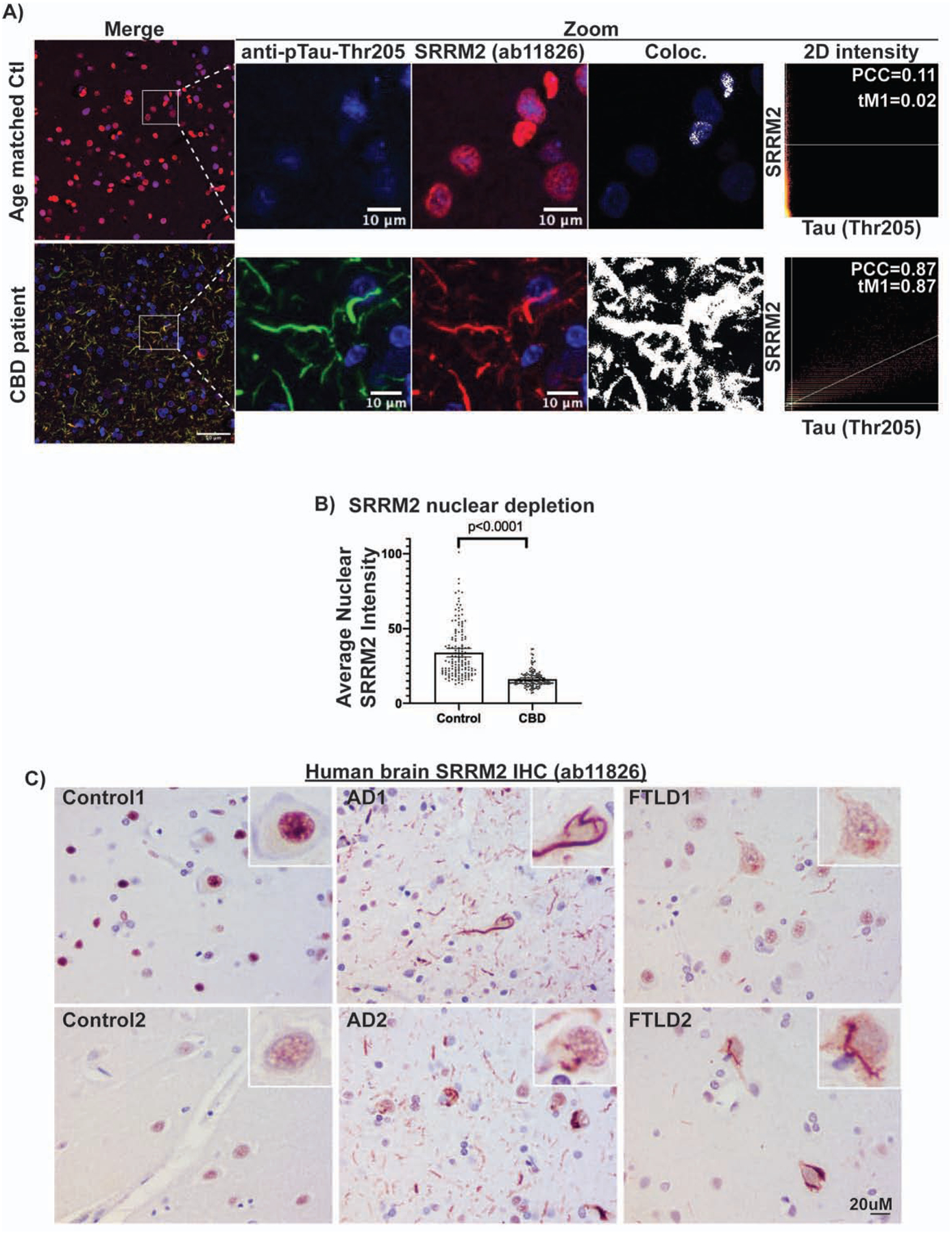
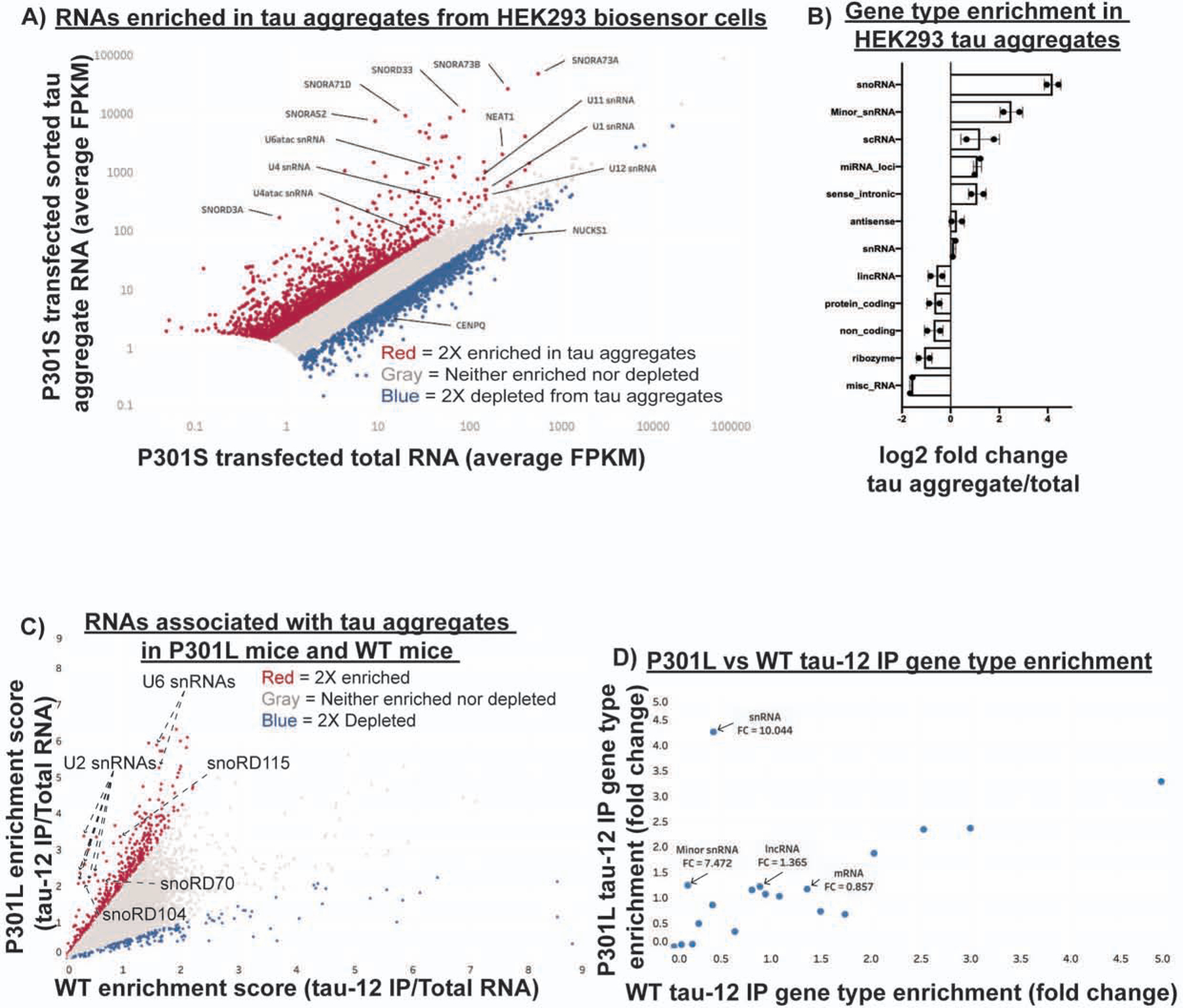
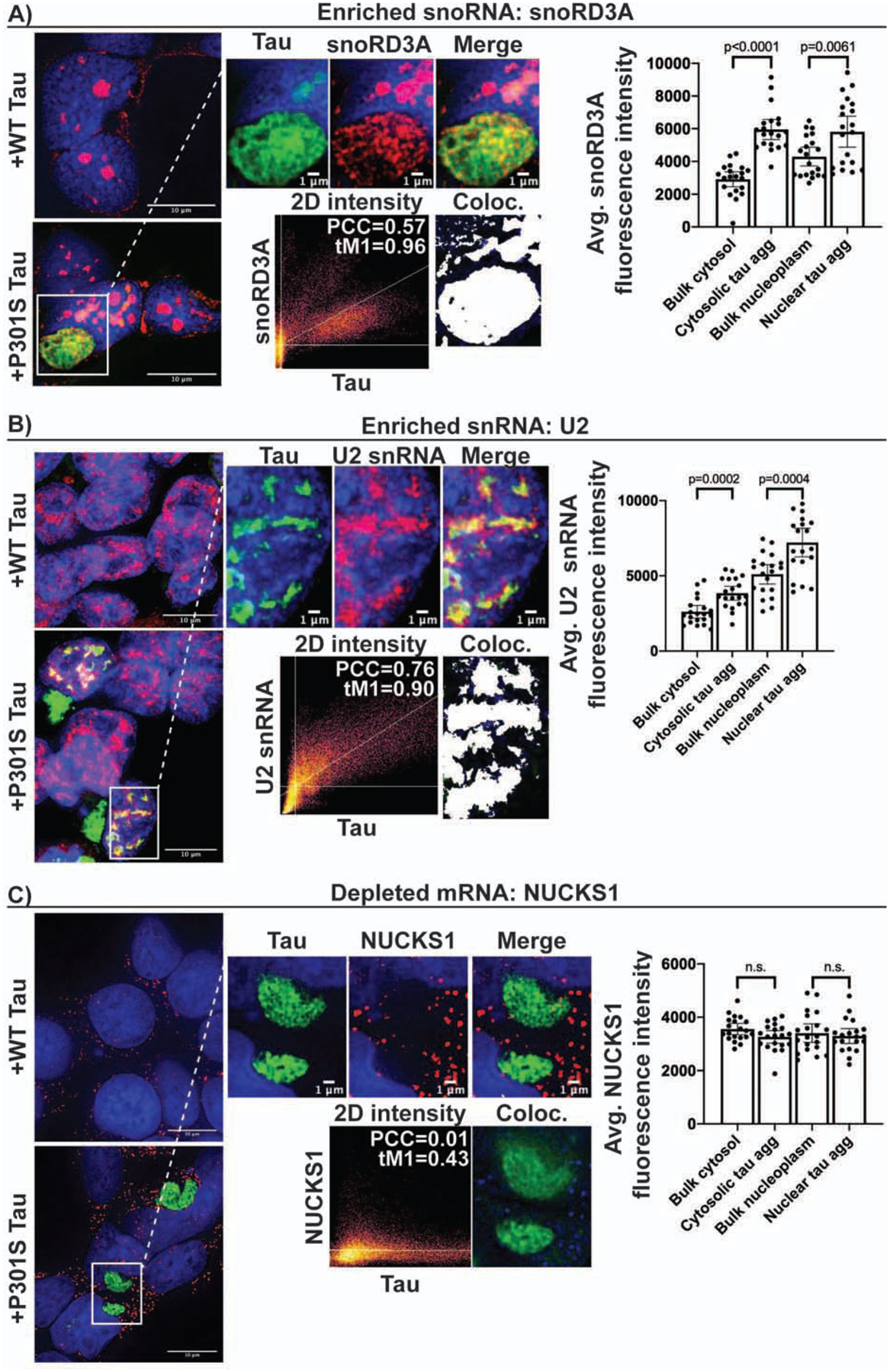
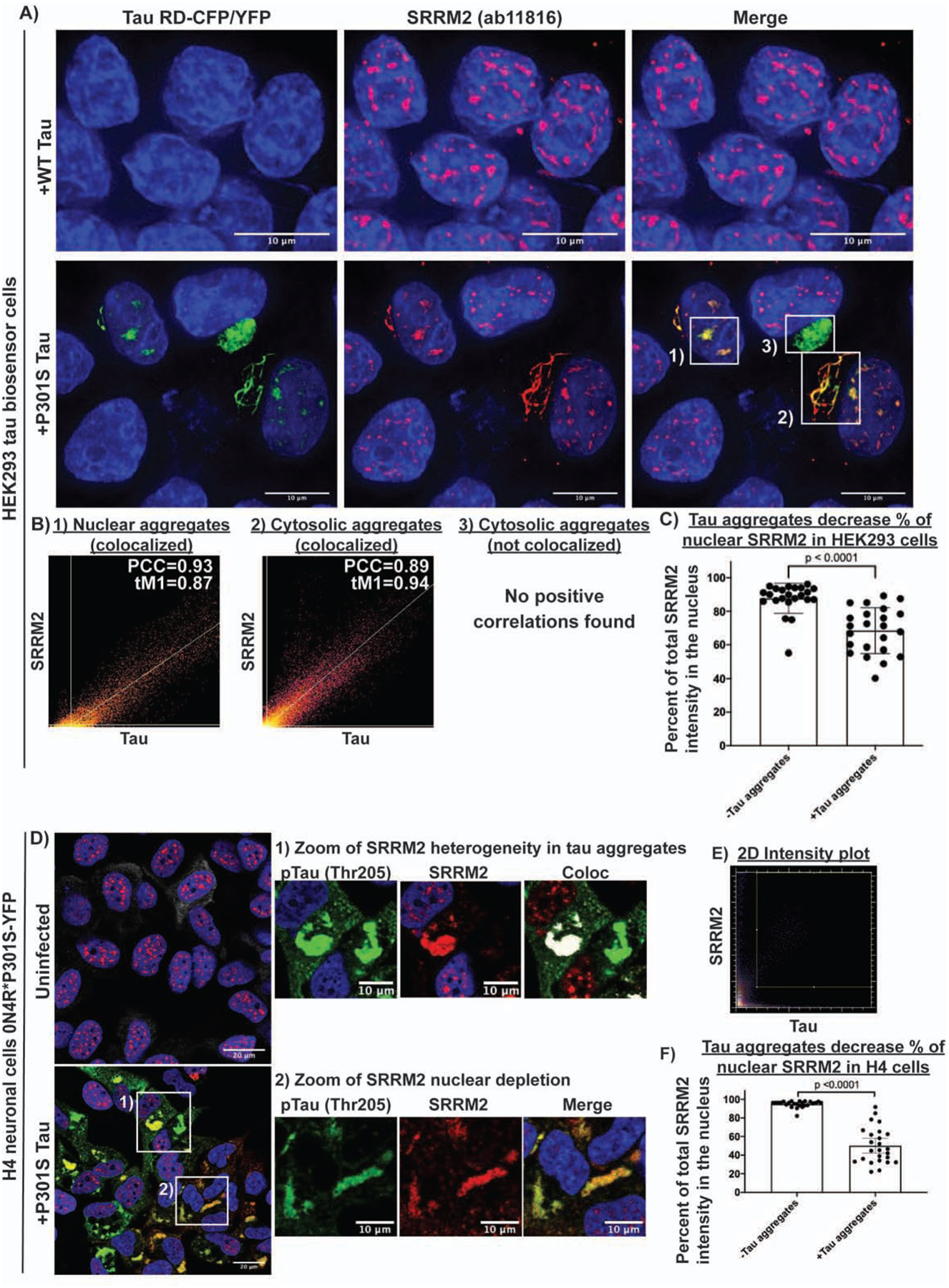
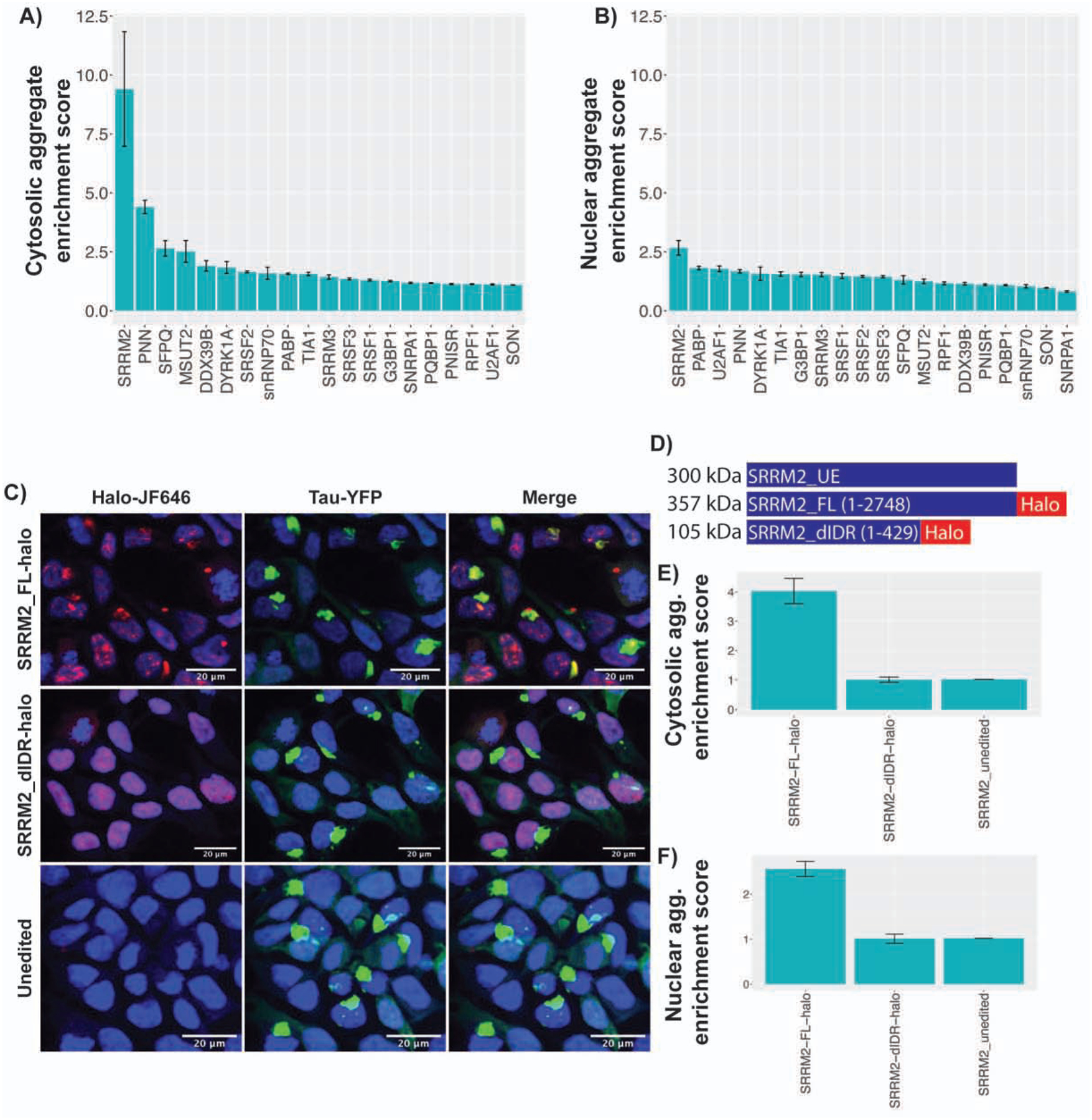
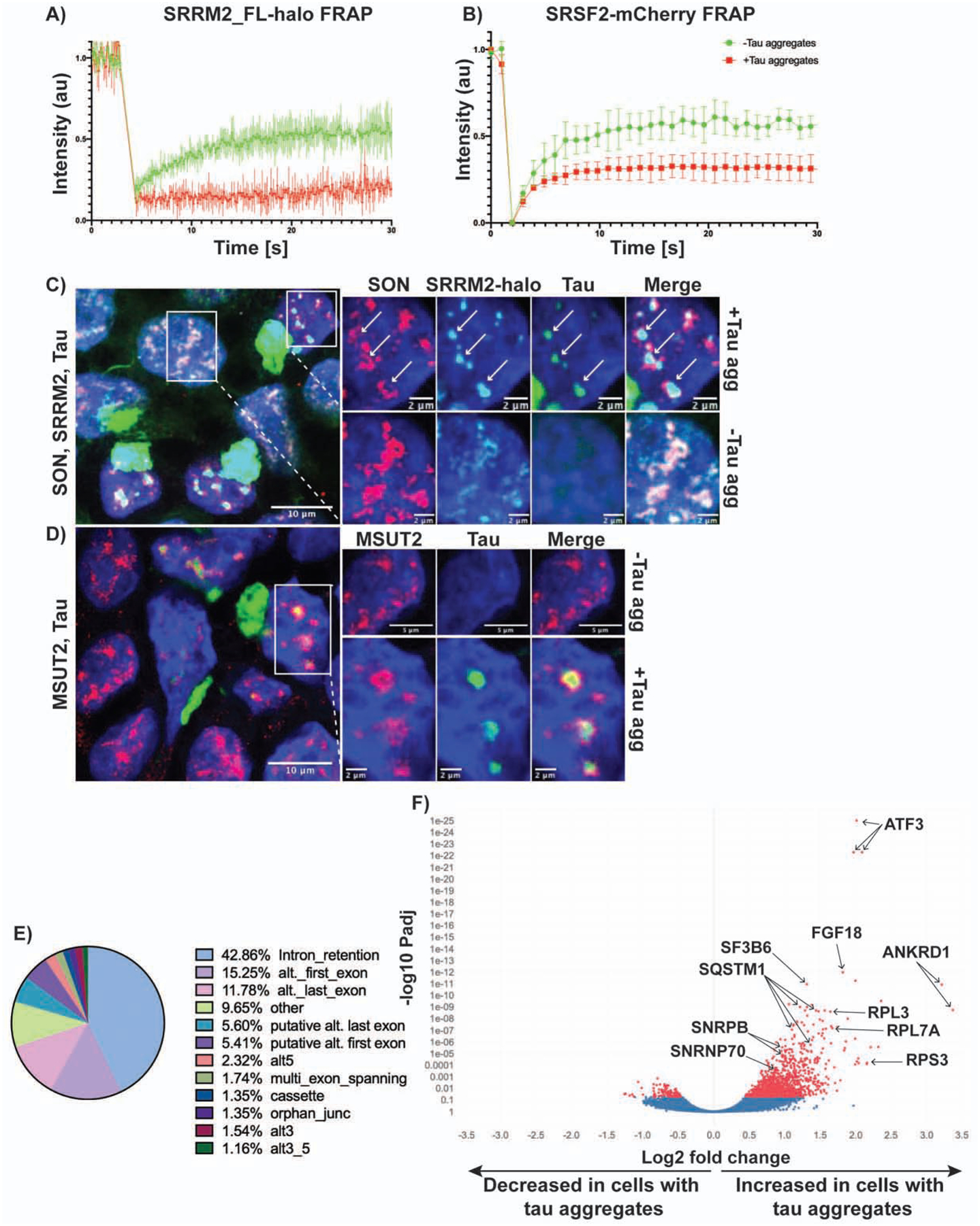
Tau aggregates contribute to neurodegenerative diseases, including frontotemporal dementia and Alzheimer's disease (AD). Although RNA promotes tau aggregation in vitro, whether tau aggregates in cells contain RNA is unknown. We demonstrate, in cell culture and mouse brains, that cytosolic and nuclear tau aggregates contain RNA with enrichment for small nuclear RNAs (snRNAs) and small nucleolar RNAs (snoRNAs). Nuclear tau aggregates colocalize with and alter the composition, dynamics, and organization of nuclear speckles, membraneless organelles involved in pre-mRNA splicing. Moreover, several nuclear speckle components, including SRRM2, mislocalize to cytosolic tau aggregates in cells, mouse brains, and brains of individuals with AD, frontotemporal dementia (FTD), and corticobasal degeneration (CBD). Consistent with these alterations, we observe that the presence of tau aggregates is sufficient to alter pre-mRNA splicing. This work identifies tau alteration of nuclear speckles as a feature of tau aggregation that may contribute to the pathology of tau aggregates.
tau聚集体与神经退行性疾病有关,包括额颞叶痴呆和阿尔茨海默病(AD)。尽管RNA在体外促进tau聚集,但细胞内的tau聚集体是否含有RNA尚不清楚。我们在细胞培养和小鼠大脑中证明,胞质和核内的tau聚集体含有RNA,其中富含小核RNA(snRNA)和小核仁RNA(snoRNA)。核内的tau聚集体与核斑点共定位,并改变其组成、动态和组织,核斑点是参与前体mRNA剪接的无膜细胞器。此外,包括SRRM2在内的几种核斑点成分在细胞、小鼠大脑以及患有AD、额颞叶痴呆(FTD)和皮质基底节变性(CBD)的个体的大脑中错误定位于胞质tau聚集体。与这些改变一致,我们观察到tau聚集体的存在足以改变前体mRNA剪接。这项工作将核斑点的tau改变确定为tau聚集的一个特征,这可能导致tau聚集体的病理学变化。