Li Yinghui, Chen Xinzhe, Xiao Shudan, Wang Haoxuan, Li Bo, Zhang MeiHua, Wang Kun
Key Laboratory of Birth Regulation and Control Technology of National Health Commission of China, Shandong Provincial Maternal and Child Health Care Hospital affiliated to Qingdao University, Jinan, 250014, China.
Institute of Chronic Diseases, Institute of Cardiovascular Diseases, Qingdao University, Qingdao, Shandong, 266021, China.
Cell Commun Signal. 2025 Jun 4;23(1):266. doi: 10.1186/s12964-025-02274-0.
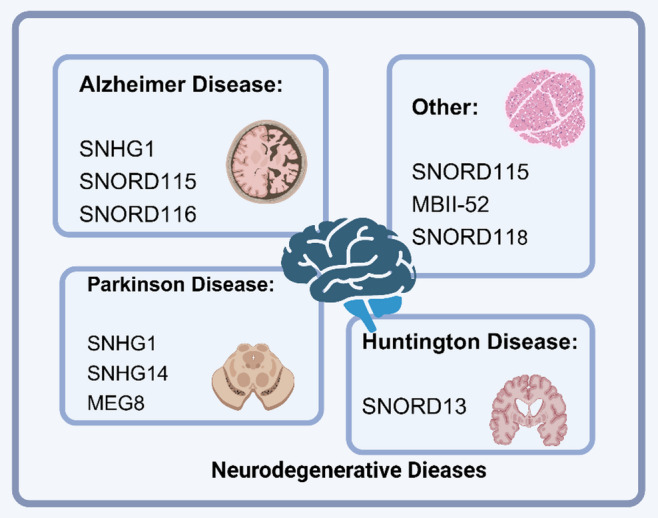
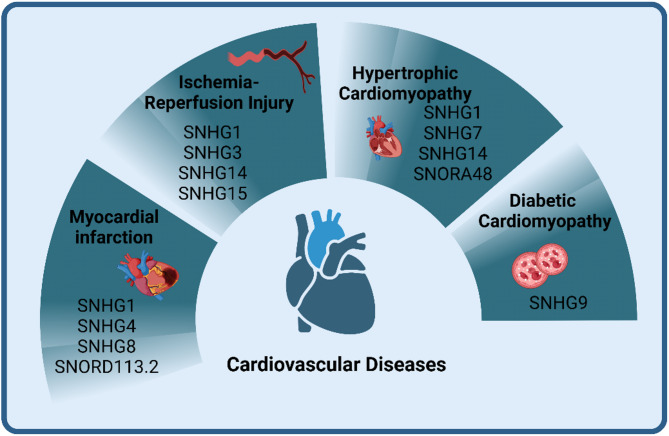
Nucleolar small RNA (snoRNA), as a class of non-coding RNAs, play a crucial role in eukaryotic cells. They are widely involved in post-transcriptional modifications of ribosomal RNAs, including methylation and pseudouridylation, precisely regulating the process of ribosome biogenesis, ensuring the integrity of ribosome structure and function, and thereby guaranteeing the accuracy and efficiency of protein synthesis. snoRNAs not only maintain cell growth, proliferation, and differentiation under normal physiological conditions but also have abnormal expression closely associated with various diseases, such as cancer, cardiovascular diseases and neurodegenerative diseases. In recent years, with the innovation of research techniques, there has been a deeper exploration of the biosynthesis pathways, functional mechanisms of snoRNAs, and their potential value in disease diagnosis and treatment. This review comprehensively summarizes the structural characteristics, classification systems, biological functions, and disease associations of snoRNAs, and looks forward to future research directions, aiming to provide a systematic reference for further exploration of the mysteries of snoRNAs in related fields.
核仁小RNA(snoRNA)作为一类非编码RNA,在真核细胞中发挥着至关重要的作用。它们广泛参与核糖体RNA的转录后修饰,包括甲基化和假尿苷化,精确调控核糖体生物发生过程,确保核糖体结构和功能的完整性,从而保证蛋白质合成的准确性和效率。snoRNAs不仅在正常生理条件下维持细胞生长、增殖和分化,而且其异常表达还与多种疾病密切相关,如癌症、心血管疾病和神经退行性疾病。近年来,随着研究技术的创新,对snoRNAs的生物合成途径、功能机制及其在疾病诊断和治疗中的潜在价值有了更深入的探索。本综述全面总结了snoRNAs的结构特征、分类系统、生物学功能和疾病关联,并展望了未来的研究方向,旨在为进一步探索snoRNAs在相关领域的奥秘提供系统的参考。