Department of Anesthesia and Pain Medicine, Guangzhou First People's Hospital, School of Medicine, South China University of Technology, Guangzhou, 510000, Guangdong, China.
Guangdong Province Key Laboratory of Brain Function and Disease, Department of Physiology, Zhongshan School of Medicine, Sun Yat-Sen University, Guangzhou, 510000, China.
J Neuroinflammation. 2021 Apr 13;18(1):91. doi: 10.1186/s12974-021-02139-6.
We previously reported a correlation between small doses of oxaliplatin penetrating onto the spinal cord and acute pain after chemotherapy. Here, we propose that MT2 within the spinal dorsal horns participates in the development of oxaliplatin-induced neuropathic pain and may be a pharmacological target for the prevention and treatment of chemotherapy-induced peripheral neuropathy (CIPN).
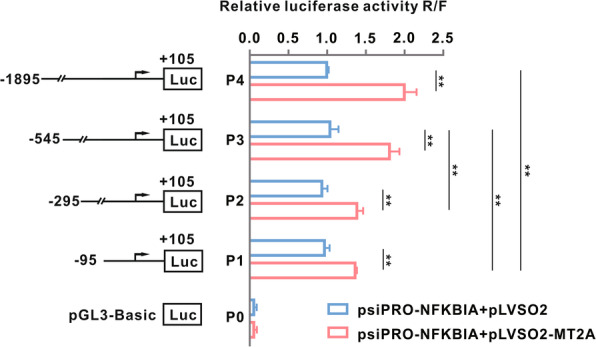
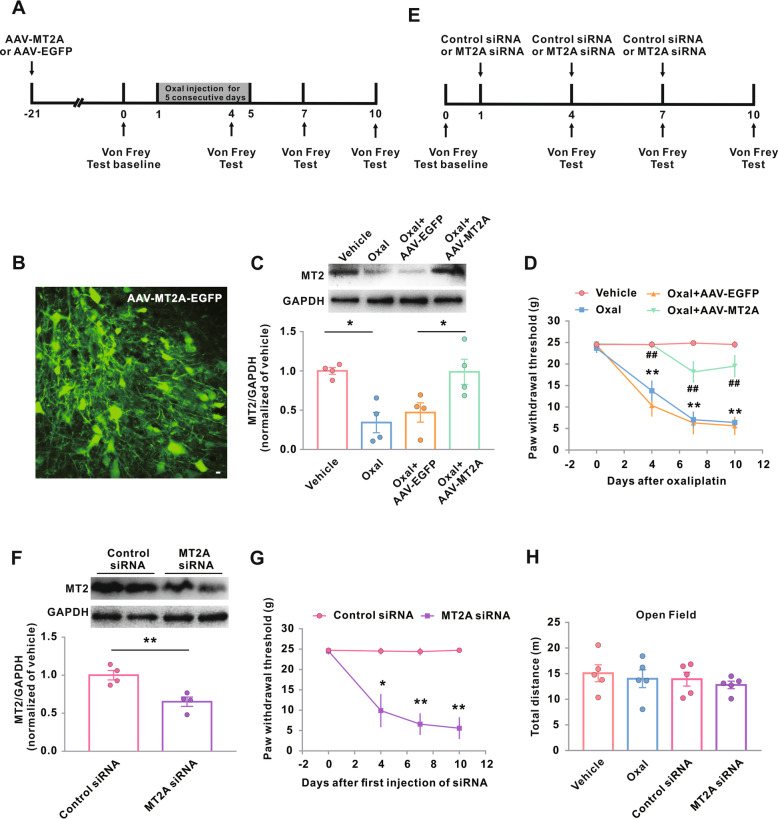
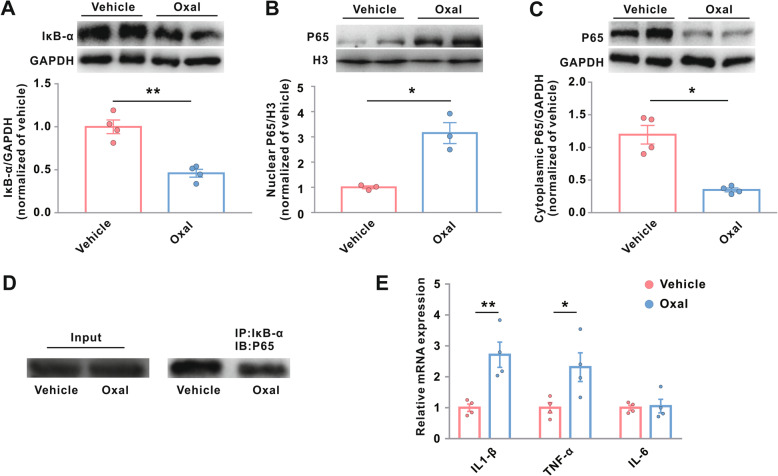
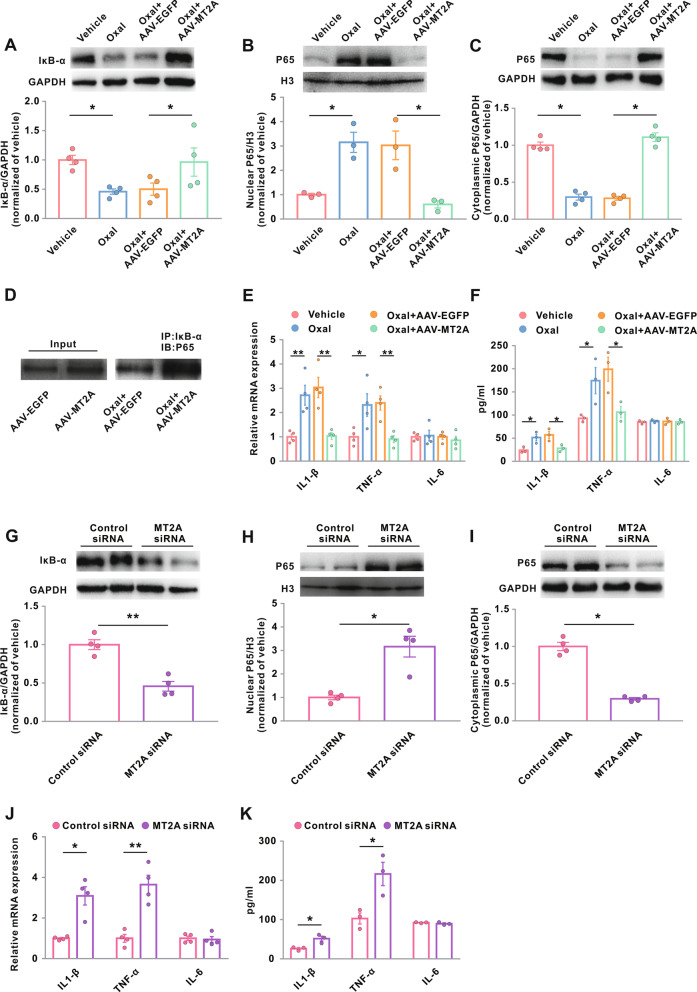
The rat model of CIPN was established by 5 consecutive injections of oxaliplatin (0.4 mg/100 g/day). Genetic restoration of neuron-specific metallothionein-2 was implemented 21 days before oxaliplatin treatment, and also, genetic inhibition by metallothionein-2 siRNA was performed. Mechanical allodynia and locomotor activity were assayed. Cell-specific expression of metallothionein-2, the mRNA levels of pro-inflammatory cytokines, nuclear translocation of NF-κB, the protein levels of expression of IκB-α, and interaction between IκB-α and P65 were evaluated in the spinal dorsal horns. Also, in vitro interaction of sequentially deleted IκB-α promoter with metallothionein-2 was used to assess the signal transduction mechanism.
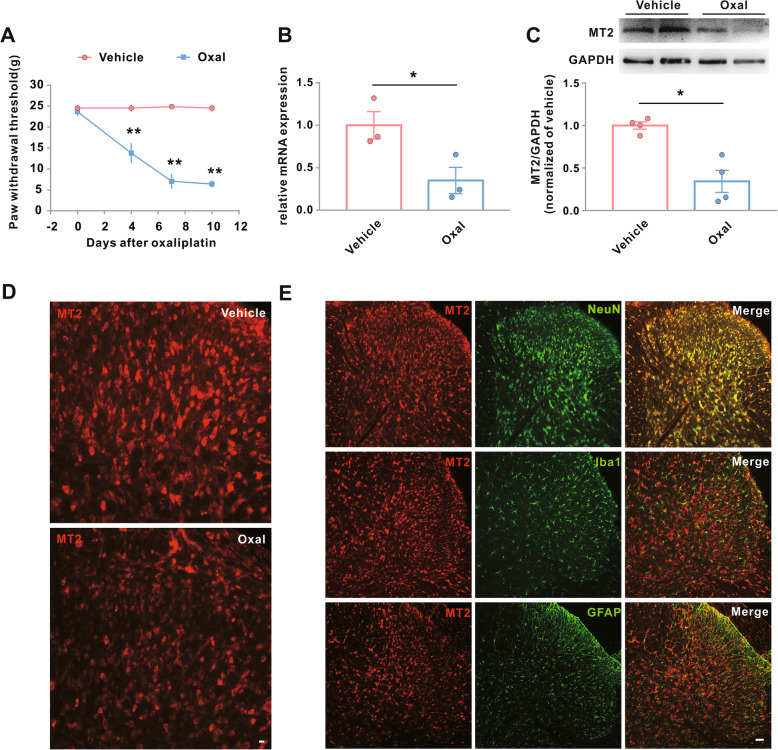
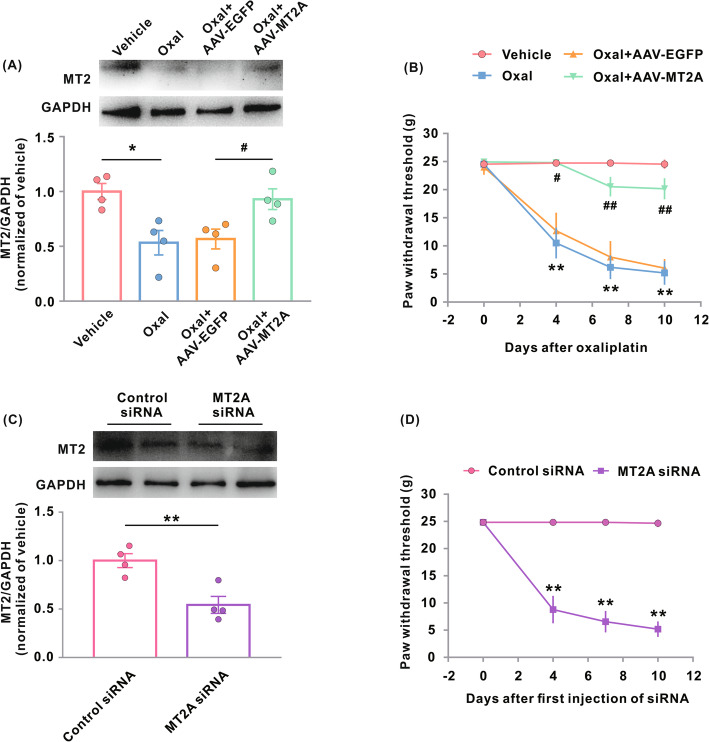
We found that oxaliplatin induced downregulation of metallothionein-2 in rat spinal cord neurons. By contrast, genetic restoration of metallothionein-2 in the spinal dorsal horn neuron blocked and reversed neuropathic pain in oxaliplatin-treated rats of both sexes, whereas genetic inhibition of metallothionein-2 triggered neuropathic pain in normal rats. Overall locomotor activity was not impaired after the genetic alterations of metallothionein-2. At the molecular level, metallothionein-2 modulated oxaliplatin-induced neuroinflammation, activation of NF-κB, and inactive transcriptional expression of IκB-α promoter, and these processes could be blocked by genetic restoration of metallothionein-2 in the spinal dorsal horn neurons.
Metallothionein-2 is a potential target for the prevention and treatment of CIPN. A reduction of NF-κB activation and inflammatory responses by enhancing the transcription of IκB-α promoter is proposed in the mechanism.
我们之前报道了小剂量奥沙利铂渗透到脊髓与化疗后急性疼痛之间的相关性。在这里,我们提出脊髓背角中的 MT2 参与了奥沙利铂诱导的神经性疼痛的发展,并且可能是预防和治疗化疗引起的周围神经病变(CIPN)的药理学靶点。
通过 5 次连续注射奥沙利铂(0.4mg/100g/天)建立 CIPN 大鼠模型。在奥沙利铂治疗前 21 天进行神经元特异性金属硫蛋白-2 的基因恢复,并且通过金属硫蛋白-2 siRNA 进行基因抑制。测定机械性痛觉过敏和运动活动。评估脊髓背角中 MT2 的细胞特异性表达、促炎细胞因子的 mRNA 水平、NF-κB 的核易位、IκB-α 的蛋白表达水平以及 IκB-α 和 P65 之间的相互作用。此外,还使用依次缺失的 IκB-α 启动子与 MT2 的体外相互作用来评估信号转导机制。
我们发现奥沙利铂诱导大鼠脊髓神经元中 MT2 的下调。相比之下,脊髓背角神经元中 MT2 的基因恢复阻断并逆转了两性奥沙利铂处理大鼠的神经性疼痛,而 MT2 的基因抑制则在正常大鼠中引发了神经性疼痛。基因改变 MT2 后整体运动活动没有受损。在分子水平上,MT2 调节了奥沙利铂诱导的神经炎症、NF-κB 的激活以及 IκB-α 启动子的无活性转录表达,这些过程可以通过脊髓背角神经元中 MT2 的基因恢复来阻断。
金属硫蛋白-2 是预防和治疗 CIPN 的潜在靶点。提出通过增强 IκB-α 启动子的转录来减少 NF-κB 激活和炎症反应的机制。