Lv Jiadi, Wang Zhenfeng, Qu Yajin, Zhu Hua, Zhu Qiangqiang, Tong Wei, Bao Linlin, Lv Qi, Cong Ji, Li Dan, Deng Wei, Yu Pin, Song Jiangping, Tong Wei-Min, Liu Jiangning, Liu Yuying, Qin Chuan, Huang Bo
Department of Immunology and National Key Laboratory of Medical Molecular Biology, Institute of Basic Medical Sciences, Chinese Academy of Medical Sciences (CAMS) and Peking Union Medical College, Beijing 100005, China.
NHC Key Laboratory of Human Disease Comparative Medicine, Beijing Key Laboratory for Animal Models of Emerging and Remerging Infectious Diseases, Institute of Laboratory Animal Science, CAMS and Comparative Medicine Center, Peking Union Medical College, Beijing 100005, China.
Cell Discov. 2021 Apr 13;7(1):24. doi: 10.1038/s41421-021-00258-1.
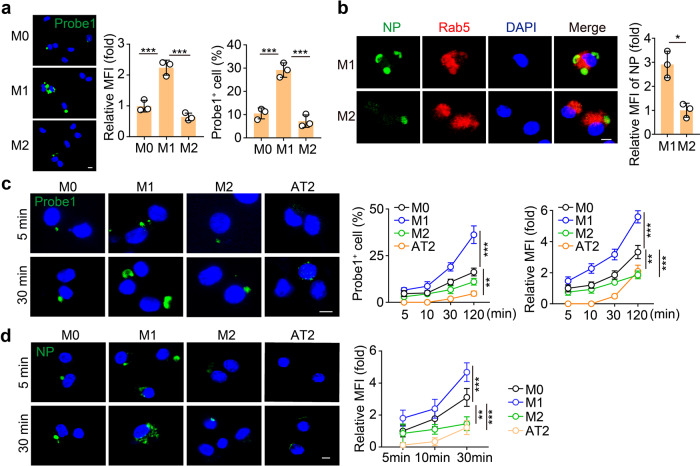
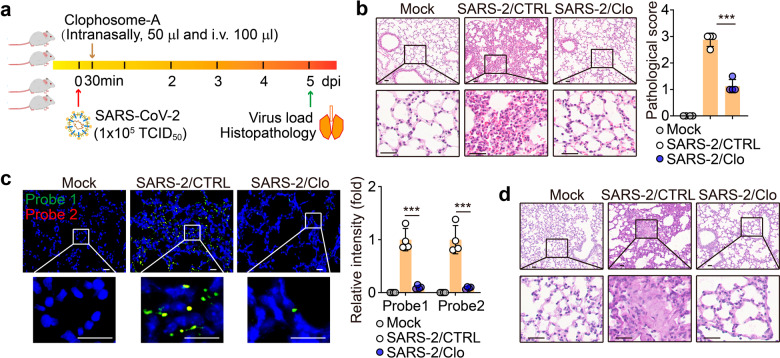
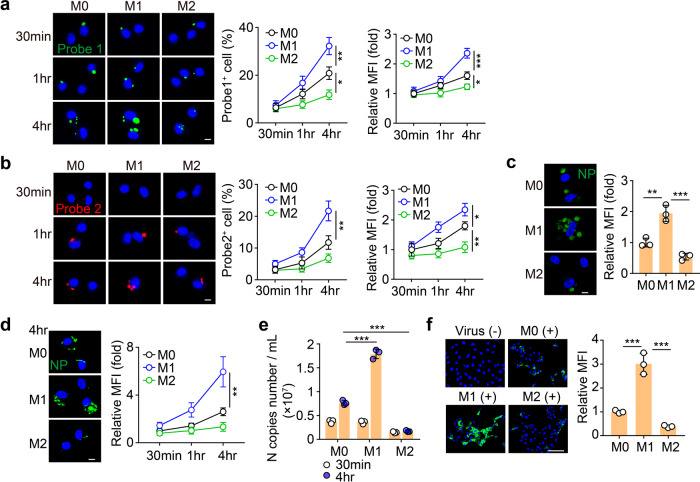
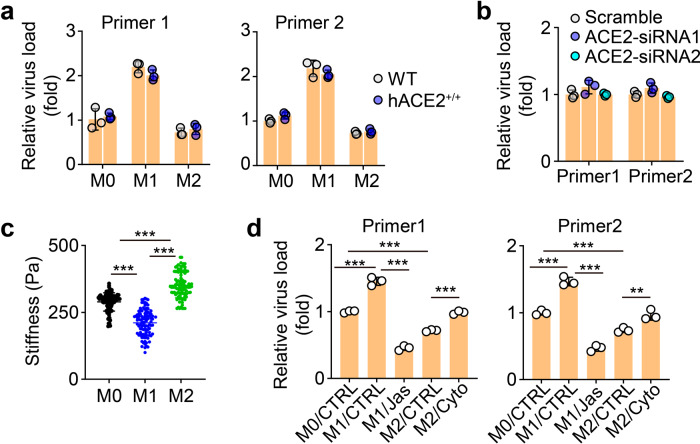
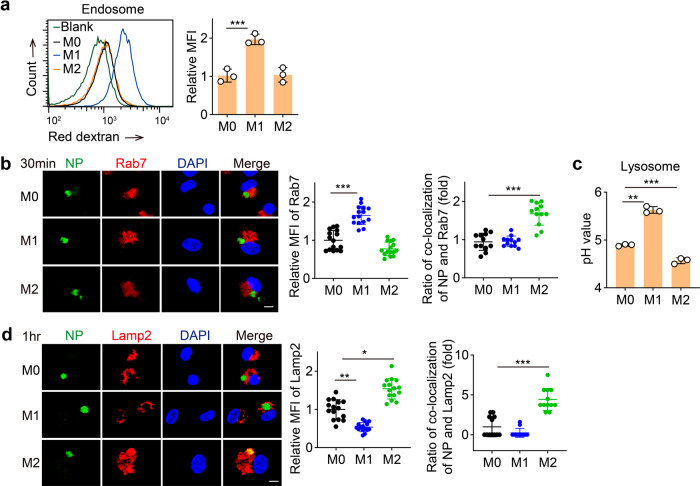
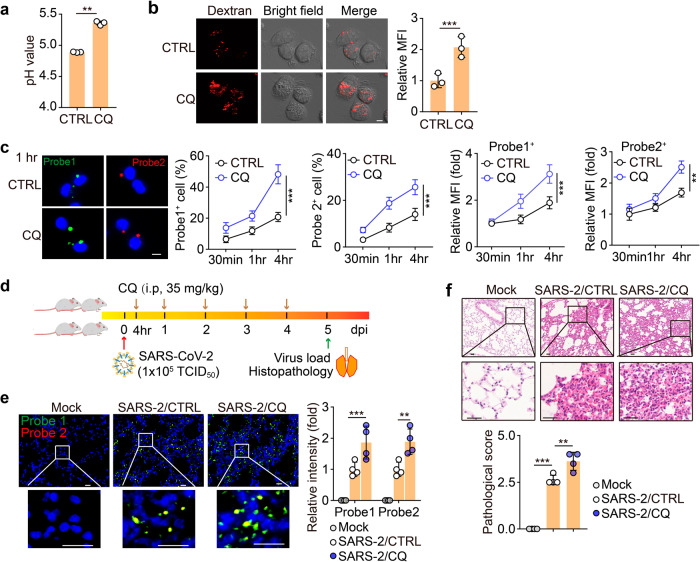
Severe acute respiratory syndrome coronavirus 2 (SARS-CoV-2) invades the alveoli, where abundant alveolar macrophages (AMs) reside. How AMs respond to SARS-CoV-2 invasion remains elusive. Here, we show that classically activated M1 AMs facilitate viral spread; however, alternatively activated M2 AMs limit the spread. M1 AMs utilize cellular softness to efficiently take up SARS-CoV-2. Subsequently, the invaded viruses take over the endo-lysosomal system to escape. M1 AMs have a lower endosomal pH, favoring membrane fusion and allowing the entry of viral RNA from the endosomes into the cytoplasm, where the virus achieves replication and is packaged to be released. In contrast, M2 AMs have a higher endosomal pH but a lower lysosomal pH, thus delivering the virus to lysosomes for degradation. In hACE2 transgenic mouse model, M1 AMs are found to facilitate SARS-CoV-2 infection of the lungs. These findings provide insights into the complex roles of AMs during SARS-CoV-2 infection, along with potential therapeutic targets.
严重急性呼吸综合征冠状病毒2(SARS-CoV-2)侵入肺泡,肺泡中存在大量肺泡巨噬细胞(AM)。AM如何应对SARS-CoV-2入侵仍不清楚。在此,我们表明经典激活的M1 AM促进病毒传播;然而,交替激活的M2 AM限制病毒传播。M1 AM利用细胞柔软性有效摄取SARS-CoV-2。随后,入侵的病毒接管内溶酶体系统以逃逸。M1 AM的内体pH值较低,有利于膜融合并允许病毒RNA从内体进入细胞质,病毒在细胞质中进行复制并被包装释放。相比之下,M2 AM的内体pH值较高,但溶酶体pH值较低,从而将病毒输送到溶酶体进行降解。在hACE2转基因小鼠模型中,发现M1 AM促进SARS-CoV-2感染肺部。这些发现为AM在SARS-CoV-2感染期间的复杂作用以及潜在治疗靶点提供了见解。