Quah Shan, Subramanian Gowtham, Sampath Prabha
Skin Research Institute of Singapore, Agency for Science Technology and Research (A*STAR), 138648, Singapore, Singapore.
Program in Cancer and Stem Cell Biology, Duke-NUS Medical School, 8 College Road, Singapore, 169857, Singapore.
Dermatol Ther (Heidelb). 2021 Jun;11(3):655-660. doi: 10.1007/s13555-021-00527-7. Epub 2021 Apr 14.
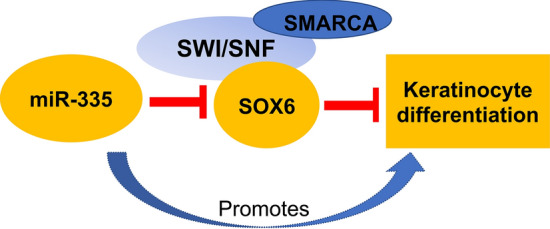
Atopic dermatitis (AD) is a highly prevalent chronic inflammatory skin disease that is characterized by intense pruritus, seriously affecting patients' quality of life. Its pathophysiology, which involves both the adaptive and innate immune responses as well as skin barrier defects, is still poorly understood. We recently identified a microRNA, miR-335, as a key driver of keratinocyte differentiation and cornification, which is essential for the establishment of a healthy skin barrier. However, expression of miR-335 is lost in AD, leading to barrier defect. We further demonstrated how belinostat, a histone deacetylase inhibitor, can effectively restore miR-335 and resolve the barrier defect in a dry skin model. Here, in this commentary, we highlight the role of belinostat in the treatment of AD and discuss the need for more research into crosstalk between epigenetic and non-coding RNA-based regulation, as well as possible therapeutic strategies targeting the epigenome.
特应性皮炎(AD)是一种高度流行的慢性炎症性皮肤病,其特征为剧烈瘙痒,严重影响患者的生活质量。其病理生理学涉及适应性和先天性免疫反应以及皮肤屏障缺陷,目前仍知之甚少。我们最近发现一种微小RNA,即miR-335,是角质形成细胞分化和角质化的关键驱动因素,这对于建立健康的皮肤屏障至关重要。然而,miR-335在AD中表达缺失,导致屏障缺陷。我们进一步证明了组蛋白脱乙酰酶抑制剂贝利司他如何在干性皮肤模型中有效恢复miR-335并解决屏障缺陷。在此评论中,我们强调了贝利司他在AD治疗中的作用,并讨论了对表观遗传学和基于非编码RNA的调控之间的相互作用进行更多研究的必要性,以及针对表观基因组的可能治疗策略。