Department of Physical Therapy, School of Health Sciences, Japan University of Health Sciences, Saitama, Japan.
Braizon Therapeutics, Inc., Tokyo, Japan.
PLoS One. 2021 Apr 14;16(4):e0249954. doi: 10.1371/journal.pone.0249954. eCollection 2021.
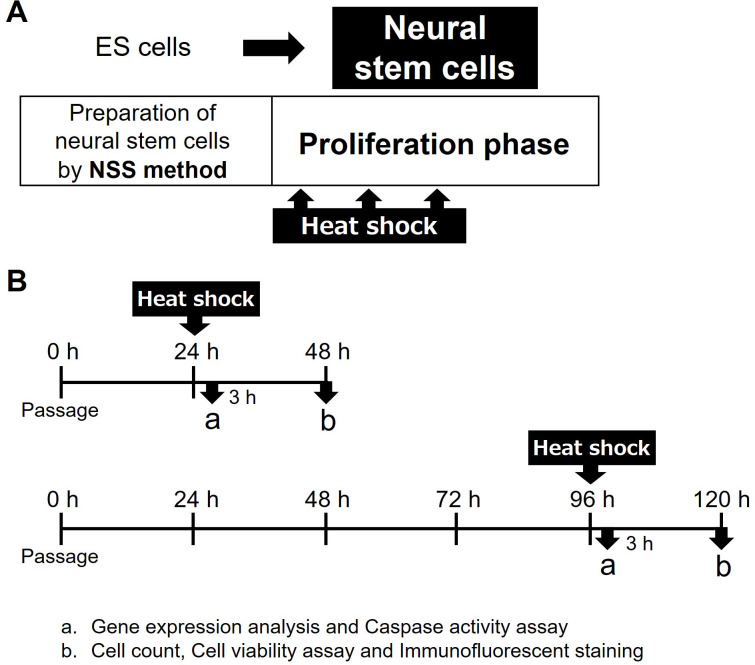
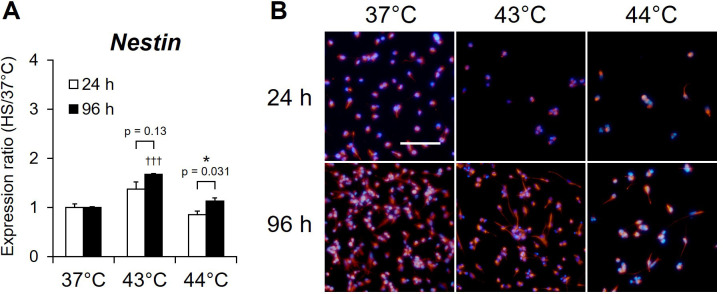
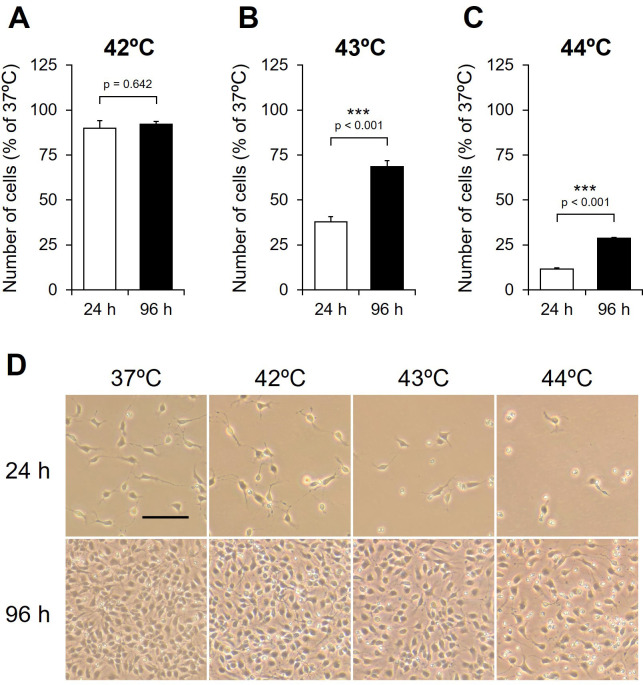
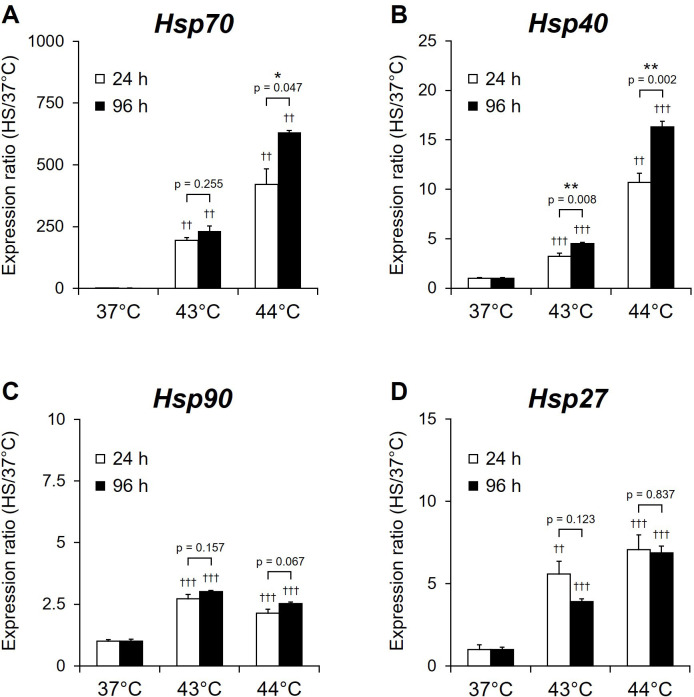
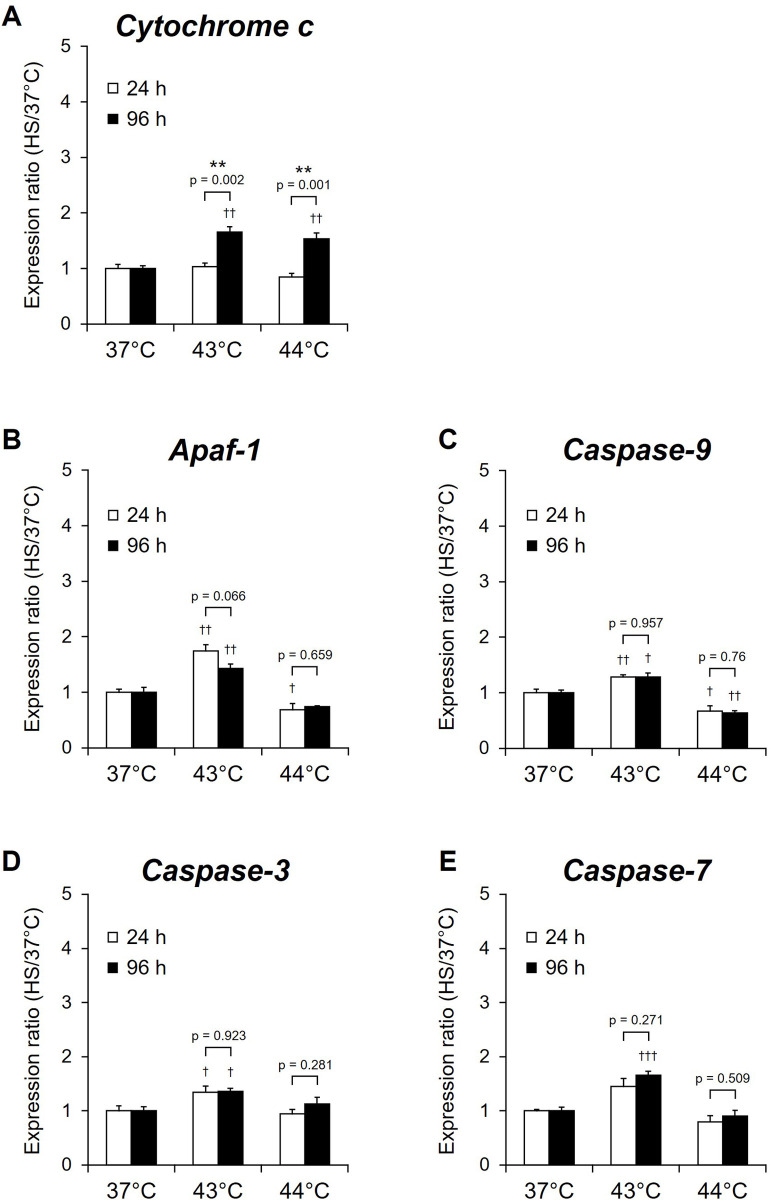
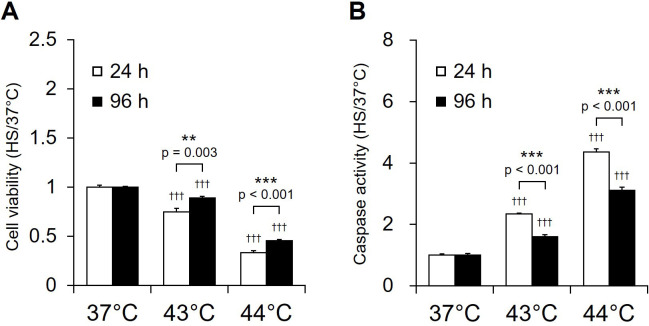
Cells have a regulatory mechanism known as heat shock (HS) response, which induces the expression of HS genes and proteins in response to heat and other cellular stresses. Exposure to moderate HS results in beneficial effects, such as thermotolerance and promotes survival, whereas excessive HS causes cell death. The effect of HS on cells depends on both exogenous factors, including the temperature and duration of heat application, and endogenous factors, such as the degree of cell differentiation. Neural stem cells (NSCs) can self-renew and differentiate into neurons and glial cells, but the changes in the HS response of symmetrically proliferating NSCs in culture are unclear. We evaluated the HS response of homogeneous proliferating NSCs derived from mouse embryonic stem cells during the proliferative phase and its effect on survival and cell death in vitro. The number of adherent cells and the expression ratios of HS protein (Hsp)40 and Hsp70 genes after exposure to HS for 20 min at temperatures above 43°C significantly increased with the extension of the culture period before exposure to HS. In contrast, caspase activity was significantly decreased by extension of the culture period before exposure to HS and suppressed the decrease in cell viability. These results suggest that the culture period before HS remarkably affects the HS response, influencing the expression of HS genes and cell survival of proliferating NSCs in culture.
细胞有一种称为热休克 (HS) 反应的调节机制,该机制在受到热和其他细胞应激时诱导 HS 基因和蛋白的表达。适度的 HS 暴露会产生有益的效果,如耐热性和促进生存,而过度的 HS 则会导致细胞死亡。HS 对细胞的影响取决于外源性因素,包括热应用的温度和持续时间,以及内源性因素,如细胞分化程度。神经干细胞 (NSC) 可以自我更新并分化为神经元和神经胶质细胞,但培养中对称增殖的 NSC 的 HS 反应变化尚不清楚。我们评估了来自胚胎干细胞的同质增殖 NSC 在增殖期的 HS 反应及其对体外存活和细胞死亡的影响。在 43°C 以上温度下暴露 20 分钟后,HS 暴露前培养时间的延长显著增加了贴壁细胞的数量和 HS 蛋白 (Hsp)40 和 Hsp70 基因的表达比值。相比之下,HS 暴露前培养时间的延长显著降低了半胱天冬酶活性,并抑制了细胞活力的下降。这些结果表明,HS 暴露前的培养时间显著影响 HS 反应,影响培养中增殖 NSC 的 HS 基因表达和细胞存活。