Laboratoire de Simulation et Modélisation du Mouvement, École de Kinésiologie et des Sciences de l'activité Physique, Université de Montréal, 1700 Rue Jacques-Tétreault, Laval, QC, Canada.
Input Devices and Music Interaction Laboratory, Centre for Interdisciplinary Research in Music Media and Technology, Schulich School of Music, McGill University, Montreal, QC, Canada.
Sci Rep. 2021 Apr 14;11(1):8117. doi: 10.1038/s41598-021-87403-8.
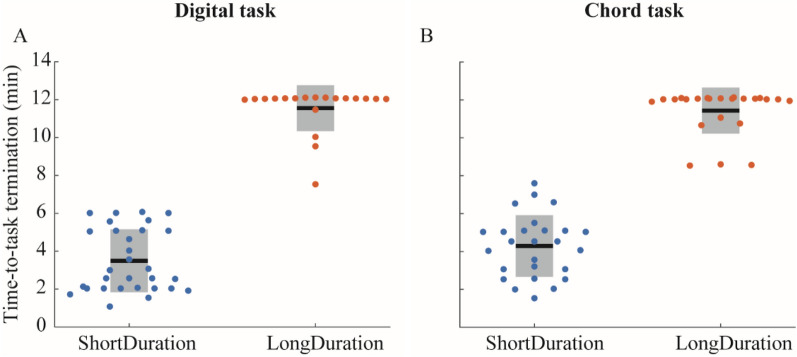
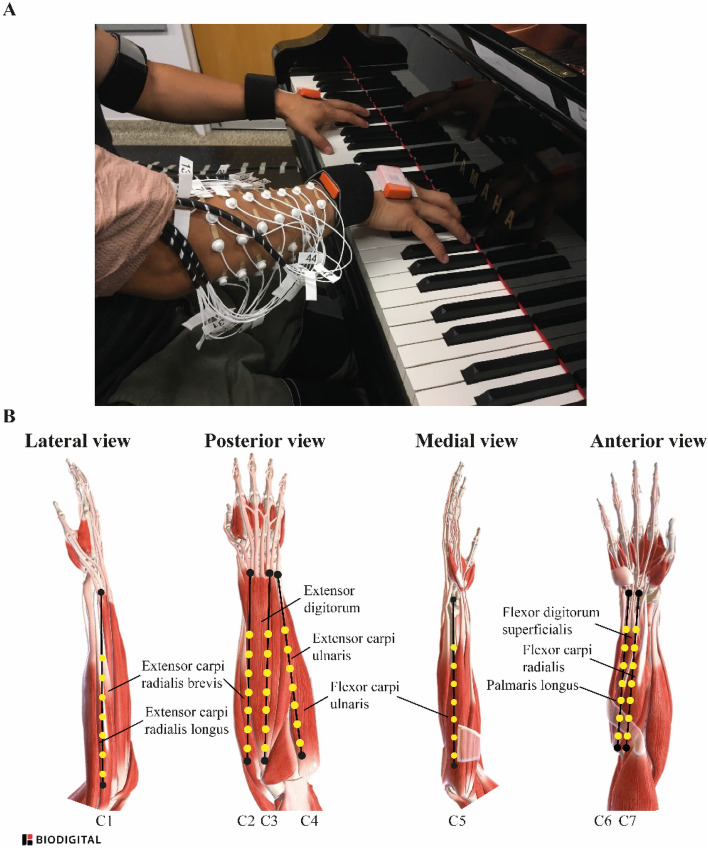
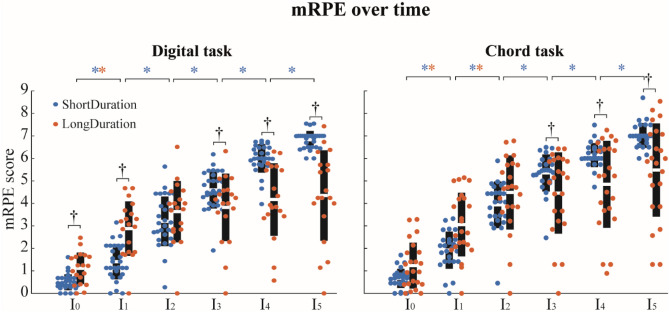
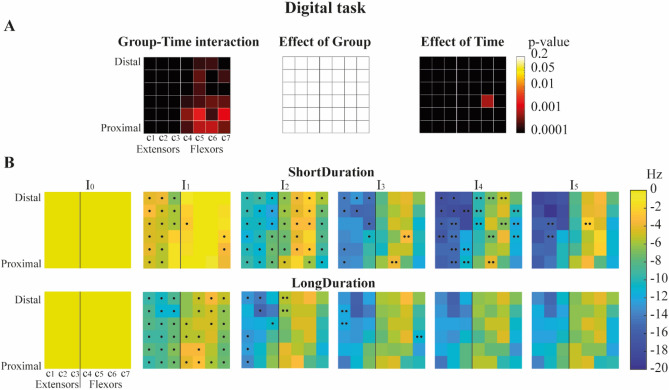
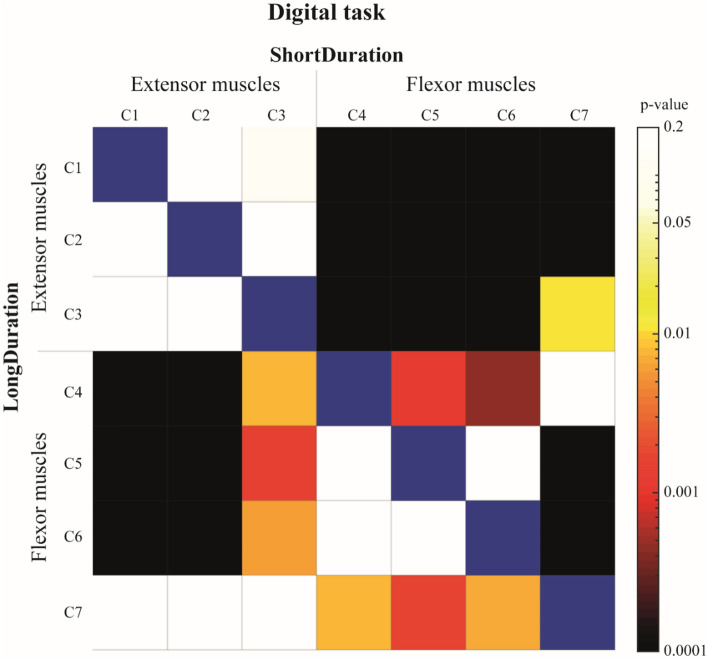
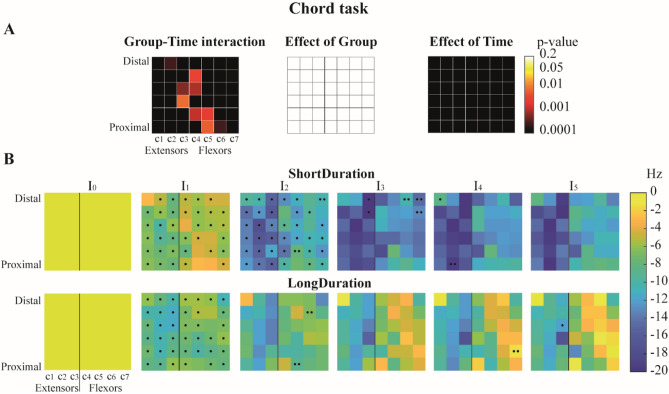
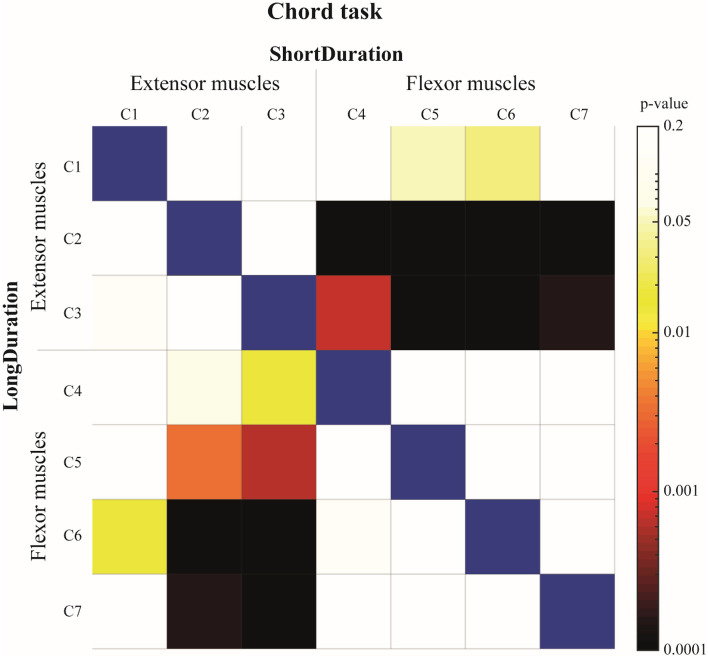
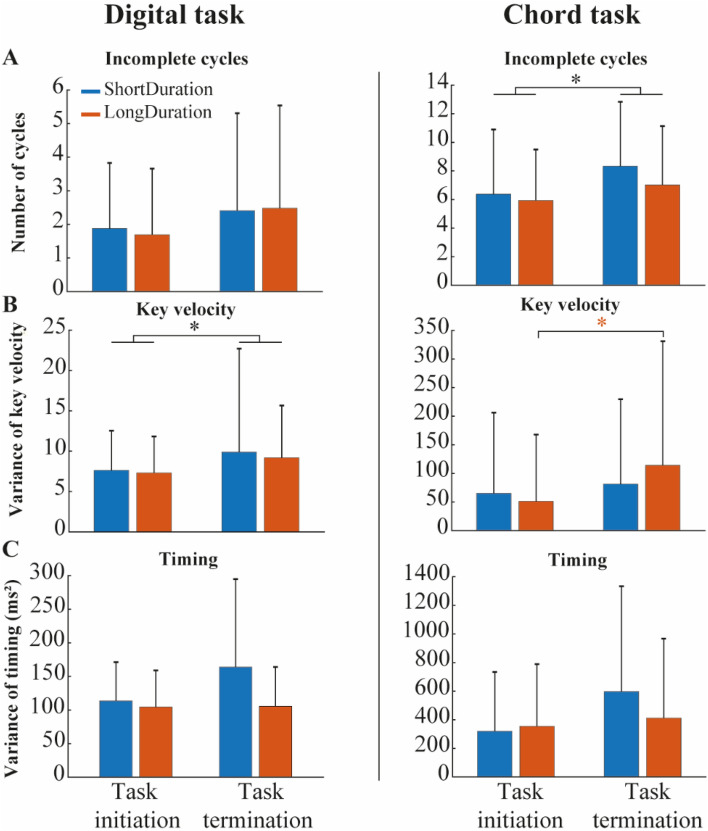
Muscle fatigue is considered as a risk factor for developing playing-related muscular disorders among professional pianists and could affect musical performance. This study investigated in 50 pianists the effect of fatiguing repetitive piano sequences on the development of forearm muscle fatigue and on piano performance parameters. Results showed signs of myoelectric manifestation of fatigue in the 42-electromyographic bipolar electrodes positioned on the forearm to record finger and wrist flexor and extensor muscles, through a significant non-constant decrease of instantaneous median frequency during two repetitive Digital (right-hand 16-tones sequence) and Chord (right-hand chords sequence) excerpts, with extensor muscles showing greater signs of fatigue than flexor muscles. In addition, muscle fatigue negatively affected key velocity, a central feature of piano sound intensity, in both Digital and Chord excerpts, and note-events, a fundamental aspect of musicians' performance parameter, in the Chord excerpt only. This result highlights that muscle fatigue may alter differently pianists' musical performance according to the characteristics of the piece played.
肌肉疲劳被认为是专业钢琴家发生与演奏相关的肌肉障碍的一个风险因素,并且可能会影响音乐演奏表现。本研究调查了 50 位钢琴家在重复钢琴序列疲劳下前臂肌肉疲劳的发展和钢琴演奏参数的变化。结果表明,通过对记录手指和手腕屈肌和伸肌的 42 个肌电图双极电极的即时中位频率的非恒定显著下降,在重复数字(右手 16 音序列)和和弦(右手和弦序列)片段中,前臂的肌电表现出疲劳迹象,伸肌比屈肌表现出更大的疲劳迹象。此外,肌肉疲劳对数字和和弦片段中钢琴声音强度的关键速度(中央特征)以及和弦片段中音乐家演奏参数的基本方面的音符事件产生负面影响。这一结果表明,根据演奏乐曲的特点,肌肉疲劳可能会以不同的方式改变钢琴家的音乐演奏表现。