Department of Surgery, Seoul St. Mary's Hospital, College of Medicine, The Catholic University of Korea, Seoul, Republic of Korea.
Department of Hospital Pathology, Seoul St. Mary's Hospital, College of Medicine, The Catholic University of Korea, 222, Banpo-daero, Seocho-gu, Seoul, 06591, Republic of Korea.
Sci Rep. 2021 Apr 14;11(1):8154. doi: 10.1038/s41598-021-87486-3.
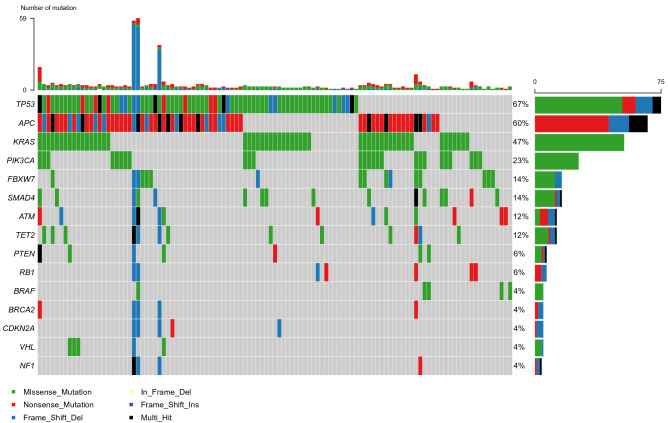
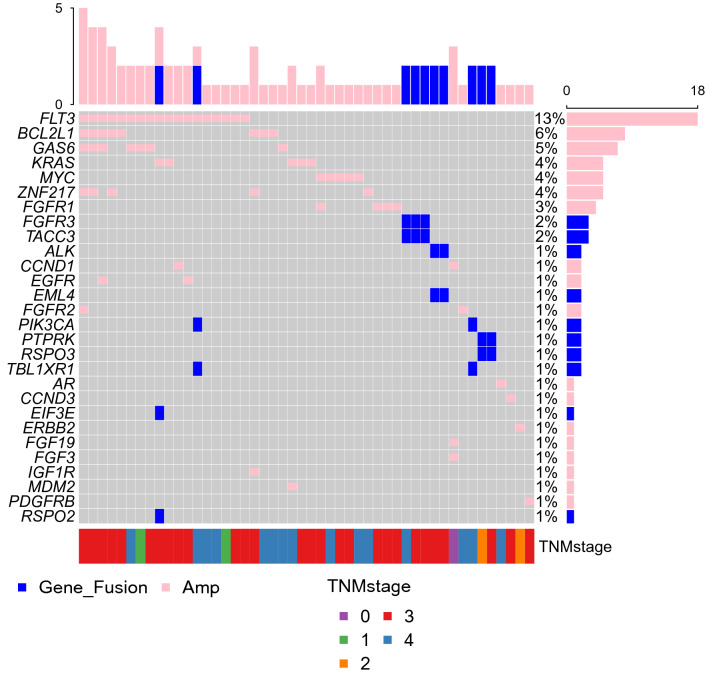
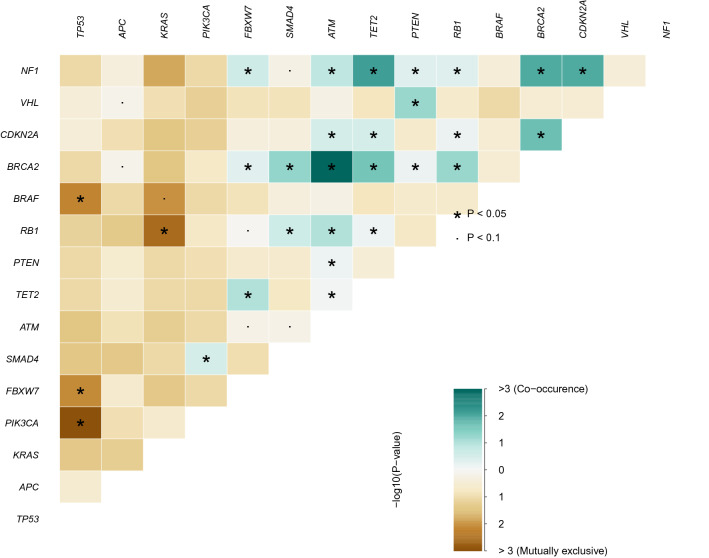
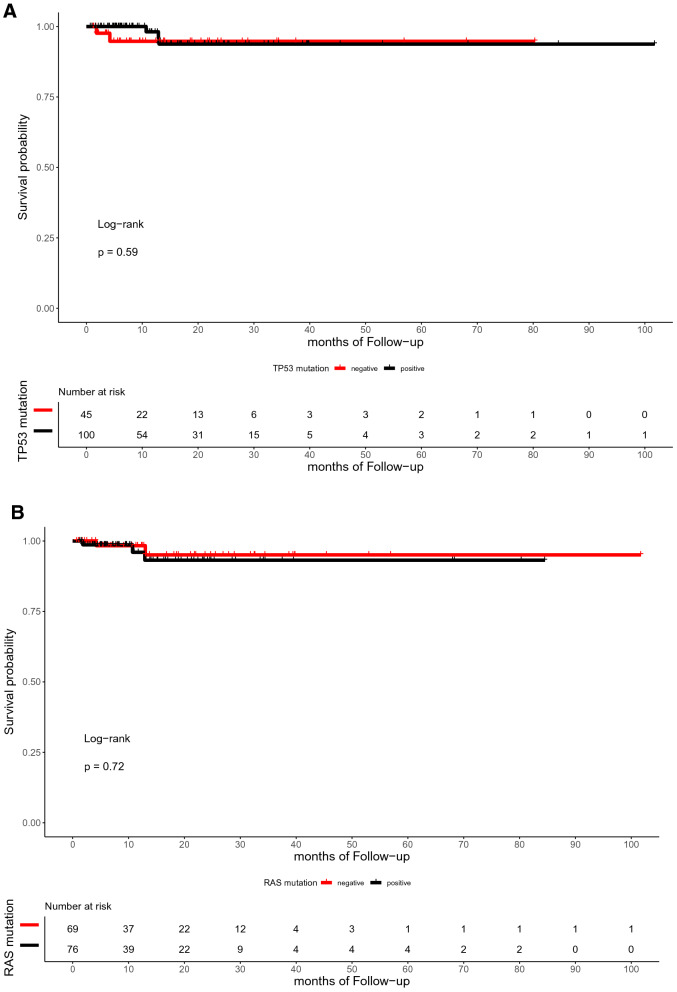
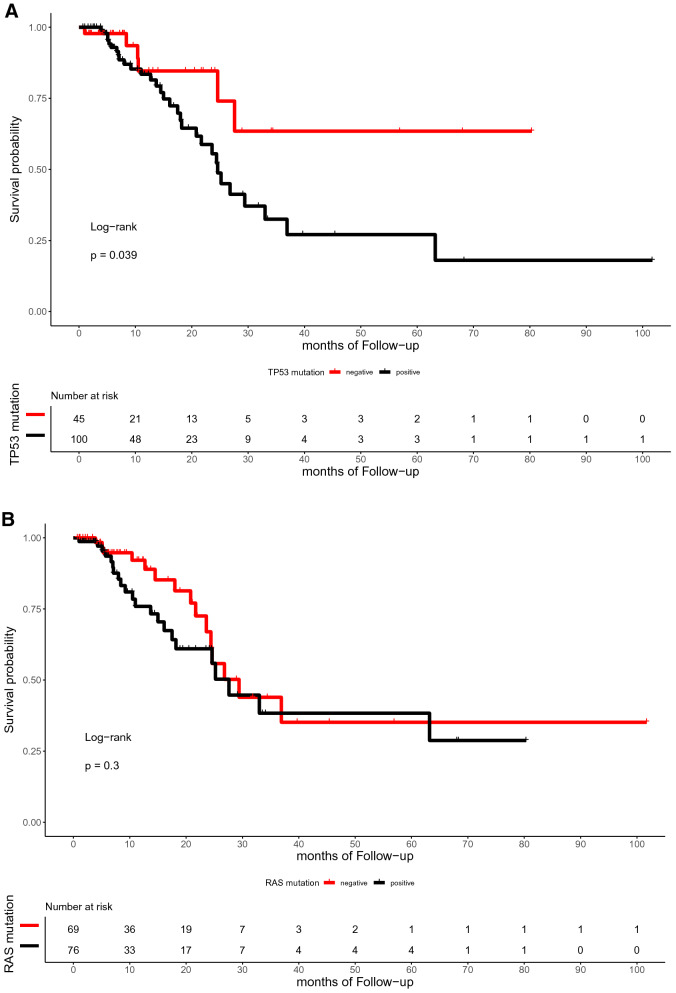
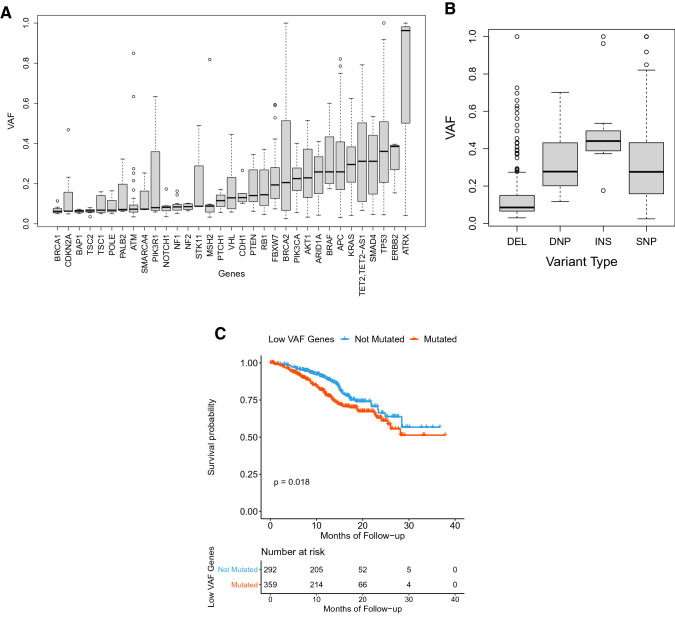
Targeted next-generation sequencing (NGS) technology detects specific mutations that can provide treatment opportunities for colorectal cancer (CRC) patients. We included 145 CRC patients who underwent surgery. We analyzed the mutation frequencies of common actionable genes and their association with clinicopathological characteristics and oncologic outcomes using targeted NGS. Approximately 97.9% (142) of patients showed somatic mutations. Frequent mutations were observed in TP53 (70%), APC (60%), and KRAS (49%). TP53 mutations were significantly linked to higher overall stage (p = 0.038) and lower disease-free survival (DFS) (p = 0.039). ATM mutation was significantly associated with higher tumor stage (p = 0.012) and shorter overall survival (OS) (p = 0.041). Stage 3 and 4 patients with ATM mutations (p = 0.023) had shorter OS, and FBXW7 mutation was significantly associated with shorter DFS (p = 0.002). However, the OS of patients with or without TP53, RAS, APC, PIK3CA, and SMAD4 mutations did not differ significantly (p = 0.59, 0.72, 0.059, 0.25, and 0.12, respectively). Similarly, the DFS between patients with RAS, APC, PIK3CA, and SMAD4 mutations and those with wild-type were not statistically different (p = 0.3, 0.79, 0.13, and 0.59, respectively). In multivariate Cox regression analysis, ATM mutation was an independent biomarker for poor prognosis of OS (p = 0.043). A comprehensive analysis of the molecular markers for CRC can provide insights into the mechanisms underlying disease progression and help optimize a personalized therapy.
目的
下一代测序(NGS)技术可检测特定的突变,为结直肠癌(CRC)患者提供治疗机会。我们纳入了 145 例接受手术的 CRC 患者。我们使用靶向 NGS 分析了常见可操作基因的突变频率及其与临床病理特征和肿瘤学结果的关系。约 97.9%(142 例)患者显示有体细胞突变。TP53(70%)、APC(60%)和 KRAS(49%)突变较为常见。TP53 突变与更高的总分期(p=0.038)和较低的无病生存率(DFS)(p=0.039)显著相关。ATM 突变与更高的肿瘤分期(p=0.012)和较短的总生存期(OS)(p=0.041)显著相关。ATM 突变的 III 期和 IV 期患者 OS 较短(p=0.023),FBXW7 突变与较短的 DFS 显著相关(p=0.002)。然而,TP53、RAS、APC、PIK3CA 和 SMAD4 突变患者的 OS 差异无统计学意义(p=0.59、0.72、0.059、0.25 和 0.12)。同样,RAS、APC、PIK3CA 和 SMAD4 突变患者与野生型患者的 DFS 无统计学差异(p=0.3、0.79、0.13 和 0.59)。多变量 Cox 回归分析显示,ATM 突变是 OS 预后不良的独立生物标志物(p=0.043)。综合分析 CRC 的分子标志物可以深入了解疾病进展的机制,并有助于优化个性化治疗。