Li Jianwen, Zhang Zhanxia, Deng Haibin, Zheng Zhan
Department of Oncology, Longhua Hospital, Shanghai University of Traditional Chinese Medicine, Shanghai, China.
Cancer Institute, Longhua Hospital, Shanghai University of Traditional Chinese Medicine, Shanghai, China.
Front Chem. 2021 Mar 29;9:637754. doi: 10.3389/fchem.2021.637754. eCollection 2021.
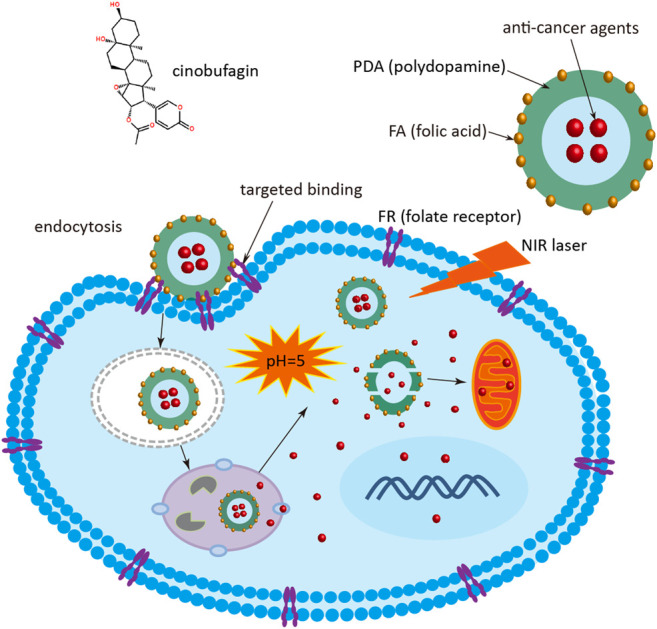
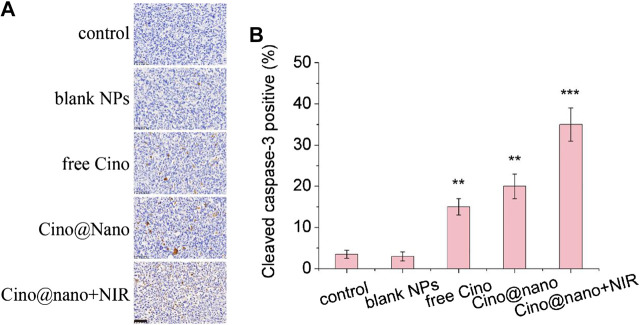
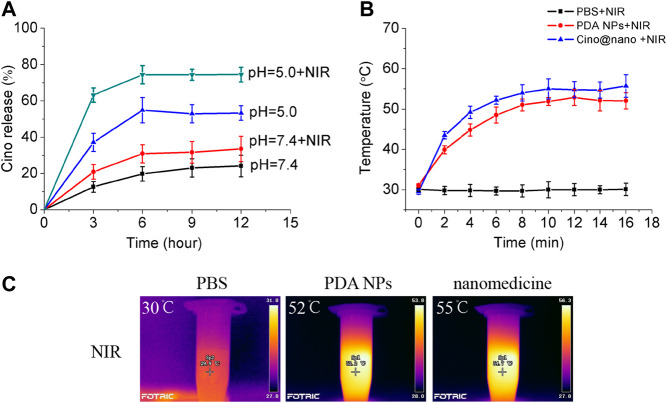
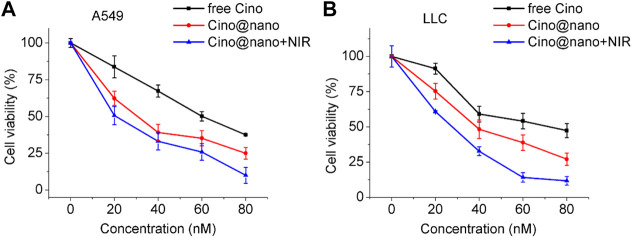
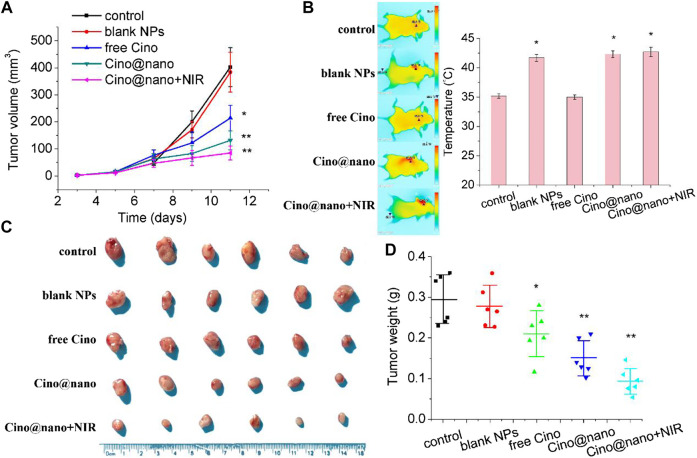
Cinobufagin is used as a traditional Chinese medicine for cancer therapy. However, it has some disadvantages, such as poor water solubility, short circulating half-life, and low bioavailability. In the present study, a targeted delivery and smart responsive polydopamine (PDA)-based nanomedicine for delivering cinobufagin was rationally designed to improve the anticancer efficacy of the compound for the treatment of lung cancer. The modification of the nanomedicine using folic acid first mediated tumor targeting via the interaction between folic acid and its receptors on tumor cells. After lysosomes escape, the PDA nanomedicine was triggered by the low pH and released its cargo into the tumor microenvironment. The nanomedicine had a better therapeutic effect against lung cancer when used in combination with photothermal therapy. Compared with other nanomedicines used with photothermal therapy, this nanocarrier was not only sensitive to biologically low pH levels for on-demand drug release, but was also biodegradable, breaking down into biocompatible terminal products. Therefore, the proposed drug delivery system with targeted delivery and smart release demonstrated potential as a multifunctional nanoplatform that can enhance the bioavailability and reduce the side effects of chemotherapeutic agents.
华蟾素作为一种用于癌症治疗的传统中药。然而,它存在一些缺点,如水溶性差、循环半衰期短和生物利用度低。在本研究中,合理设计了一种基于靶向递送和智能响应聚多巴胺(PDA)的纳米药物来递送华蟾素,以提高该化合物治疗肺癌的抗癌疗效。首先用叶酸修饰纳米药物,通过叶酸与其在肿瘤细胞上的受体之间的相互作用介导肿瘤靶向。溶酶体逃逸后,PDA纳米药物被低pH触发,并将其负载物释放到肿瘤微环境中。与光热疗法联合使用时,该纳米药物对肺癌具有更好的治疗效果。与其他用于光热疗法的纳米药物相比,这种纳米载体不仅对生物低pH水平敏感以实现按需药物释放,而且还可生物降解,分解为生物相容性终产物。因此,所提出的具有靶向递送和智能释放功能的药物递送系统显示出作为多功能纳米平台的潜力,该平台可以提高生物利用度并减少化疗药物的副作用。