The Center for Nanomedicine at the Wilmer Eye Institute, Johns Hopkins University School of Medicine, Johns Hopkins, Baltimore, MD, USA.
Department of Ophthalmology, Johns Hopkins University, Baltimore, MD, USA.
Angew Chem Int Ed Engl. 2021 Jul 5;60(28):15225-15229. doi: 10.1002/anie.202101732. Epub 2021 Jun 10.
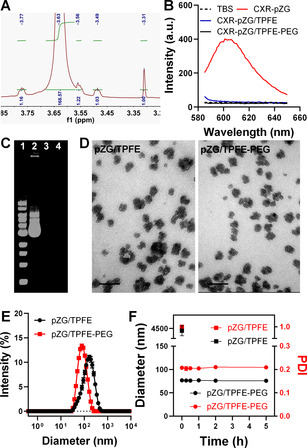
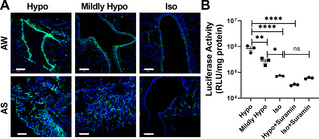
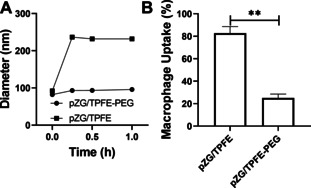
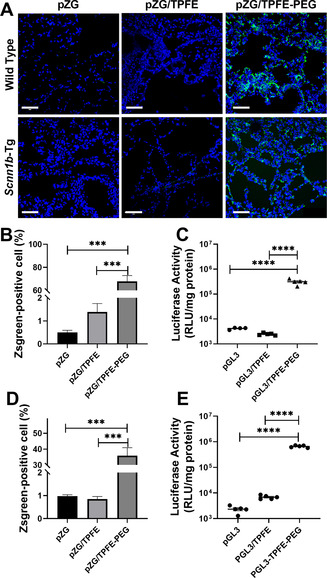
Inhaled gene therapy poses a unique potential of curing chronic lung diseases, which are currently managed primarily by symptomatic treatments. However, it has been challenging to achieve therapeutically relevant gene transfer efficacy in the lung due to the presence of numerous biological delivery barriers. Here, we introduce a simple approach that overcomes both extracellular and cellular barriers to enhance gene transfer efficacy in the lung in vivo. We endowed tetra(piperazino)fullerene epoxide (TPFE)-based nanoparticles with non-adhesive surface polyethylene glycol (PEG) coatings, thereby enabling the nanoparticles to cross the airway mucus gel layer and avoid phagocytic uptake by alveolar macrophages. In parallel, we utilized a hypotonic vehicle to facilitate endocytic uptake of the PEGylated nanoparticles by lung parenchymal cells via the osmotically driven regulatory volume decrease (RVD) mechanism. We demonstrate that this two-pronged delivery strategy provides safe, wide-spread and high-level transgene expression in the lungs of both healthy mice and mice with chronic lung diseases characterized by reinforced delivery barriers.
吸入基因治疗为治疗慢性肺部疾病提供了独特的潜力,目前这些疾病主要通过对症治疗来管理。然而,由于存在许多生物传递障碍,因此很难在肺部实现具有治疗相关性的基因转移效率。在这里,我们介绍了一种简单的方法,该方法克服了细胞外和细胞内的障碍,从而提高了体内肺部的基因转移效率。我们赋予基于四(哌嗪基) fullerene 环氧化物(TPFE)的纳米粒子具有非粘性表面的聚乙二醇(PEG)涂层,从而使纳米粒子能够穿过气道黏液凝胶层并避免肺泡巨噬细胞的吞噬作用。同时,我们利用低渗载体通过渗透压驱动的调节体积减少(RVD)机制促进肺实质细胞对 PEG 化纳米粒子的内吞摄取。我们证明,这种双管齐下的传递策略可在具有增强传递障碍的慢性肺部疾病的健康小鼠和小鼠的肺部中提供安全,广泛和高水平的转基因表达。