Takahashi Yosuke, Fujino Yuji, Miura Kohei, Toida Ayumi, Matsuda Tadamitsu, Makita Shigeru
Department of Rehabilitation Center, Saitama Medical University International Medical Center, 1397-1 Yamane, Hidaka, Saitama, 350-1298, Japan.
Department of Physical Therapy, Faculty of Health Science, Juntendo University, 3-2-12, Hongo, Bunkyo-ku, Tokyo, 113-0033, Japan.
Ultrasound J. 2021 Apr 15;13(1):21. doi: 10.1186/s13089-021-00224-8.
Ultrasonography (US) is a feasible and accessible method for the measurement of skeletal muscle mass. This technique presents acceptable intra-rater reliability; however, there are a few reports on its inter-rater reliability. Additionally, relative reliability should equally be inspected to determine the presence of systematic errors. Therefore, this study aimed to investigate the intra- and inter-rater reliabilities and absolute reliability of rectus femoris muscle thickness as measured using US.
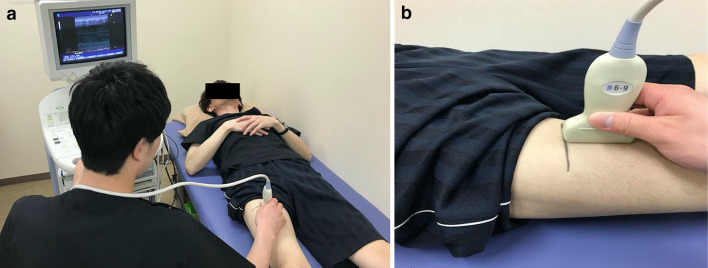
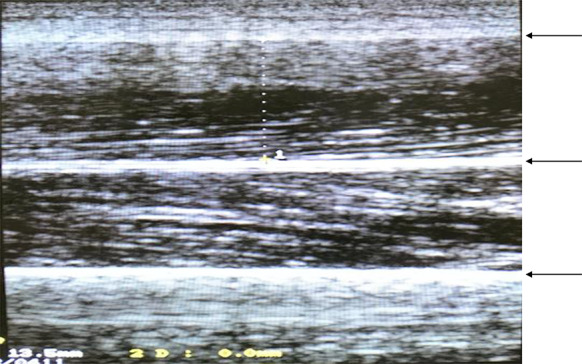
The participants included in our study comprised 12 healthy young men (26.5 ± 3.9 years. Rectus femoris muscle thickness was measured from the right side of the thigh using US by two trained physical therapists. Inter- and intra-rater reliabilities were determined using the intraclass correlation coefficient (ICC) (1, 1) and ICC (2, 1) methods, respectively. Absolute reliability was evaluated using Bland - Altman analysis. Additionally, we calculated the minimal detectable change at the 95% level of confidence (MDC).
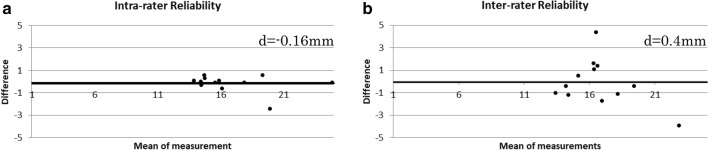
According to the results of the Bland - Altman analysis, no fixed or proportional errors were present. The ICC (1, 1) was 0.95, and the ICC (2, 1) was 0.70. The MDC values of rectus femoris thickness for the intra- and inter-rater reliabilities were 2.0 mm and 4.3 mm, respectively.
In our study, intra- and inter-rater reliabilities were measured at "excellent" and "moderate" levels in the healthy individuals based on a previously defined scale. Moreover, we determined the measurement error for quantifying rectus femoris thickness. Therefore, the measurement of rectus femoris thickness using US could be considered applicable in clinical research.
超声检查(US)是一种测量骨骼肌质量的可行且可及的方法。该技术具有可接受的测量者内可靠性;然而,关于其测量者间可靠性的报道较少。此外,应同样检查相对可靠性以确定是否存在系统误差。因此,本研究旨在调查使用超声测量股直肌厚度的测量者内和测量者间可靠性以及绝对可靠性。
我们研究中的参与者包括12名健康年轻男性(26.5±3.9岁)。由两名经过培训的物理治疗师使用超声从大腿右侧测量股直肌厚度。测量者间和测量者内可靠性分别使用组内相关系数(ICC)(1,1)和ICC(2,1)方法确定。使用布兰德-奥特曼分析评估绝对可靠性。此外,我们计算了95%置信水平下的最小可检测变化(MDC)。
根据布兰德-奥特曼分析的结果,不存在固定或比例误差。ICC(1,1)为0.95,ICC(2,1)为0.70。股直肌厚度测量者内和测量者间可靠性的MDC值分别为2.0毫米和4.3毫米。
在我们的研究中,根据先前定义的量表,健康个体的测量者内和测量者间可靠性分别为“优秀”和“中等”水平。此外,我们确定了量化股直肌厚度的测量误差。因此,使用超声测量股直肌厚度可被认为适用于临床研究。