Gómez-Arias Pedro Jesús, Gómez-García Francisco, Hernández-Parada Jorge, Montilla-López Ana María, Ruano Juan, Parra-Peralbo Esmeralda
Inflammatory Immune-Mediated Chronic Skin Diseases' Laboratory, Maimonides Biomedical Research Institute of Cordoba (IMIBIC), Reina Sofia University Hospital-University of Cordoba, Menendez Pidal Ave, 14004, Córdoba, Spain.
Department of Dermatology, Reina Sofia University Hospital, Menendez Pidal Ave, 14004, Córdoba, Spain.
Dermatol Ther (Heidelb). 2021 Jun;11(3):733-750. doi: 10.1007/s13555-021-00517-9. Epub 2021 Apr 15.
Type I interferon (IFN)-mediated monogenic autoinflammatory disorders (interferonopathies) are childhood-onset rare multisystemic diseases with limited treatment options. The Janus kinase (JAK) inhibitors are promising potential therapeutic candidates for immune-mediated chronic inflammatory skin diseases.
To review the use of JAK inhibitors to improve decision-making when treating interferonopathies with cutaneous manifestations.
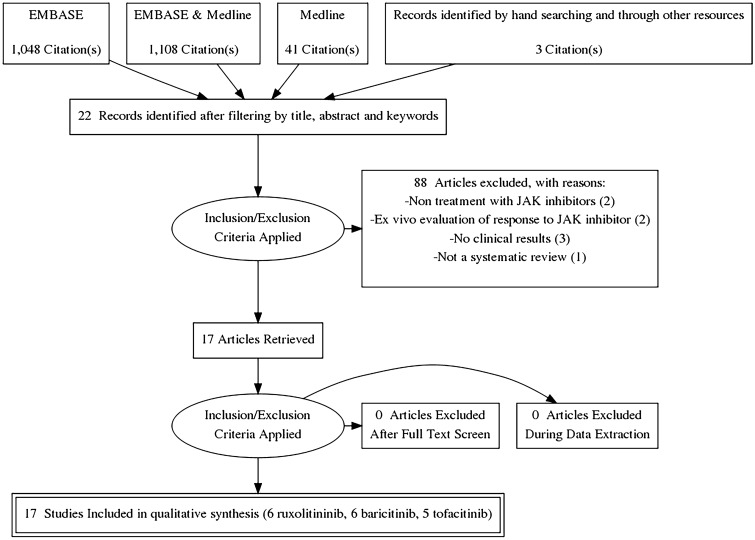
The MEDLINE, EMBASE, CINAHL, Scopus, and Web of Science databases were searched for studies that used JAK protein inhibitors to treat IFN-related monogenic diseases with cutaneous manifestations in humans. The search results are reported using the scoping review approach.
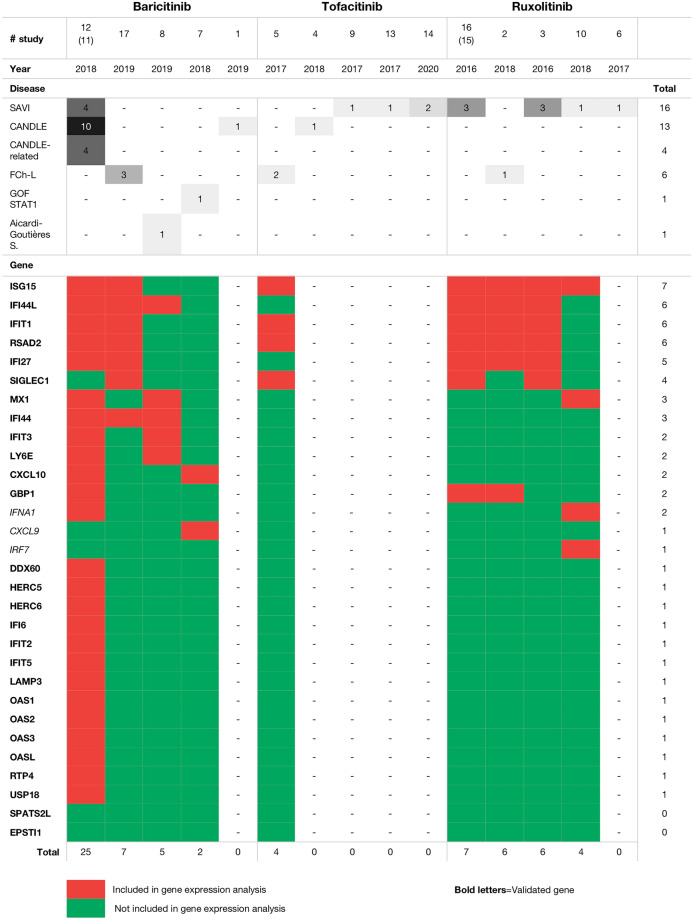
Seventeen open-label studies assessing the efficacy of ruxolitinib, baricitinib, or tofacitinib reported variable responses in patients with chronic atypical neutrophilic dermatosis with lipodystrophy and elevated temperature (CANDLE) and related syndromes, stimulator of IFN genes [STING]-associated vasculopathy with onset in infancy (SAVI), familial chilblain lupus (FCh-L), gain-of-function mutations of STAT1 (GOF-STAT1), or Aicardi-Goutiéres syndrome. JAK inhibitors improved clinical and analytical parameters and decreased flare numbers, plasma inflammatory markers, and expression of IFN-stimulated genes. BK viremia and upper respiratory infections were the most frequent and severe adverse events. Significant heterogeneity in efficacy assessment methods and poor reporting of safety events were detected.
Evidence of the use of JAK inhibitors in patients with interpheronopathies is scarce and of low methodological quality. Future clinical trials should use validated scales and report drug safety in a more accurate way.
I型干扰素(IFN)介导的单基因自身炎症性疾病(干扰素病)是儿童期起病的罕见多系统疾病,治疗选择有限。Janus激酶(JAK)抑制剂是免疫介导的慢性炎症性皮肤病有前景的潜在治疗候选药物。
综述JAK抑制剂在治疗有皮肤表现的干扰素病时的应用,以改善决策。
检索MEDLINE、EMBASE、CINAHL、Scopus和Web of Science数据库,查找使用JAK蛋白抑制剂治疗有皮肤表现的IFN相关单基因疾病的人类研究。搜索结果采用范围综述方法报告。
17项评估鲁索替尼、巴瑞替尼或托法替布疗效的开放标签研究报告了慢性非典型嗜中性皮肤病伴脂肪营养不良和体温升高(CANDLE)及相关综合征、婴儿期起病的干扰素基因[STING]相关血管病(SAVI)、家族性冻疮性狼疮(FCh-L)、STAT1功能获得性突变(GOF-STAT1)或Aicardi-Goutiéres综合征患者的不同反应。JAK抑制剂改善了临床和分析参数,减少了发作次数、血浆炎症标志物和IFN刺激基因的表达。BK病毒血症和上呼吸道感染是最常见和严重的不良事件。在疗效评估方法上存在显著异质性,且安全事件报告不佳。
JAK抑制剂用于干扰素病患者的证据稀少且方法学质量低。未来的临床试验应使用经过验证的量表,并更准确地报告药物安全性。