Department of Molecular and Human Genetics, Baylor College of Medicine, Houston, TX, United States of America.
Graduate Program in Diagnostic Genetics, MD Anderson Cancer Center, Houston, TX, United States of America.
PLoS One. 2021 Apr 15;16(4):e0249695. doi: 10.1371/journal.pone.0249695. eCollection 2021.
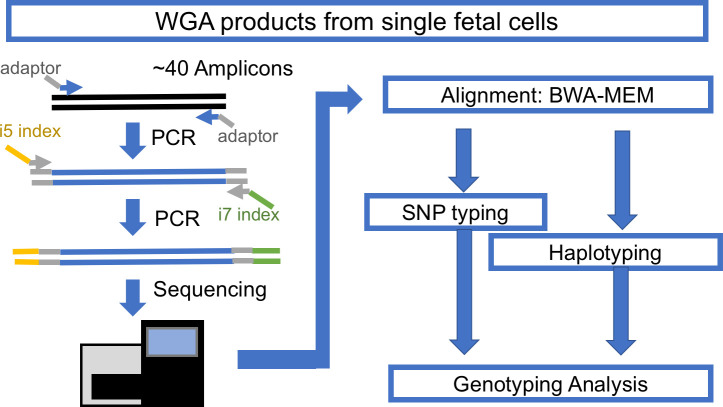
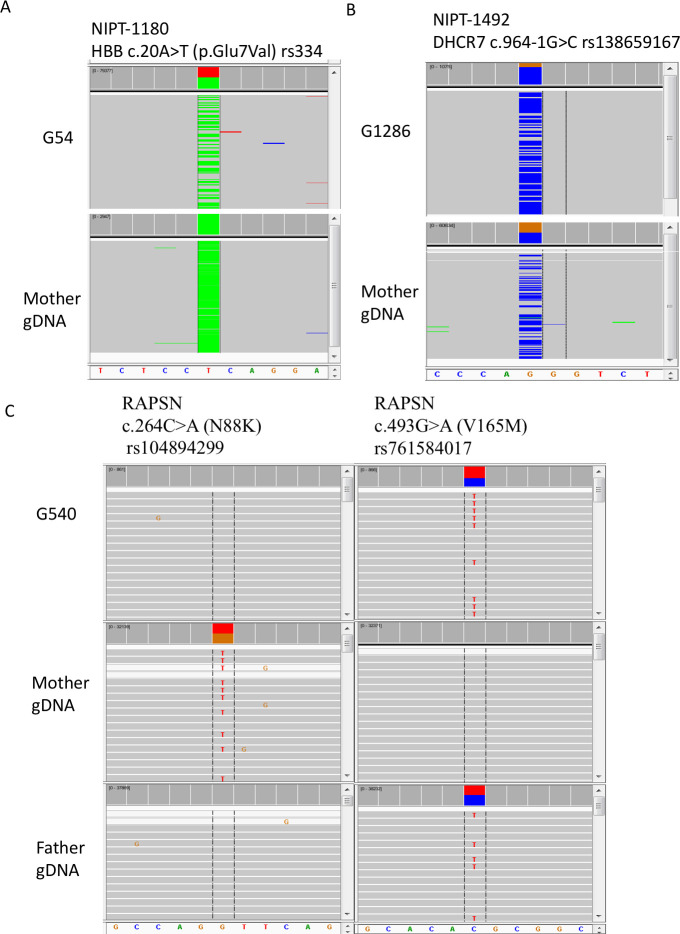
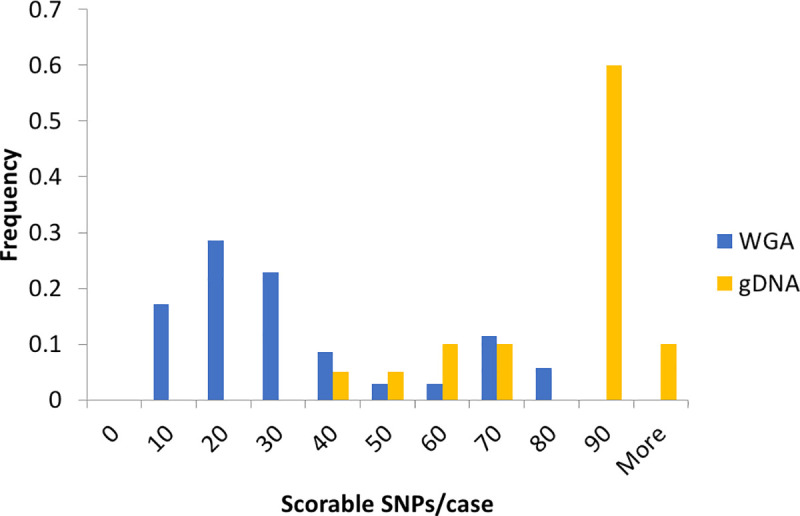
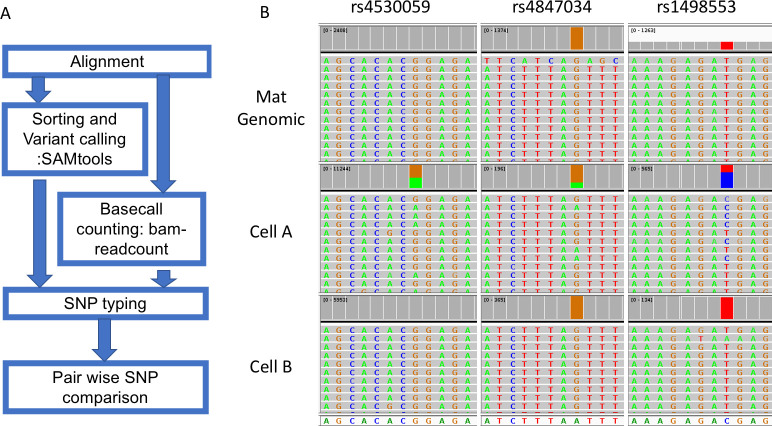
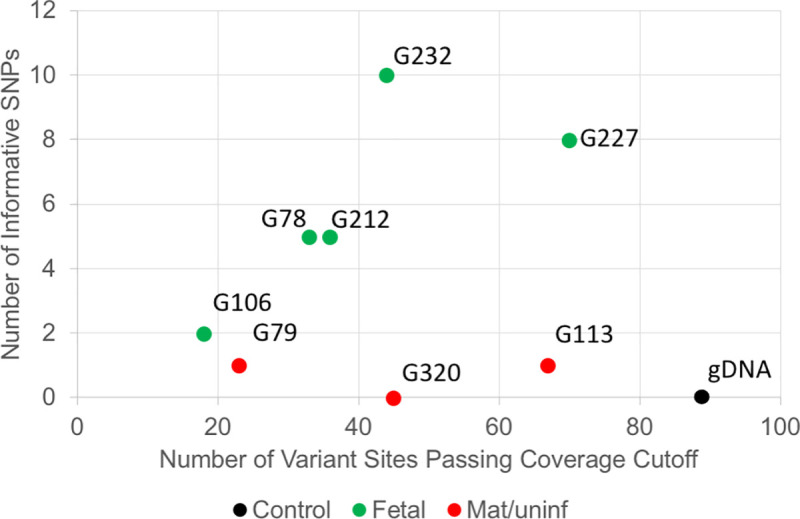
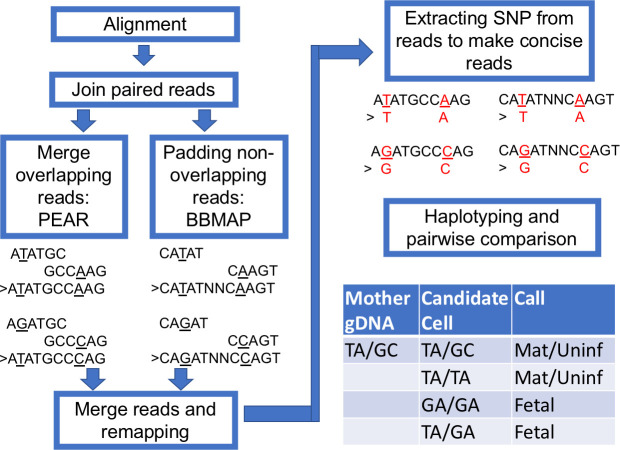
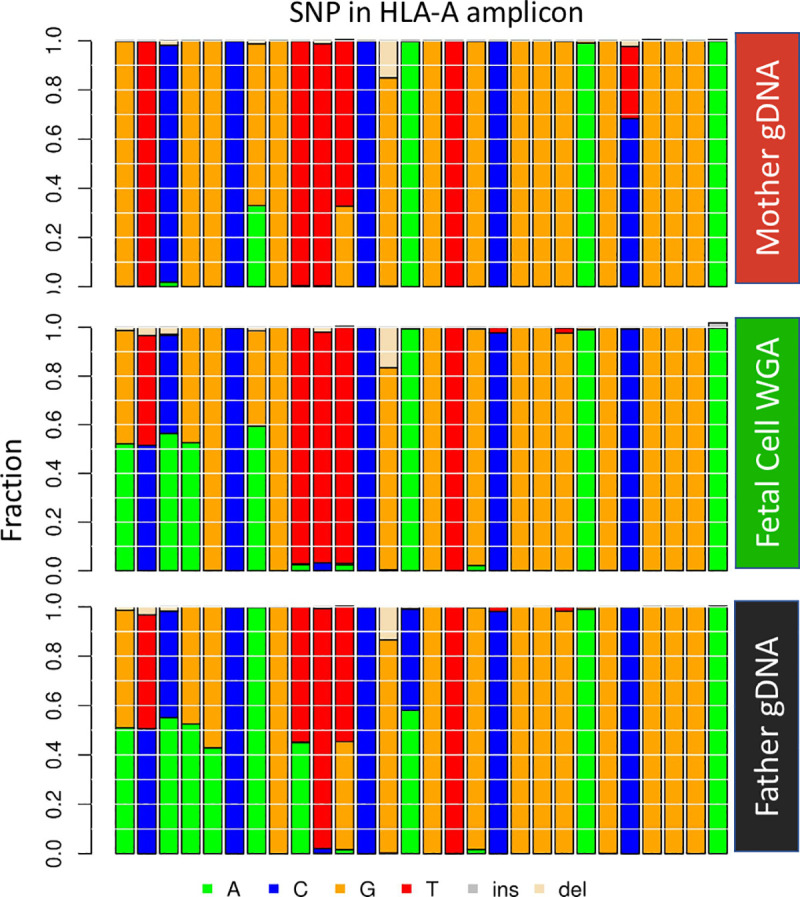
A major challenge for cell-based non-invasive prenatal testing (NIPT) is to distinguish individual presumptive fetal cells from maternal cells in female pregnancies. We have sought a rapid, robust, versatile, and low-cost next-generation sequencing method to facilitate this process. Toward this goal, single isolated cells underwent whole genome amplification prior to genotyping. Multiple highly polymorphic genomic regions (including HLA-A and HLA-B) with 10-20 very informative single nucleotide polymorphisms (SNPs) within a 200 bp interval were amplified with a modified method based on other publications. To enhance the power of cell identification, approximately 40 Human Identification SNP (Applied Biosystems) test amplicons were also utilized. Using SNP results to compare to sex chromosome data from NGS as a reliable standard, the true positive rate for genotyping was 83.4%, true negative 6.6%, false positive 3.3%, and false negative 6.6%. These results would not be sufficient for clinical diagnosis, but they demonstrate the general validity of the approach and suggest that deeper genotyping of single cells could be completely reliable. A paternal DNA sample is not required using this method. The assay also successfully detected pathogenic variants causing Tay Sachs disease, cystic fibrosis, and hemoglobinopathies in single lymphoblastoid cells, and disease-causing variants in three cell-based NIPT cases. This method could be applicable for any monogenic diagnosis.
对于基于细胞的非侵入性产前检测 (NIPT) 来说,一个主要的挑战是区分女性妊娠中个体假定的胎儿细胞和母体细胞。我们一直在寻找一种快速、稳健、通用且低成本的下一代测序方法来促进这一过程。为此,我们在进行基因分型之前对单个分离的细胞进行了全基因组扩增。基于其他出版物的修改方法,我们扩增了多个高度多态性的基因组区域(包括 HLA-A 和 HLA-B),在 200bp 间隔内有 10-20 个非常有信息量的单核苷酸多态性 (SNP)。为了增强细胞识别能力,还利用了大约 40 个人类识别 SNP (Applied Biosystems) 测试扩增子。使用 SNP 结果与 NGS 的性染色体数据进行比较作为可靠的标准,基因分型的真阳性率为 83.4%,真阴性率为 6.6%,假阳性率为 3.3%,假阴性率为 6.6%。这些结果不足以用于临床诊断,但它们证明了该方法的一般有效性,并表明单细胞的更深层次基因分型可能完全可靠。使用这种方法不需要父本 DNA 样本。该检测还成功地在单个淋巴母细胞中检测到导致泰萨克斯病、囊性纤维化和血红蛋白病的致病性变异,以及三个基于细胞的 NIPT 病例中的致病变异。该方法可适用于任何单基因诊断。