Department of Reproductive Genetics, International Peace Maternity and Child Health Hospital, Shanghai Key Laboratory of Embryo Original Diseases, Shanghai Municipal Key Clinical Specialty, Shanghai Jiao Tong University School of Medicine, No.910, Hengshan Road, Shanghai, 200030, PR China.
Obstetrics and Gynecology Hospital of Fudan University, Shanghai, 200011, China.
BMC Cancer. 2021 Apr 15;21(1):411. doi: 10.1186/s12885-021-08139-2.
Little data is available on prognostic biomarkers and effective treatment options for Kidney Renal Papillary Cell Carcinoma (KIRP) patients, to find potential prognostic biomarkers and new targets was an urgent mission for KIRP therapy.
The differentially expressed autophagy-related genes (DEARGs) were screened out according to the RNA sequencing data in The Cancer Genome Atlas database, then identified survival-related DEARGs to establish a prognostic model for survival predicting of KIRP patients. Then we verified the robustness and validity of the prognostic risk model through clinicopathological data. At last, we evaluate the prognostic value of genes that formed the prognostic risk model individually.
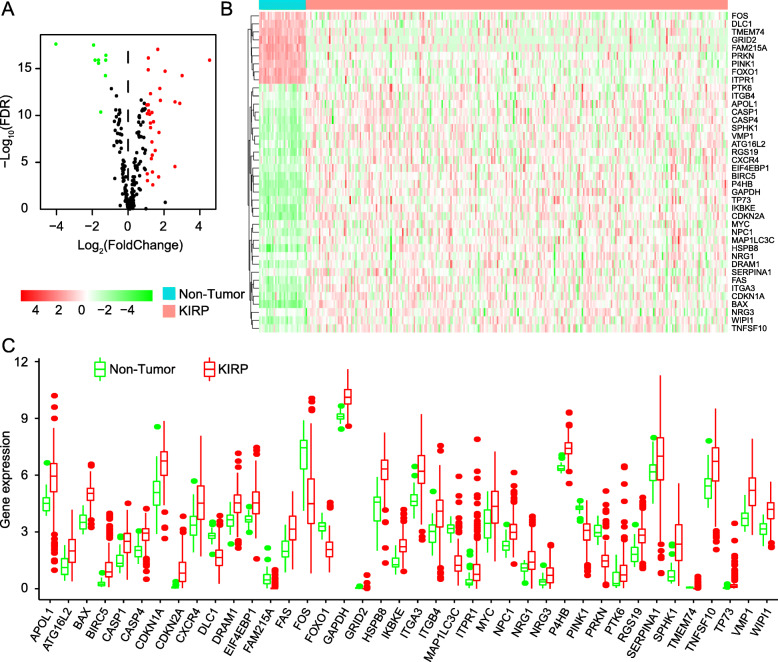
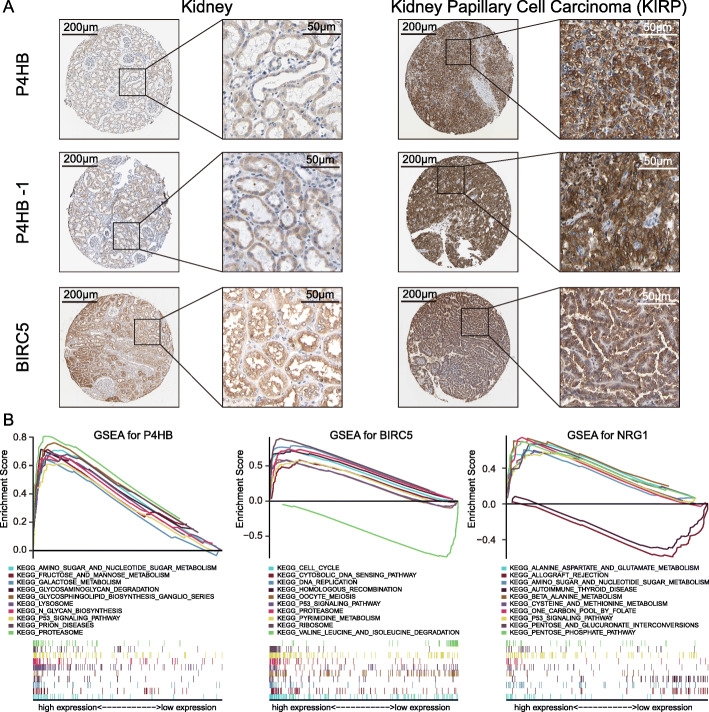
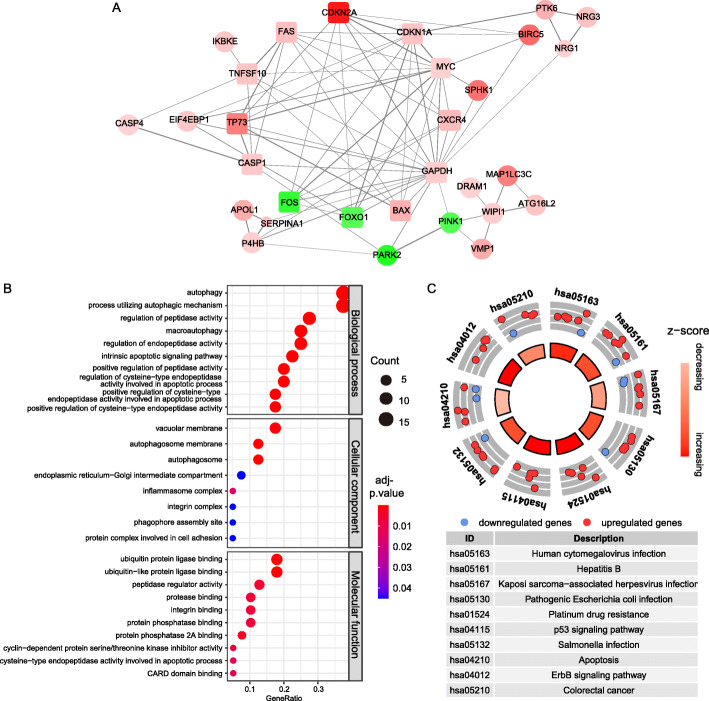
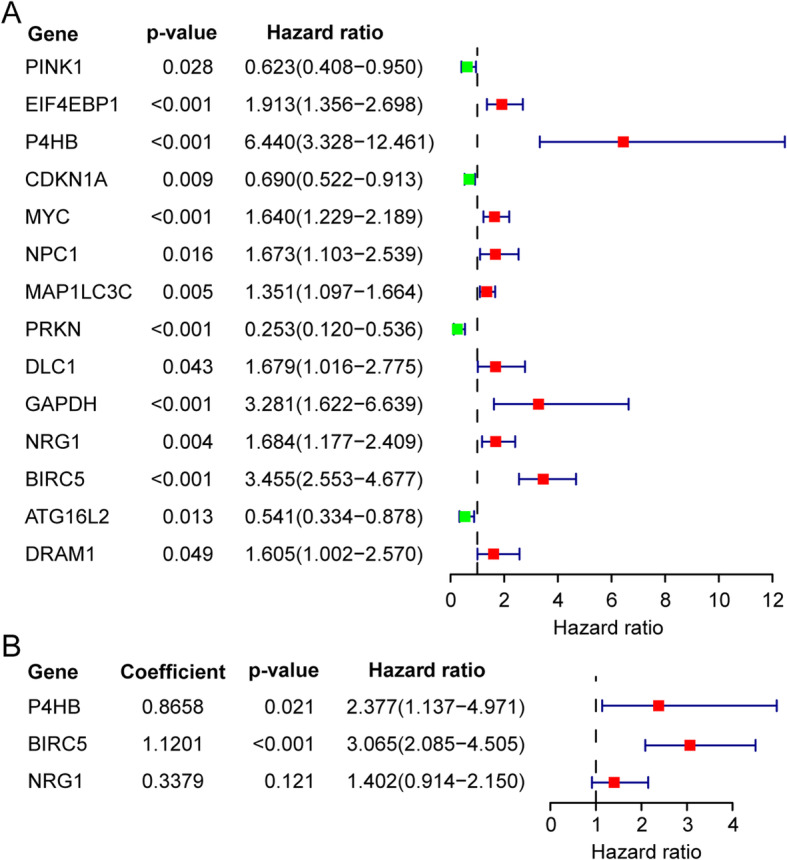
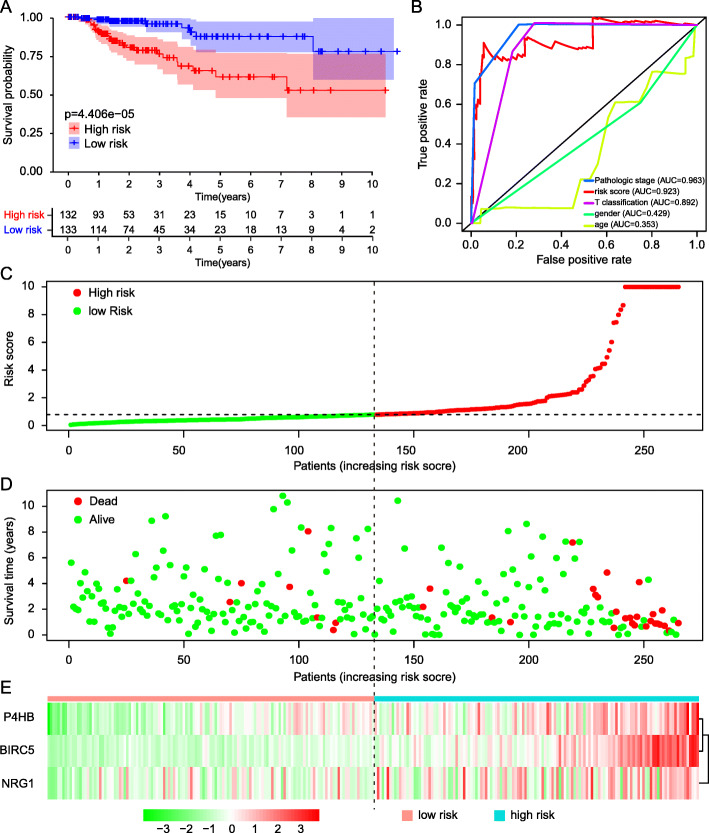
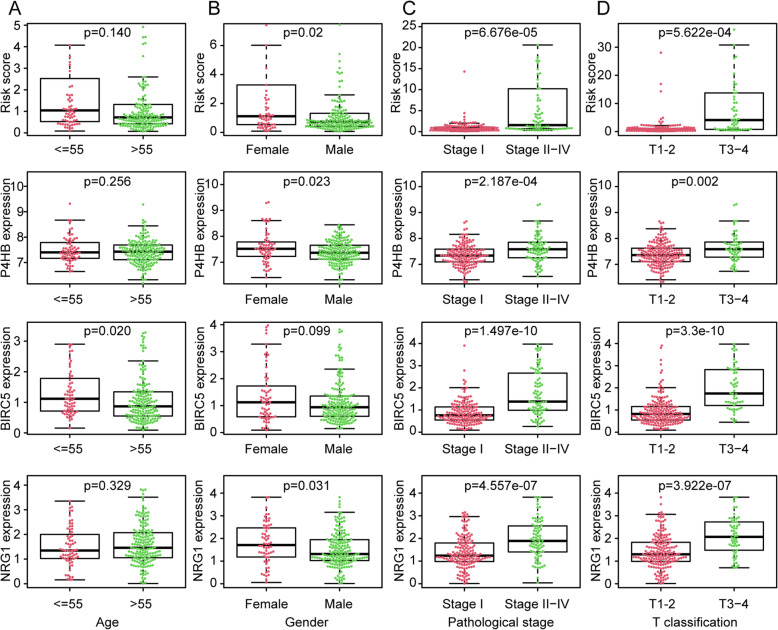
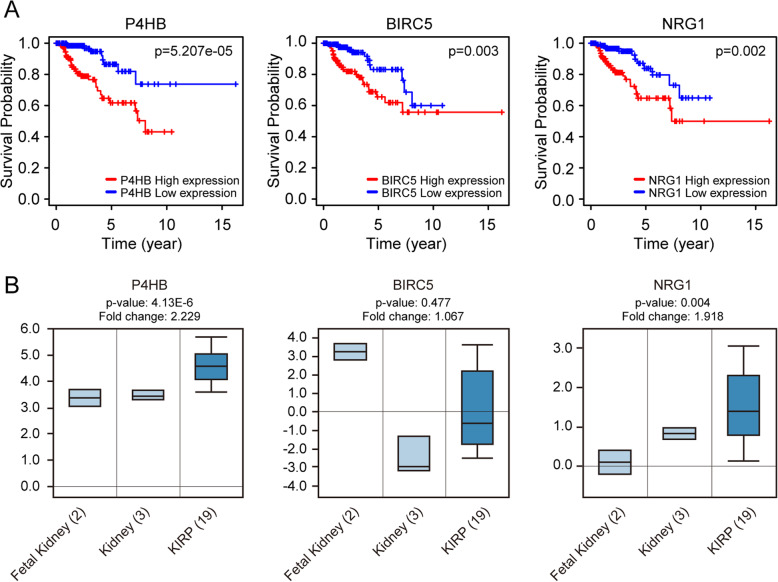
We analyzed the expression of 232 autophagy-related genes (ARGs) in 289 KIRP and 32 non-tumor tissue cases, and 40 mRNAs were screened out as DEARGs. The functional and pathway enrichment analysis was done and protein-protein interaction network was constructed for all DEARGs. To sift candidate DEARGs associated with KIRP patients' survival and create an autophagy-related risk prognostic model, univariate and multivariate Cox regression analysis were did separately. Eventually 3 desirable independent prognostic DEARGs (P4HB, NRG1, and BIRC5) were picked out and used for construct the autophagy-related risk model. The accuracy of the prognostic risk model for survival prediction was assessed by Kaplan-Meier plotter, receiver-operator characteristic curve, and clinicopathological correlational analyses. The prognostic value of above 3 genes was verified individually by survival analysis and expression analysis on mRNA and protein level.
The autophagy-related prognostic model is accurate and applicable, it can predict OS independently for KIRP patients. Three independent prognostic DEARGs can benefit for facilitate personalized target treatment too.
关于肾乳头细胞癌(KIRP)患者的预后生物标志物和有效治疗方案的数据很少,因此寻找潜在的预后生物标志物和新靶点是 KIRP 治疗的当务之急。
根据癌症基因组图谱数据库中的 RNA 测序数据筛选出差异表达的自噬相关基因(DEARGs),然后鉴定出与生存相关的 DEARGs,为 KIRP 患者的生存预测建立预后模型。然后,我们通过临床病理数据验证了预后风险模型的稳健性和有效性。最后,我们单独评估了构成预后风险模型的基因的预后价值。
我们分析了 289 例 KIRP 和 32 例非肿瘤组织病例中的 232 个自噬相关基因(ARGs)的表达情况,筛选出 40 个差异表达的 mRNA。对所有 DEARGs 进行了功能和通路富集分析,并构建了蛋白质-蛋白质相互作用网络。为了筛选与 KIRP 患者生存相关的候选 DEARGs,并构建自噬相关风险预后模型,我们分别进行了单因素和多因素 Cox 回归分析。最终,筛选出 3 个理想的独立预后 DEARGs(P4HB、NRG1 和 BIRC5),并用于构建自噬相关风险模型。通过 Kaplan-Meier 绘图器、受试者工作特征曲线和临床病理相关性分析评估了预后风险模型对生存预测的准确性。通过生存分析和 mRNA 及蛋白水平的表达分析单独验证了上述 3 个基因的预后价值。
自噬相关的预后模型准确且适用,可独立预测 KIRP 患者的 OS。三个独立的预后 DEARGs 也有助于促进个性化靶向治疗。