Department of Minimally Invasive Surgery, The Marchand Institute for Minimally Invasive Surgery, Mesa, AZ, USA.
Department of Medicine, Midwestern University School of Medicine, Glendale, AZ, USA.
Am J Case Rep. 2021 Apr 16;22:e930659. doi: 10.12659/AJCR.930659.
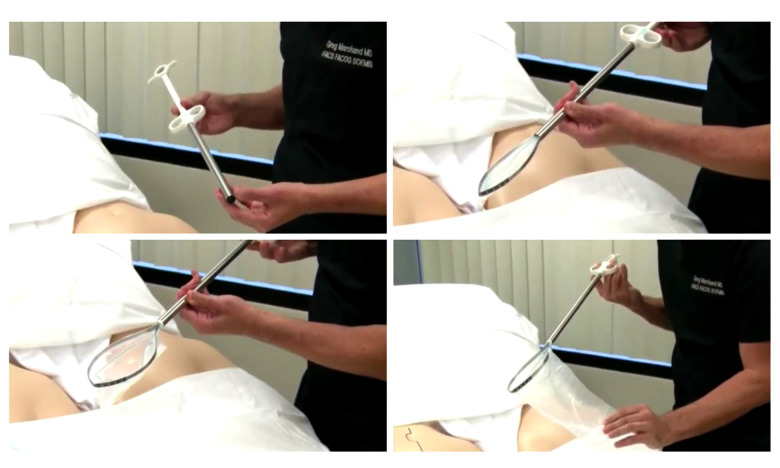
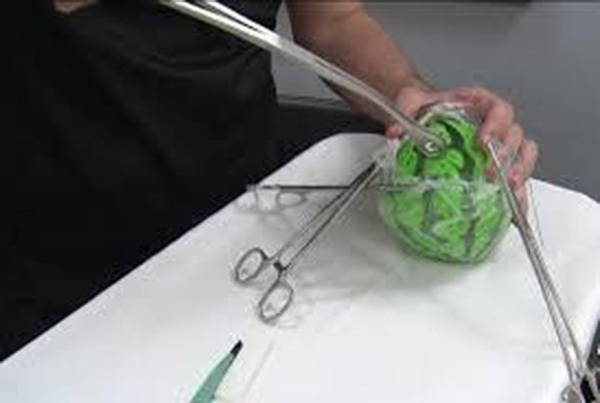
BACKGROUND Advances in minimally invasive surgery are essential for the improvement of patient care, overall health care efficiency, and total cost reductions. Morcellation, the technique used in the present case, is often used to aid minimally invasive laparoscopic procedures, whereby larger tissue specimens are broken down and divided to be removed via smaller incisions. Morcellation has become controversial in the medical community owing to the risk of the procedure spreading an occult malignancy. CASE REPORT A 47-year-old woman with obesity presented with right-sided pelvic pain and suspicion of ovarian torsion. The patient experienced severe acute pain and was taken to the operating room for laparoscopy to remove the left-sided adnexal mass seen on imaging. During surgery, there was no evidence of torsion, and the mass was perfused. During removal of the entire tumor, blunt instruments were utilized for in-bag manual morcellation to avoid spillage of the contents of the bag, which were then sent for frozen section analysis, and a diagnosis of adenocarcinoma of the ovary was made. Once the tumor was removed, a board-certified gynecologic oncologist was consulted to assist with the remainder of the procedure. Following this, the ovarian cancer staging procedure was able to be completed laparoscopically. CONCLUSIONS This technique of in-bag manual morcellation using blunt instruments allows laparoscopic procedures to be performed on large tissue specimens with potential malignancies without spreading cancerous tissue, overcoming the associated risks of dissemination of malignancy. This technique is therefore more beneficial to patients.
微创技术的进步对于改善患者护理、提高整体医疗效率和降低总成本至关重要。在本案例中使用的粉碎技术常用于辅助微创腹腔镜手术,通过该技术可将较大的组织标本切碎并分块通过较小的切口取出。由于该手术有传播隐匿性恶性肿瘤的风险,粉碎术在医学界引起了争议。
一名 47 岁肥胖女性因右侧盆腔疼痛和疑似卵巢扭转就诊。患者经历了严重的急性疼痛,被送往手术室进行腹腔镜检查以切除影像学上所见的左侧附件肿块。术中未见扭转,肿块有血供。在切除整个肿瘤时,使用钝性器械在袋内进行手动粉碎,以避免袋内内容物溢出,然后将其送检进行冷冻切片分析,诊断为卵巢腺癌。肿瘤切除后,咨询了一名经过董事会认证的妇科肿瘤医生,以协助完成其余手术。此后,能够通过腹腔镜完成卵巢癌分期手术。
这种使用钝性器械在袋内进行手动粉碎的技术允许对潜在恶性的大组织标本进行腹腔镜手术,而不会传播癌组织,克服了恶性传播的相关风险。因此,该技术对患者更有益。